Private Label, White Label, Wholesale partnerships available - EU, USA and UK - Free shipping from €75

Blog
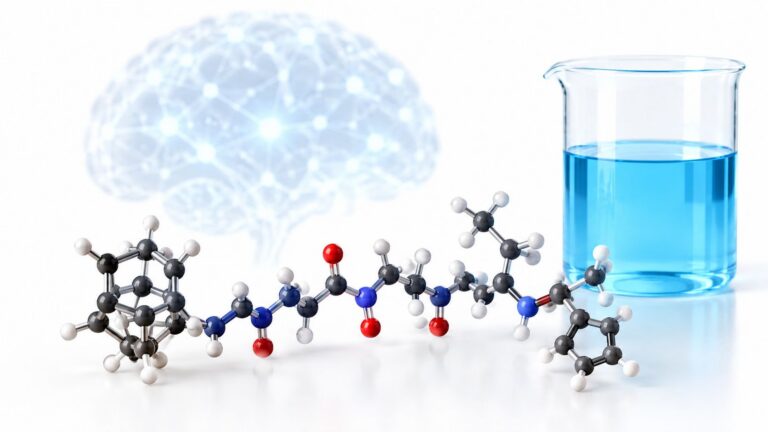
P 21 Peptide Explained: What Researchers Should Know
The most popular advice about the P 21 peptide often starts with the wrong question. Readers are told to focus on its potential effects on memory, neurogenesis, or Alzheimer's disease models before establishing what the compound is, how it was…
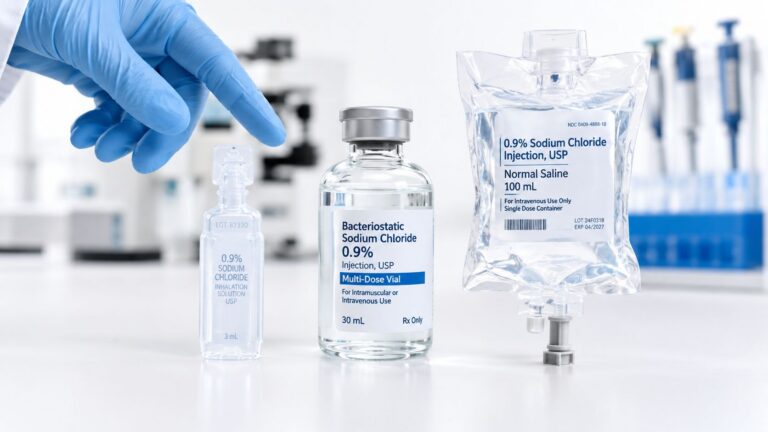
0.9 Sodium Chloride Inhalation Solution USP Explained
A lab technician reaches for a saline vial during nebulizer preparation, then stops. Beside it sit a multi-dose vial of bacteriostatic saline and a larger container of injectable normal saline. All three appear to contain 0.9% sodium chloride, but the…
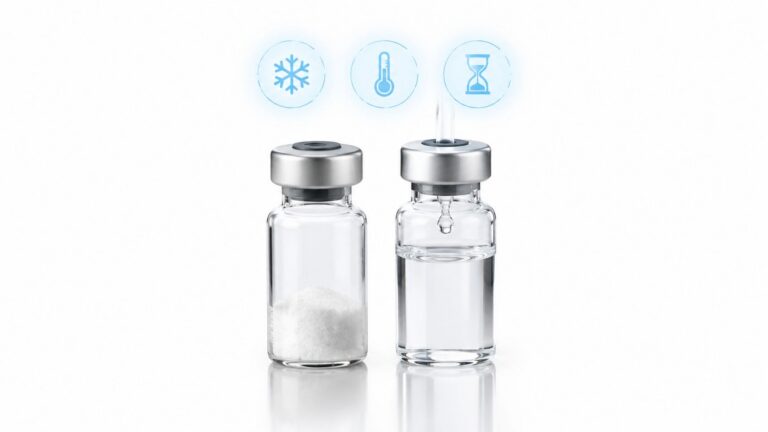
How Long Do Reconstituted Peptides Last? Fridge, Room Temperature and Freezer
How long reconstituted and lyophilised research peptides last in the fridge, at room temperature and in the freezer, whether peptides need to be refrigerated, and how to store a mixed vial.
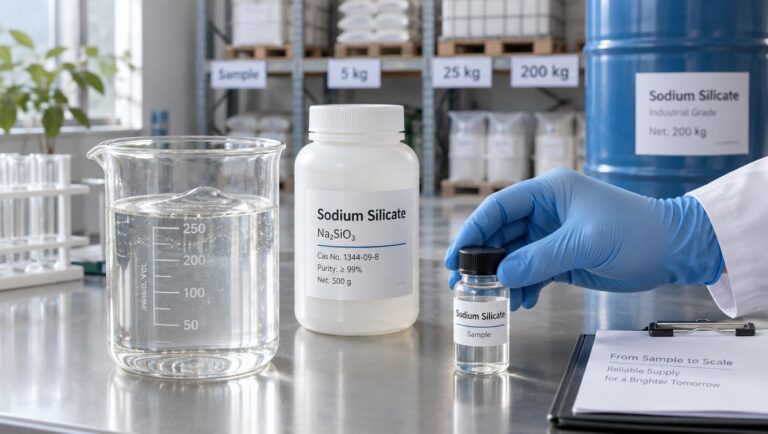
Waterglass for Sale: A Lab Buyer’s Sourcing Guide
Waterglass is the trade name for sodium silicate, usually supplied as a thick alkaline liquid with a pH around 11–12. A common commercial solution contains 37% sodium silicate by weight in water, although the exact formulation must be confirmed with…
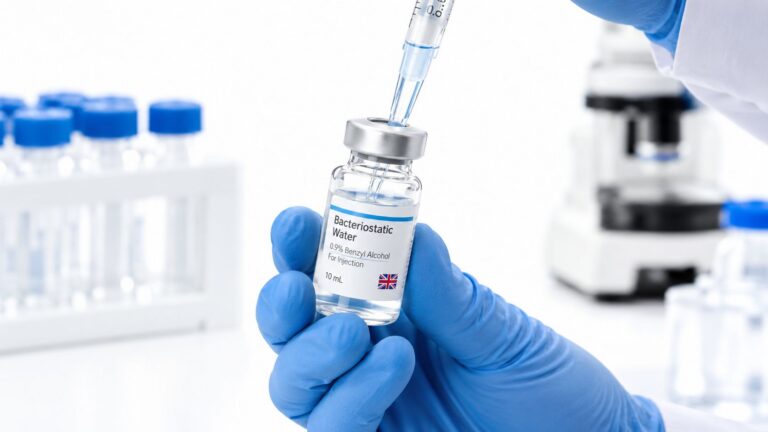
Bacteriostatic Water for Injection UK: Complete Guide
A UK-registered bacteriostatic water for injection product contains 0.9% benzyl alcohol, equal to 9 mg/mL, and is sterile and non-pyrogenic. Although an official medicine register lists an authorized product, most bacteriostatic water sold to researchers is labelled Research Use Only,…
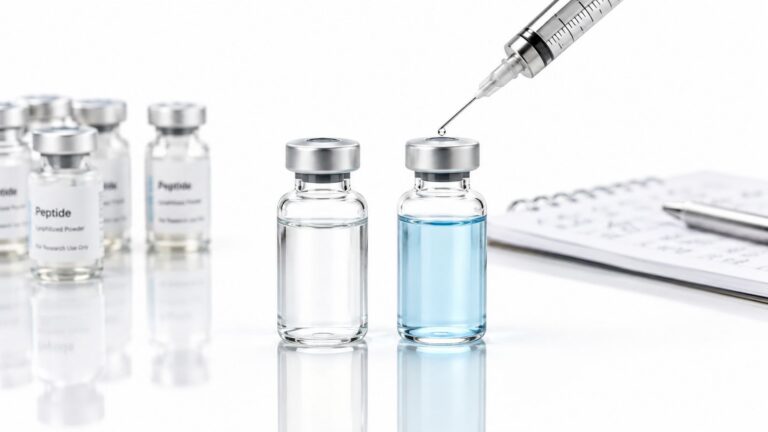
Bacteriostatic Water with Sodium Chloride: A Practical Guide
The most popular advice about peptide reconstitution is also the least precise: “Just use bacteriostatic water.” That shortcut treats plain bacteriostatic water and bacteriostatic water with sodium chloride as interchangeable, even though one is a water-based vehicle and the other…
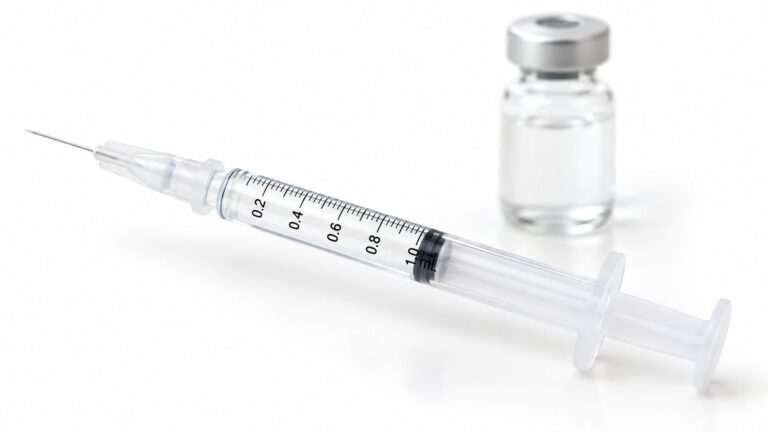
What Does 1cc Look Like on a Syringe: A Visual Guide
A researcher holds a clear syringe over a vial, sees several lines on the barrel, and pauses. The question seems simple: what does 1cc look like on a syringe? On a standard volume syringe, the answer is straightforward, but the…
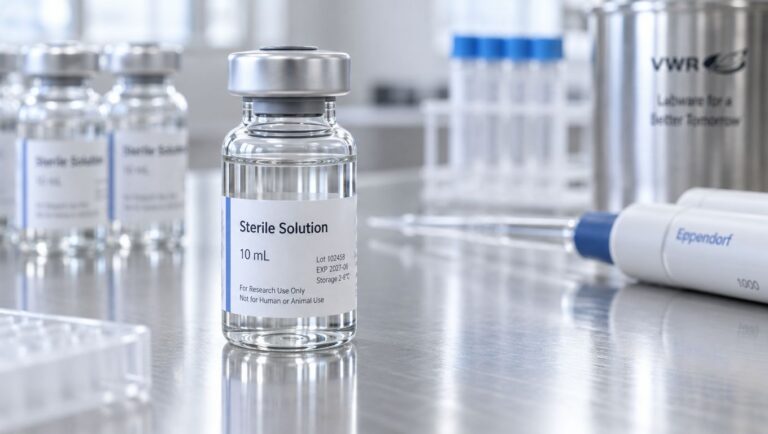
10 mL Sterile Vial: Lab Specs and Storage
A researcher has just opened a fresh 10 mL sterile vial to reconstitute a valuable peptide or protein. The seal was intact, the glass looked clean, and the first withdrawal went smoothly. The hidden risk begins after that first needle…
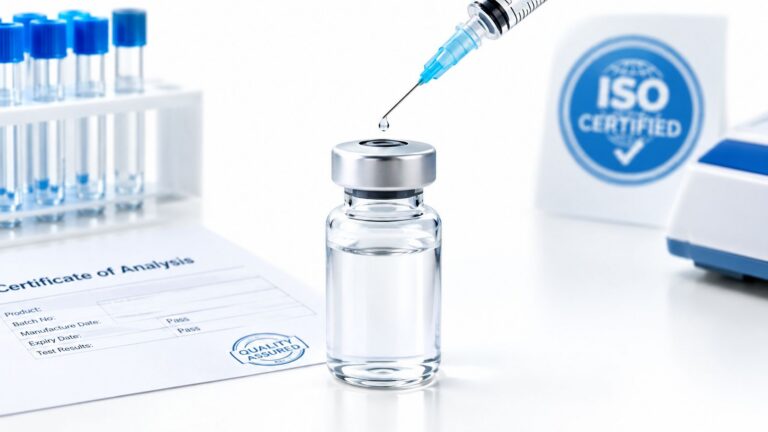
Vial of Liquid: A Complete 2026 Lab Safety Guide
A researcher can spend weeks preparing a peptide study, then compromise the entire workflow during a routine withdrawal. The vial looks clear, the stopper appears intact, and the liquid remains within its expected volume. Yet a contaminated needle, an inadequately…
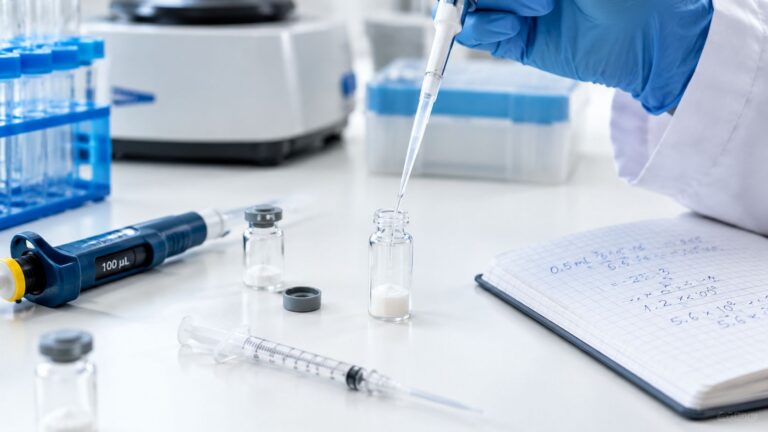
Lyophilized Powder Reconstitution: A Practical Lab Guide
The vial has been on the bench for a few minutes. The seal comes off a 10 mg lyophilized peptide, the cake looks intact, and the calculated diluent volume goes in cleanly. Ten minutes later, the solution is still cloudy.…
See our privacy policy.