Private Label, White Label, Wholesale partnerships available - EU, USA and UK - Free shipping from €75

P 21 Peptide Explained: What Researchers Should Know
The most popular advice about the P 21 peptide often starts with the wrong question. Readers are told to focus on its potential effects on memory, neurogenesis, or Alzheimer's disease models before establishing what the compound is, how it was studied, and whether those findings have any demonstrated relevance to people. The central issue isn't a lack of interesting signals. It's the distance between rodent results and human evidence.
For a research team, that distinction changes the entire workflow. P21 can be treated as an investigational research tool for testing defined molecular and behavioral hypotheses, but it can't be treated as an established therapy, a source of human dosing guidance, or proof of clinical benefit. Identity checks, assay controls, exposure measurements, and careful interpretation matter more than promotional summaries.
Table of Contents
- What the P 21 Peptide Actually Is
- How P21 Is Designed to Work
- Why Use a Small Peptide Instead of Full CNTF
- Research Applications and Model Systems
- Physicochemical Properties Worth Verifying
- Storage Stability and Reconstitution Best Practices
- Safety Notes and RUO Sourcing Considerations
- Evidence Limits and a Practical Next Steps Checklist
What the P 21 Peptide Actually Is
The name creates an immediate identification risk. P21, also written P021, is different from p21/CDKN1A, the cellular protein involved in cell-cycle regulation. CDKN1A is commonly described as an approximately 18-kDa protein, whereas P21 is a short synthetic peptide. A search that treats these names as interchangeable can retrieve cell-cycle literature instead of neurobiology studies and can introduce errors into procurement records.
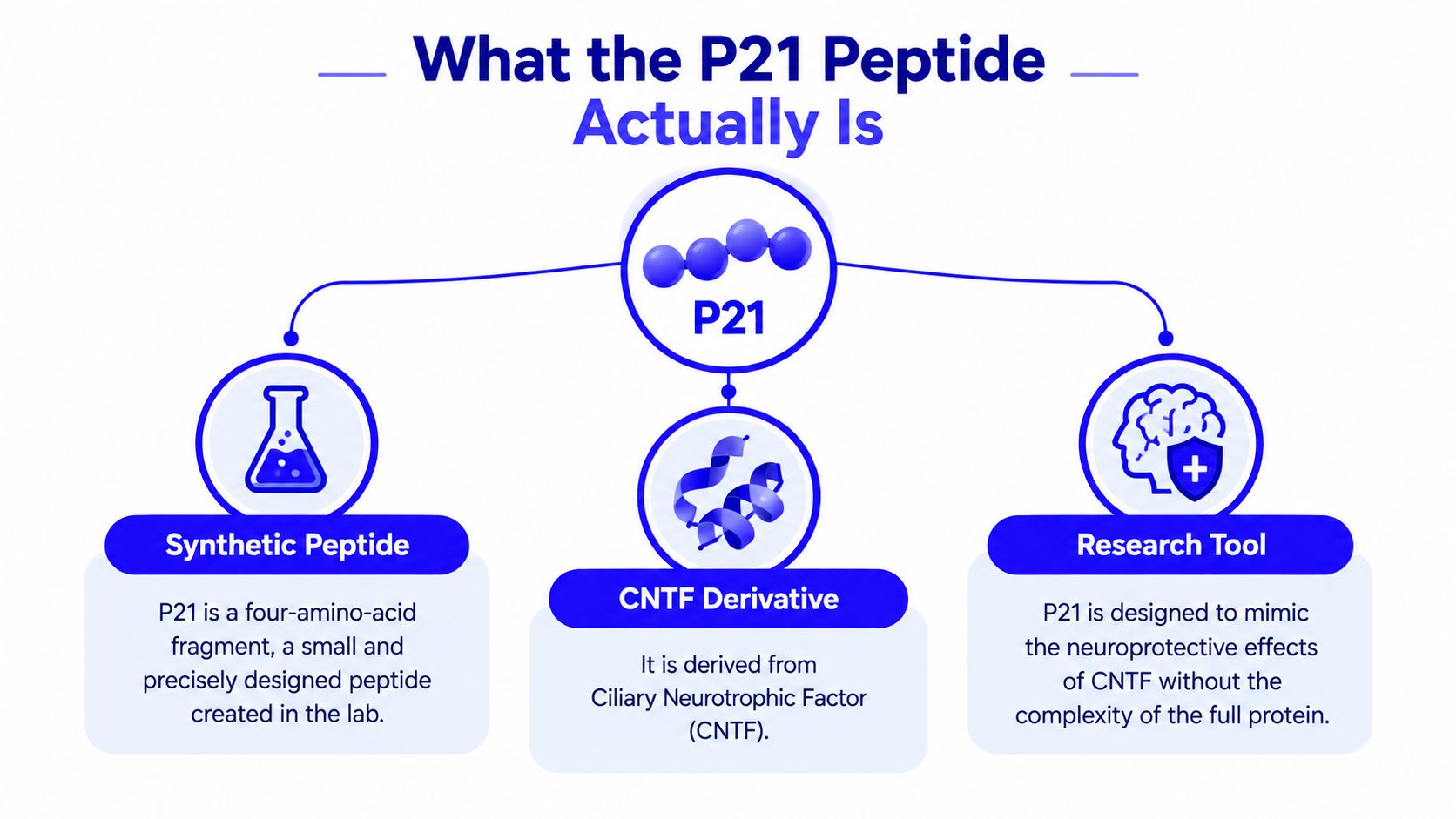
P21 is described as a synthetic neuroactive peptide derived from an active region of ciliary neurotrophic factor, or CNTF. Its shorthand sequence is Ac-DGGLAG-NH2, with a core structure containing four amino acids. The molecule also includes an adamantane modification, intended to improve central-nervous-system exposure while retaining selected neurotrophic or neuroprotective activity associated with the CNTF-derived portion. The foundational P21 peptide description summarizes these identity features.
A practical identity model
Classify the compound across three connected properties:
- Synthetic peptide: P21 is not the complete CNTF protein. It is a deliberately designed, short chemical entity.
- CNTF derivative: Its biological rationale comes from a selected CNTF-related region, not the entire parent protein.
- Research tool: The record is centered on laboratory and animal work rather than an established human treatment.
A label that says only “P21” leaves important questions unanswered. The research file should record the sequence notation, terminal modifications, adamantane status, purity documentation, storage conditions, and lot information. For lyophilized material, document the reconstitution steps for lyophilized peptides alongside the experimental record.
The translation gap should remain visible at this stage. Reported work has focused mainly on animal and laboratory models, including hippocampal neurogenesis and memory-related outcomes in models associated with Alzheimer's disease. One summary reports approximately an 85% increase in neural-progenitor-cell proliferation and approximately a 110% increase in mature newborn neurons in normal mice relative to vehicle-treated controls. Those results describe specific preclinical models. They do not estimate human efficacy or establish a treatment effect in people.
How P21 Is Designed to Work
P21's proposed mechanism should be handled as a set of testable hypotheses, not as a finished account of human brain activity. The two main hypotheses involve modulation of leukemia inhibitory factor, or LIF, signaling, and increased expression of brain-derived neurotrophic factor, or BDNF. The P21 pathway overview summarizes these proposed routes.
The LIF hypothesis focuses on adult hippocampal neural-stem-cell behavior. In this model, reduced LIF signaling may remove a restraint on neural-stem-cell proliferation. A suitable study would therefore measure LIF-pathway markers, proliferation markers, and cell-fate outcomes in the relevant hippocampal region. A memory task alone cannot establish this mechanism.
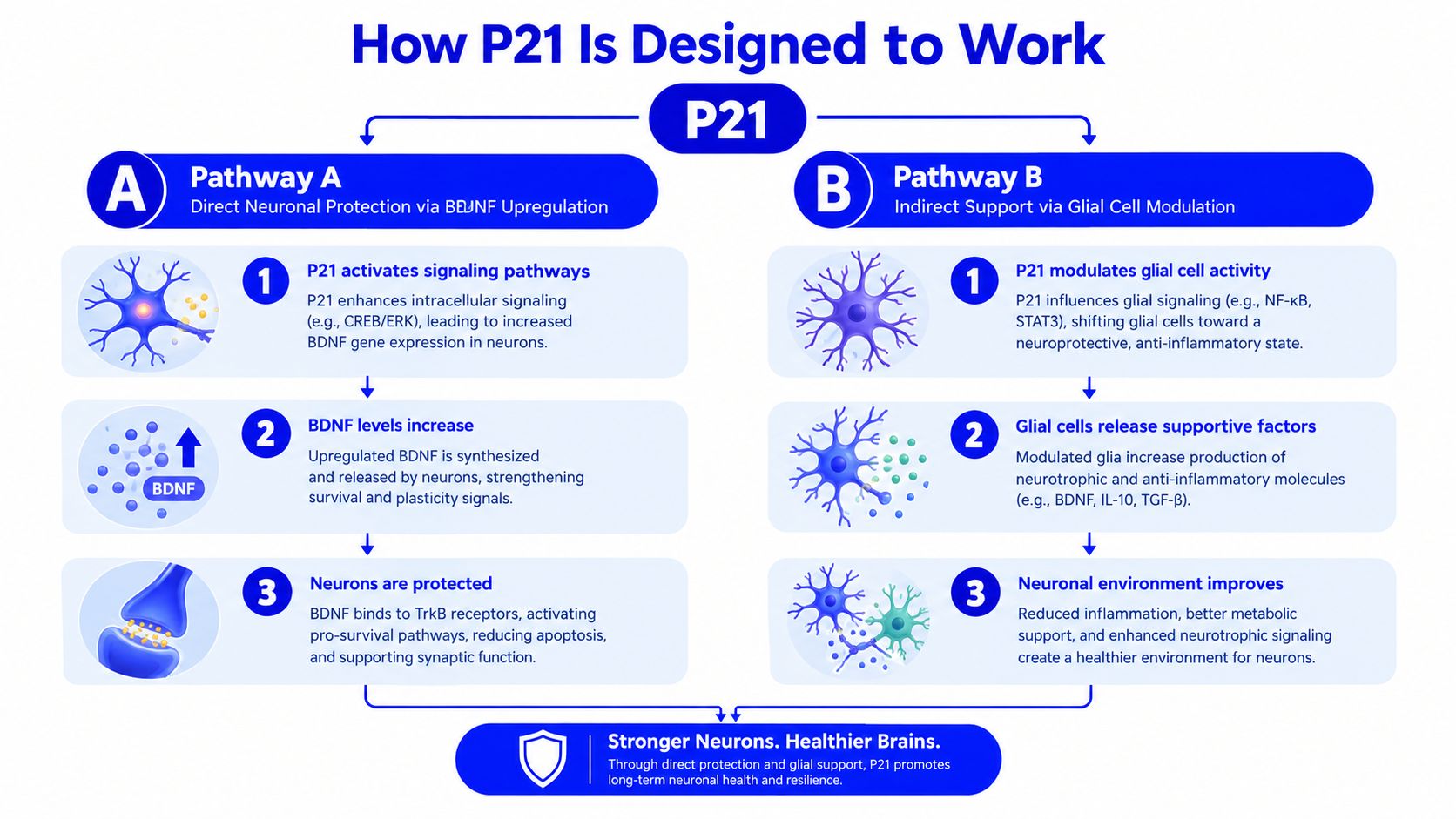
The second hypothesis involves BDNF. Increased BDNF expression could engage TrkB-linked PI3K/AKT and related plasticity pathways, offering a plausible connection between peptide exposure, synaptic maintenance, neurogenesis, and behavior. That chain still contains several separate steps. A behavioral change cannot show that BDNF increased, TrkB was activated, or the peptide reached the intended brain compartment.
Match the claim to the assay
A defensible design separates molecular endpoints from indirect outcomes:
- BDNF expression: measure transcript or protein changes with a validated method in a defined brain region.
- TrkB and AKT signaling: assess activation markers such as phospho-TrkB or phospho-AKT, with appropriate normalization.
- Neurogenesis: use established proliferation and neuronal-maturation markers rather than inferring neurogenesis from behavior.
- Behavior: treat spatial-memory performance as an integrated outcome influenced by many variables.
Include a vehicle group to assess effects from administration and formulation. A sequence-control group can test whether the response depends on the intended peptide sequence. Dose-response groups can show whether outcomes change systematically with exposure, although a rodent response curve does not establish a human dose.
Treat BDNF and TrkB findings as separate endpoints. Measure them with phospho-specific assays in the same animals that provide behavioral data, then compare molecular, cellular, and behavioral results rather than using one category as proof of another.
Why Use a Small Peptide Instead of Full CNTF
Studying P21 instead of administering full-length CNTF reflects a design trade-off, not proof that the peptide is a superior treatment. CNTF is a larger growth factor with broad biological activity. P21 is a much smaller, CNTF-derived construct intended to preserve selected activity in a more manageable form.
Size matters for central-nervous-system research because P21 includes an adamantane modification intended to improve CNS exposure. Full-length CNTF has been associated with systemic inflammatory limitations as a parent growth factor. Researchers are therefore exploring whether a smaller derivative can test a narrower neurotrophic signal without reproducing the full protein's systemic profile. These are development rationales, not confirmed clinical advantages.
The comparison researchers should make
| Consideration | P21 | Full-length CNTF |
|---|---|---|
| Molecular design | Short synthetic CNTF-derived peptide with an adamantane modification | Complete parent growth factor |
| Intended CNS rationale | Designed to improve central exposure | Broader protein behavior and more complex delivery challenges |
| Biological scope | Selected neurotrophic activity is the design objective | Wider native growth-factor signaling |
| Translational status | Preclinical research compound | Not a shortcut to validated human treatment |
The practical advantage of a smaller construct is narrower experimental control. It does not establish favorable absorption, distribution, metabolism, elimination, target engagement, or toxicity. The design rationale remains a hypothesis until each study measures the relevant property.
A useful comparison should include a head-to-head table row for measured brain concentration, reported in ng/g, by route for P21 versus CNTF in the same strain. That approach tests exposure directly instead of inferring it from behavior. Route, sampling time, brain region, and assay method should remain aligned so that an apparent difference reflects the compounds rather than the protocol.
Interpretation rule: A design objective is not the same as a demonstrated property. “Intended to improve CNS exposure” should remain separate from measured exposure in each study.
Brain-tissue quantification, route-specific exposure data, and target-related molecular markers provide a stronger basis for interpretation than a single behavioral endpoint. P21's present value lies in testing a defined biological hypothesis under controlled conditions. It should not be assumed to inherit every useful property of CNTF, and rodent exposure findings should remain separate from claims about human relevance.
Research Applications and Model Systems
P21 research has been organized around several model types, each answering a different question. A transgenic Alzheimer's disease model can examine disease-associated pathology and signaling. An aged-rat model can address distribution and tau-related measures. Normal rodents can help investigate hippocampal neurogenesis without the added complexity of a disease genotype.
In 3xTg-AD mice, reported P21 exposure has been associated with normalized BDNF-related signaling and reduced abnormal tau phosphorylation. Those outcomes make the model useful for pairing molecular pathology with behavior, but a sound protocol should still separate treatment assignment, exposure, and endpoint assessment. The reported findings are summarized in P21 model research involving tau and BDNF.
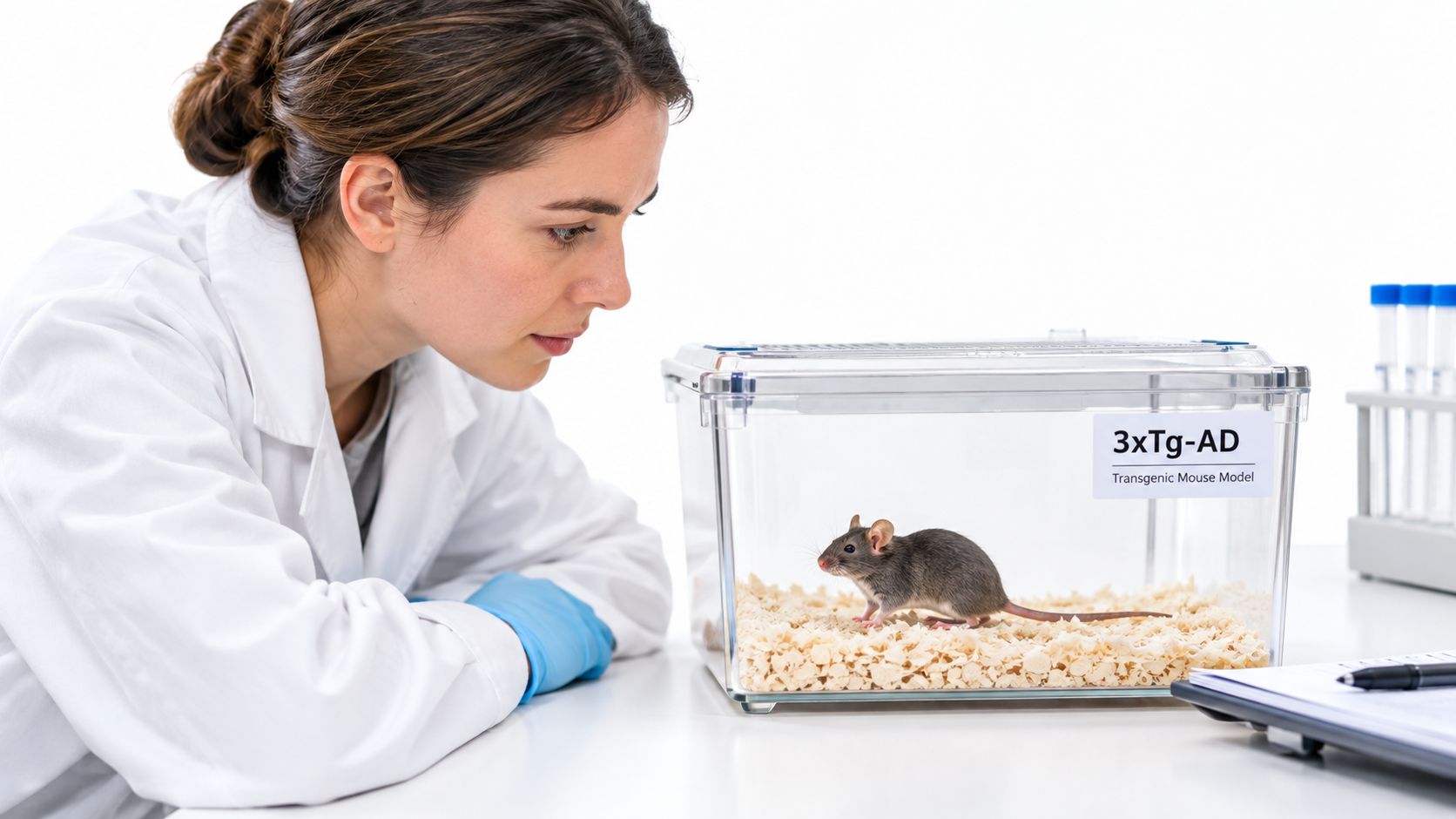
Aged rats have been used to investigate apparent blood-brain-barrier permeability and total tau in brain and cerebrospinal fluid. That scenario highlights a frequent interpretation error. A lower tau measurement can be biologically interesting, but it doesn't by itself prove the route, concentration, or target engagement responsible for the result.
Build the controls around the question
Normal rodent studies focused on hippocampal neurogenesis may use proliferation and neuronal maturation markers, including labeling approaches such as BrdU or doublecortin. The controls should reflect the claim being tested:
- Vehicle control: identifies effects caused by handling, formulation, or administration.
- Sequence control: helps test whether the response depends on the intended peptide sequence.
- Dose-response design: shows whether outcomes vary with exposure rather than appearing only in a single treatment condition.
- Exposure measurement: links brain concentration or distribution to molecular and behavioral endpoints.
A reviewer will also expect complete reporting of species, age, sex, route, formulation, treatment duration, randomization, and blinding. Without those details, results become difficult to compare even when the same nominal compound is used.
The model determines what can be concluded. A mouse neurogenesis result can support a hypothesis about hippocampal biology in mice. It can't establish a human therapeutic effect, and it can't supply a human dose. Each model should therefore be treated as one layer in an evidence map, not as a miniature clinical trial.
Physicochemical Properties Worth Verifying
For P21, identity verification is more than a procurement formality. The compound has multiple naming conventions and shares a name with an unrelated cellular protein, so every vial should be tied to a precise chemical description.
The shorthand Ac-DGGLAG-NH2 identifies the reported core sequence notation, while the adamantane modification identifies an important design feature. The four-amino-acid core should not be confused with a claim that the entire modified molecule has only the same molecular size. The modification and terminal groups contribute to the complete chemical entity and must be represented in the vendor's analytical documentation.
P21 Peptide Properties at a Glance
| Property | Typical Specification | Why It Matters |
|---|---|---|
| Chemical identity | P21 or P021, synthetic CNTF-derived peptide | Prevents confusion with p21/CDKN1A |
| Core sequence notation | Ac-DGGLAG-NH2 | Allows the laboratory to compare the ordered material with the intended construct |
| Core structure | Four-amino-acid peptide sequence | Clarifies the peptide portion of the design |
| Modification status | Adamantane-modified | May affect exposure, handling, analytical mass, and biological behavior |
| Purity documentation | Lot-specific analytical report | Supports reproducibility instead of relying on a general product page |
| Identity confirmation | Orthogonal analytical evidence, such as chromatography and mass analysis | Helps distinguish the intended material from truncated or incorrectly modified species |
| Storage and handling | Vendor-defined conditions recorded with the lot | Connects material history to experimental outcomes |
A practical acceptance review should compare the order, label, certificate of analysis, sequence notation, modification status, and analytical results. HPLC can help assess chromatographic purity, while mass spectrometry can support molecular identity and modification checks. Amino acid analysis may provide additional compositional information, but no single method should be treated as a complete substitute for a lot-specific characterization package.
Practical rule: Purity is not identity. A highly pure but incorrectly modified peptide can still produce an irreproducible experiment.
The laboratory should also record whether the material is supplied for research use only, how it was stored before receipt, and which lot entered each assay. That record makes later troubleshooting possible when two experiments produce different results.
Storage Stability and Reconstitution Best Practices
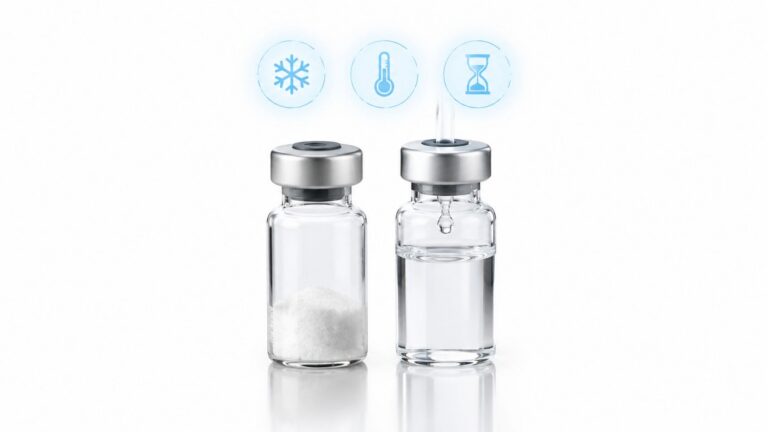
Lyophilization protects a peptide during storage, but it doesn't remove the need for disciplined handling. The sealed vial should remain protected from moisture, excessive light, and temperature excursions, with storage following the supplier's documented instructions. The lot number and arrival condition belong in the same record as the experimental protocol.
Reconstitution introduces a separate source of variation. The diluent, final concentration, mixing method, hold time, and number of vial entries can all affect the working solution. The appropriate choice depends on whether the preparation is intended for a single use or repeated access within a controlled research workflow.
A handling sequence for RUO work
- Confirm the vial: Match the label to the purchase record, sequence notation, modification status, lot number, and certificate of analysis.
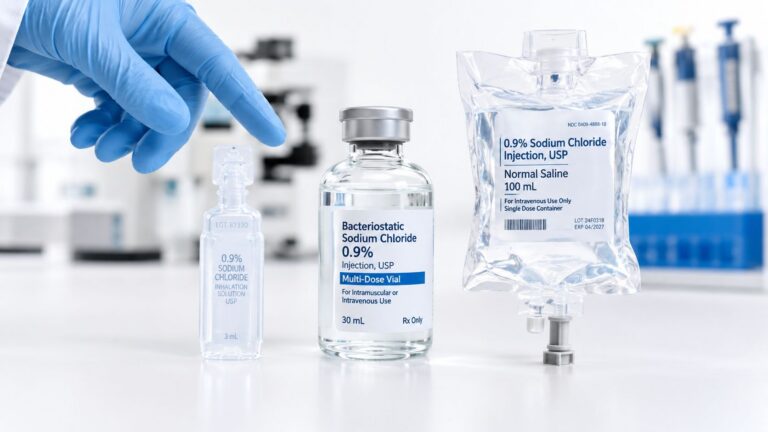
- Choose the diluent: Sterile water may suit a single-use preparation, while a bacteriostatic diluent may suit a documented multi-dose workflow.
- Add slowly: Direct the diluent against the vial wall where practical and avoid vigorous agitation that could increase foaming or mechanical stress.
- Record the preparation: Note the date, operator, diluent, concentration, lot, and any visible change.
- Aliquot when appropriate: Smaller working portions can reduce repeated vial access and limit avoidable freeze-thaw handling.
- Inspect before use: Cloudiness, particles, unexpected color, or precipitation should trigger a hold and investigation rather than silent use.
Bacteriostatic water containing 0.9% benzyl alcohol enables multi-dose withdrawals for up to 28 days when handled aseptically, supporting preparation of peptides, proteins, and antibodies from lyophilized materials. That stated in-use period is a handling condition, not a guarantee that every peptide remains chemically or biologically unchanged throughout the period.
Aseptic technique still matters. Each entry should use sterile equipment, a clean preparation area, and a documented withdrawal process. The diluent doesn't correct an incorrectly identified peptide, poor storage, incompatible formulation, or contamination introduced during handling.
The most defensible workflow links the reconstituted solution to an assay plan. If a result is unexpected, the team can then check the peptide lot, diluent lot, preparation record, storage history, and analytical controls instead of treating the vial as an unexplained black box.
Safety Notes and RUO Sourcing Considerations
P21 should be handled as an investigational research compound for research use only. The available record doesn't establish a human pharmacokinetic dataset, a characterized human dose, an approved indication, or human clinical safety. Animal findings therefore shouldn't be converted into self-administration guidance or clinical claims.
Laboratories should follow institutional requirements for biosafety, personal protective equipment, waste handling, chemical safety, and supervision. The exact controls depend on the formulation, route, model, facility, and local rules. Research-use labeling doesn't remove those responsibilities.
What a sourcing review should establish
- Chemical identity: The documentation should distinguish P21 or P021 from CDKN1A/p21 and state the sequence notation.
- Modification status: The adamantane modification and terminal groups should be identified rather than implied by a generic product name.
- Lot-specific analysis: A certificate of analysis should correspond to the exact lot supplied.
- Orthogonal verification: Identity and purity should be supported by suitable analytical methods, not only a marketing statement.
- Manufacturing records: The supplier should explain relevant quality procedures and material traceability.
- Storage history: Shipment and storage requirements should be clear enough for the receiving laboratory to assess potential excursions.
Teams that need a broader framework for evaluating research compounds can browse peptide sourcing and compliance before placing an order. The useful question isn't whether a vendor sounds authoritative. It's whether the documentation allows an independent laboratory to identify, inspect, store, and trace the material.
For organizations purchasing diluent in larger quantities, bacteriostatic water wholesale may support procurement planning, but the selected solution still needs to match the peptide's formulation requirements and the institution's RUO procedures. A reliable diluent can't substitute for compound characterization or oversight.
Evidence Limits and a Practical Next Steps Checklist
The central translation problem remains unresolved. Available evidence reviews indicate that the principal cognitive and neurogenic findings haven't been independently replicated, published in-vivo work largely comes from a single research group, and no human trials or human pharmacokinetic data exist (evidence review). That doesn't prove the animal findings are false. It does mean that internal consistency within a narrow preclinical literature is weaker than independent replication across laboratories and protocols.
A research team can still study P21 responsibly by narrowing the claim and strengthening the design.
A next-day operator checklist
- Verify the material: Record the exact chemical identity, sequence, terminal groups, adamantane modification, lot, and analytical documentation.
- Separate endpoints: Measure molecular markers, pathway activation, neurogenesis, exposure, and behavior as distinct evidence streams.
- Use controls: Include vehicle and sequence-control groups, with a dose-response design where scientifically justified.
- Measure distribution: Pair behavioral or pathological outcomes with brain-tissue exposure and route information.
- Document the model: Report species, age, sex, dose, formulation, route, treatment duration, randomization, and blinding.
- Protect interpretation: Describe findings as preclinical model results unless human evidence supports a stronger statement.
What would move P21 closer to a credible development candidate? Independent replication would be necessary, along with validated analytical methods, exposure and bioavailability studies, GLP toxicology, and eventually a properly registered early-phase human study. Anecdotal reports and a positive rodent memory task can't replace that sequence of evidence.
Researchers evaluating the P 21 peptide should therefore ask a narrower and more useful question: Which biological claim can the current model and assay support? That question keeps procurement, reconstitution, measurement, and interpretation aligned with the evidence.
Herbilabs supplies RUO bacteriostatic water and reconstitution solutions for laboratories preparing lyophilized peptides, proteins, and antibodies, with documentation designed to support controlled workflows. Researchers can visit Herbilabs to review available solutions and select a diluent that fits their documented P21 handling process.