Private Label, White Label, Wholesale partnerships available - EU, USA and UK - Free shipping from €75

Blog
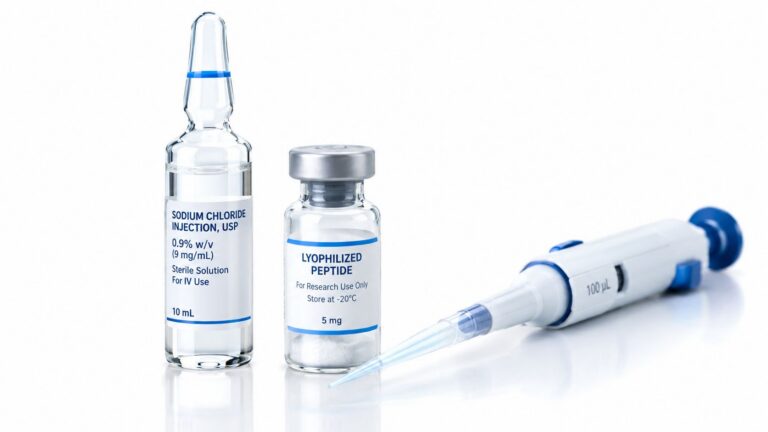
Preservative Free Sterile Saline Solution: A Practical Guide
A researcher reaches into a cold room, takes out a 10 mL ampule of preservative-free saline, and places it beside a lyophilized peptide vial. Then the hesitation starts. The ampule was opened two days ago, the reconstitution is scheduled now,…
Why Aseptic Technique Is Important in Microbiology
A new researcher often notices contamination only at the end of a workflow. The plate that should show one colony type suddenly shows several. The sterile broth control turns cloudy. A reagent that looked fine at setup behaves unpredictably in…
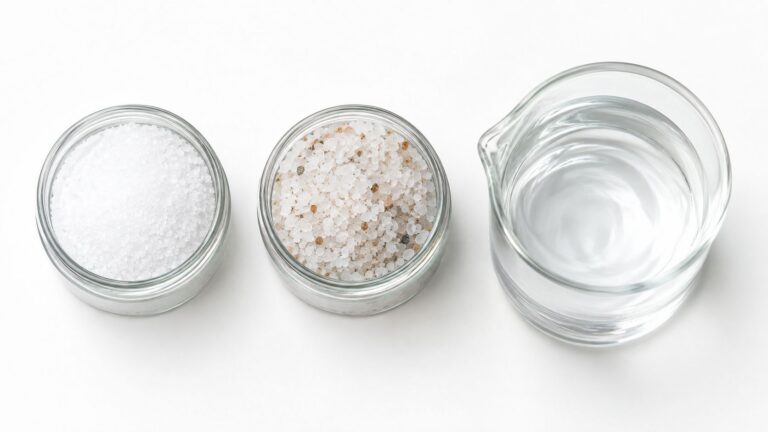
Is Sodium Chloride a Mixture or a Compound Explained
Pure sodium chloride is not a mixture. It is an ionic compound with the fixed formula NaCl, which means sodium and chloride are present in a strict 1:1 ratio, with pure sodium chloride made of 39.34% sodium and 60.66% chlorine…
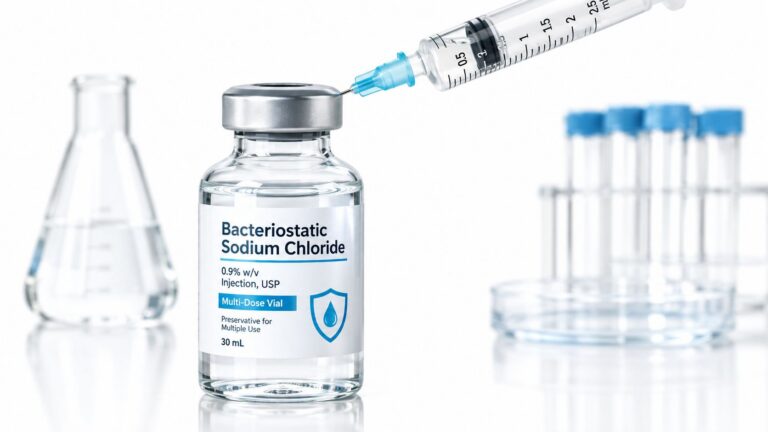
Sodium Chloride Bacteriostatic Water Guide for RUO Use
A common RUO bench moment goes like this. A researcher has a lyophilized vial, a protocol note with only a short diluent label, and two clear multi-dose containers that seem close enough to swap. One says bacteriostatic water. The other…
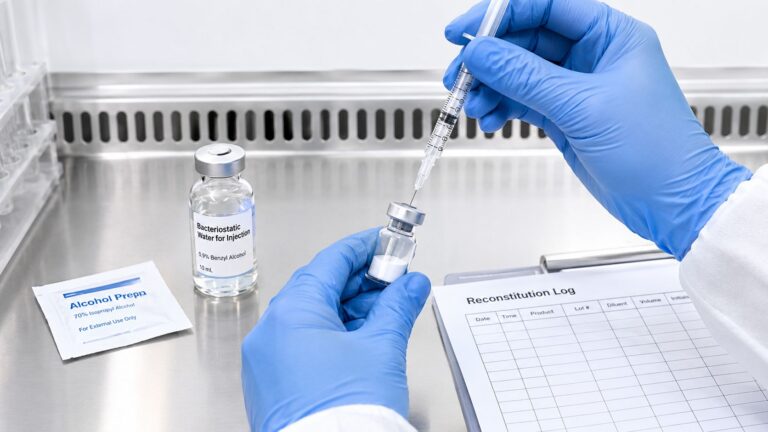
How to Reconstitute Peptides: Step-by-Step Guide and Peptide Reconstitution Chart
How to reconstitute and mix lyophilised research peptides with bacteriostatic water, with a peptide reconstitution chart showing how much bac water to add per mg and what each U-100 syringe reading holds.
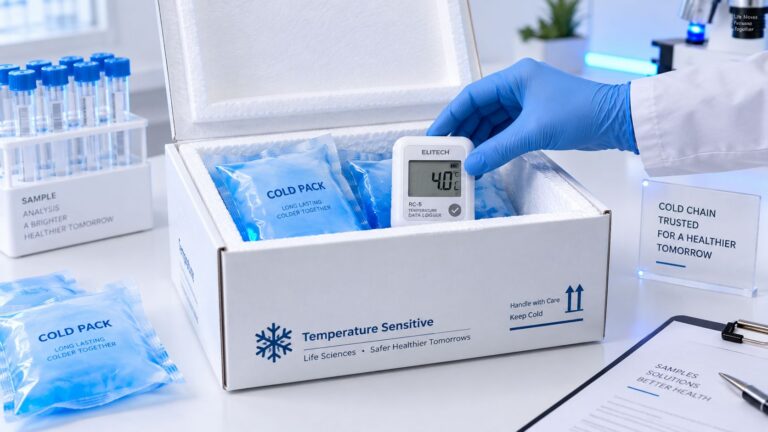
Temperature Controlled Shipping Explained for Labs
A lab receives a small shipment of vials on Monday morning. The outer carton is intact, the delivery took less time than expected, and the package still feels cool. Yet the temperature record is missing, the carrier handoff isn't documented,…

Temperature Controlled LTL Transportation How to Ship Right
A small RUO shipment can leave a controlled warehouse in perfect condition and still arrive with an unresolved temperature question. A pallet of bacteriostatic water vials may spend hours waiting at a transfer terminal, move through another dock without a…
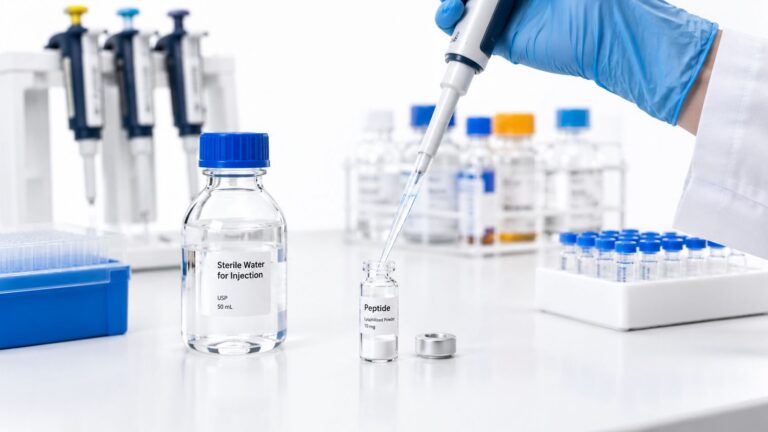
Peptide Reconstitution Steps: A Practical Lab Protocol
A researcher has a 5 mg peptide vial on the bench, a fresh vial of bacteriostatic water nearby, and one decision to make before the powder ever sees liquid: how should the diluent enter the vial? The answer affects more…
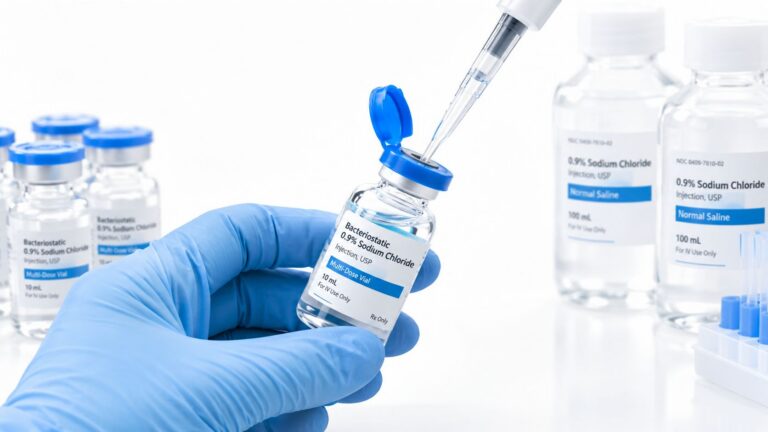
Bacteriostatic 0.9 Sodium Chloride Explained for Labs
A researcher has a lyophilized peptide on the bench, a protocol that calls for saline, and several planned withdrawals over the coming days. Opening a fresh single-use container for every preparation may create unnecessary handling and documentation work, but choosing…
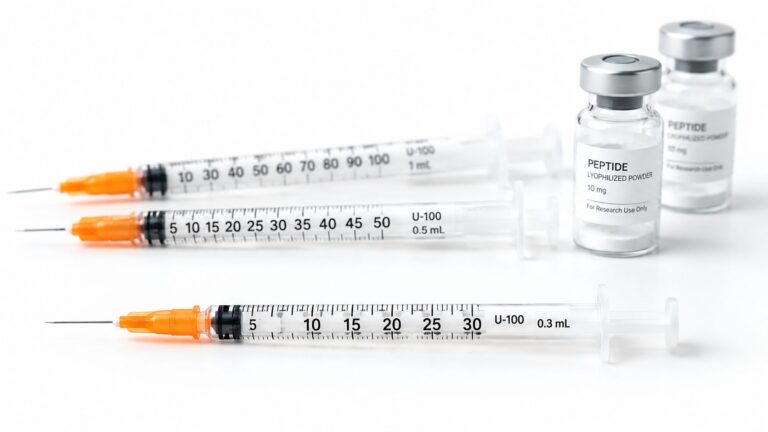
3/10 mL U-100 Syringe: Specs, Sizing and Lab Use
Could a syringe designed for insulin become a useful low-volume precision tool in a peptide workflow, or does the label create more confusion than clarity? The phrase “3 10 ml insulin syringe” exposes that problem. It can look like a…
See our privacy policy.