Private Label, White Label, Wholesale partnerships available - EU, USA and UK - Free shipping from €75
Sodium Chloride Bacteriostatic Water Guide for RUO Use
A common RUO bench moment goes like this. A researcher has a lyophilized vial, a protocol note with only a short diluent label, and two clear multi-dose containers that seem close enough to swap. One says bacteriostatic water. The other says sodium chloride with a bacteriostatic preservative. The labels look similar. The workflow pressure is real. The temptation is to treat them as equivalents.
That shortcut is where avoidable variability starts.
In research settings, diluent choice isn't just a chemistry detail. It shapes reconstitution behavior, repeat withdrawals, compatibility with the material in the vial, and how much trust a lab can place in results generated over several days of handling. Sodium chloride bacteriostatic water is often searched as if it were one simple thing, but the phrase usually reflects a naming mix-up between bacteriostatic sodium chloride and bacteriostatic water. That confusion matters because one is saline-based and isotonic, while the other is water-based and not the same product class.
For RUO work, that distinction should be handled calmly, not dramatically. A lab doesn't need jargon. It needs a reliable way to answer a few practical questions. Is isotonic saline needed, or would plain preserved water make more sense for the material? Is the vial going to be accessed once or repeatedly? Is the team disciplined enough to get the benefit of a bacteriostatic preservative in the first place?
Practical rule: A preserved multi-dose diluent only helps when the formulation fits the material and the handling fits the label.
This guide approaches the topic the way a senior lab trainer would. Start with what the product is. Then sort out what it isn't. Then look at the operational reality, because a well-labeled vial can't compensate for poor bench discipline.
Table of Contents
- Introduction to Sodium Chloride Bacteriostatic Water in Research
- What Sodium Chloride Bacteriostatic Water Is and How It Works
- Bacteriostatic Sodium Chloride Compared With Other Diluents
- Multi Dose Use and the 28 Day In Use Window
- Compatibility With Peptides Proteins and Antibodies
- Common Handling Mistakes That Undermine Preservative Protection
- Quality Regulatory and Sourcing Notes for RUO Workflows
Introduction to Sodium Chloride Bacteriostatic Water in Research
A new researcher often hears a shorthand phrase such as “grab the bac saline” or “use sodium chloride bacteriostatic water” and assumes the choice is routine. On the bench, though, those words carry more meaning than they seem to. The decision affects not only what goes into the vial, but also how the material behaves after reconstitution and how the lab manages repeated access.
In RUO environments, this usually shows up during ordinary prep. A peptide panel is being split across several assay days. An antibody stock needs a working solution. A small lab wants one multi-dose vial instead of opening fresh single-use diluent every session. Nothing about that scene feels complicated. The complexity appears later, when someone tries to compare outcomes and realizes the reconstitution conditions weren't as interchangeable as the team assumed.
Where the confusion usually starts
The phrase sodium chloride bacteriostatic water blends two separate ideas. One is bacteriostatic water, which is a water-based product with benzyl alcohol as preservative. The other is bacteriostatic sodium chloride, which is a saline-based product with sodium chloride plus the preservative. They aren't the same liquid with two names. They solve related problems from different formulation starting points.
That's the first point worth slowing down for. In bench language, “bac water” often becomes a catch-all phrase. In labeling language, it shouldn't.
Why researchers should care
The choice is really about two axes:
- Formulation fit: Whether the material should see isotonic saline or plain water as the base.
- Operational fit: Whether the team will access the vial once or repeatedly, and whether those repeated withdrawals are aseptic.
A lab that gets the first part right but the second part wrong still creates trouble. A preserved vial isn't magic. It buys a controlled in-use window, not immunity from sloppy handling.
For that reason, RUO users should read these products as workflow tools. The label tells the lab what the container is built to support. The protocol tells the lab whether that support is chemically appropriate. The bench routine determines whether the benefit is real or only theoretical.
What Sodium Chloride Bacteriostatic Water Is and How It Works
The most useful way to understand this product is to build it in layers.
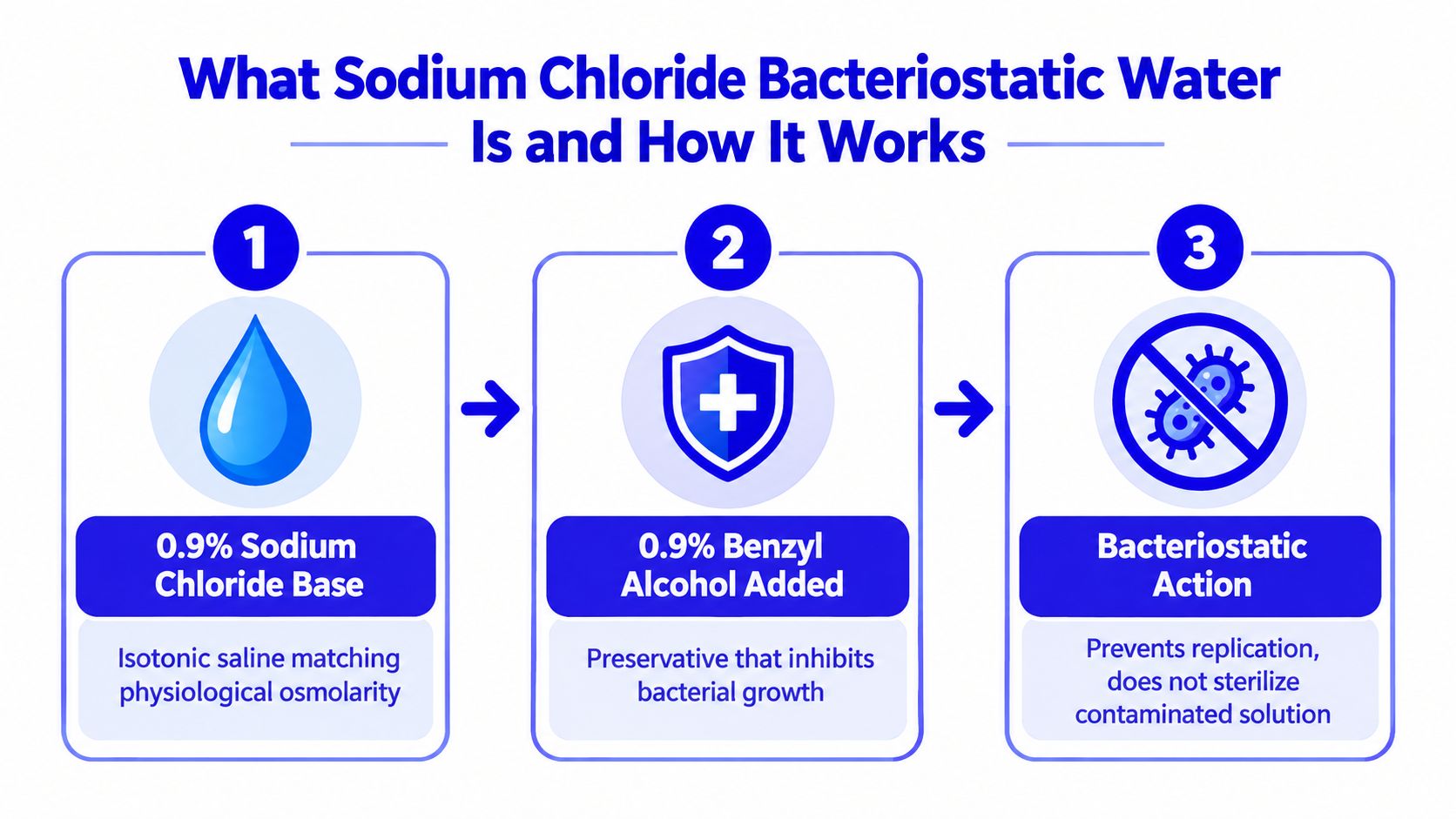
At the base is sodium chloride injection with bacteriostatic preservation, not plain water. The official labeling describes bacteriostatic sodium chloride injection as a sterile, nonpyrogenic, isotonic solution containing 9 mg of sodium chloride per milliliter and 0.9% benzyl alcohol as a bacteriostatic preservative, with a labeled pH range of 4.5 to 7.0 and design for multi-dose access, which distinguishes it from plain saline that has no bacteriostatic preservative (DailyMed bacteriostatic sodium chloride injection labeling).
Start with the saline base
Think of the saline portion as the carrier. It provides an isotonic environment rather than a plain-water environment. In simple bench terms, isotonic saline is less like “just water in a vial” and more like a balanced transport medium. That matters because some workflows prefer a saline background for handling or compatibility reasons.
The 9 mg/mL sodium chloride detail matters because it defines what kind of liquid this is. It isn't merely preserved water with a salt mention on the label. It is a saline formulation first.
Add the preservative layer
Then comes the second layer, 0.9% benzyl alcohol. That's the feature that makes the product bacteriostatic rather than plain saline. A simple analogy helps here. If the saline is the carrier road, the benzyl alcohol is the gatekeeper at the entrance. It doesn't sterilize a contaminated vial after the fact. It helps suppress microbial proliferation after access, provided the vial is handled correctly.
That difference is easy to miss. “Bacteriostatic” sounds stronger than it is. It means growth-inhibiting, not contamination-proof.
A short visual explanation helps fix the idea:
Why pH and multi-dose design matter
The labeled pH range of 4.5 to 7.0 gives the product a broadly compatible operating range for many reconstitution workflows. That doesn't mean universal compatibility. It means the diluent sits in a range that often works, while still requiring protocol-specific judgment for sensitive materials.
Three label features deserve attention:
- Sterile and nonpyrogenic: The product is prepared for controlled research and preparation contexts where baseline solution quality matters.
- Isotonic: The sodium chloride content defines the tonicity, which separates this from bacteriostatic water.
- Multi-dose design: The vial is meant for repeated access, not accidental reuse of a single-use liquid.
A preserved saline vial should be understood as a system. Saline sets the environment. Benzyl alcohol supports repeated access. Aseptic technique determines whether that design actually performs as intended.
Bacteriostatic Sodium Chloride Compared With Other Diluents
Most confusion disappears once the options are placed side by side.
The critical distinction is this: bacteriostatic water is sterile water plus 0.9% benzyl alcohol, while bacteriostatic sodium chloride is a saline-based formulation and not interchangeable with water-based bacteriostatic diluent (DailyMed comparison-relevant labeling record).
Choosing between common RUO diluents
| Diluent | Composition | Preservative | Isotonic | Multi Dose Use |
|---|---|---|---|---|
| Bacteriostatic sodium chloride | Sodium chloride solution with benzyl alcohol | Yes | Yes | Yes |
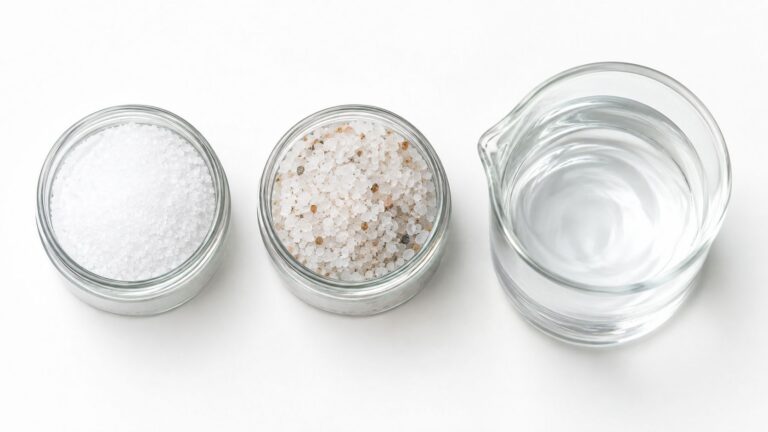
| Bacteriostatic water | Sterile water with benzyl alcohol | Yes | No | Yes |
| Plain sterile saline | Sodium chloride solution without bacteriostatic preservative | No | Yes | Typically treated as single-use in practice |
| Plain sterile water | Sterile water without bacteriostatic preservative | No | No | Typically treated as single-use in practice |
The decision point isn't the word bacteriostatic alone
New researchers often lock onto the preservative and stop there. That's understandable, but incomplete. The more important question comes first: should the dissolved material sit in saline or in water?
If a protocol or material profile points toward an isotonic saline environment, bacteriostatic sodium chloride may be the better fit. If the material is sensitive to salt effects or the workflow calls for water-based reconstitution, bacteriostatic water may make more sense. The preservative question comes after that, not before.
A useful bench analogy is to think of these as different roads leading to the same destination of reconstitution. Both preserved options support repeated withdrawals. They do not provide the same travel surface.
A plain-language way to remember the differences
- Bacteriostatic water: preserved water base
- Bacteriostatic sodium chloride: preserved saline base
- Sterile water: unpreserved water base
- Sterile saline: unpreserved saline base
Bench check: If the label says sodium chloride, the salt content is part of the formulation identity, not a minor detail.
That's why “bac water” becomes risky shorthand. In everyday lab talk, people use it loosely. In actual reconstitution decisions, the label has to win over habit.
Multi Dose Use and the 28 Day In Use Window
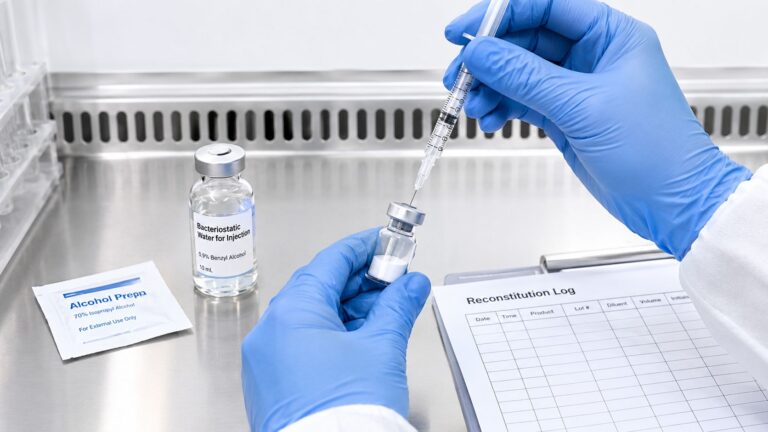
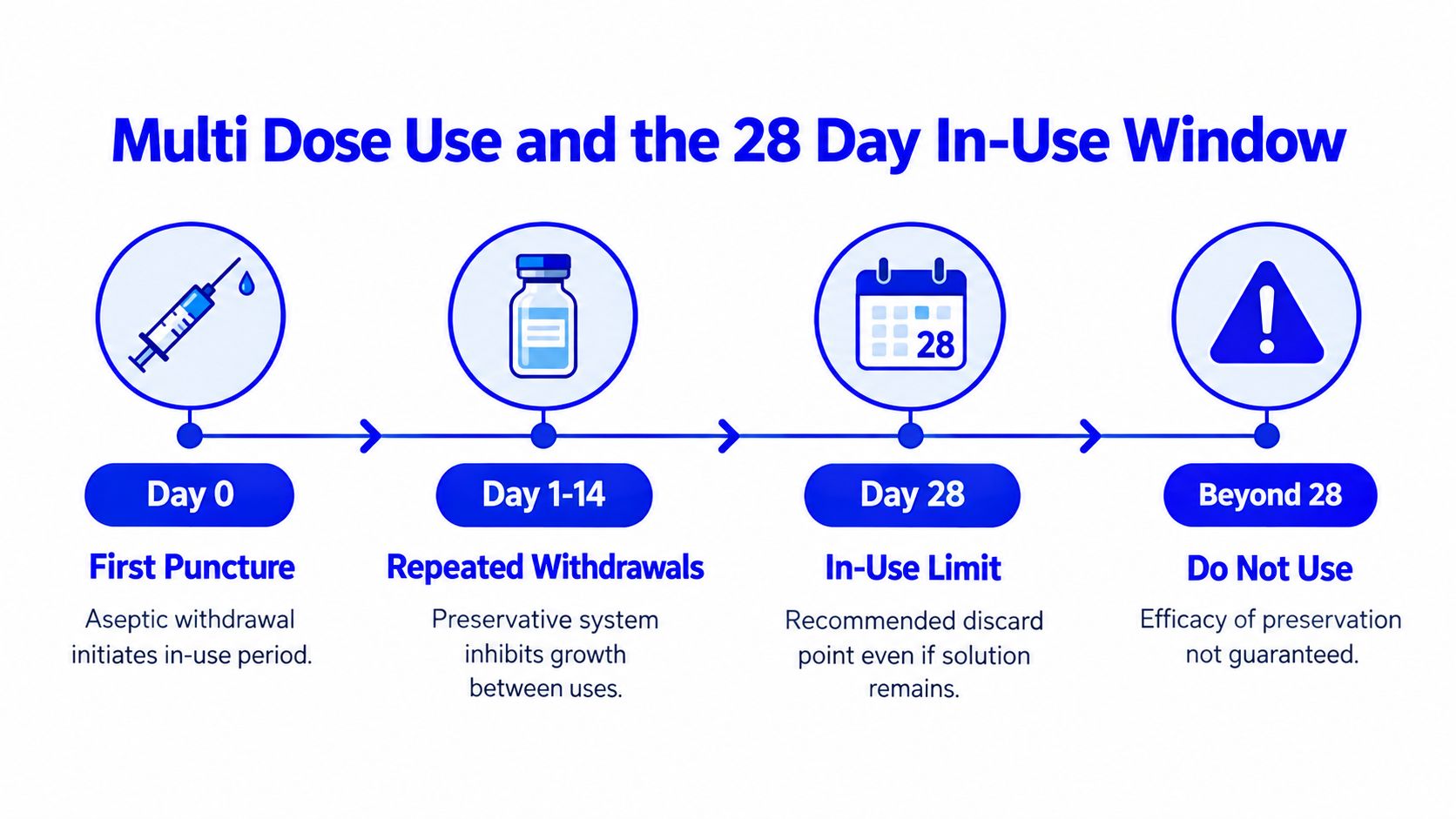
The reason bacteriostatic diluents exist is simple. Labs often need to puncture the same vial more than once. Reconstitution isn't always a one-session event. A peptide stock may support several runs. A small antibody prep may be drawn repeatedly over days. A preservative system makes that workflow practical, but only within a controlled in-use window.
A major operational rule governs that window. CDC and USP-aligned guidance states that a multi-dose vial should be dated and discarded within 28 days after first puncture unless the manufacturer specifies a shorter period, which is why preserved products became standard choices for repeated withdrawals in research and clinical settings (28-day multi-dose vial guidance summary).
What the in-use window really means
The 28-day rule is often repeated as if it were the whole story. It isn't. It only has practical value when the vial is:
- Dated at first puncture
- Stored as labeled
- Accessed with aseptic technique each time
Without those three behaviors, the number on the calendar becomes cosmetic.
For readers comparing saline-based and water-based preserved options, the same logic applies to bacteriostatic water. The preservative supports repeated use. It doesn't excuse repeated mistakes.
What breaks the protection
The preservative is there to reduce risk during normal multi-dose handling. It's not there to rescue a vial from poor practice. Trouble usually comes from ordinary bench shortcuts:
- Touching the stopper after sanitizing it
- Using compromised consumables
- Leaving date tracking to memory
- Keeping a vial in circulation because solution remains
Those habits defeat the reason the product was chosen.
How to plan around actual lab cadence
A disciplined lab treats vial size as a workflow decision. If a team knows a reconstitution project will span only a short series of withdrawals, smaller multi-dose formats may fit better. If a lab runs recurring prep cycles, a larger vial may reduce packaging waste and repeated opening of fresh units. The right choice depends less on product marketing and more on how often the lab accesses the vial.
A practical routine looks like this:
- Date immediately: Mark first puncture on the vial, not in a separate notebook only.
- Match vial size to use rate: Don't choose volume by habit.
- Assign handling ownership: One bench area or one trained user reduces inconsistency.
- Retire on schedule: Remaining liquid isn't a reason to extend use.
A multi-dose vial saves work only when the team treats it like a controlled resource rather than a convenient leftover container.
Compatibility With Peptides Proteins and Antibodies
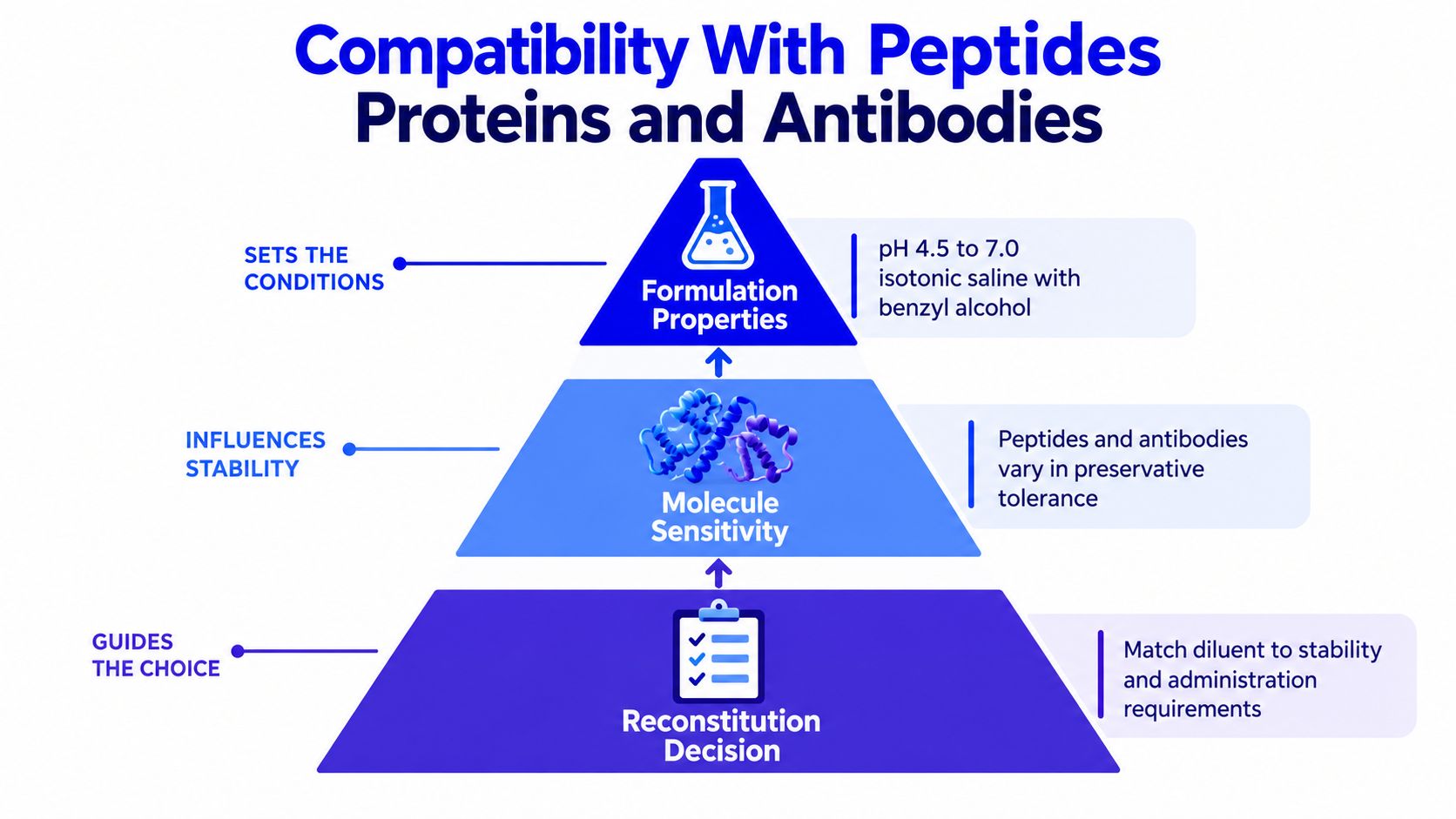
Compatibility decisions get clearer when the diluent is viewed through three interacting variables: base composition, pH range, and preservative presence.
For water-based comparison, the official labeling for Bacteriostatic Water for Injection, USP describes it as a sterile, nonpyrogenic preparation containing 0.9% benzyl alcohol in a multiple-dose container, with reported pH 5.7 inside the broader 4.5 to 7.0 specification range, which matters because pH can affect compatibility, dissolution behavior, and container interactions (DailyMed bacteriostatic water labeling).
What matters for sensitive materials
Peptides, proteins, and antibodies don't all respond the same way to a diluent. Some tolerate a preserved isotonic saline background without issue in RUO workflows. Others may be more sensitive to salt, preservative presence, or the way pH influences dissolution and stability.
That's why a label match isn't enough on its own. A material can be soluble without being optimal. It can dissolve quickly but still be a poor fit for downstream assay conditions.
A practical compatibility framework
When a lab is choosing between preserved saline, preserved water, or preservative-free alternatives, these questions help:
- What does the protocol specify? If the source method names saline or water, start there.
- Is isotonicity useful or unnecessary? Some workflows benefit from a saline environment. Others don't need it.
- Could benzyl alcohol interfere? Sensitive biologics may prefer preservative-free handling, especially when repeated access isn't required.
- Will the final assay tolerate the diluent background? Salt and preservative can matter even if reconstitution itself looks clean.
For teams reviewing bench setup alongside procedure details, this guide on how to reconstitute peptides can help frame the preparation sequence without changing the core rule that the protocol should govern the chemistry.
A simple way to think about it
A peptide often raises questions about dissolution and concentration. A protein often raises questions about structural stability. An antibody often raises questions about functional integrity in downstream use. The same diluent doesn't answer all three concerns equally well.
Selection cue: If the molecule is sensitive, small-scale compatibility checks are usually more useful than assumptions based on naming similarity.
That's especially true when a team is deciding whether the convenience of a preserved multi-dose vial is worth the added formulation variables.
Common Handling Mistakes That Undermine Preservative Protection
The most overlooked point in this topic is also the most practical. Labs often debate which diluent is better while ignoring whether their handling allows any bacteriostatic benefit to survive contact with routine behavior.
Independent survey content reported that 1 in 5 labs do not follow proper aseptic technique when drawing from multi-dose vials, and 30% admit needle reuse between draws, which shifts the risk discussion from product choice to operational discipline (survey summary on multi-dose vial handling behaviors).
Where teams usually slip
Those numbers fit what many trainers already suspect. Problems rarely start with the label. They start at the moment of access.
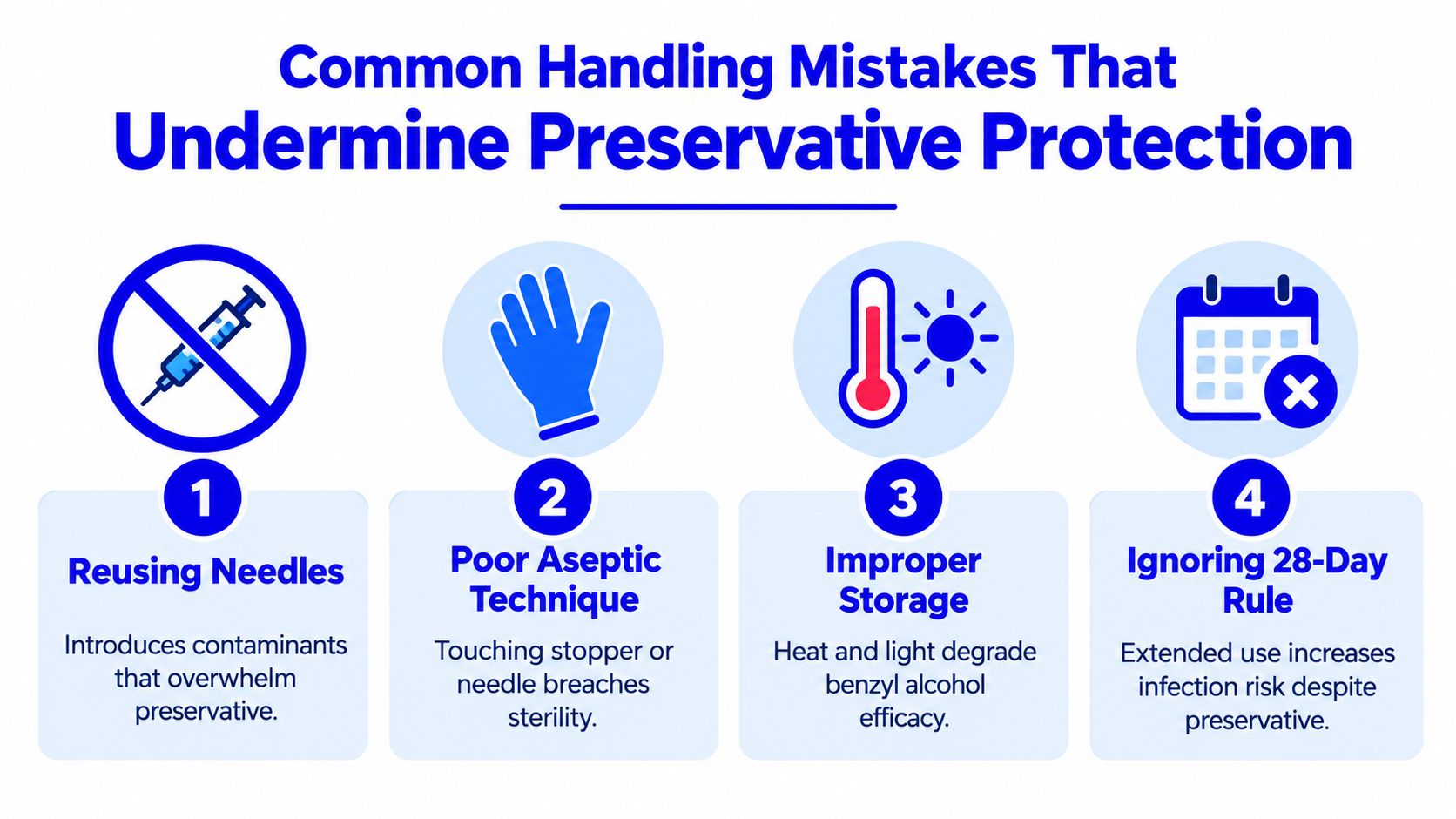
A quick audit list helps:
- Reusing needles: This is the fastest way to defeat the preservative advantage.
- Breaking aseptic flow: Touching the stopper, touching the needle, or rushing the draw turns a controlled access step into a contamination opportunity.
- Poor storage discipline: A vial tossed into whatever drawer or tray is free usually signals weak process control elsewhere too.
- Ignoring dating habits: If the team can't tell when first puncture happened, the in-use system has already broken.
For labs building better bench routines around bac water, the strongest improvements usually come from simpler habits rather than more complicated rules.
The uncomfortable but useful takeaway
A preserved vial doesn't replace clean technique. It only supports it.
That's the contrarian angle worth remembering. Many researchers spend more time choosing between bacteriostatic water and bacteriostatic sodium chloride than they spend checking whether every draw uses fresh consumables, clean access, and consistent dating. In small labs, that imbalance causes more trouble than the saline-versus-water question.
Quality Regulatory and Sourcing Notes for RUO Workflows
Once the chemistry and handling questions are settled, the last layer is documentation. RUO workflows still need traceability. A clean-looking vial with vague paperwork is harder to defend in records, audits, and reproducibility reviews than a properly documented lot from a supplier with controlled production practices.
What to look for before a vial reaches the bench
A useful sourcing review includes more than the front label. Teams should check for:
- Lot-specific documentation: A Certificate of Analysis should match the lot in hand.
- QA release review: Someone should have cleared the batch through a defined quality process.
- Clear RUO labeling: The intended use needs to be explicit.
- Container quality: Multi-dose handling depends on the vial, stopper, and closure system, not just the liquid.
A supplier option in this space is Herbilabs, which states RUO sterile diluent supply in multiple vial formats with lot-specific COAs, QA review, and controlled storage and fulfillment practices for research organizations and related users.
Why quality systems matter in routine research
For many labs, formal credentials matter because they support consistency, not because they look impressive on a vendor page. Documented procedures, batch traceability, employee training, and controlled storage reduce the chance that one lot behaves differently from another without explanation.
This becomes more important when a lab serves multiple internal users or ships material across sites. Reproducibility problems often get blamed on the peptide, protein, or assay kit first. Sometimes the diluent and its handling records deserve that scrutiny instead.
A short supplier checklist
Before approving a RUO diluent source, a team should be able to answer yes to most of these:
- Is the formulation clearly labeled?
- Does the lot have matching documentation?
- Is the product packaged for repeated withdrawal if multi-dose use is intended?
- Are storage and fulfillment practices stated clearly?
- Does the supplier separate RUO communication from clinical implication?
The best sourcing decisions usually look boring on paper. Clear labels, matched records, stable fulfillment, and no ambiguity about intended use. For laboratory work, that kind of boredom is useful.
Researchers who need RUO diluents for repeated reconstitution workflows can use Herbilabs to review bacteriostatic water and related labware options, along with documentation formats relevant to lot tracking and bench compliance. For teams deciding between preserved water and preserved saline workflows, the most useful next step is usually to match the protocol, the access pattern, and the paperwork before opening the vial.