Private Label, White Label, Wholesale partnerships available - EU, USA and UK - Free shipping from €75

Blog
Bacteriostatic Water with Sodium Chloride: A Practical Guide
The most popular advice about peptide reconstitution is also the least precise: “Just use bacteriostatic water.” That shortcut treats plain bacteriostatic water and bacteriostatic water with sodium chloride as interchangeable, even though one is a water-based vehicle and the other…
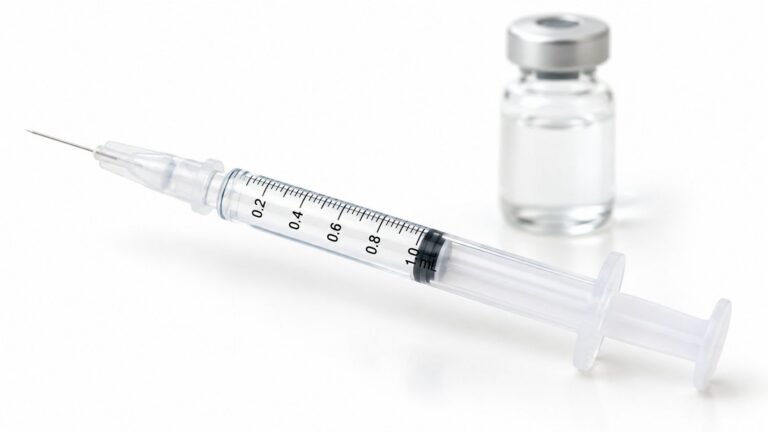
What Does 1cc Look Like on a Syringe: A Visual Guide
A researcher holds a clear syringe over a vial, sees several lines on the barrel, and pauses. The question seems simple: what does 1cc look like on a syringe? On a standard volume syringe, the answer is straightforward, but the…
10 mL Sterile Vial: Lab Specs and Storage
A researcher has just opened a fresh 10 mL sterile vial to reconstitute a valuable peptide or protein. The seal was intact, the glass looked clean, and the first withdrawal went smoothly. The hidden risk begins after that first needle…
Vial of Liquid: A Complete 2026 Lab Safety Guide
A researcher can spend weeks preparing a peptide study, then compromise the entire workflow during a routine withdrawal. The vial looks clear, the stopper appears intact, and the liquid remains within its expected volume. Yet a contaminated needle, an inadequately…
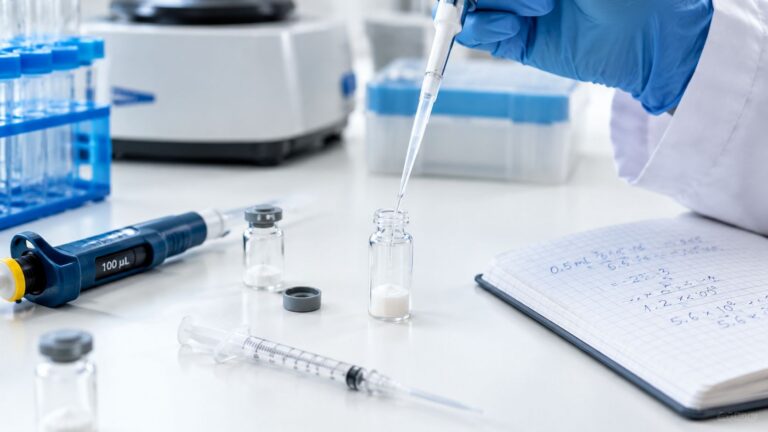
Lyophilized Powder Reconstitution: A Practical Lab Guide
The vial has been on the bench for a few minutes. The seal comes off a 10 mg lyophilized peptide, the cake looks intact, and the calculated diluent volume goes in cleanly. Ten minutes later, the solution is still cloudy.…
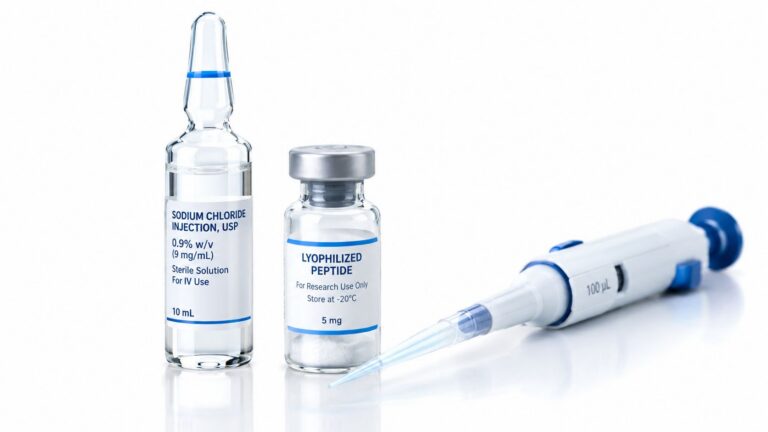
Preservative Free Sterile Saline Solution: A Practical Guide
A researcher reaches into a cold room, takes out a 10 mL ampule of preservative-free saline, and places it beside a lyophilized peptide vial. Then the hesitation starts. The ampule was opened two days ago, the reconstitution is scheduled now,…
Why Aseptic Technique Is Important in Microbiology
A new researcher often notices contamination only at the end of a workflow. The plate that should show one colony type suddenly shows several. The sterile broth control turns cloudy. A reagent that looked fine at setup behaves unpredictably in…
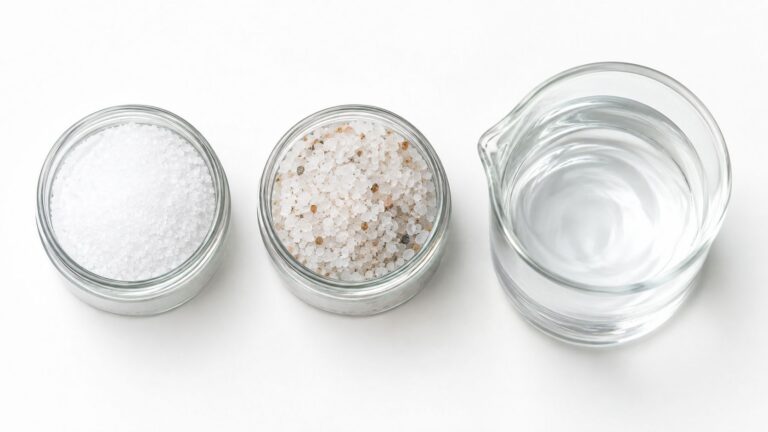
Is Sodium Chloride a Mixture or a Compound Explained
Pure sodium chloride is not a mixture. It is an ionic compound with the fixed formula NaCl, which means sodium and chloride are present in a strict 1:1 ratio, with pure sodium chloride made of 39.34% sodium and 60.66% chlorine…
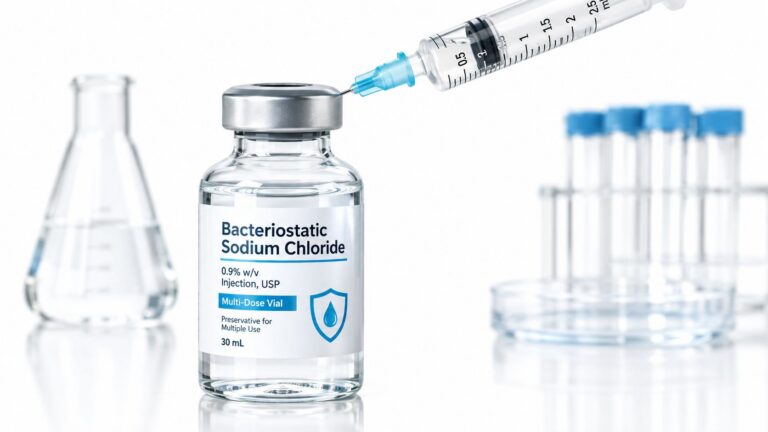
Sodium Chloride Bacteriostatic Water Guide for RUO Use
A common RUO bench moment goes like this. A researcher has a lyophilized vial, a protocol note with only a short diluent label, and two clear multi-dose containers that seem close enough to swap. One says bacteriostatic water. The other…
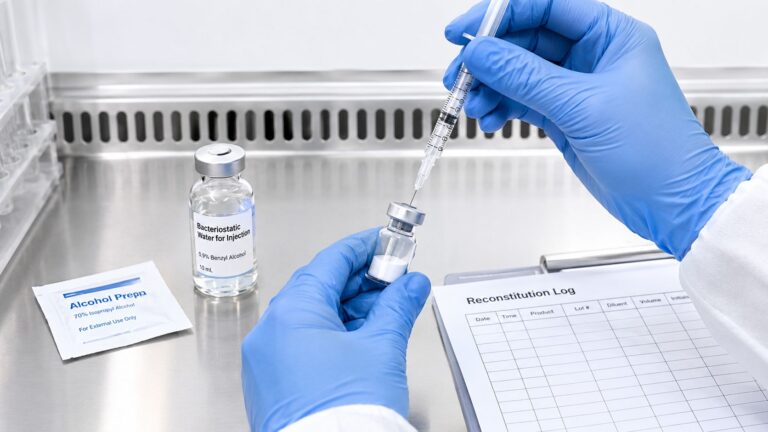
How to Reconstitute Peptides Safely in Research Labs
The vial is on the bench, the lyophilized peptide is still dry, and the syringe is ready. At that moment, the important question isn't which liquid dissolves the powder. The correct choice depends on the target concentration, expected number of…