Private Label, White Label, Wholesale partnerships available - EU, USA and UK - Free shipping from €75
Why reagent grade matters for accuracy in lab research
Discover why reagent grade matters for accuracy in lab research. Learn how to protect your data integrity and improve experimental outcomes.
TL;DR:
- Reagent grade signifies a defined level of chemical purity critical for precise analytical and experimental work, not just a supplier label. Impurities at low levels can subtly bias results, especially in sensitive chromatography and spectrometry methods, leading to inaccurate data interpretation. Regulatory frameworks in the UK and EU mandate strict impurity control, supplier qualification, and thorough documentation to ensure data integrity and safety across research workflows.
Reagent grade is frequently dismissed as a supplier label rather than a scientific specification, yet this misunderstanding carries measurable consequences for research validity. When impurity profiles are left uncontrolled, the effects manifest not as obvious failures but as subtle data drift, spurious peaks, and calibration offsets that are difficult to trace back to their source. This article examines what reagent grade actually means in technical terms, how trace contaminants compromise experimental outcomes across sensitive analytical methods, what UK and EU regulatory frameworks require, and how laboratory professionals can implement practical quality controls to protect data integrity at every stage of their workflow.
Table of Contents
- What does reagent grade mean in laboratory research?
- How impurities compromise research outcomes
- Regulatory demands for reagent grade in the UK and EU
- When reagent grade is essential—and when it’s not
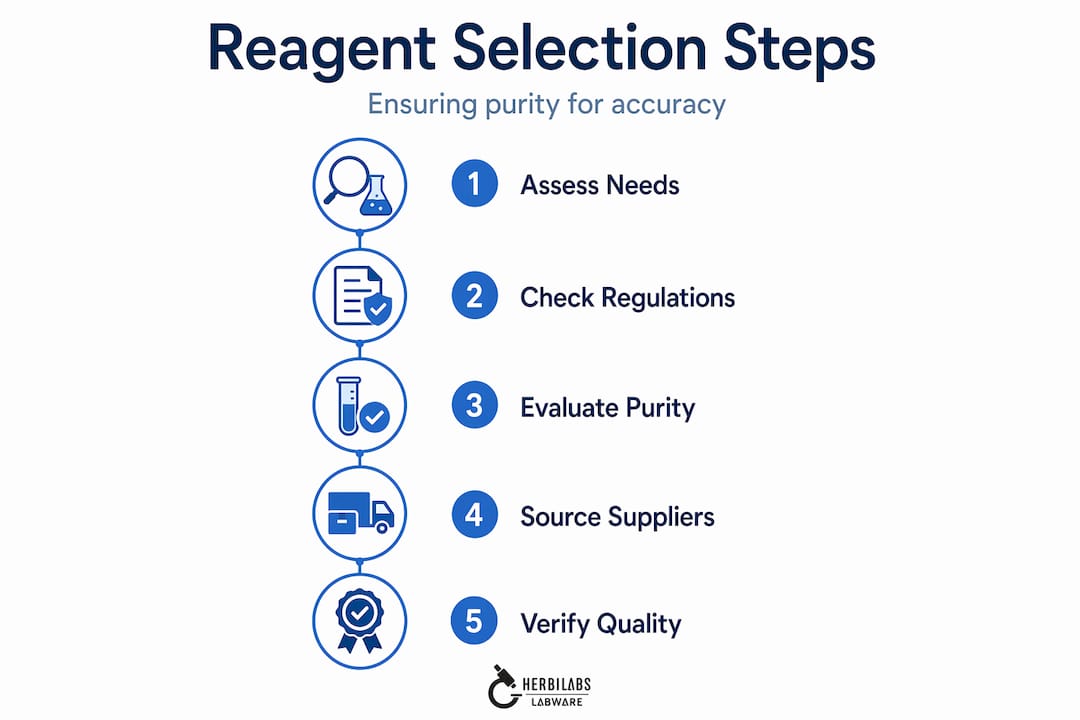
- Practical steps to ensure reagent quality in your lab
- Our take: Reagent grade purity is essential—but context matters
- Reliable reagent grade products and labware for your research
- Frequently asked questions
Key Takeaways
| Point | Details |
|---|---|
| Impurities distort results | Even minuscule reagent impurities can cause false positives, calibration errors, and unreliable scientific data. |
| Regulations demand purity | UK and EU regulatory bodies require laboratories to meet and justify impurity thresholds for quality assurance. |
| Grade selection is context-driven | Choosing reagent grade depends on your workflow’s sensitivity, costs, and regulatory needs—not every task needs maximum purity. |
| Best practices prevent contamination | Source from trusted suppliers, verify certificates of analysis, and use consistent lab protocols to safeguard reagent quality. |
What does reagent grade mean in laboratory research?
Having established the stakes, the next step is clarifying what reagent grade actually means in practice. The term “reagent grade” refers to a defined level of chemical purity that is sufficient for use in precise analytical and experimental procedures, where trace impurities could influence the outcome of a measurement or reaction. It is not a marketing category. It is a technical specification with quantified purity thresholds, typically expressed as a minimum assay value alongside maximum allowable limits for specific impurities such as heavy metals, chlorides, sulfates, and water content.
In the context of grades and compliance recognized across UK and EU laboratories, chemical grades can be broadly mapped along a purity continuum:
| Grade | Typical purity | Typical applications |
|---|---|---|
| Technical/industrial | Variable, often 90-95% | Large-scale synthesis, non-analytical use |
| Laboratory/purified | 95-99% | General lab use, low-sensitivity tasks |
| Reagent grade | 99%+ with controlled impurity limits | Quantitative analysis, instrumentation |
| Analytical grade (ACS/AR) | 99%+ with verified lot-specific certificates | High-precision quantitative methods |
| Primary standard | 99.95%+ | Reference calibration and standardization |
Reagent grade occupies a critical middle tier, offering purity levels that are sufficient for the vast majority of quantitative analytical work without the premium cost associated with primary standards. In the UK and EU, relevant compendial bodies such as the British Pharmacopoeia (BP) and European Pharmacopoeia (Ph. Eur.) provide grade-specific monographs that set the legal and technical basis for impurity control.
Key characteristics that define reagent grade chemicals include:
- Minimum assay value typically at or above 99% for inorganic reagents and many organic solvents
- Heavy metal limits expressed in parts per million (ppm), often below 5 ppm for research-grade applications
- Residual solvent specifications for reagents used in chromatographic or spectroscopic work
- Moisture content limits critical for hygroscopic substances and lyophilized substrates
- Lot-specific certificates of analysis (CoA) documenting actual measured values rather than category averages
As a high-purity reagent guide makes clear, the distinction between a “reagent grade” label and a verified lot-specific CoA is itself significant. Impurities at very low levels in reagents can bias measurements and create analytical artifacts, making reagent grade selection a data-quality decision rather than a purchasing formality.
How impurities compromise research outcomes
With definitions clear, we turn to the practical consequences of impurity and how they undermine even well-designed experiments. Trace contaminants operate below the threshold of casual observation. They do not necessarily turn a solution cloudy or produce an obvious precipitate. Instead, they interact with analytes, matrices, and instrument components in ways that distort the signal being measured.
Consider liquid chromatography, where reagent purity and results are closely coupled. Organic impurities in mobile phase solvents introduce baseline noise and ghost peaks that can be misidentified as analyte signals, particularly when working at low concentrations near the limit of quantification. In inductively coupled plasma mass spectrometry (ICP-MS), dissolved metal contaminants in reagent-grade water that falls short of specification can elevate background counts for target elements, producing false-positive detections or raising the effective detection limit of the method.
“Trace contaminants can suppress signals or trigger false-positive detections in HPLC and elemental analysis—the effects propagate throughout the workflow.”
Analytical methods most vulnerable to reagent-grade impurities include:
- High-performance liquid chromatography (HPLC) and UHPLC where solvent impurities introduce baseline drift and false peaks
- Gas chromatography (GC) where carrier gas or solvent impurities alter retention times and peak areas
- ICP-MS and ICP-OES where trace metal contamination directly inflates elemental signals
- Enzyme-linked immunosorbent assay (ELISA) where surfactant or metal impurities alter antibody binding kinetics
- Peptide reconstitution and bioassay where endotoxin or ionic contamination interferes with receptor interactions and cell viability
Understanding reagent standards and their relationship to method performance is therefore not optional for researchers working near detection limits or within validated analytical frameworks. Contamination effects are cumulative across a workflow. A solvent with substandard purity used in sample preparation compounds with a reagent of borderline specification used in the mobile phase, and the combined effect on a calibration curve can shift reported concentrations by a margin that exceeds the acceptable uncertainty of the method.
Pro Tip: When troubleshooting unexpected baseline noise or anomalous results in chromatographic runs, systematically replace each reagent with a fresh, verified-grade alternative before modifying instrument parameters. Reagent contamination is more frequently the root cause than instrument malfunction.

Regulatory demands for reagent grade in the UK and EU
Understanding the magnitude of impurity risks leads directly to why regulatory frameworks demand high reagent grade. In the UK and EU, the regulatory environment for chemical and pharmaceutical quality is among the most precisely articulated in the world. The European Medicines Agency (EMA) and the Medicines and Healthcare products Regulatory Agency (MHRA) both operate within frameworks where impurity thresholds in UK/EU research must be justified and controlled by applicants, not simply assumed to be acceptable.
The following comparison illustrates the distinction between regulated and non-regulated impurity control requirements:
| Context | Impurity control requirement | Documentation burden |
|---|---|---|
| Regulated pharmaceutical research | Thresholds defined, qualified, and justified per ICH Q3A/Q3B | Full specification with toxicological justification |
| Compendial testing (Ph. Eur./BP) | Limits specified in individual monographs | CoA cross-referenced to pharmacopeial specifications |
| Academic/industrial research | Risk-based, defined by method sensitivity | CoA and supplier qualification records |
| Routine teaching/screening | Minimal formal requirement | Basic grade documentation |
For researchers operating within the scope of labware regulatory standards, compliance involves several structured steps:
- Identify applicable compendial standards: Determine whether the Ph. Eur., BP, or ISO standards govern the reagents being used in the specific workflow.
- Specify impurity limits per method: Review the analytical method’s sensitivity and set maximum allowable impurity concentrations that will not affect the decision limit or calibration.
- Qualify suppliers against documented specifications: Obtain and review lot-specific CoAs, verifying actual measured values against required thresholds.
- Implement change control procedures: Any change in reagent supplier or lot must be evaluated against the validated method performance to ensure comparability.
- Maintain traceability records: Archive all documentation linking specific reagent lots to specific experimental runs, supporting audit trail requirements.
These requirements are not administrative burdens. They exist because uncontrolled compendial standards deviations in reagent quality have historically produced safety-critical analytical errors in pharmaceutical and clinical contexts.
When reagent grade is essential—and when it’s not
Armed with regulatory insight, it’s important to recognize when reagent grade is indispensable and when a pragmatic approach is reasonable. Not every laboratory procedure demands the highest achievable purity. The resource allocation involved in sourcing, documenting, and verifying reagent grade chemicals is significant, and applying that standard uniformly to every task in a laboratory is neither cost-effective nor scientifically necessary.
The decisive variable is method sensitivity relative to the impurity profile of available grades. As noted by industry chemical procurement guidance, for low-sensitivity workflows, reagent grade may be cost-inefficient; what matters is whether impurities would influence your decision limits, calibration, or instrument baseline.
Scenarios where reagent grade is non-negotiable:
- Quantitative trace elemental analysis by ICP-MS or atomic absorption spectroscopy (AAS), where analyte concentrations may be measured at sub-ppb levels
- Validated pharmaceutical or clinical assays where method performance parameters must be maintained within specified tolerances
- Peptide reconstitution for bioassay or in vitro pharmacology, where ionic strength, pH, and endotoxin levels directly influence receptor binding or cellular response
- Reference standard preparation and calibration, where reagent impurities propagate into all downstream measurements using that calibrant
Scenarios where lower grades may be appropriate:
- Qualitative screening where the goal is presence/absence detection at concentrations far above the contamination threshold
- Non-sensitive synthetic chemistry where reagent impurities will not carry through to the final purified product
- Equipment cleaning and rinse steps that precede a separate, high-grade preparation stage
Refer to reagent quality control protocols for structured decision frameworks. When selecting reagents for peptide research specifically, peptide reagent selection guidance addresses the interaction between reconstitution solvent purity, buffer composition, and peptide stability in detail.
Pro Tip: Before defaulting to laboratory-grade reagents on the basis of cost, run a brief sensitivity assessment. Calculate whether the maximum impurity level permitted at the lower grade would, if present at its specified maximum, shift your key analyte signal by more than your method’s acceptable uncertainty. If it would, upgrade the grade.
For water-dependent workflows, lab water purification systems that achieve Type 1 ultrapure water specifications are an effective complement to reagent-grade chemicals, particularly in ICP-MS and HPLC mobile phase preparation.
Practical steps to ensure reagent quality in your lab
Having explored the importance and selection process, we finish by focusing on proactive lab strategies for reagent quality. The best specification on paper means nothing if storage, handling, and documentation practices allow contamination to occur after the reagent leaves the supplier.
Contaminated process water and unsuitable reagents can impact laboratory data quality and instrument calibration, and this risk applies equally to reagents that were correctly specified at the point of purchase but were subsequently compromised in storage or use.
A structured reagent quality management protocol should include:
- Supplier qualification and audit: Establish a preferred supplier list based on documented manufacturing standards, ISO 9001 certification, and consistent lot-to-lot reproducibility. Request and retain CoAs for every received batch.
- Incoming inspection: On receipt, verify the CoA against the purchase specification. For critical reagents, conduct independent verification testing using in-house instrumentation or a third-party laboratory.
- Appropriate storage conditions: Reagents must be stored at manufacturer-specified temperature, humidity, and light conditions. Deviations accelerate degradation and can alter impurity profiles through oxidation, hydrolysis, or adsorption from the environment.
- Dedicated labware for high-purity reagents: Use contaminant-free labware that has been pre-cleaned and certified for trace analysis. Shared labware is a primary source of cross-contamination.
- Expiry and retest date management: Implement a first-in, first-out (FIFO) inventory system. Reagents beyond their retest date should be re-verified before use in critical work, not assumed to remain compliant.
- Documented dispensing protocols: Define and enforce procedures for dispensing that prevent backflow contamination, minimize atmospheric exposure, and record the operator, date, and lot number for traceability.
Refer to safe reagent handling protocols for technique-specific guidance on minimizing contamination risk during routine dispensing and preparation.
Pro Tip: Assign a specific, labeled set of volumetric glassware and pipettes exclusively to high-purity reagent work. Color-coding or dedicated storage locations for these items substantially reduces the risk of inadvertent contamination from shared labware.
Our take: Reagent grade purity is essential—but context matters
After detailing the practical steps, it’s essential to consider the broader perspective on purity requirements. The scientific community has at times overcorrected from a period of casual reagent sourcing toward an almost reflexive demand for the highest available grade across all applications. This overcorrection creates its own problems, including inflated procurement budgets, supply constraints for genuinely critical applications, and a compliance culture where grade selection becomes performative rather than scientifically reasoned.
Our position is that reagent grade purity is genuinely essential for the workflows where it was designed to be used, but that rigorous purity selection requires analytical reasoning, not grade-maximizing instinct. A researcher who specifies reagent grade sodium chloride for a high-throughput peptide solubility screen is making a defensible choice. One who specifies primary standard-grade sodium chloride for the same application is not demonstrating scientific rigor—they are allocating cost without benefit.
The practical tension arises most acutely in budget-constrained environments, particularly independent research groups and smaller contract organizations. Here, the temptation to substitute lower grades for borderline applications is understandable but must be managed with documented risk assessment rather than assumed acceptability. When in doubt, a brief pilot experiment using the proposed grade alongside a reagent-grade reference in the same run will provide empirical data on the impact of the substitution, which is far more defensible than assumption.
Quality in research ultimately traces back to reliable lab consumables at every point in the workflow. The reagent grade decision is one node in that quality network, and like every other node, it should be justified by the specific demands of the experiment rather than by convention or convenience.
Reliable reagent grade products and labware for your research
Choosing the right reagent grade is only part of the solution. The next step is sourcing those reagents from a supplier whose quality documentation, manufacturing standards, and consistency you can rely on across every batch.
At Herbilabs, we supply research-grade reagent products including bacteriostatic water, sterile diluents, and reconstitution solutions manufactured to strict purity standards in a dedicated facility. Every batch is supported by documentation that researchers and institutions can use to satisfy trusted reagent results and audit trail requirements. Whether you are reconstituting lyophilized peptides for bioassay or preparing diluents for quantitative analytical work, our product range is designed to meet the purity expectations of laboratory professionals across the UK and Europe. Visit our product pages to select reliable reagents suited to your specific research application and workflow requirements.
Frequently asked questions
What is the difference between reagent grade and analytical grade?
Reagent grade chemicals are highly purified for precise laboratory work with controlled impurity limits, while analytical grade may carry even more rigorous lot-specific verification and is typically targeted at quantitative analytical methods requiring traceable reference standards.
Why do UK/EU regulations require strict impurity control?
Regulatory bodies including the EMA require that impurity thresholds be justified and controlled by applicants, because uncontrolled impurity profiles directly compromise the safety and accuracy of analytical results in medicines research and clinical testing.
Can I use lower-grade chemicals for routine lab tasks?
Lower-grade chemicals are acceptable for routine, low-sensitivity tasks where impurities will not affect experimental outcomes, but as noted in industry sourcing guidance, they should always be avoided in any workflow where results inform regulatory submissions or clinical decisions.
How do trace impurities impact chromatography or spectroscopy?
Even sub-ppm contaminants can suppress signals and cause false-positive detections in HPLC and ICP-MS, affecting baseline stability, calibration accuracy, and the reliable identification of analytes at low concentrations.
How can I verify reagent grade quality for my lab?
Request lot-specific certificates of analysis from your supplier, cross-reference measured impurity values against the compendial or method-specific specification, and implement incoming inspection protocols to independently verify critical batches before they are committed to validated workflows.