Private Label, White Label, Wholesale partnerships available - EU, USA and UK - Free shipping from €75
Labware Purity Explained: Standards, Risks, and Best Practices
Discover what is labware purity, why it matters, and best practices to ensure reliable results in sensitive research. Ensure your lab's accuracy today!
TL;DR:
- Labware contamination can cause significant errors in trace-level and sensitive research applications.
- Selecting appropriate materials and validating cleaning protocols are crucial for maintaining high purity.
- Ongoing validation through blanks and tests ensures data reliability and reduces contamination risks.
Most laboratory professionals assume their labware is pure enough for the job. That assumption, however, is quietly responsible for a significant portion of analytical errors in trace-level and sensitive research applications. Contaminants such as trace metals, nanoplastics, leachable ions, and PFAS compounds are frequently invisible under standard inspection, yet they interfere with results at concentrations measured in parts per trillion. Understanding labware purity importance — what it means precisely, how it is measured, and how it is actively maintained — is not optional for researchers and laboratory managers who require defensible, reproducible data.
Table of Contents
- What is labware purity and why does it matter?
- Key contaminants: What to watch for in labware
- Labware materials and purity standards: What sets the bar?
- Best practices for validating and maintaining labware purity
- Labware purity: What most experts get wrong (and what actually works)
- Find reliable, high-purity labware for your research
- Frequently asked questions
Key Takeaways
| Point | Details |
|---|---|
| Labware purity definition | Labware purity means freedom from contaminants that may affect sensitive lab results. |
| Common contaminants | Trace metals, nanoplastics, and leaching ions are top risks for laboratory glass and plasticware. |
| Material and standards | Choosing Type I borosilicate glass or certified plastics and understanding ISO/USP standards are vital for risk control. |
| Testing and validation | Ongoing validation with blanks and proper cleaning protocols is essential for reliable research. |
| No universal purity grade | Labware purity depends on application, with no one-size-fits-all standard—continuous verification is necessary. |
What is labware purity and why does it matter?
Labware purity is a more nuanced concept than most routine quality control checklists acknowledge. At its core, it refers to the degree to which laboratory containers, glassware, and plasticware are free from contaminants that interfere with samples. For general chemistry, minor contamination may be inconsequential. For trace analysis, proteomics, peptide reconstitution, or environmental monitoring at sub-part-per-billion levels, even the container itself becomes a variable.
Consider a straightforward example. A researcher running an ICP-MS (inductively coupled plasma mass spectrometry) method to detect iron at the 0.1 ppb level is using a borosilicate glass volumetric flask that has not been acid-leached. The glass itself can leach boron, sodium, and silicon ions, particularly under acidic conditions or elevated temperatures, and those leachates can shift baseline readings, compromise instrument calibration, and ultimately skew quantitative results by orders of magnitude relative to the analyte of interest.
The problem extends well beyond metals. Contaminants encountered in modern laboratory workflows include:
- Trace metals such as iron, lead, zinc, and copper, present at parts-per-trillion levels sufficient to interfere with EPA Method 200-series requirements
- Nanoplastics, shed from polypropylene, polyethylene, and other plastic labware, detectable by dynamic light scattering (DLS) and capable of binding proteins or nucleic acids
- Fluoride ions, leached from glass NMR tubes at micromolar concentrations sufficient to disrupt biomolecular NMR experiments
- Leachable ions including boron, sodium, and silicon from borosilicate glass under acidic or thermal stress
- PFAS compounds from PTFE-lined caps or septa, which accumulate in biological assays
“Contamination from labware itself is one of the most systematically underestimated sources of analytical error in trace chemistry. Sub-ppb metal contributions from unvalidated vessels can render ICP-MS results meaningless without any visible sign of failure.”
The practical consequence is direct: data reliability is inseparable from labware purity. When contamination is present but undetected, false positives, inflated baselines, and inconsistent replicate measurements follow. For regulated industries or publication-quality research, such errors are not recoverable post hoc. Labware purity must therefore be treated as a primary experimental parameter, not an afterthought reserved for instrument validation.
Key contaminants: What to watch for in labware
Now that the importance of purity is clear, it is critical to know exactly what kinds of contaminants can undermine your work. Contaminants originate from three main mechanisms: manufacturing residues, active leaching during use, and inadequate cleaning protocols. Each pathway introduces distinct chemical species with distinct analytical consequences.
The following table summarizes the most consequential labware contaminants encountered in research settings, their origins, and their primary impact on experimental outcomes:
| Contaminant | Source | Detection Method | Primary Impact |
|---|---|---|---|
| Trace metals (Fe, Pb, Cu, Zn) | Manufacturing, cleaning agents, corrosion | ICP-MS, ICP-OES | False positives in elemental analysis |
| Nanoplastics | Polypropylene/polyethylene labware | DLS (up to 100 μg/mL detectable) | Protein/nucleic acid binding, A260/A280 ratio distortion |
| Fluoride ions | Borosilicate and soda-lime glass NMR tubes | 19F NMR, ion chromatography | Biomolecular NMR spectral interference |
| Boron, sodium, silicon | Borosilicate glass under acid/heat | ICP-OES | Baseline elevation, ionic strength shifts |
| PFAS compounds | PTFE-lined caps, septa, tubing | LC-MS/MS | Chromatographic peak interference, bioassay artifacts |
| Surfactant residues | Inadequate rinsing after cleaning | TOC analysis | Enzyme inhibition, membrane disruption |
The risks from nanoplastics and PFAS deserve particular attention because they represent emerging, less-regulated categories of contamination. Plastic labware releases nanoplastics through mechanical handling, UV exposure, and chemical stress, and these particles are sufficiently small to pass through standard filtration steps. In molecular biology workflows, nanoplastic contamination has been shown to distort spectrophotometric purity ratios, interfering with DNA or RNA quantification at concentrations that seem negligible by mass.
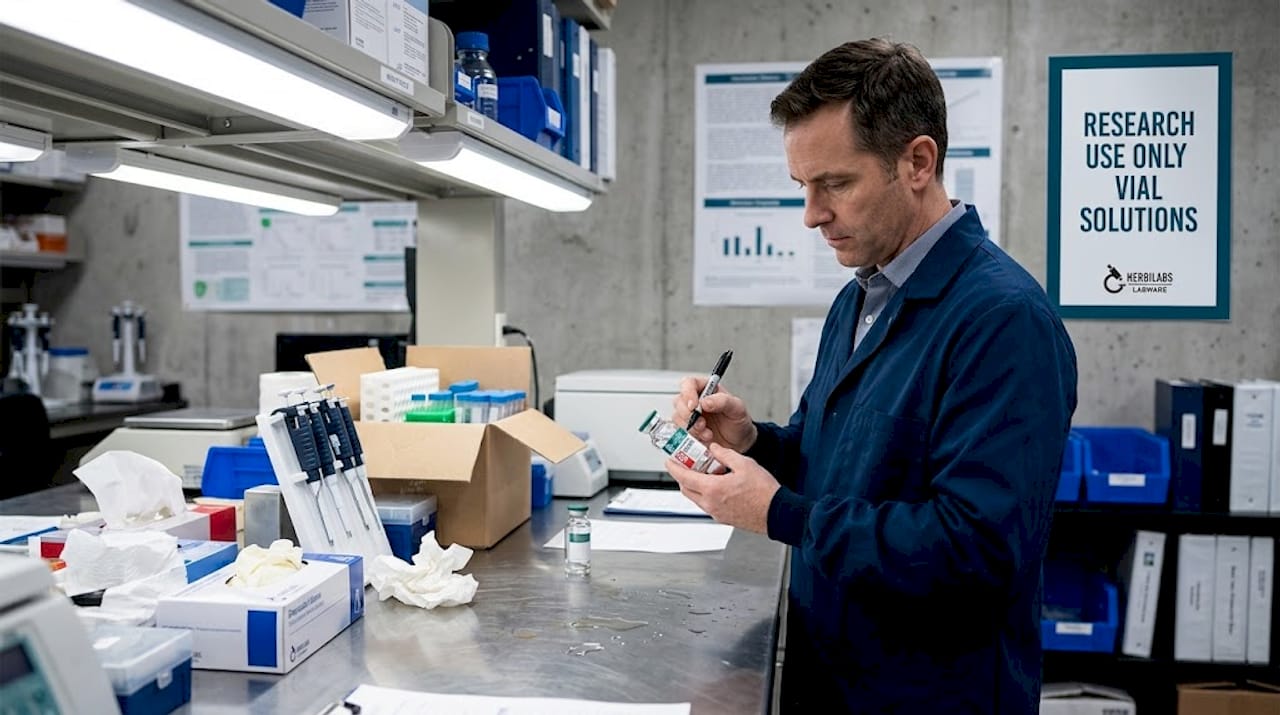
Manual cleaning is a recurring weak point. Inconsistent rinsing cycles, tap water instead of Type I water, and variable detergent concentrations create batch-to-batch variability that automated washers largely eliminate. The choice of cleaning agent also matters: phosphate-based detergents leave residues that interfere with phosphate-sensitive assays, and chlorinated cleaners can introduce halide contamination.
Pro Tip: When working with glass NMR tubes or any glass vessels exposed to fluoride-containing buffers, test for fluoride leaching using a dedicated fluoride ion-selective electrode before introducing your sample. This single precaution can prevent hours of spectral reanalysis.
Understanding labware integrity steps before choosing and cleaning your vessels significantly reduces the probability of contamination events that are only discovered during data review.
Labware materials and purity standards: What sets the bar?
Understanding contaminants makes it essential to know which materials and standards minimize those risks. Material selection is the first and most durable defense against labware contamination, and the differences between material classes are substantial in practice.
The table below compares the principal labware material types relevant to high-purity research applications:
| Material | Purity Rating | Key Strength | Main Risk | Regulatory Standard |
|---|---|---|---|---|
| Borosilicate glass (Type I) | High | Low metal leaching, autoclavable | Leaches B, Na, Si under acid/heat | ASTM E438, ISO 4796-1 |
| Quartz (fused silica) | Very high | Minimal metal contribution, UV-transparent | Expensive, fragile | USP Type I glass equivalent |
| PTFE (polytetrafluoroethylene) | Very high | Chemically inert, broad solvent resistance | PFAS leaching from inferior grades | USP <661>, ASTM |
| PFA (perfluoroalkoxy alkane) | Highest for plastics | Ultra-low extractables, transparent | High cost, limited availability | ISO 15223 |
| Polypropylene (PP) | Moderate | Low cost, broad chemical compatibility | Nanoplastic shedding, limited thermal range | ISO 6706 |
| Polyethylene (PE) | Moderate | Flexible, low cost | Nanoplastics, plasticizer leaching | ISO 6706 |
Borosilicate glass, specifically Type I, Class A per ASTM E438 and ISO 4796-1, remains the standard for most high-purity laboratory applications due to its combination of hydrolytic resistance (Class HGB 1), acid resistance (Class S1), and controlled trace impurity profiles for elements like iron and titanium. However, for sub-ppt metal work or applications involving aggressive acid digestion, quartz and PFA are the appropriate upgrades.
Selecting the right material for your specific application follows a logical hierarchy:
- Identify your analyte class and detection sensitivity. Trace metal work at ppt levels demands quartz or PFA. Routine pH and titrimetric work tolerates borosilicate glass without acid leaching protocols.
- Assess your chemical matrix. Acidic or oxidizing samples accelerate glass leaching. Organic solvents may be incompatible with certain plastics or PTFE grades.
- Review the applicable regulatory standard. Environmental laboratories following EPA methods must comply with USP <233> for elemental impurities; pharmaceutical applications reference USP <661> for container-closure interactions.
- Factor in cleaning and reuse cycles. Quartz and PFA tolerate aggressive acid cleaning; polypropylene degrades with repeated acid exposure, increasing nanoplastic release over time.
- Verify manufacturer documentation. Request trace impurity data or batch-specific leach test results, particularly for pharmaceutical-grade glass and PFA vessels.
Review the labware checklist as a structured starting point when auditing your current material choices against these criteria.
Pro Tip: If your application involves ICP-MS at sub-ppb sensitivity, consider upgrading sample preparation vessels to PFA or quartz even if the rest of your workflow uses borosilicate glass. The incremental cost of material upgrade is far lower than the cost of repeated failed analyses or invalid data sets.
Best practices for validating and maintaining labware purity
Once the best materials and standards are in place, ongoing maintenance guarantees that purity levels are preserved across every use cycle. Material selection is the foundation, but process discipline is what actually delivers consistent, validated results.
The following protocol represents current best practice for maintaining and confirming labware purity in high-sensitivity research environments:
- Acid-leach all new glass and quartz vessels. Soak in 10 to 20% HNO3 (nitric acid) for a minimum of 48 hours, followed by thorough rinsing with Type I water at 18.2 MΩ·cm resistivity and TOC below 5 ppb. This removes surface-adsorbed metals and pre-conditions the glass to minimize subsequent leaching.
- Use automated glassware washers with acid rinse cycles. Automated systems provide reproducible washing conditions and eliminate the operator-to-operator variability inherent in manual cleaning. Ensure rinse water meets Type I specifications.
- Pre-rinse all labware with the intended sample matrix before use. For trace metal analysis, this means a dilute acid rinse; for biological applications, a Type I water or buffer rinse appropriate to the assay matrix.
- Run application blanks for every analytical batch. Process a blank sample through the same vessel, cleaning cycle, and analytical workflow as real samples. Blank contamination above the method detection limit signals a labware purity failure before it can affect reported results.
- Perform wipe tests on high-use surfaces. Wipe test strips calibrated for metals or surfactants provide a rapid screen for contamination buildup on frequently used vessel interiors.
- Apply DLS (dynamic light scattering) when nanoplastic contamination is suspected. DLS can detect nanoplastic particles in rinse solutions collected from plastic vessels, confirming whether shedding is occurring at levels that could compromise your assay.
- Validate each new lot of labware. Batch variation in manufacturing affects leaching behavior. A new batch of volumetric flasks or microcentrifuge tubes should be qualified with blank tests before being placed into production use.
Warning signs that purity controls are failing include:
- Elevated baseline signals in ICP-MS or ICP-OES that cannot be attributed to the sample matrix
- Inconsistent replicate measurements across nominally identical samples
- Distorted nucleic acid purity ratios, specifically A260/A280 deviating from the accepted 1.8 benchmark or A260/A230 below 2.0
- Enzyme inhibition or loss of biological activity in assays using freshly reconstituted reagents
- Failed method blanks in regulated analytical batches
Practical purity targets include sub-ppb metal levels for ICP-MS workflows, surface particle densities below 1,000 particles per cm² for particles greater than 5 μm in clean-zone environments, and rinse water meeting USP purified water or Type I specifications throughout. Use the lab QC checklist and quality control tips to structure your internal validation program around these benchmarks.
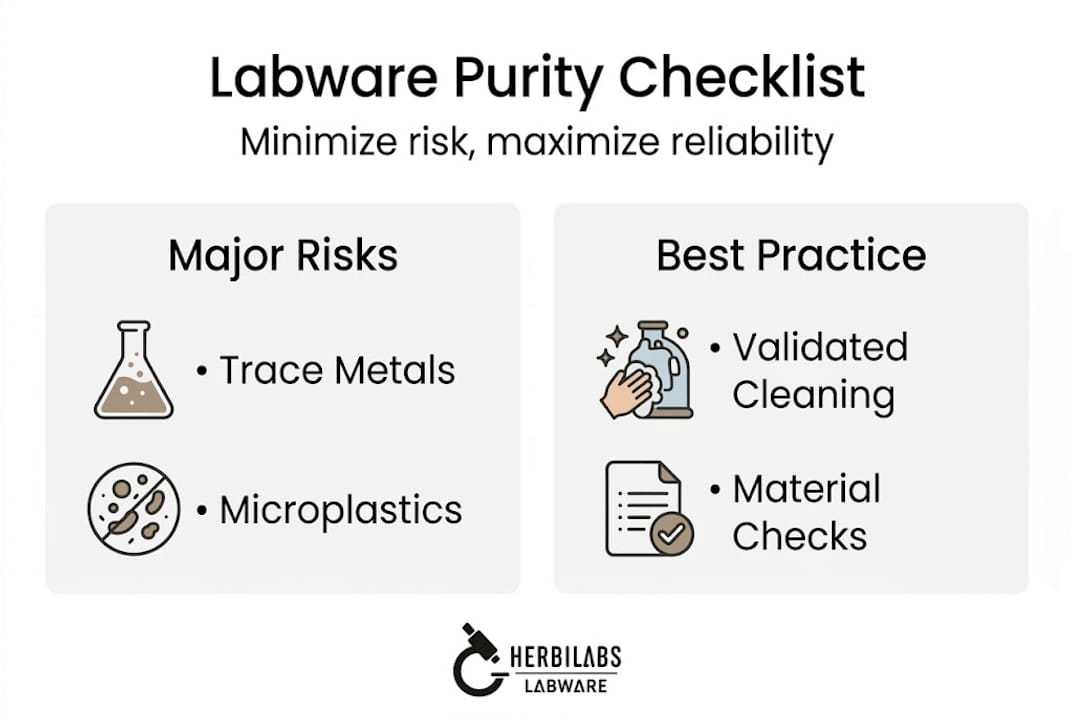
Pro Tip: Use application blanks and complete validation protocols for every new lot of labware, not just new material types. Lot-to-lot manufacturing variability means that a previously validated product cannot be assumed to perform identically from a new production batch.
Labware purity: What most experts get wrong (and what actually works)
There is an uncomfortable reality that most published best-practice summaries avoid: there is no universal purity grade for labware the way there is for analytical-grade reagents. Unlike chemicals with defined purity percentages and COA specifications, labware purity is assessed through application-specific blanks, leach tests per ASTM, and compliance with ISO 4796 or USP <233>. COAs are rare for labware and, when available, are typically limited to pharmaceutical-grade products from premium suppliers.
This matters because researchers frequently over-rely on supplier designation, assuming a label reading “analytical-grade” or “trace metal-free” eliminates the need for in-house validation. It does not. Supplier claims are starting points, not substitutes for application-specific qualification.
The glass-versus-plastic debate is also more nuanced than a simple binary. Glass offers consistency and low carryover in most applications but leaches specific ions under conditions that many researchers create routinely without realizing it. Plastics are cheaper and resist HF, but their nanoplastic and PFAS risks are poorly characterized across product grades and increasing use cycles. Neither material is universally superior, and the correct answer is always context-dependent.
The key lesson from sustained laboratory practice is that real quality control is a multi-layered, ongoing process. Certification and material specification are entry requirements. Validation and monitoring are what actually protect your data. Researchers who rely only on high-purity reagents insights and manufacturer specs without coupling them to in-house blank testing are operating with unquantified risk in their results.
Find reliable, high-purity labware for your research
Choosing the correct labware and maintaining its purity requires more than good intentions. It demands a structured approach grounded in material knowledge, validated cleaning protocols, and a clear understanding of application-specific contamination thresholds.
Herbilabs supports independent researchers and laboratory managers across the UK and Europe with research-grade products manufactured to strict purity standards, including reconstitution solutions and sterile diluents validated for demanding scientific environments. Whether you are auditing your current labware selection or sourcing compliant products for a new protocol, our resources are designed to simplify that process. Start with the curated labware selection checklist to confirm your materials, cleaning protocols, and purity validation steps are aligned with current best practices.
Frequently asked questions
What makes labware “high-purity”?
Labware is considered high-purity when it meets strict standards for minimal contaminant leaching, validated by blank tests and compliance with ISO or USP guidelines. Type I, Class A borosilicate glass per ASTM E438 and ISO 4796-1 represents the standard benchmark for most high-purity applications.
How can I test if my labware is contaminating samples?
Run application blanks, perform leach tests under your actual use conditions, and apply validation via blanks and DLS for nanoplastics or standard wipe tests for trace metals. These methods directly identify contamination before it affects reported data.
Is glass or plastic labware better for purity?
Borosilicate glass offers lower and more predictable leaching for most applications, but plastic labware releases nanoplastics and PFAS compounds that glass does not. The optimal material depends on the analyte, matrix chemistry, and sensitivity of the method.
What cleaning method ensures the highest labware purity?
Automated acid washers with validated rinse cycles using Type I water provide the most reproducible purity outcomes. Automated washers reduce variability compared to manual cleaning, which is subject to operator inconsistency and inadequate rinsing.
Are certificates of analysis (COA) available for labware?
COAs are rare for labware but may be obtainable for certain pharmaceutical-grade or premium research-grade products from specialized suppliers. In the absence of a COA, in-house validation via blank tests and leach tests remains essential.