Private Label, White Label, Wholesale partnerships available - EU, USA and UK - Free shipping from €75
Maximize research reliability with quality lab consumables
Discover how lab consumable quality, including bacteriostatic water and reagents, directly shapes research reproducibility and data integrity across experimental workflows.
TL;DR:
- Lab consumable quality significantly impacts experimental accuracy and reproducibility.
- Bacteriostatic water is ideal for multi-use peptide reconstitution but unsuitable for cell cultures.
- Proper validation, staff training, and procurement practices are essential for reliable research outcomes.
Nearly one in three analytical chemistry methods carries expanded uncertainties over 100%, a figure that points directly to a source most researchers underestimate: the quality of everyday lab consumables. Pipette tips, sterile diluents, reagent vials, and reconstitution waters are rarely the first suspects when experimental data drifts or reproducibility fails, yet their influence on outcomes is substantial and well-documented. This article examines why consumable selection is a foundational research decision, explores the specific role of bacteriostatic water in reliable reagent preparation, and outlines practical frameworks for maintaining data integrity across experimental workflows.
Table of Contents
- Why lab consumables matter: Precision, reliability, and research outcomes
- Bacteriostatic water: Foundation for reliable reagent preparation
- How reagent and consumable quality shape data integrity
- From theory to practice: Implementing lab consumable best practices
- Our take: Why even the best consumables can’t fix poor laboratory habits
- Find high-purity consumables for your research
- Frequently asked questions
Key Takeaways
| Point | Details |
|---|---|
| Consumables drive reliability | The right lab consumables directly affect your experimental accuracy and reproducibility. |
| Bacteriostatic water is essential | Bacteriostatic water enables safe, reliable reagent reconstitution for many applications. |
| Quality over shortcuts | Using matched, validated consumables and regular staff training minimizes research errors. |
| Validation is crucial | Regular validation and method-based training help maintain high research standards. |
Why lab consumables matter: Precision, reliability, and research outcomes
Lab consumables span a broad category of materials used during daily experimental work, including pipette tips, reaction tubes, sterile water types, filtration membranes, volumetric vessels, and chemical reagents. Each of these items interacts directly with the sample, the instrument, or both. The assumption that all commercially available consumables perform equivalently is, in practice, unsupported by evidence.
Understanding why lab consumables are essential to experimental fidelity begins with acknowledging the mechanisms through which quality failures propagate. Contamination from low-grade plasticware introduces organic interferents. Inconsistent reagent purity shifts equilibrium constants in titration-based assays. Substandard sterile water introduces ionic species that alter buffer conductivity. These are not edge cases; they represent recurring failure modes observed across analytical, biochemical, and pharmaceutical research environments.
The scale of this problem is captured in published literature. Poor consumable quality contributes directly to reproducibility failures that invalidate entire data sets, and the consequences extend beyond wasted reagents to delayed publication timelines and compromised regulatory submissions.
“In analytical chemistry, 28% of methods showed expanded uncertainties over 100%, a finding frequently linked to inadequate consumable quality and insufficient method validation.”
Common consumable-related pitfalls include:
- Lot-to-lot variability in commercial reagents that alters assay sensitivity between experimental runs
- Non-sterile or inadequately sealed vials that introduce microbial contamination into sensitive biological preparations
- Mismatched pipette tips that introduce systematic volumetric errors across dilution series
- Low-endotoxin labeling without verification, where certificate data is accepted without independent lot testing
- Unvalidated water quality used in reconstitution, where conductivity or TOC values are assumed rather than confirmed
For any laboratory committed to generating reproducible data, the 2026 procurement checklist approach, where consumables are selected through specification matching rather than price alone, represents the minimum standard for responsible procurement practice.
Bacteriostatic water: Foundation for reliable reagent preparation
Understanding the risks of poor consumables, let’s examine one of the most overlooked but vital lab waters: bacteriostatic water. Despite its widespread use in pharmaceutical and research settings, bacteriostatic water is frequently confused with sterile water for injection or water for irrigation, each of which serves a distinct and non-interchangeable purpose.
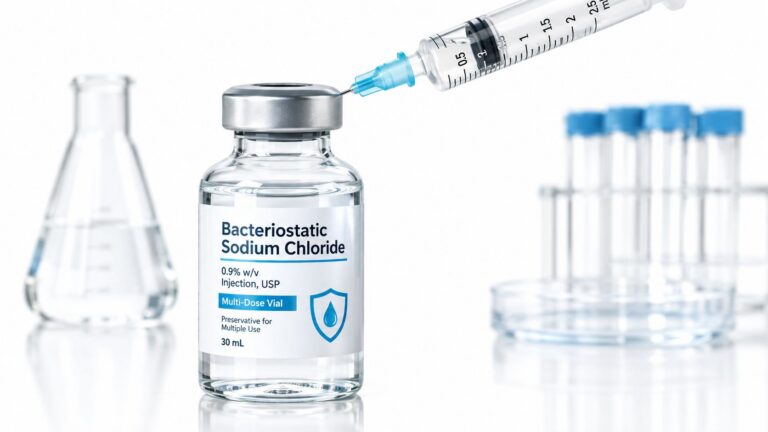
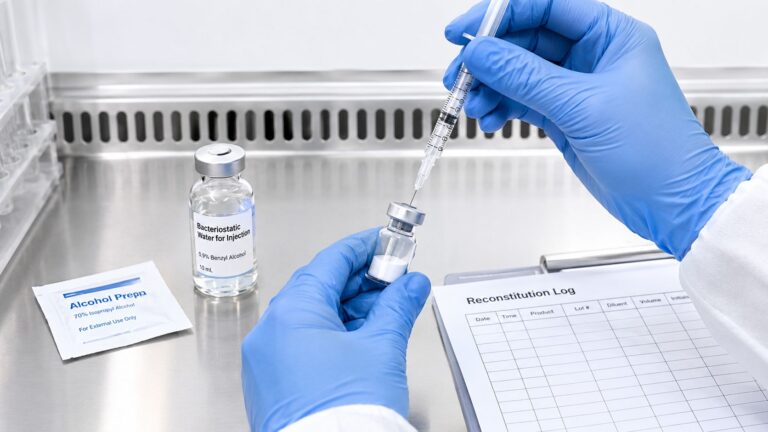
Bacteriostatic water is a sterile diluent containing 0.9% benzyl alcohol as a preservative, specifically formulated to inhibit bacterial growth following initial access to the vial. This property makes it uniquely suited for experimental protocols requiring multiple withdrawals from a single container over an extended preparation period, which is a common requirement in peptide reconstitution workflows.
Comparison of sterile water types for laboratory use:
| Water type | Preservative | Multi-use vial | Peptide reconstitution | Cell culture use |
|---|---|---|---|---|
| Bacteriostatic water | 0.9% benzyl alcohol | Yes | Recommended | Not recommended |
| Sterile water for injection | None | No (single use) | Limited | Conditionally suitable |
| Water for irrigation | None | No | Not applicable | Not applicable |
| HPLC-grade water | None | No | Instrument use only | Not applicable |
The quality control tips for labs most relevant to bacteriostatic water center on two critical considerations. First, the benzyl alcohol preservative that makes this water suitable for multi-use applications is the same compound that renders it inappropriate for certain cell culture systems. Benzyl alcohol is cytotoxic at the concentrations present in bacteriostatic water, and its use in cell-based assays risks introducing confounding cytotoxicity artifacts.
Second, not all commercial bacteriostatic water products meet equivalent purity standards. Particulate matter, endotoxin levels, and benzyl alcohol concentration uniformity vary by manufacturer and lot.
Key applications where bacteriostatic water is the appropriate choice:
- Reconstitution of lyophilized peptides for research use
- Preparation of multi-withdrawal stock solutions where single-use sterile water is logistically impractical
- Diluent for protein-based standards requiring repeated sampling
Pro Tip: Always cross-reference the benzyl alcohol tolerance of your specific reagent or compound before selecting bacteriostatic water as a reconstitution vehicle. Some peptides and proteins exhibit reduced stability or altered solubility in its presence, and this compatibility check belongs in your reliable labware checklist before any reconstitution begins.
How reagent and consumable quality shape data integrity
Bacteriostatic water is just one example; let’s zoom out to see how overall reagent and consumable selection underpins data integrity across experiments. The relationship between consumable quality and experimental outcome is direct, but its expression is often subtle and therefore easily misattributed.
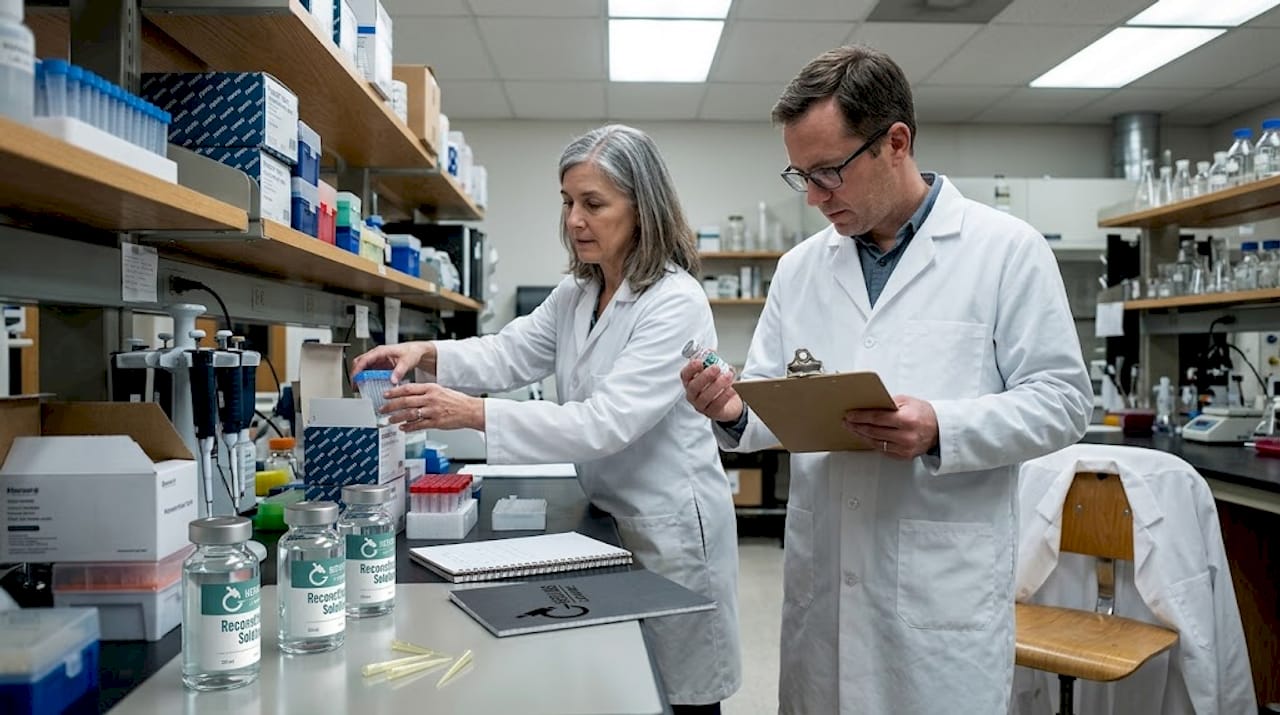
Systematic errors, those that consistently bias results in one direction, frequently originate from consumable incompatibilities. Random errors, which increase measurement scatter without a directional pattern, often arise from lot-to-lot variability in reagents or inconsistent tip-to-pipette seating. Both error types are preventable through deliberate consumable selection and validation.
Different pipette tips from non-matched manufacturers can induce systematic volumetric errors, with studies demonstrating measurable deviations when tips and pipettes originate from different production sources. This finding is particularly consequential for dilution-sensitive assays such as ELISA quantification, where a 2% volumetric error compounds across serial dilution steps to produce concentration estimates outside acceptable variance.
The following processes are especially sensitive to consumable quality:
- Serial dilutions in immunoassays and enzyme activity assays
- Titration endpoints in acid-base and complexometric methods
- Gravimetric sample preparation where vessel tare weight variability matters
- RNA and DNA quantification where nuclease contamination from low-grade plasticware is a documented concern
- LC-MS sample preparation where plasticizer leaching from substandard vials introduces ion suppression artifacts
Key examples of efficient lab consumables consistently demonstrate that matched-set configurations, where tips, tubes, and reagents are validated together as a system, outperform individually sourced component combinations in reproducibility benchmarks.
Pro Tip: When switching reagent lots mid-study, run a parallel validation using both lots against your historical control data before full adoption. This single step prevents the undetected introduction of lot-dependent bias into your data set. The lab consumables comparison guide provides structured frameworks for this type of side-by-side evaluation.
High-quality vs. low-quality consumables: Data integrity impact
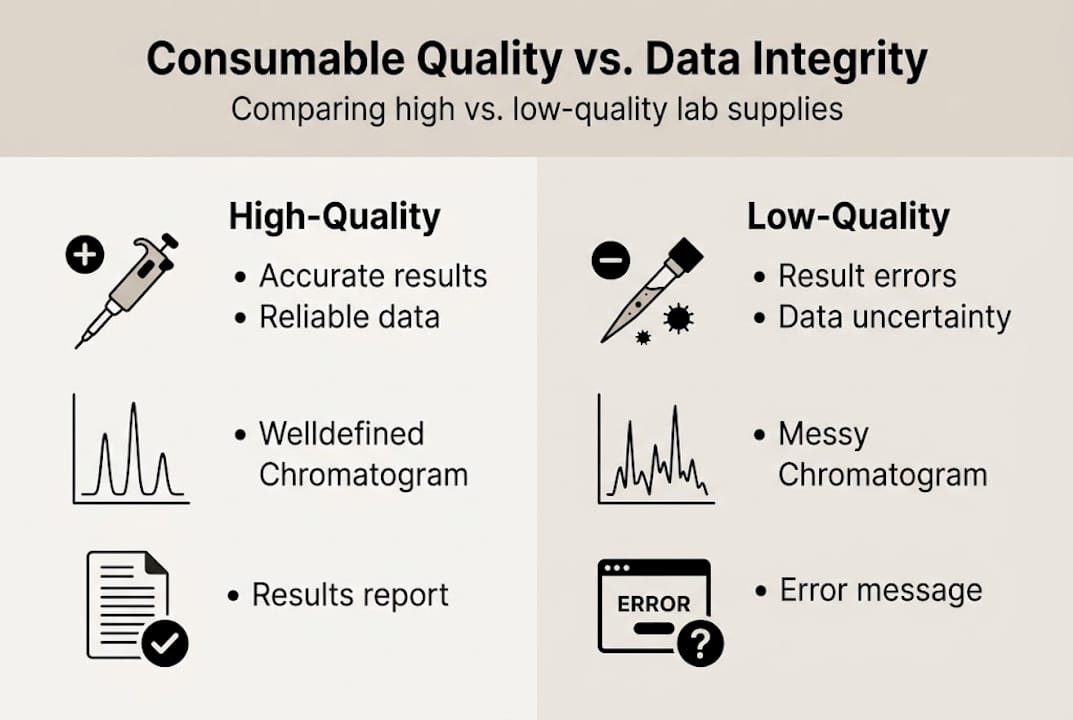
| Parameter | High-quality consumables | Low-quality consumables |
|---|---|---|
| Volumetric precision | Within 0.5% of nominal | Up to 3-5% deviation |
| Reagent purity certification | Lot-specific CoA provided | Generic or absent |
| Endotoxin levels | Verified per lot | Unverified or inconsistent |
| Reproducibility across runs | High | Variable |
From theory to practice: Implementing lab consumable best practices
To make quality more than a concept, here’s how to put best practices into action in your lab environment. Translating awareness of consumable quality into operational laboratory policy requires a structured, stepwise approach that addresses procurement, validation, and staff competency simultaneously.
A practical implementation sequence:
- Define specification requirements for each consumable category before procurement, including purity grade, sterility standard, endotoxin limit, and compatibility with the intended application.
- Request lot-specific certificates of analysis from suppliers for all reagents and sterile water products; do not accept generic or batch-level documentation as a substitute.
- Conduct incoming quality checks on critical consumables, including conductivity and pH verification for water products and visual inspection of vial integrity for sterile reagents.
- Implement parallel lot testing when transitioning between reagent lots, using historical controls to confirm performance equivalence before adopting the new lot into active studies.
- Document consumable provenance in experimental records, including lot number, manufacturer, expiry date, and storage conditions, to support traceability during data review.
Method validation guidance from established frameworks confirms that training based on EURACHEM/ISO standards dramatically reduces the adverse impacts of consumable variability by ensuring researchers understand the statistical basis of measurement uncertainty and how individual inputs contribute to it.
“Structured training and method validation per EURACHEM and ISO frameworks remain the most effective interventions for reducing consumable-related measurement uncertainty in analytical laboratory settings.”
Key elements of a sustainable consumable quality program:
- Regular staff training on consumable handling, storage, and expiry management
- Scheduled inventory audits with lot number reconciliation
- Approved supplier lists maintained with quality performance history
- Integration of quality control in labs procedures into standard operating procedures for all critical workflows
- Periodic review of the lab consumables workflow tips to identify process inefficiencies that increase consumable waste or misuse
Our take: Why even the best consumables can’t fix poor laboratory habits
After outlining best practices, it’s worth addressing what truly makes lab reliability sustainable. At Herbilabs, we work with researchers and institutions across the UK and Europe, and a pattern emerges consistently: laboratories that upgrade their consumable sourcing without simultaneously investing in staff training and validation protocols do not achieve the reliability improvements they expect.
Switching to a higher-grade bacteriostatic water or a certified pipette tip brand is a necessary condition for better data, but it is not a sufficient one. Method validation and training amplify the reliability benefits of quality consumables in ways that product substitution alone cannot replicate. A well-trained technician using verified protocols will extract more reproducible results from good consumables than an untrained one using identical materials.
Real-world laboratory errors we observe are frequently traceable to handling practices: inconsistent reconstitution techniques, improper storage of opened vials, or failure to equilibrate reagents before use. These are process failures, not product failures. The importance of lab quality control culture, where every team member understands why protocols exist rather than simply following them by rote, is what transforms good consumables into consistently reliable results.
Find high-purity consumables for your research
For those looking to make an immediate impact on lab reliability, here’s where to start. Sourcing research-grade consumables that meet documented purity and sterility standards is the first concrete step toward reducing measurement uncertainty in your experimental workflows.

Herbilabs supplies high-purity reconstitution solutions including bacteriostatic water manufactured to strict quality standards, with lot-specific documentation available for each product. For researchers working through reagent selection decisions, our guide to selecting lab reagents for peptide research provides specification-level guidance. The lab consumables comparison resource supports side-by-side evaluation of options across key quality parameters, giving procurement decisions a structured, evidence-based foundation.
Frequently asked questions
What are the most essential lab consumables for experimental research?
Pipette tips, reagents, sterile water types, and filtration membranes are foundational, as each directly influences data quality and reproducibility across analytical and biological assay formats.
When should I use bacteriostatic water instead of sterile water in the lab?
Use bacteriostatic water when reconstituting peptides or proteins for protocols requiring multiple vial withdrawals, but avoid it in cell culture applications where benzyl alcohol cytotoxicity could confound results.
How does consumable quality affect research reproducibility?
Low-quality consumables introduce both systematic and random measurement errors, and expanded uncertainties over 100% in analytical methods have been directly linked to inadequate consumable quality.
What best practices ensure valid lab consumable use?
Validate consumables against lot-specific certificates, train staff on correct handling protocols, and audit inventory regularly; training per EURACHEM/ISO standards provides the most structured framework for sustained compliance.