Private Label, White Label, Wholesale partnerships available - EU, USA and UK - Free shipping from €75

Lab supply quality: The foundation of reliable biotech research
Discover the crucial role of lab supplies in biotech research. Ensure success with high-quality materials that safeguard your results.
TL;DR:
- Laboratory supply quality is a critical factor impacting experimental success and data integrity.
- Using verified, high-grade reagents like bacteriostatic water ensures consistency and reproducibility.
- Active management of supply chains and adherence to quality standards reduce reproducibility issues.
In biotech research, the quality of laboratory supplies is not a secondary concern — it is a primary determinant of experimental success. Researchers who invest in optimized protocols and advanced instrumentation yet overlook the grade of their reconstitution solutions routinely encounter results that cannot be replicated. Bacteriostatic water, a sterile solution containing 0.9% benzyl alcohol, is indispensable for multi-dose peptide reconstitution, inhibiting microbial growth over a 28-day period. When this foundational material is substituted with an inferior or inappropriate alternative, downstream data integrity suffers, regardless of how precisely every other variable is controlled.
Table of Contents
- Why lab supplies are the backbone of biotech research
- Understanding bacteriostatic water and sterile water: Key differences
- Best practices for peptide reconstitution and reagent handling
- Quality benchmarks: Lab supply standards and reproducibility in biotech
- What most guides miss: Small supply choices that quietly sabotage research
- Upgrade your lab’s reliability with trusted supplies
- Frequently asked questions
Key Takeaways
| Point | Details |
|---|---|
| Lab supply quality matters | Even minor lapses in supply purity can undermine otherwise flawless biotech experiments. |
| Choose the right water | Bacteriostatic water is essential for multi-dose use, while sterile water fits only single-use applications. |
| Follow handling protocols | Proper peptide reconstitution technique maximizes compound integrity and result reliability. |
| Insist on supply benchmarks | Lab supply vendors adhering to LQMS and QSE standards help ensure reproducible results. |
Why lab supplies are the backbone of biotech research
While the introduction highlights the risk of underestimating lab supply impact, let’s examine why these materials are anything but routine in modern biotech labs. Every stage of a biotech workflow, from cell culture and peptide synthesis to assay development and data validation, depends on materials that are chemically pure, biologically inert where required, and produced under documented manufacturing conditions. The assumption that off-the-shelf consumables are interchangeable is one of the most persistent and costly misconceptions in laboratory practice.
Bacteriostatic water exemplifies this principle. It prevents contamination during repeated vial access, extends the usable life of reconstituted reagents, and maintains the chemical environment required for peptide stability. Replace it with untested alternatives, and you introduce variables that no statistical correction can fully account for.
The broader market reflects how seriously the research community takes supply quality. The lab consumables market is projected to grow at a 10.01% CAGR, reaching $25.32 billion by 2033, driven largely by rising standards in biotech and pharmaceutical research. This growth signals institutional recognition that precision research demands precision materials.
“The quality of your data is bounded by the quality of your inputs. No protocol, however refined, can compensate for a compromised reagent upstream.”
Key consequences of supply quality compromise include:
- Contamination events that invalidate entire experimental runs and require costly repetition
- Batch-to-batch variability in substandard consumables that introduces systematic error into longitudinal studies
- Peptide degradation caused by inappropriate reconstitution solvents or improper storage conditions
- Failed reproducibility when external labs cannot replicate results obtained with non-standardized materials
Researchers who treat reliable laboratory consumables as a procurement formality, rather than a scientific variable, often trace irreproducible findings back to this exact oversight. The evidence increasingly supports a simple conclusion: supply quality is not background noise. It is signal.
Understanding bacteriostatic water and sterile water: Key differences
Now that we’ve seen the foundational role of lab supplies, let’s zoom in on a common but critical choice — bacteriostatic versus sterile water. These two solutions are superficially similar and are sometimes conflated, yet their functional differences are significant enough to determine whether an experiment succeeds or fails.
Sterile water for injection is water that has been sterilized and rendered free of viable microorganisms. It contains no added preservatives, which makes it appropriate for single-use applications. Once the vial is opened and the sterile barrier is breached, microbial contamination risk rises rapidly. For this reason, sterile water must be used as a single-dose solution only; any remaining volume should be discarded after the first use.
Bacteriostatic water, by contrast, contains 0.9% benzyl alcohol as a preservative. Benzyl alcohol inhibits microbial growth through disruption of microbial cell membranes, allowing the solution to remain stable across multiple vial entries over a 28-day period. This property makes bacteriostatic water the standard choice for multi-dose peptide reconstitution protocols, where researchers access the same vial multiple times across experimental sessions.
The following table summarizes the critical distinctions:
| Property | Sterile water | Bacteriostatic water |
|---|---|---|
| Preservative | None | 0.9% benzyl alcohol |
| Intended use | Single-dose only | Multi-dose, repeated access |
| Post-opening stability | Immediate discard required | Stable for 28 days (2-8°C) |
| Contamination risk (multi-use) | High | Low |
| Appropriate for peptide research | Single-use reconstitution | Multi-dose reconstitution |
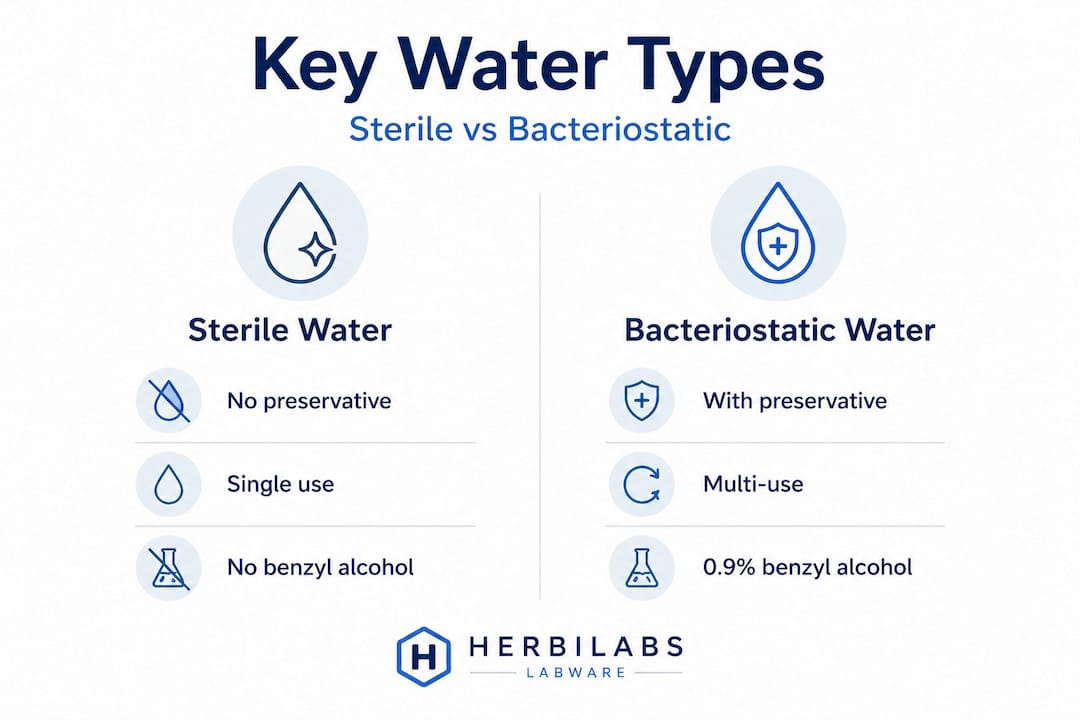
For researchers working with sterile versus bacteriostatic water in routine peptide experiments, the selection process should follow a structured decision framework.
Checklist for choosing the correct reconstitution solvent:
- Determine whether the reconstituted solution will be accessed once or multiple times
- Identify whether the peptide or compound is benzyl alcohol-sensitive (rare but relevant for certain assays)
- Confirm that the chosen solution is manufactured to research grade, not repurposed from clinical stock
- Verify that the vial is sealed, sterile, and within its expiration date before use
- Review the peptide manufacturer’s reconstitution guidance for solvent compatibility
Pro Tip: When working with lyophilized peptides that are particularly hydrophobic, a small volume of acetic acid (0.1%) or DMSO (dimethyl sulfoxide) may be used to aid initial dissolution before dilution with bacteriostatic water. This intermediate step significantly reduces incomplete dissolution, which is a common but under-reported source of dosing inaccuracy in peptide research.
Best practices for peptide reconstitution and reagent handling
With the differences between water types clear, it’s vital to implement handling practices that safeguard your reagents and data. Even when researchers select the correct reconstitution solvent, procedural errors during the reconstitution step itself can compromise peptide integrity. Denaturation, aggregation, and partial dissolution are all consequences of suboptimal technique rather than suboptimal chemistry.
Standard reconstitution protocol for lyophilized peptides:
- Allow the lyophilized peptide vial to equilibrate to room temperature before opening, minimizing condensation and moisture uptake
- Clean the vial septum with an alcohol swab and allow it to dry completely before needle insertion
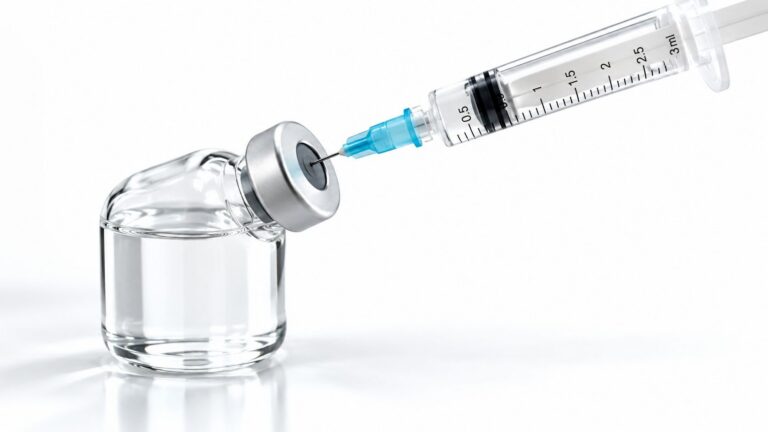
- Draw the calculated volume of bacteriostatic water into a sterile syringe, using an appropriate gauge needle to maintain sterility
- Insert the needle into the vial and direct solvent slowly down the interior wall of the vial, never directly onto the lyophilized cake
- Gently swirl — do not vortex — until the peptide dissolves completely and the solution appears homogeneous
- Label the vial with the reconstitution date, concentration, and initials of the researcher
- Store the reconstituted solution at 2-8°C immediately after preparation
The fourth step in this protocol is the one most frequently performed incorrectly. Forceful injection of solvent directly onto the peptide mass generates localized turbulence that denatures secondary and tertiary structure, particularly in larger or more complex peptides. The result is a solution that may appear visually complete but contains a proportion of inactive, misfolded peptide that will not respond as expected in bioassays.
Aseptic technique must be maintained across all handling steps. This is not a procedural formality. Aseptic manufacturing in biotech principles apply equally to laboratory reconstitution, because any introduction of microbial contamination during handling will accelerate degradation and compromise data validity, even in the presence of benzyl alcohol as a preservative.
Pro Tip: For long-term storage of reconstituted peptides beyond 28 days, aliquot the solution into multiple small volumes immediately after reconstitution and store at -20°C or -80°C depending on the peptide’s thermal stability profile. Freeze-thaw cycling is a significant source of peptide degradation that is entirely avoidable with proactive aliquoting.
The following table provides reference parameters for common peptide reconstitution scenarios:
| Peptide type | Recommended solvent | Volume (typical) | Storage temp | Maximum stability |
|---|---|---|---|---|
| Hydrophilic peptides | Bacteriostatic water | 1-2 mL | 2-8°C | 28 days |
| Hydrophobic peptides | Acetic acid 0.1% / BAC water | 0.5-1 mL | -20°C (aliquoted) | 3-6 months |
| Lyophilized research peptides | Bacteriostatic water | Per manufacturer spec | 2-8°C | 28 days |
| Unstable or sensitive peptides | Sterile water (single use) | Minimal volume | Use immediately | Single use |
Monitoring lab water quality control at every stage, from source verification through post-reconstitution storage, forms an essential layer of quality assurance that many labs apply inconsistently, often until an unexplained experimental failure forces a retrospective audit.
Quality benchmarks: Lab supply standards and reproducibility in biotech
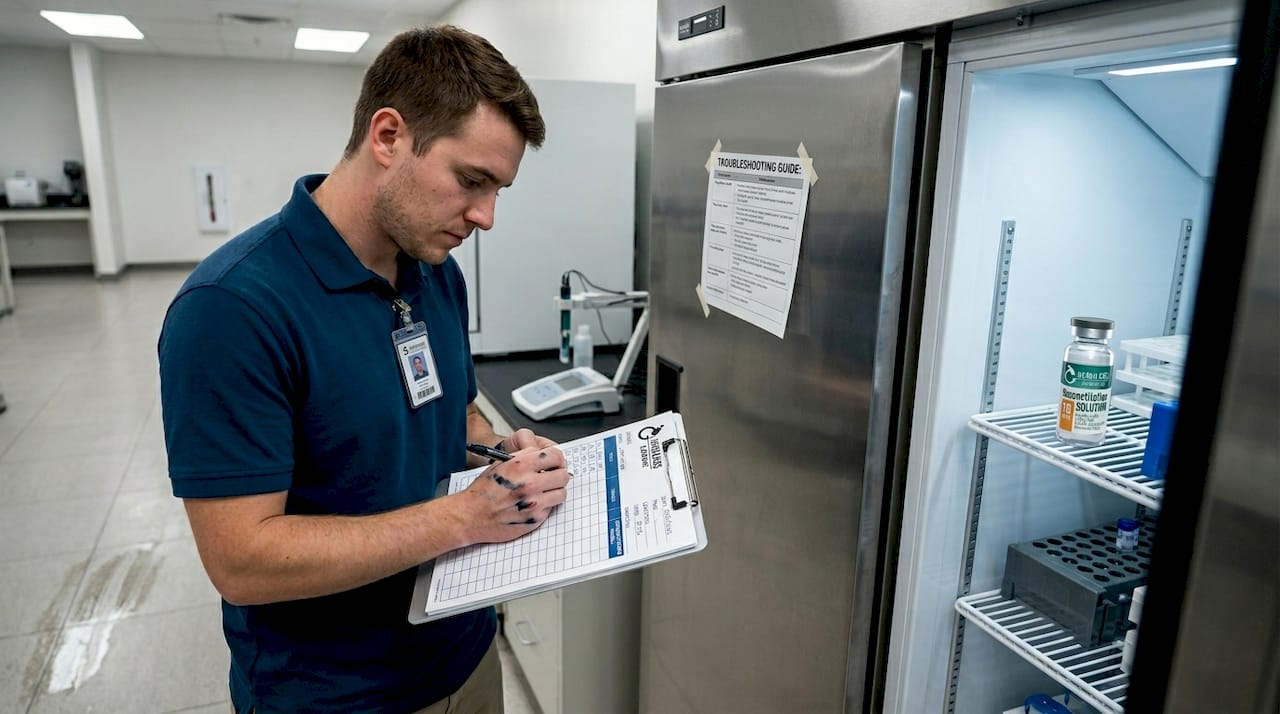
Even with impeccable technique and supplies, it pays to verify your sources follow top-tier quality systems. The reproducibility crisis in biomedical and biotech research is well-documented and multifactorial, but a recurring and often overlooked contributor is the use of laboratory materials that lack verified provenance and quality management documentation.
Laboratory quality management systems (LQMS) provide the structural framework for ensuring that every consumable in a research workflow meets defined standards for purity, consistency, and performance. Within LQMS frameworks, the 12 quality system essentials (QSEs) address documentation, personnel, equipment, process control, purchasing, and a range of other operational variables. Research published in Frontiers in Bioengineering and Biotechnology confirms that LQMS benchmarked against 12 QSEs substantively reduces reproducibility failures linked to supply quality.
“Laboratories that implement formalized quality management for their supply chains report measurably lower rates of assay failure attributable to reagent inconsistency, reinforcing that supply governance is an active research variable.”
Biotech labs and independent researchers sourcing reagents and reconstitution solutions should demand the following quality indicators from their suppliers:
- Certificate of Analysis (CoA) for each product batch, specifying purity, pH, osmolarity, and endotoxin levels where relevant
- Good Manufacturing Practice (GMP) or equivalent documentation confirming controlled production environments
- Lot traceability enabling the precise identification of any batch linked to an experimental anomaly
- Sterility testing records confirming absence of viable microorganisms in the finished product
- Endotoxin testing data where injectable or cell-culture-grade reagents are involved, since lipopolysaccharide contamination at sub-visible levels can significantly alter cell behavior and assay outputs
- Stability data establishing the verified shelf-life under defined storage conditions
Reviewing essential lab benchmarks and establishing a minimum supplier quality standard before procurement, rather than after an unexplained result, is a straightforward preventive measure with disproportionate impact on research reliability. Similarly, auditing and improving lab workflow to incorporate systematic lot documentation reduces the time required to trace anomalies back to their source when they do occur.
The correlation between quality system adoption and reduced reproducibility failures is not theoretical. It is measured and documented. Labs that treat supply quality governance as a bureaucratic formality, rather than a methodological tool, consistently report higher rates of unexplained assay variability.
What most guides miss: Small supply choices that quietly sabotage research
After covering best practices and standards, let’s pull back the curtain: supply choices determine outcomes more often than most protocols admit. The dominant narrative around the reproducibility crisis focuses on statistical methods, publication bias, and flawed experimental design. These are real and important factors. But they draw attention away from a quieter category of failure, one that experienced researchers encounter repeatedly and rarely discuss openly.
Consider a scenario encountered across multiple European biotech labs: a research group achieves robust, consistent results with a particular lyophilized peptide across six experimental cycles. On the seventh cycle, results diverge significantly. The protocol is unchanged. The peptide batch is the same. The instrument calibration is verified. The investigation eventually traces the anomaly to a single substitution — a different supplier’s bacteriostatic water, procured during a supply chain disruption, which contained trace endotoxin contamination just below the threshold that a standard visual inspection would detect.
This is not an exceptional story. It is a representative one. The details vary, but the pattern recurs: a small, seemingly inconsequential supply substitution introduces a variable that invalidates data and costs weeks of repetition. Researchers focused on labware purity for peptide research understand that the cumulative effect of minor supply concessions is rarely minor in practice.
Our perspective, grounded in direct experience supplying research-grade bacteriostatic water and reagents to laboratories across the UK and Europe, is this: most protocols are sound. Most researchers are skilled. The variable that most frequently undermines both is the unexamined assumption that any compliant-looking reagent will perform equivalently to a verified, benchmarked one.
Auditing your own lab supply chain for hidden weaknesses requires a structured approach:
- Map every consumable that contacts your experimental samples, from water and solvents to collection tubes and pipette tips
- For each item, verify whether a current CoA is on file and whether the supplier’s quality documentation has been reviewed in the past 12 months
- Identify any recent substitutions made during supply chain disruptions and flag those batches for correlation with any anomalous results in the same period
- Establish a policy that research-critical reagents require approved vendor lists, and that substitutions trigger a documented review before use
The lesson is not that supply chains are impossible to manage. It is that they require active management, not passive assumption.
Upgrade your lab’s reliability with trusted supplies
Ready to put these insights into action? At Herbilabs Labware, we manufacture and supply research-grade bacteriostatic water and reconstitution solutions to rigorous purity standards, with full lot traceability and batch-specific Certificates of Analysis for every product we ship. Our facility maintains strict quality controls specifically designed to meet the demands of peptide research and biotech laboratory environments across the UK and Europe.

Researchers who rely on high-purity reagents for reliability understand that supply quality is not a procurement detail. It is a research variable. Our product range is selected with that principle in mind. Whether you are selecting lab reagents for peptides for the first time or standardizing an established protocol, our team can support both procurement decisions and technical questions. Use our labware checklist for reliable research to audit your current supply setup and identify gaps before your next experimental cycle.
Frequently asked questions
What is the shelf-life of bacteriostatic water after opening?
Once opened, bacteriostatic water remains stable for 28 days when stored refrigerated between 2-8°C, after which the preservative efficacy may diminish and the product should be discarded.
Can sterile water be reused for multiple doses in peptide experiments?
Sterile water is formulated for single-use applications only; for any protocol requiring repeated vial access, bacteriostatic water is required to maintain microbial control and prevent contamination across doses.
Why inject solvent down the vial wall for peptide reconstitution?
Directing solvent slowly along the vial wall rather than onto the peptide cake prevents the mechanical disruption that causes peptide denaturation, preserving the structural integrity and biological activity of the compound.
How do quality supply benchmarks reduce the reproducibility crisis?
Laboratory quality management systems structured around 12 quality system essentials enforce supply consistency at every procurement and handling stage, systematically reducing the reagent-level variability that drives experimental irreproducibility.