Private Label, White Label, Wholesale partnerships available - EU, USA and UK - Free shipping from €75

Best Practices for Reagent Storage: Lab Guide 2026
Discover essential best practices for reagent storage to ensure stability, purity, and reliable results in your lab. Learn more now!
TL;DR:
- Proper reagent storage maintains stability, purity, and performance by following strict environmental and handling protocols.
- Segregating incompatible chemicals and using validated labels prevent safety hazards and ensure data integrity in laboratories.
Best practices for reagent storage are defined as the documented protocols that preserve reagent stability, purity, and performance from receipt through final use. These protocols draw directly from FDA 21 CFR 58.83, OMCL/EDQM recommendations, and Good Laboratory Practice (GLP) standards. Proper storage is not a secondary concern. Degraded or contaminated reagents produce unreliable data, compromise safety, and invalidate experiments. Every lab technician and researcher working with chemical or biological reagents needs a clear, current framework to protect both their materials and their results.
1. What are the best practices for reagent storage?
Reagent storage best practices are the structured set of environmental, procedural, and documentation controls that prevent degradation, contamination, and hazardous incidents. The industry term for this framework is “reagent management,” and it encompasses everything from temperature control to expiration tracking. Applying these controls consistently is the single most reliable way to protect data integrity and lab safety.
The sections below address each control category in depth, from environmental conditions and container selection to segregation protocols and monitoring systems.
2. Essential environmental conditions for safe reagent storage
Environmental control is the foundation of optimal reagent storage. Temperature, humidity, light, and airflow each affect reagent stability in distinct ways, and failure to control any one of them can accelerate degradation significantly.
Temperature is the most critical variable. General guidelines specify:
- Room temperature (15°C–25°C): Suitable for most stable dry chemicals and many buffer solutions.
- Refrigerated (2°C–8°C): Required for antibodies, enzymes, and many biological reagents.
- Frozen (–20°C or –80°C): Necessary for nucleic acids, certain proteins, and lyophilized peptides.
Reagents must be stored according to supplier instructions and lab-validated procedures, including temperature, light protection, and humidity control. Deviating from the specified temperature range, even briefly, can alter molarity, reduce activity, or trigger irreversible chemical changes.
Humidity is equally important. Hygroscopic reagents, those that absorb moisture from the air, must be stored in sealed desiccator cabinets or with desiccant packs. High ambient humidity causes caking, hydrolysis, and concentration errors in powdered reagents.
Light exposure degrades photosensitive compounds including fluorescent dyes, certain vitamins, and silver-based reagents. Store these materials in amber glass vials, foil-wrapped containers, or dedicated dark cabinets. Never leave photosensitive reagents on open benchtops under fluorescent lighting.
Airflow presents a contamination risk. High-traffic ventilation zones carry particulates and volatile compounds that can enter loosely capped containers. Position storage units away from fume hood exhausts and HVAC vents.
Pro Tip: Install a calibrated min/max thermometer in every storage unit. Check and log readings at the start of each working day. This takes under 60 seconds and creates a defensible audit trail.
3. Proper containerization and labeling for reagent integrity
The original manufacturer container is the preferred storage vessel for any reagent. Original containers minimize contamination and chemical instability because they are designed and tested for compatibility with the specific reagent inside. Transferring reagents to generic containers introduces risks from material incompatibility, residual contaminants, and inadequate sealing.
When transfer is unavoidable, container material selection matters:
- Borosilicate glass: Preferred for most aqueous solutions, acids, and organic solvents. Chemically inert and non-porous.
- High-density polyethylene (HDPE): Suitable for bases, dilute acids, and aqueous buffers. Avoid for halogenated solvents.
- Polypropylene (PP): Good for biological reagents and many aqueous solutions. Check solvent compatibility before use.
- Amber glass: Required for photosensitive reagents regardless of other container considerations.
Always close containers tightly after each use. Loose caps allow moisture ingress, solvent evaporation, and airborne contamination. For hygroscopic or volatile reagents, use PTFE-lined caps or parafilm as a secondary seal.
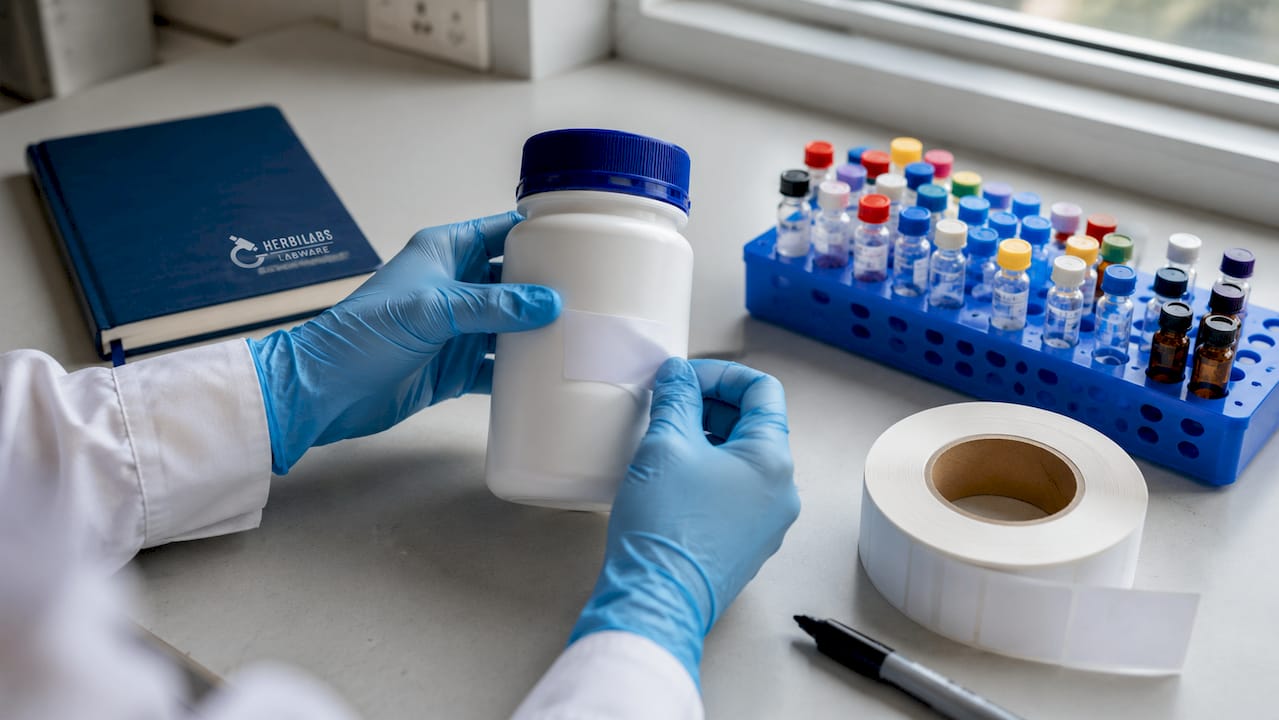
Labeling is a regulatory requirement, not a convenience. FDA 21 CFR 58.83 specifies that labels must include reagent identity, concentration, lot number, preparation and receipt dates, storage conditions, and expiration information. The regulation also prohibits the use of outdated or deteriorated reagents. Every label must be legible, durable, and fixed directly to the container, not to the lid.
Pro Tip: For aliquots and in-house preparations, print labels rather than handwriting them. Printed labels resist solvent smearing and remain legible after refrigerator condensation.
4. Handling practices that maximize reagent longevity
Aliquoting is the most effective single practice for extending reagent shelf life. Dividing a bulk reagent into single-use or limited-use portions prevents repeated exposure of the entire stock to air, moisture, and temperature fluctuation. Repeated exposure accelerates degradation and is the primary reason opened reagents lose stability faster than unopened ones.
Implement the following handling sequence for every reagent in active use:
- Record the first-opened date on the container label immediately upon opening. This date triggers the post-opening expiration clock.
- Aliquot into working volumes before the first use. Return the bulk stock to storage and work only from the aliquot.
- Conduct a visual quality check before each use. Look for color changes, precipitates, turbidity, or unusual odor. Discard any reagent showing signs of degradation.
- Use dedicated dispensing tools for each reagent. Never insert a used pipette tip or spatula directly into a stock container. This is the most common route for cross-contamination.
- Apply FIFO or FEFO inventory control. FIFO and FEFO systems ensure older stock is used before newer stock, reducing waste and preventing silent expiration of forgotten materials.
- Conduct periodic inventory reviews. Remove expired, degraded, or unlabeled reagents from active storage immediately. Do not allow ambiguous materials to accumulate.
- Document all transfers and dilutions. Record the source lot, dilution factor, diluent used, and preparation date for every working solution. This documentation supports traceability under GLP and regulatory compliance requirements.
5. How to safely segregate and store incompatible reagents
Chemical segregation is a safety requirement, not an organizational preference. Storing incompatible reagents together creates conditions for violent reactions, toxic gas generation, and fire. The correct approach classifies reagents by hazard group and assigns each group to a dedicated storage unit.
| Hazard class | Examples | Recommended storage |
|---|---|---|
| Flammables | Ethanol, acetone, methanol | Flammable storage cabinet, away from ignition sources |
| Corrosive acids | Hydrochloric acid, sulfuric acid | Acid cabinet, corrosion-resistant lining, ventilated |
| Corrosive bases | Sodium hydroxide, ammonium hydroxide | Alkali cabinet, separate from acids |
| Oxidizers | Hydrogen peroxide, potassium permanganate | Oxidizer cabinet, away from flammables and organics |
| Toxics | Formaldehyde, heavy metal salts | Locked toxic cabinet, ventilated, restricted access |
| Biological reagents | Enzymes, antibodies, cell culture media | Dedicated refrigerator or freezer, no food storage |
Chemical storage cabinets must feature ventilation, locking mechanisms, spill containment, and corrosion-resistant materials. These features are not optional upgrades. They are the minimum standard for any lab handling hazardous reagent classes.
Advanced lab safety requires segregation by hazard class in designated ventilated cabinets with spill containment to reduce accident risks. A common mistake is grouping all chemicals alphabetically regardless of compatibility. Alphabetical organization places acetic acid next to acetone, and nitric acid near organic solvents, both of which are hazardous pairings.
Pro Tip: Post a chemical compatibility chart inside each storage cabinet door. Lab technicians can verify compatibility in seconds without consulting a separate reference, which reduces the likelihood of unsafe improvised storage decisions.
6. Expiration guidelines and monitoring systems for quality assurance
Expiration management is the most frequently neglected component of reagent storage guidelines. Many labs treat manufacturer expiration dates as the only relevant deadline. In practice, two separate expiration windows apply to every reagent: the unopened shelf life and the post-opening use period.
Reagents without specific manufacturer expiration data can be assigned up to 5 years validity from receipt if stored properly, per 2026 OMCL/EDQM recommendations. This provides a defensible baseline for labs managing reagents with incomplete documentation. It does not replace analytical verification when data quality depends on reagent performance.
Opening a reagent container significantly reduces stability and shelf life. The post-opening expiration period must be determined experimentally or based on analytical data, and it can never exceed the unopened shelf life. Labs that assign arbitrary post-opening periods without supporting data are operating outside GLP standards.
Key monitoring practices include:
- Temperature loggers and smart freezers: Calibrated devices with automatic recording and alert limits are the standard for compliant environmental monitoring. Manual checks alone are insufficient for controlled storage units holding high-value biological reagents.
- Deviation documentation: Any temperature excursion, power failure, or storage breach must be recorded with the time, duration, and affected reagents. An impact assessment determines whether affected materials remain fit for use.
- Sustainability through justified extension: When analytical data confirms continued reagent performance, extending use beyond a conservative default date reduces waste. This requires documented evidence, not assumption.
Monitoring systems also support laboratory quality control by creating a continuous record of storage conditions that auditors and quality managers can review. A gap in the temperature log is treated the same as a confirmed excursion in most regulatory frameworks.
Key takeaways
Proper reagent storage requires environmental control, compliant labeling, chemical segregation, and active expiration monitoring applied consistently across every reagent class in the lab.
| Point | Details |
|---|---|
| Environmental control is foundational | Maintain specified temperature, humidity, and light conditions for every reagent class without exception. |
| Original containers protect purity | Store reagents in manufacturer containers whenever possible to prevent contamination and chemical incompatibility. |
| Labels must meet FDA 21 CFR 58.83 | Include identity, lot number, dates, storage conditions, and expiration on every container. |
| Segregate by hazard class | Use dedicated cabinets for flammables, acids, bases, oxidizers, and toxics to prevent dangerous interactions. |
| Monitor and document continuously | Use calibrated temperature loggers and record all deviations to maintain GLP compliance and protect data integrity. |
What I’ve learned about reagent storage that most protocols miss
The written protocol is rarely the problem. Most labs have a storage policy. The gap is almost always in execution, specifically in the moments when a technician is under time pressure and makes a small compromise that compounds over weeks.
The most damaging habit I’ve seen is the “temporary” placement. A reagent gets set on a benchtop because the designated cabinet is full or inconvenient, and it stays there for days. Light exposure, ambient temperature swings, and accidental contamination follow. By the time someone notices a result anomaly, the reagent has been compromised for weeks and the connection is rarely made.
The second underestimated issue is label decay. A label written in ballpoint pen on a refrigerated vial will be unreadable within a month. Printed, laminated, or cryogenic-rated labels are not a luxury for high-throughput labs. They are the minimum standard for any reagent that will be stored for more than a few weeks.
My practical recommendation is to treat storage audits as a monthly calibration exercise, not an annual compliance event. A 20-minute walk through storage areas with a checklist catches misplaced reagents, faded labels, and expired materials before they affect results. The labs that do this consistently spend less time troubleshooting anomalous data and more time generating reliable results.
The safe storage of sensitive chemicals is ultimately a discipline of consistency. The protocols work when they are followed every time, by every person, without exception.
— Ragnar
Herbilabs products for research-grade reagent quality
Maintaining the storage standards described above starts with sourcing reagents that meet those standards from the beginning.
Herbilabs supplies research-grade bacteriostatic water, sterile diluents, and high-purity reconstitution solutions manufactured under strict quality control in a dedicated facility. Every product ships with documentation supporting traceability and compliant storage. Researchers working with lyophilized peptides and sensitive biological reagents can also consult the Herbilabs bac water research guide for storage-specific guidance on reconstitution solutions. Wholesale pricing and secure ordering are available for institutions, resellers, and independent researchers across the UK and Europe.
FAQ
What temperature should most laboratory reagents be stored at?
Most stable dry chemicals store at room temperature (15°C–25°C). Biological reagents such as enzymes and antibodies require refrigeration at 2°C–8°C, while nucleic acids and lyophilized peptides typically require freezing at –20°C or –80°C.
How long can an opened reagent be used after its container is first opened?
The post-opening use period must be determined experimentally or from analytical data and can never exceed the unopened shelf life. OMCL/EDQM guidance confirms that opening a container significantly reduces stability, making the first-opened date a critical data point.
What must a compliant reagent label include?
FDA 21 CFR 58.83 requires labels to include reagent identity, concentration, lot number, preparation and receipt dates, storage conditions, and expiration information. Outdated or deteriorated reagents must not be used.
Why should incompatible reagents be stored separately?
Storing incompatible reagents together, such as acids with bases or flammables with oxidizers, creates conditions for violent reactions, toxic gas release, and fire. Each hazard class requires a dedicated cabinet with ventilation, spill containment, and appropriate lining materials.
Can a reagent without a manufacturer expiration date still be used safely?
Yes, with documentation. OMCL/EDQM recommendations allow labs to assign up to 5 years validity from receipt for reagents lacking specific manufacturer expiration data, provided storage conditions are maintained and documented throughout that period.