Private Label, White Label, Wholesale partnerships available - EU, USA and UK - Free shipping from €75
How Long Does BAC Water Last After Opening?
Discover how long does BAC water last after opening. Learn the 28-day rule for storage and safety to ensure effective use.
TL;DR:
- Bacteriostatic water remains safe for 28 days after first puncture if stored properly at 2°C–8°C. The 28-day rule is based on contamination risk, not chemical stability, which persists beyond this period. Proper handling and tracking are essential to prevent microbial contamination and ensure safety.
Bacteriostatic water (BAC water) is defined as sterile water containing 0.9% benzyl alcohol as a preservative, and it must be discarded 28 days after the rubber stopper is first punctured. This 28-day window applies regardless of how much water remains in the vial. Understanding how long does bac water last after opening is not a matter of guesswork. The answer is grounded in microbial safety science, not in the chemical lifespan of benzyl alcohol itself. Storage conditions, handling technique, and date tracking all determine whether a vial stays safe through that full window.
How long does bac water last after opening? The 28-day rule explained
The 28-day in-use period is the industry standard for opened bacteriostatic water, and it supersedes the original expiration date printed on the vial. Once the stopper is punctured, the original bac water expiration date no longer governs safety. The 28-day clock starts at first puncture, not at manufacture.
This rule exists because every needle insertion introduces a contamination event. Benzyl alcohol inhibits bacterial growth but does not kill bacteria already present in the vial. The 28-day limit is therefore a safety margin that accounts for cumulative contamination risk across multiple punctures, not a reflection of preservative chemical degradation.
Researchers and laboratory technicians working with lyophilized peptides, hormones, or other reconstituted compounds rely on this window to plan their protocols. Exceeding it introduces unacceptable microbial risk, even when the water appears visually clear.
What scientific evidence supports the 28-day post-opening shelf life?
The preservative in bacteriostatic water, benzyl alcohol at 0.9% concentration, remains stable for up to 120 days with only minor concentration declines. That finding is significant. It means the 28-day discard rule is not driven by preservative exhaustion. The benzyl alcohol is still chemically effective well beyond the usage window.
The real driver of the 28-day limit is microbial contamination risk from repeated vial punctures. Each puncture introduces a contamination event, and benzyl alcohol inhibits growth of introduced organisms but cannot sterilize the solution if contamination has already occurred. The preservative slows bacterial proliferation. It does not reverse it.
The table below summarizes the relationship between benzyl alcohol stability and contamination risk over time:
| Time after opening | Benzyl alcohol status | Microbial contamination risk |
|---|---|---|
| 0–7 days | Fully stable | Low |
| 8–28 days | Fully stable | Moderate, increases with punctures |
| 29–120 days | Minor decline, still above minimum | High; 28-day rule exceeded |
| Beyond 120 days | Meaningful concentration decline | Very high; discard regardless |
This table illustrates why the 28-day rule is a safety protocol combining preservative activity with contamination risk management. The benzyl alcohol remains effective, but the cumulative risk from repeated access makes continued use unsafe after 28 days.
Pro Tip: If your protocol requires fewer than five punctures over 28 days, contamination risk remains lower. Still discard at 28 days. The rule is not negotiable under standard bac water usage guidelines.
How do storage temperature and handling affect opened BAC water?
Refrigeration at 2°C–8°C (36°F–46°F) after opening maximizes the full 28-day safety window. Room temperature storage shortens that window substantially, with safe usage dropping to approximately 14 days. Storage above 25°C reduces it further, to around 7 days. These are not conservative estimates. They reflect the accelerated rate at which microbial activity increases at higher temperatures.
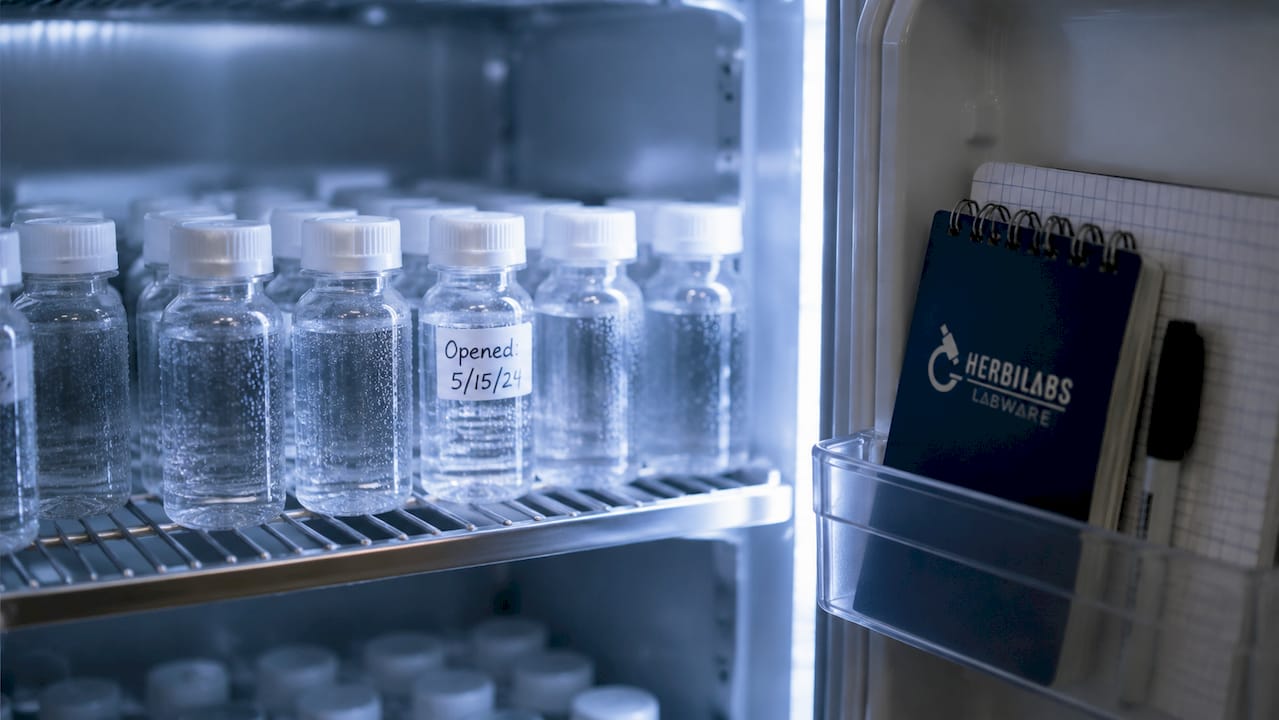
Manufacturers recommend refrigeration immediately after first puncture. Leaving a vial at room temperature between uses, even briefly, compounds risk over the course of a multi-use protocol. Temperature fluctuations are particularly damaging because they stress the rubber stopper and can alter the distribution of benzyl alcohol within the solution.
Freezing bacteriostatic water is explicitly discouraged. Ice crystal formation can damage the rubber seal, and benzyl alcohol crystallizes unevenly, compromising preservative distribution throughout the vial. Freezing does not extend bac water shelf life. It invalidates the 28-day safety window entirely.
Best handling practices for opened BAC water vials:
- Store immediately at 2°C–8°C after each use, without exception.
- Recap the vial with the original stopper or a sterile cap after every withdrawal.
- Use a new sterile needle and syringe for each puncture to avoid cross-contamination.
- Keep the vial upright to minimize stopper contact with liquid.
- Avoid storing near heat sources, direct light, or in areas with fluctuating temperatures.
- Never pool remaining volumes from two opened vials into one container.
Pro Tip: Label the vial with the date and time of first puncture immediately after opening. A permanent marker on the vial cap takes five seconds and eliminates the most common storage error in laboratory settings.
How does bacteriostatic water differ from sterile water in terms of post-opening usability?
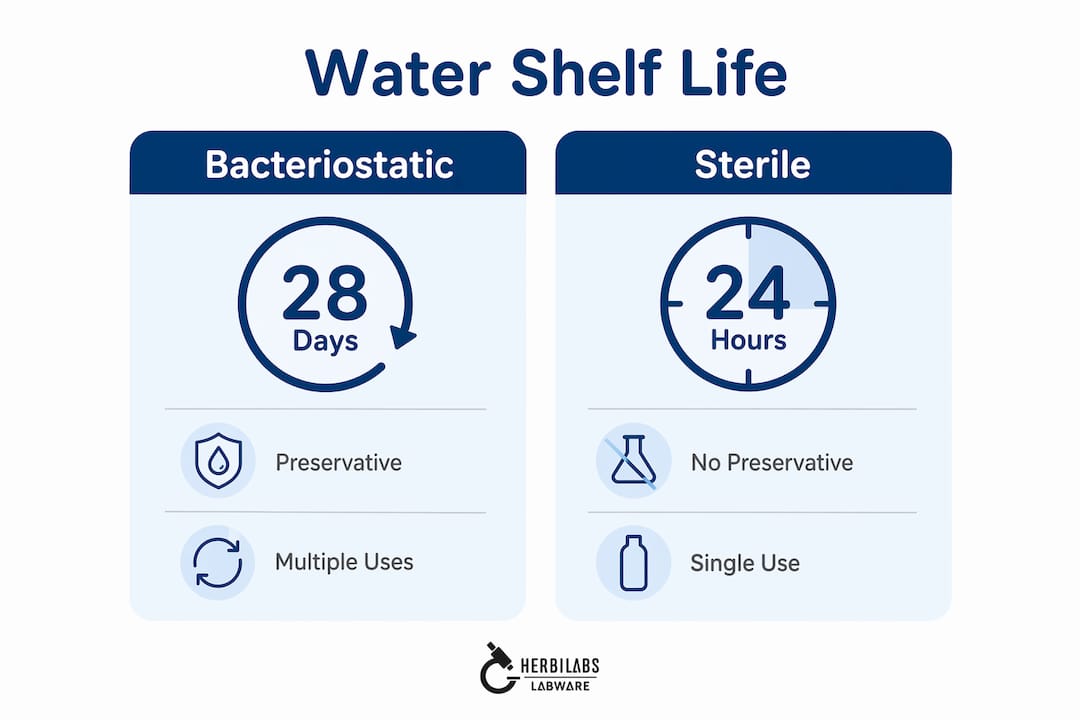
Sterile water for injection contains no preservative. Without bacteriostatic agents, sterile water is usable for approximately 24 hours after opening before bacterial growth risk becomes unacceptable. That single-use window makes sterile water unsuitable for multi-day reconstitution protocols. BAC water’s benzyl alcohol content is the sole reason it supports multi-use access over 28 days.
This distinction has direct implications for laboratory protocol design. Researchers reconstituting lyophilized peptides or hormones for extended studies must use bacteriostatic water, not sterile water, when the vial will be accessed more than once. Using sterile water in a multi-use context violates basic lab safety protocols and introduces contamination risk within hours of opening.
The comparison table below clarifies the key differences for protocol planning:
| Parameter | Bacteriostatic water | Sterile water for injection |
|---|---|---|
| Preservative | 0.9% benzyl alcohol | None |
| Post-opening usability | 28 days (refrigerated) | Approximately 24 hours |
| Multi-use suitability | Yes | No |
| Contamination inhibition | Yes (bacteriostatic) | No |
| Freezing recommended | No | No |
| Discard trigger | 28 days or visual change | 24 hours or visual change |
For researchers evaluating single-use vs multi-use sterile water options, the presence or absence of a preservative is the defining variable. BAC water is the correct choice for any protocol requiring repeated vial access over days or weeks.
What are best practices for storing and tracking opened bacteriostatic water?
Systematic tracking is the most reliable way to stay within safe bac water usage guidelines. Failing to record the puncture date is the most common storage error in laboratory settings. The fix is straightforward and takes seconds to implement.
Follow these steps for every opened vial:
- Record the first puncture date and time on the vial label immediately after opening, using a permanent marker. Write the calculated discard date directly below it.
- Return the vial to refrigeration at 2°C–8°C within five minutes of use. Do not leave it at bench temperature between withdrawals.
- Inspect the vial visually before each use. Cloudy or discolored water must be discarded immediately, regardless of where the vial falls within the 28-day window.
- Use strict aseptic technique for every puncture. Swab the stopper with 70% isopropyl alcohol and allow it to dry before inserting a new sterile needle.
- Store the vial upright and away from light. Horizontal storage increases stopper contact with liquid and raises contamination risk over time.
- Discard on day 28 without exception. Do not extend use because the vial appears clear or because volume remains.
Aseptic technique and proper recapping after each use are critical to maintaining sterility throughout the safe use window. Labs managing multiple open vials simultaneously benefit from a simple log sheet or digital tracking system that records vial ID, puncture date, and discard date for each unit in use.
What common misconceptions exist about BAC water shelf life?
Several persistent misconceptions lead researchers and technicians to extend BAC water use beyond safe limits. Each one carries real contamination risk.
- “Clear water is safe water.” Visual clarity does not guarantee sterility. Microbial contamination is invisible to the naked eye at concentrations that still pose risk. A vial can appear perfectly clear and still be unsafe after 28 days.
- “The preservative keeps it safe indefinitely.” Benzyl alcohol inhibits bacterial growth. It does not sterilize a contaminated solution. The preservative prevents new growth but cannot eliminate bacteria already introduced through puncture events.
- “Freezing extends the shelf life.” Freezing damages the rubber stopper seal and causes uneven benzyl alcohol crystallization. It does not preserve the vial. It compromises it.
- “If most of the water remains, the 28-day rule doesn’t apply.” Volume has no bearing on the discard timeline. The 28-day rule applies from first puncture regardless of how much water is left.
- “The printed expiration date is still valid after opening.” The manufacturer’s expiration date applies only to unopened vials stored under recommended conditions. First puncture resets the clock to 28 days.
Strict adherence to the 28-day discard window, combined with proper refrigeration and aseptic technique, is the only reliable way to manage bac water shelf life safely.
Key takeaways
Opened bacteriostatic water is safe for 28 days from first puncture when stored at 2°C–8°C, and no visual, chemical, or volume-based factor justifies extending that window.
| Point | Details |
|---|---|
| 28-day discard rule | Discard all opened BAC water 28 days after first puncture, regardless of remaining volume. |
| Refrigeration is mandatory | Store at 2°C–8°C to maintain the full 28-day window; room temperature reduces it to ~14 days. |
| Benzyl alcohol stability | The preservative remains effective beyond 120 days; the 28-day rule is a contamination safety margin, not a chemical limit. |
| Visual clarity is not sterility | Clear water can still be contaminated; discard on schedule and at any sign of cloudiness or discoloration. |
| Date tracking is non-negotiable | Mark the puncture date and discard date on every vial immediately after opening to prevent accidental extended use. |
Why the 28-day rule deserves more respect than it gets
Working with laboratory reagents over many years, I have seen the 28-day rule treated as a suggestion more often than I would like to admit. Researchers running tight budgets or working with limited supply sometimes rationalize extending a vial by a few days. The water looks fine. The benzyl alcohol is still active. Nothing has gone wrong before.
That reasoning misunderstands what the rule is actually protecting against. The 28-day window is not about the chemistry of the preservative. It is about the cumulative probability of contamination across multiple puncture events in a real laboratory environment. Even with excellent aseptic technique, every needle insertion is a risk event. The rule exists because risk compounds over time.
The most reliable labs I have observed treat the discard date as a hard stop, the same way they treat reagent lot numbers or calibration schedules. They use a simple log, physical or digital, that records every open vial by puncture date and calculated discard date. The overhead is minimal. The protection is substantial.
My recommendation: treat the 28-day rule the same way you treat your pipette calibration schedule. It is not optional, and it is not a conservative estimate. It is the minimum standard for safe practice. If your protocol demands more flexibility, the answer is not to extend the window. The answer is to plan smaller working volumes and open vials closer to the point of use.
— Ragnar
Herbilabs resources for safe BAC water handling
Researchers and laboratory technicians who need reliable, research-grade bacteriostatic water benefit from working with a supplier that documents quality at every stage of production.
Herbilabs supplies high-purity bacteriostatic water and reconstitution solutions manufactured to strict standards for the peptide research community across the UK and Europe. The BAC water lab professional guide covers storage protocols, handling procedures, and product specifications in detail. For researchers evaluating supplier options, the COA supplier alternatives guide provides a structured comparison of certified sources. Herbilabs also offers high-purity reconstitution solutions for protocols requiring alternatives to standard BAC water formulations.
FAQ
How long does opened BAC water last without refrigeration?
Room temperature storage reduces the safe usage window to approximately 14 days. Storage above 25°C shortens it further, to around 7 days.
Does the 28-day rule apply if most of the vial is still full?
Yes. The 28-day discard window starts at first puncture and applies regardless of remaining volume. Volume does not affect the contamination timeline.
Can you tell if bacteriostatic water is contaminated by looking at it?
No. Microbial contamination is invisible at concentrations that still pose risk. Discard any vial that appears cloudy or discolored, and always discard at 28 days even if the water looks clear.
What is the difference in shelf life between BAC water and sterile water after opening?
Bacteriostatic water is usable for 28 days after opening due to its benzyl alcohol preservative. Sterile water for injection contains no preservative and must be discarded within approximately 24 hours of opening.
Is it safe to freeze bacteriostatic water to extend its shelf life?
No. Freezing damages the rubber stopper seal and causes uneven crystallization of benzyl alcohol, compromising both vial integrity and preservative distribution. Freezing does not extend shelf life and should never be used as a storage method.