Private Label, White Label, Wholesale partnerships available - EU, USA and UK - Free shipping from €75

Laboratory reagent handling: best practices for safety
Master safe laboratory reagent handling with expert guidance on storage, PPE, spill response, and verification practices for UK and EU research environments.
Improper laboratory reagent handling creates serious risks to both personal safety and data integrity. A single mistake in storage, preparation, or use can trigger chemical reactions, contaminate samples, or compromise experimental results. This guide delivers comprehensive practical guidance on safe reagent handling for lab technicians and independent researchers across the UK and Europe. You’ll learn preparation requirements, storage protocols, safe use practices, and verification methods that prevent accidents and ensure reliable outcomes in your research environment.
Table of Contents
- Key takeaways
- Understanding hazards and preparation requirements
- Safe storage practices for laboratory reagents
- Practices during reagent use to ensure safety and data integrity
- Verification and monitoring for reagent safety and effectiveness
- Explore top-quality reagents and labware at Herbilabs
- Frequently asked questions
Key Takeaways
| Point | Details |
|---|---|
| Segregate by compatibility | Group reagents by compatibility to prevent dangerous reactions from mixing incompatible chemicals. |
| COSHH risk assessments | Perform COSHH risk assessments for each reagent to identify hazards and establish protective controls. |
| Use PPE consistently | Follow the PPE requirements listed for each reagent and hazard and replace damaged gear promptly. |
| Label and store properly | Label reagents with expiration dates and storage instructions and store them according to manufacturer guidance. |
Understanding hazards and preparation requirements
Before touching any reagent bottle, you must understand what you’re handling and how to protect yourself. Conducting COSHH risk assessments isn’t optional in UK and EU laboratories. These assessments identify chemical hazards, evaluate exposure routes, and establish control measures specific to each reagent and procedure.
Start by reviewing the Safety Data Sheet for every reagent. The SDS reveals physical hazards like flammability or reactivity, health hazards including toxicity or corrosivity, and environmental risks. Pay special attention to Section 2 (hazard identification) and Section 8 (exposure controls and personal protection). This information determines your PPE requirements and handling procedures.
PPE requirements include safety glasses or goggles, gloves, lab coat, and closed-toe shoes as baseline protection. Face shields become necessary when splash hazards exist, particularly with corrosive liquids or exothermic reactions. Glove selection matters: nitrile resists many chemicals but degrades rapidly with certain solvents, while neoprene or butyl rubber provides better protection for specific applications. Check SDS recommendations for glove material compatibility.
Hygiene practices form another critical layer of protection. Never eat, drink, or apply cosmetics in the laboratory. Wash hands thoroughly after handling reagents, even when wearing gloves, because contamination can occur during glove removal. Avoid touching your face, phone, or shared equipment with potentially contaminated gloves.
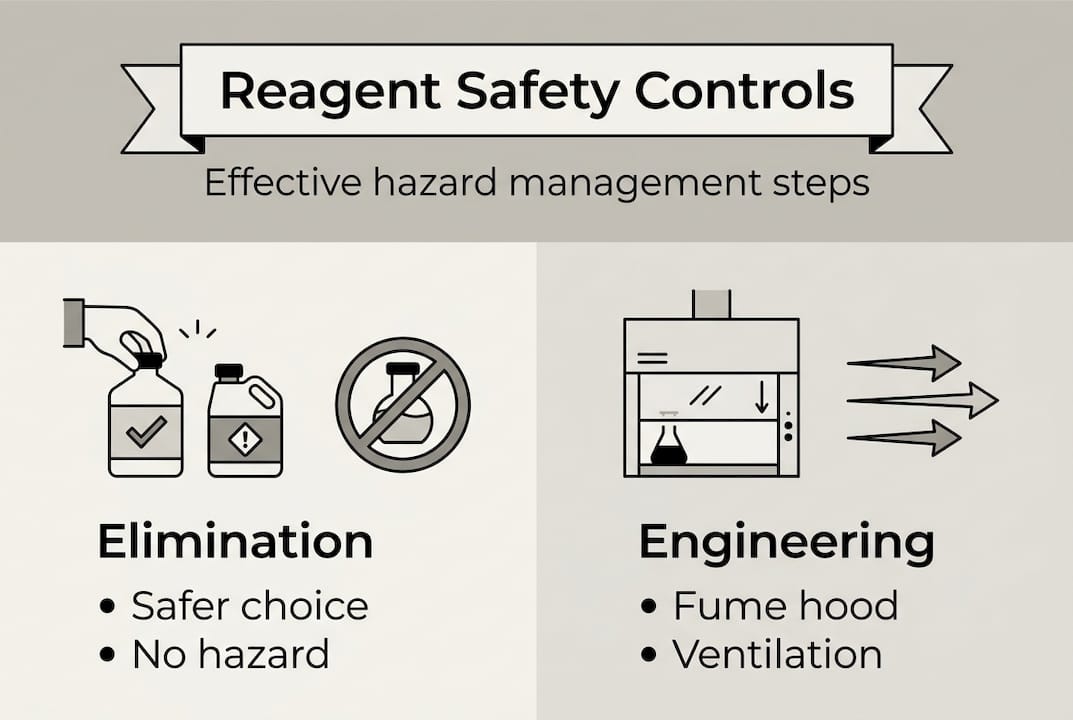
The hierarchy of controls guides hazard management decisions. Elimination removes the hazard entirely by choosing a safer experimental method. Substitution replaces hazardous reagents with less dangerous alternatives. Engineering controls like fume hoods and enclosed systems contain hazards at the source. Administrative controls include aseptic techniques during reagent preparation and standard operating procedures. PPE serves as the last line of defense when other controls prove insufficient.
Pro Tip: Create a quick reference card for each reagent you use frequently. List the specific PPE required, incompatible chemicals, spill response steps, and first aid measures. Laminate these cards and post them near storage areas for instant access during emergencies.
Safe storage practices for laboratory reagents
Proper storage prevents degradation, maintains reagent integrity, and eliminates dangerous interactions between incompatible chemicals. Segregation by compatibility groups forms the foundation of safe chemical storage. Acids must stay separated from bases to prevent violent neutralization reactions. Flammables require distance from oxidizers that can fuel combustion. Water-reactive materials need isolation from aqueous solutions.
The table below shows common compatibility groups and storage requirements:
| Chemical Group | Examples | Storage Requirements | Incompatible With |
|---|---|---|---|
| Flammables | Acetone, ethanol, hexane | Fire-resistant cabinet, cool area | Oxidizers, heat sources |
| Acids | HCl, sulfuric acid, acetic acid | Corrosion-resistant cabinet, ventilated | Bases, metals, water-reactives |
| Bases | NaOH, KOH, ammonia | Corrosion-resistant cabinet, separate from acids | Acids, metals |
| Oxidizers | Hydrogen peroxide, nitric acid | Cool, dry area away from organics | Flammables, reducing agents |
| Water-reactives | Sodium metal, calcium hydride | Dry cabinet with desiccant | Water, aqueous solutions, acids |
Dedicated storage cabinets provide essential protection. Fire-resistant cabinets for flammables must meet local fire codes and include self-closing doors, ventilation, and grounding for static discharge. Corrosion-resistant cabinets for acids and bases use specialized coatings or materials like polyethylene that resist chemical attack. Never mix chemical groups in the same cabinet, even on different shelves.
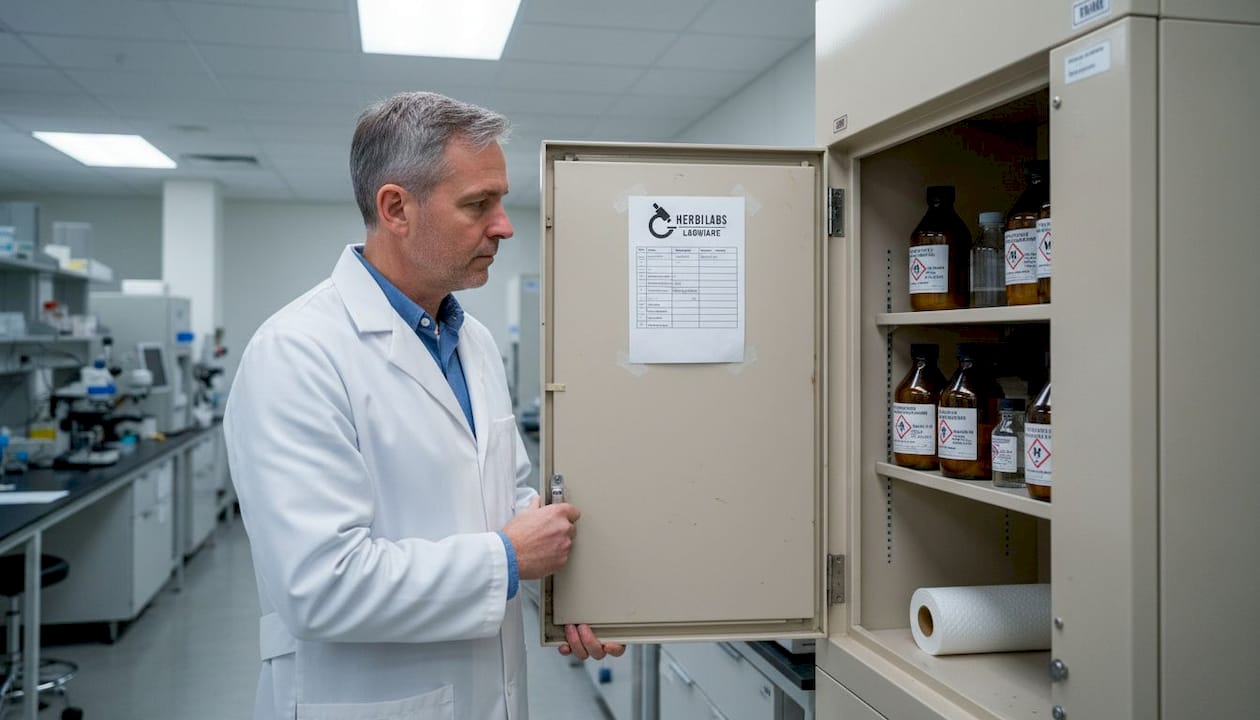
Temperature-sensitive reagents require monitored cold storage. Follow manufacturer storage instructions from SDS or Certificate of Analysis, and maintain temperature logs for fridges and freezers. Check temperatures daily and investigate any deviations immediately. Frost-free freezers create temperature fluctuations that can degrade sensitive reagents, so use manual defrost units for critical materials.
Labeling prevents costly mistakes and safety incidents. Every container needs a GHS/CLP pictogram showing hazard classification, the chemical name (not abbreviations or nicknames), concentration, date received, date opened, and expiry date. Secondary containers created during reagent transfers require identical labeling. Color-coding by hazard class provides quick visual identification but never replaces proper written labels.
Inventory management systems using barcodes or RFID tags enable tracking from receipt through disposal. Implement FIFO (first in, first out) rotation to use older stock before newer arrivals. Set alerts 90 days before expiration to allow time for use or proper disposal. This prevents waste and ensures you never use expired reagents that could compromise results.
Special materials demand extra attention. Peroxide formers like diethyl ether and tetrahydrofuran become explosive when peroxides accumulate. Date these reagents on receipt and discard after 12 months, even if unopened. Water-reactive materials like sodium and lithium require storage under mineral oil or inert gas. Hygroscopic substances need tightly sealed containers with desiccant to prevent moisture absorption. For detailed guidance on proper labeling and storing reconstituted samples, review specialized protocols.
Pro Tip: Photograph your chemical storage areas quarterly and compare images over time. This reveals gradual changes like container degradation, label fading, or accumulation that might escape daily notice.
Practices during reagent use to ensure safety and data integrity
Safe handling during reagent use requires constant attention to quantities, containment, and contamination prevention. Minimize quantities in use by transferring only what you need for immediate work. Smaller volumes reduce exposure risk and limit potential spill size. Return stock bottles to proper storage immediately after dispensing.
Fume hoods provide essential protection when working with volatile, toxic, or hazardous reagents. Use fume hoods for all volatiles and hazards, ensuring the hood passes annual certification and maintains proper face velocity. Work at least 6 inches inside the sash opening where airflow provides maximum protection. Never store reagents inside fume hoods because they block airflow and create clutter that increases accident risk.
Contamination prevention starts with proper dispensing technique. Never dip pipettes, spatulas, or other tools directly into reagent bottles. Pour liquids into clean intermediate containers or use dispensing pumps. For solids, use dedicated spatulas that never contact other chemicals. This prevents cross-contamination that can trigger unexpected reactions or compromise experimental results. Learn more about avoiding lab reconstitution contamination mistakes.
Spill response requires immediate, appropriate action:
- Assess the spill size and identify the chemical using container labels or SDS
- Alert nearby personnel and evacuate if the spill exceeds your training or available resources
- Don appropriate PPE before approaching the spill area
- Use SDS-specific spill kits designed for the chemical class involved
- Contain small spills (under 1 liter) using absorbent materials or neutralizing agents
- Report large spills to safety personnel immediately and do not attempt cleanup
- Dispose of contaminated materials according to hazardous waste protocols
- Decontaminate the affected area and document the incident
Secondary containment prevents spills from spreading. Use spill trays under reagent bottles during transfers and under equipment that processes liquids. These trays catch drips, leaks, and minor spills before they reach bench surfaces or floors. Size trays to hold at least 110% of the largest container volume they protect.
Pro Tip: Practice spill response procedures quarterly using water or non-hazardous liquids. This builds muscle memory and reveals gaps in your spill kit supplies or procedures before a real emergency occurs.
Verification and monitoring for reagent safety and effectiveness
Post-handling verification ensures reagents remain safe and effective throughout their lifecycle. Visual inspection before each use catches obvious degradation signs. Check for color changes, precipitate formation, cloudiness in normally clear liquids, or crystallization around bottle caps. Any unusual appearance warrants investigation before use.
Expiry dates require strict adherence. Reagent degradation leads to inaccurate results and safety risks because chemical properties change over time. Expired reagents may show reduced reactivity, increased impurities, or altered physical characteristics. Follow SDS and Certificate of Analysis guidance, and note that in-house prepared reagents expire no later than the stock materials used to create them.
Peroxide formers need specific testing. Use peroxide test strips or the KI/starch/HCl method monthly for ethers and other susceptible solvents. A positive test requires immediate disposal through proper hazardous waste channels. Never open containers showing crystallization around the cap, as peroxide crystals are shock-sensitive explosives.
The table below shows degradation indicators for common reagent types:
| Reagent Type | Degradation Signs | Testing Method | Action Required |
|---|---|---|---|
| Acids | Color change, precipitate | pH verification | Discard if outside spec |
| Bases | Crystallization, cloudiness | pH verification | Discard if outside spec |
| Solvents | Peroxide formation, discoloration | Peroxide test strips | Discard if positive |
| Buffers | pH drift, microbial growth | pH meter, visual | Remake or discard |
| Standards | Concentration change | Analytical verification | Discard and replace |
Documentation maintains traceability and supports quality systems. Log storage conditions, temperature excursions, dates opened, and any observations about reagent condition. These records prove compliance during audits and help troubleshoot unexpected experimental results. Digital systems simplify tracking but require regular backups.
Reagent integrity directly impacts data quality. Using degraded materials introduces variables that compromise reproducibility and accuracy. When results seem inconsistent, verify reagent condition before assuming equipment malfunction or technique errors. For specialized guidance on optimizing shelf life stability of critical materials, consult manufacturer resources.
Explore top-quality reagents and labware at Herbilabs
Implementing these best practices requires reliable reagents and proper supplies. Herbilabs Labware specializes in research-grade bacteriostatic water, sterile diluents, and reconstitution solutions manufactured to strict purity standards. Our products support safe reagent preparation and sample handling in research environments across the UK and Europe.
Whether you need guidance on bacteriostatic vs sterile water selection or detailed protocols for lab best practices for handling bac water, our resource library provides the technical information you need. We understand the challenges of maintaining reagent integrity and offer solutions backed by rigorous quality control. Explore our guides on optimizing shelf life and stability to ensure your research materials perform reliably. Visit Herbilabs today to discover how our products and expertise support your laboratory’s safety and accuracy goals.
Frequently asked questions
What is the best way to segregate chemicals in the lab?
Segregate by compatibility groups to prevent dangerous reactions. Store acids separately from bases, flammables away from oxidizers, and water-reactives isolated from aqueous solutions. Use dedicated cabinets for each major hazard class, with fire-resistant units for flammables and corrosion-resistant cabinets for acids and bases. Never rely on alphabetical storage, which places incompatible chemicals adjacent to each other.
How often should reagents be checked for expiry or degradation?
Inspect reagents visually before every use, checking for color changes, precipitate, or other degradation signs. Peroxide formers require testing monthly and disposal after 12 months, even if unopened. Flag expiry dates 90 days in advance using your inventory system to allow time for use or proper disposal. Temperature-sensitive materials in cold storage need daily temperature log checks.
What PPE is essential when handling laboratory reagents?
Essential PPE includes safety glasses or goggles, gloves, lab coat, and closed-toe shoes as baseline protection for all reagent work. Add face shields when splash hazards exist, particularly with corrosive liquids or reactions that generate aerosols. Select glove materials based on SDS recommendations for chemical compatibility. Replace PPE immediately if it becomes contaminated or damaged during use.
Why should reagents never be stored inside fume hoods?
Storing reagents in fume hoods blocks airflow, reduces hood effectiveness, and creates clutter that increases accident risk. Hoods need clear space for air circulation and safe work area. Storage also exposes reagents to continuous airflow that can accelerate evaporation of volatile materials and cause concentration changes. Keep only materials actively in use inside the hood, and return everything to proper storage locations immediately after completing work.
What should you do if a reagent shows signs of degradation?
Stop using the reagent immediately and quarantine it from active stock. Document the degradation signs, check the expiry date, and review storage logs for temperature excursions or other issues. Contact your safety officer or supervisor before disposal. Never attempt to “salvage” degraded reagents by mixing with fresh stock, as this contaminates good material. Dispose through proper hazardous waste channels and replace with fresh reagent before continuing experiments.
Recommended
- Aseptic Techniques During Reagent Preparation – A PRO Researcher’s 1# Checklist – Herbilabs Labware
- Lab Reconstitution: Avoid Contamination Mistakes Now – Herbilabs Labware
- Understanding Reconstitution Solutions in 2025 Research Environments – Herbilabs Labware
- Labeling & Storing Reconstituted Samples for perfect Traceability in 2025 – Herbilabs Labware