Private Label, White Label, Wholesale partnerships available - EU, USA and UK - Free shipping from €75
Bac Water for Peptides: Lab Professional’s 2026 Guide
Discover the essential guide on bac water for peptides. Learn about composition, storage, and techniques to enhance your lab practices in 2026.
TL;DR:
- Bacteriostatic water contains 0.9% benzyl alcohol to inhibit bacterial growth during peptide reconstitution. It allows multi-dose use for up to 28 days when stored properly, reducing contamination risk. Proper technique and storage are essential to preserve peptide activity and ensure research safety.
Bacteriostatic water, commonly called bac water, is defined as sterile water for injection containing 0.9% benzyl alcohol as a preservative, formulated specifically to inhibit bacterial proliferation in multi-dose vials. For researchers and lab technicians working with peptide reconstitution, bac water for peptides is the standard solvent of choice because it extends vial usability to 28 days post-puncture while maintaining microbiological safety. This guide covers composition, solvent selection, reconstitution technique, storage standards, and critical limitations, reflecting current 2026 laboratory protocols.
What is bac water and why does it matter for peptides?
Bacteriostatic water is a precisely formulated injectable solution. Its key composition includes 0.9% benzyl alcohol, a pH of 5.7, an osmolarity of approximately 286 mOsm/L, and endotoxin levels below 0.25 EU/mL. These specifications are not arbitrary. They reflect the minimum standards required to maintain both chemical stability and microbiological safety across repeated vial access.
The benzyl alcohol preservative inhibits bacterial reproduction without altering the chemical structure of dissolved peptides under normal conditions. This makes bacteriostatic water for peptides the preferred reconstitution solvent wherever multi-dose protocols are in use. Without a preservative, each vial puncture introduces contamination risk that accumulates with every subsequent access. Switching to bacteriostatic water is among the most impactful improvements researchers can make to preserve peptide activity across a study period.
How does bac water differ from sterile water and saline for peptide use?
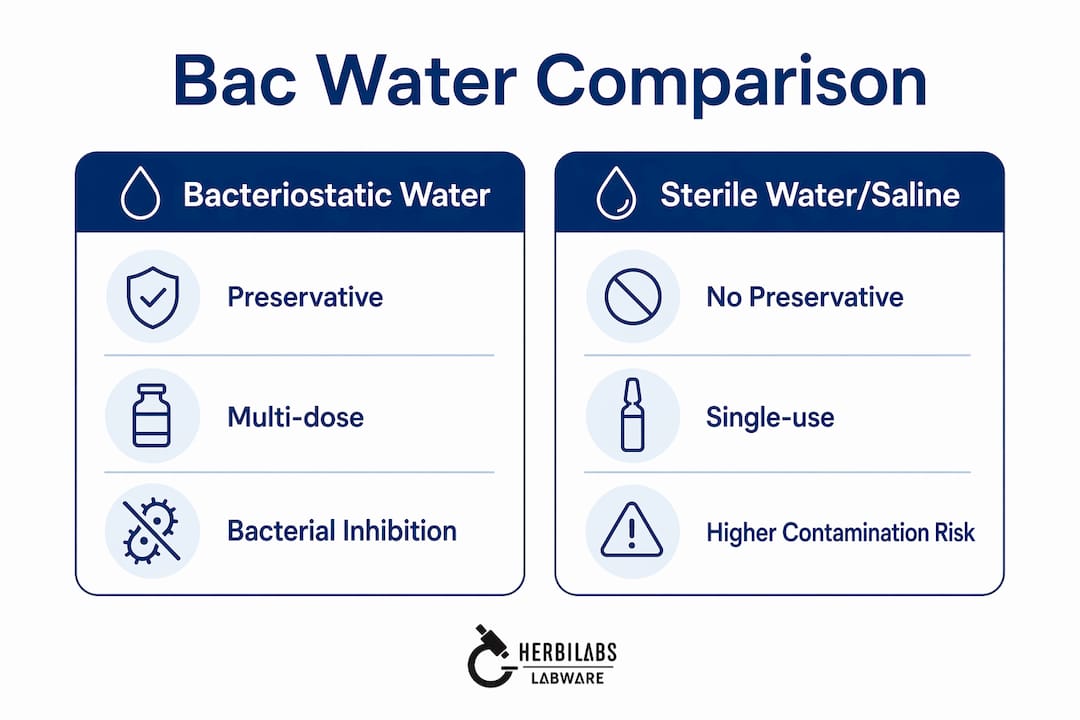
Solvent selection directly affects peptide stability, contamination risk, and protocol design. The three most commonly encountered options in peptide research are bacteriostatic water, sterile water for injection, and normal saline (0.9% sodium chloride). Each has a distinct profile.
| Property | Bacteriostatic water | Sterile water | Normal saline (0.9% NaCl) |
|---|---|---|---|
| Preservative | 0.9% benzyl alcohol | None | None |
| Multi-dose suitability | Yes, up to 28 days | No, single use only | Limited |
| Post-puncture window | 28 days refrigerated | Hours | Single use |
| Osmolarity | ~286 mOsm/L | ~0 mOsm/L | ~308 mOsm/L |
| Bacterial contamination risk | Low (inhibited) | High without preservative | Moderate |
| Typical peptide research use | Multi-dose vials, standard reconstitution | Single-use, preservative-sensitive peptides | Specific formulation requirements |
Sterile water for injection carries no preservative and must be discarded after a single use because bacterial growth risk becomes unacceptable within hours of vial puncture. Normal saline introduces sodium chloride, which can interfere with certain peptide assays or formulations where ionic strength is a controlled variable. Bacteriostatic water avoids both problems, making it the default choice for multi-dose peptide work in most research settings.
How to properly reconstitute peptides using bac water
Correct reconstitution technique determines whether a peptide retains full biological activity or is partially denatured before the first experiment begins. The process requires attention to volume, injection angle, and sterile handling at every step.
The following numbered protocol reflects current best practices for peptide reconstitution techniques:
- Confirm peptide vial contents. Verify the lyophilized peptide mass (in milligrams) and the target working concentration before calculating solvent volume.
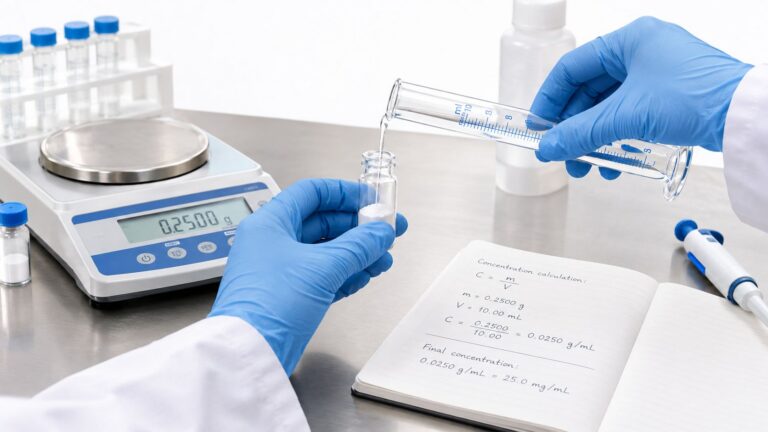
- Calculate reconstitution volume. The optimal volume for most peptide vials is 1–3 mL. Volumes below 1 mL produce overly concentrated solutions that are difficult to dose accurately. Volumes above 3 mL result in large injection volumes that reduce dosing precision.
- Swab all vial septa. Wipe both the bac water vial septum and the peptide vial septum with 70% isopropyl alcohol and allow to dry fully before needle insertion.
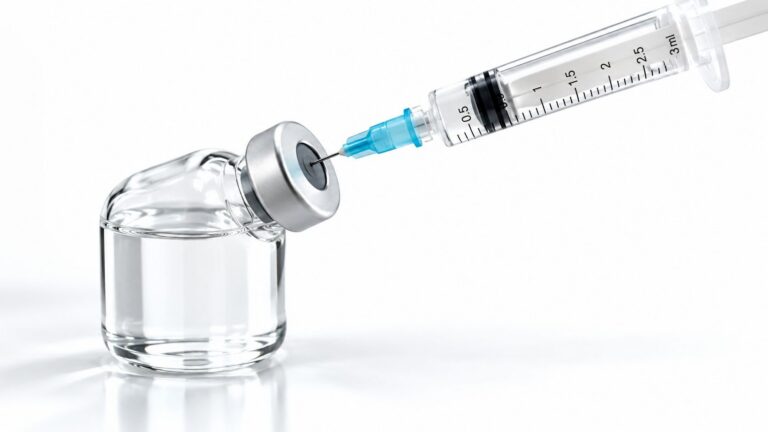
- Draw the calculated volume of bac water into a sterile syringe using a fresh needle.
- Inject slowly along the vial wall. Direct the stream down the inner glass wall of the peptide vial rather than onto the lyophilized powder. Injecting directly onto powder causes foaming and mechanical stress that denatures the peptide.
- Allow passive dissolution. Gently swirl or rotate the vial. Never vortex or shake. Vigorous agitation introduces the same mechanical denaturation risk as direct injection.
- Inspect the solution. The reconstituted solution should be clear and free of particulates before use. Cloudiness or visible aggregates indicate incomplete dissolution or degradation.
Pro Tip: If a peptide dissolves slowly, refrigerate the vial for 15–30 minutes and then gently swirl again. Adding a small amount of dilute acetic acid (0.1%) or DMSO is sometimes necessary for hydrophobic peptides, but confirm solvent compatibility with the peptide’s stability data first.
Sterile technique remains mandatory throughout this process. Benzyl alcohol inhibits bacterial reproduction but does not kill bacteria already introduced into a vial. Alcohol swabbing of vial tops before every access is the primary contamination prevention measure, not the preservative itself.
Storage and handling best practices for bac water and reconstituted peptides
Proper storage is the single most controllable variable in maintaining peptide integrity after reconstitution. Both opened bac water vials and reconstituted peptide solutions require refrigeration at 2–8°C immediately after use.
Key storage requirements for laboratory compliance in 2026:
- Refrigerate at 2–8°C. Store opened bac water vials and all reconstituted peptide solutions at 2–8°C. Room temperature storage accelerates both chemical degradation and the risk of benzyl alcohol failing to suppress bacterial growth adequately.
- Apply a 28-day beyond-use date. USP guidelines specify a 28-day post-puncture limit for opened bacteriostatic water vials stored under refrigeration. This is a safety mandate, not a guideline.
- Label vials immediately upon first puncture. Write the puncture date directly on the vial label at the time of first access. Failing to label the puncture date is a common oversight that creates compliance risk and can result in use of expired solution.
- Separate storage for peptide solutions. Reconstituted peptide solutions should be stored in clearly labeled, sealed vials away from light. Photodegradation is a documented risk for several peptide classes.
- Do not freeze reconstituted solutions. Freeze-thaw cycles disrupt peptide structure. Lyophilized powder is stable frozen; reconstituted solution is not.
- Track unopened shelf life. Unopened bacteriostatic water vials carry a shelf life of 2–3 years under manufacturer-specified conditions. Verify lot expiration dates before use.
Detailed bac water storage protocols for post-opening handling are available for researchers who need step-by-step refrigeration and labeling procedures aligned with current standards. Maintaining a log of puncture dates and solution preparation records also supports audit trails in regulated research environments.
Are there limitations or special considerations when using bac water for peptides?
Bacteriostatic water is not universally appropriate for every peptide or every research context. Several specific limitations require evaluation before selecting it as the reconstitution solvent.
Benzyl alcohol sensitivity in peptides. Some peptides show minor activity changes when exposed to benzyl alcohol. Researchers should consult the peptide’s stability data and published literature before defaulting to bac water. Where sensitivity is confirmed, preservative-free sterile water or another compatible solvent is the correct choice.
Bacteriostatic is not bactericidal. Benzyl alcohol inhibits bacterial reproduction but does not kill bacteria already present in a vial. This distinction is critical. A contaminated vial cannot be rendered safe by the preservative alone. Strict aseptic technique at every access point remains the primary defense against contamination.
Additional critical exceptions and precautions:
- Neonatal and low-birth-weight populations. Benzyl alcohol is contraindicated in neonates and low-birth-weight infants due to documented toxicity at accumulative doses. This applies to clinical and translational research contexts where subject populations include these groups.
- Large-volume parenteral use. Bac water is not intended for large-volume parenteral administration. It is formulated for small-volume reconstitution and dilution only.
- Peptide aggregation at low pH. The pH of 5.7 in bacteriostatic water can promote aggregation in peptides with isoelectric points near that range. Check the peptide’s isoelectric point before reconstitution.
- Incompatibility with certain excipients. Some lyophilized peptide formulations contain excipients that react with benzyl alcohol. Review the certificate of analysis for each peptide lot.
Pro Tip: When working with a new peptide for the first time, reconstitute a small test aliquot in bac water and assess solubility and clarity before committing the full vial. This avoids losing an entire batch to an incompatibility that could have been identified with a 50 µL trial.
Researchers who need guidance on solvent selection for specific peptide classes will find that matching solvent properties to peptide chemistry is as important as the reconstitution technique itself.
Key takeaways
Bacteriostatic water is the correct multi-dose reconstitution solvent for most peptides, but its 28-day post-puncture limit, strict storage requirements, and benzyl alcohol limitations require active management to protect research integrity.
| Point | Details |
|---|---|
| Composition defines function | Bac water contains 0.9% benzyl alcohol, pH 5.7, and osmolarity ~286 mOsm/L, enabling safe multi-dose use. |
| 28-day limit is mandatory | USP standards require discarding opened bac water after 28 days refrigerated at 2–8°C, not as a suggestion. |
| Reconstitution volume matters | Use 1–3 mL per vial to balance concentration accuracy and injection volume for dosing precision. |
| Technique prevents denaturation | Inject bac water slowly along the vial wall to avoid foaming and mechanical peptide degradation. |
| Benzyl alcohol has limits | Some peptides are sensitive to benzyl alcohol; always verify compatibility with stability data before use. |
Reconstitution precision: what lab experience actually teaches
The technical specifications for using bac water are well-documented. What gets less attention is how often experienced researchers still make avoidable errors, not from ignorance of the protocol, but from the accumulated shortcuts of a busy lab.
The most common mistake I observe is the direct injection error. Researchers who know the wall-injection rule still rush it under time pressure, and the result is a foamy vial that looks recoverable but has already lost a measurable fraction of active peptide. The peptide does not announce its denaturation. The solution clears, the experiment proceeds, and the data is slightly off in ways that take weeks to trace back to reconstitution technique.
The second issue is labeling. The 28-day rule is clear, but vials in shared refrigerators routinely go unlabeled. A puncture date written in permanent marker on the vial takes three seconds. The cost of skipping it is a contamination event or a compliance failure that takes considerably longer to resolve.
What I find genuinely underappreciated is the volume calculation step. Researchers often default to a round number, 1 mL or 2 mL, without calculating the actual target concentration. The result is either a solution that requires impractically small injection volumes for accurate dosing or one dilute enough to require volumes that cause discomfort in in vivo applications. Spending two minutes on the concentration calculation before drawing up the syringe eliminates both problems.
The 2026 updates to USP storage guidance have tightened documentation requirements for beyond-use dating in research settings. Labs that have not updated their standard operating procedures to reflect these changes are operating on outdated protocols. Reviewing your current SOPs against current USP standards is a straightforward audit that pays for itself the first time it prevents a batch loss.
— Ragnar
Herbilabs bac water for professional peptide research
Researchers who need pharmaceutical-grade bacteriostatic water manufactured to strict purity standards will find Herbilabs’ product range built specifically for this application. Every vial is produced in a dedicated facility with rigorous quality control, endotoxin testing, and full traceability, meeting the standards that professional peptide research demands.

Herbilabs supplies research institutions, universities, and independent researchers across the UK and Europe with high-purity bac water formulated for multi-dose peptide reconstitution. The 2026 lab professional’s guide covers product specifications, storage compliance, and ordering options for both individual researchers and wholesale accounts. For labs requiring consistent supply with documented quality assurance, Herbilabs also offers top-rated reconstitution solutions suited to a range of peptide research applications. Secure ordering, customer support, and wholesale pricing are available directly through the Herbilabs webshop.
FAQ
What is bac water for peptides?
Bac water for peptides is sterile water for injection containing 0.9% benzyl alcohol, used to dissolve lyophilized peptides for multi-dose research applications. The benzyl alcohol preservative inhibits bacterial growth for up to 28 days after the vial is first punctured.
How do you mix peptides with bac water?
Draw the calculated volume of bac water (typically 1–3 mL) into a sterile syringe, swab the peptide vial septum with 70% isopropyl alcohol, and inject slowly along the inner vial wall. Never inject directly onto the lyophilized powder, as this causes foaming and peptide denaturation.
How long does bac water last after opening?
Opened bacteriostatic water vials are stable for 28 days when stored at 2–8°C, as specified by USP guidelines. The vial must be labeled with the puncture date at first access and discarded after 28 days regardless of remaining volume.
Can all peptides be reconstituted with bac water?
Most peptides are compatible with bacteriostatic water, but some show reduced activity when exposed to benzyl alcohol. Researchers should consult the peptide’s stability data and certificate of analysis before using bac water, and switch to preservative-free sterile water when sensitivity is confirmed.
Is bac water the same as sterile water?
Bacteriostatic water and sterile water are not the same. Sterile water contains no preservative and must be discarded after a single use due to contamination risk. Bacteriostatic water contains 0.9% benzyl alcohol, which allows safe multi-dose use over a 28-day post-puncture window.