Private Label, White Label, Wholesale partnerships available - EU, USA and UK - Free shipping from €75
Research Use Only Water Solution: 2026 Lab Guide
Discover the importance of the research use only water solution. Learn about selection criteria, handling protocols, and enhance your lab results!
TL;DR:
- Research use only water solutions are specialized aqueous preparations created solely for scientific and research settings, not for clinical or therapeutic purposes. Selecting the correct type, such as bacteriostatic water for peptide reconstitution or ultrapure Type I water for analytical work, is crucial to prevent contamination, ensure reproducibility, and maintain experimental integrity.
A research use only water solution is defined as a specialized aqueous preparation manufactured exclusively for controlled scientific and research environments, not for clinical or therapeutic administration. The two primary categories are bacteriostatic water for injection (BWFI), used in multi-dose peptide reconstitution, and ultrapure Type I water, used in sensitive analytical workflows such as HPLC and ICP-MS. Selecting the wrong category is not a minor procedural error. It introduces contamination variables, compromises reproducibility, and can invalidate entire experimental datasets. This guide covers formulation, quality standards, selection criteria, and handling protocols for both types.
What is a research use only water solution?
Research use only water solutions refer to either bacteriostatic water for peptide reconstitution or purified and ultrapure water for buffers and analytical instruments. Conflating these two types causes quality mismatches that affect storage assumptions, purity requirements, and experimental outcomes. The designation “research use only” (RUO) signals that the product is not approved for diagnostic or therapeutic use. It is manufactured to strict purity and sterility standards appropriate for laboratory research protocols.
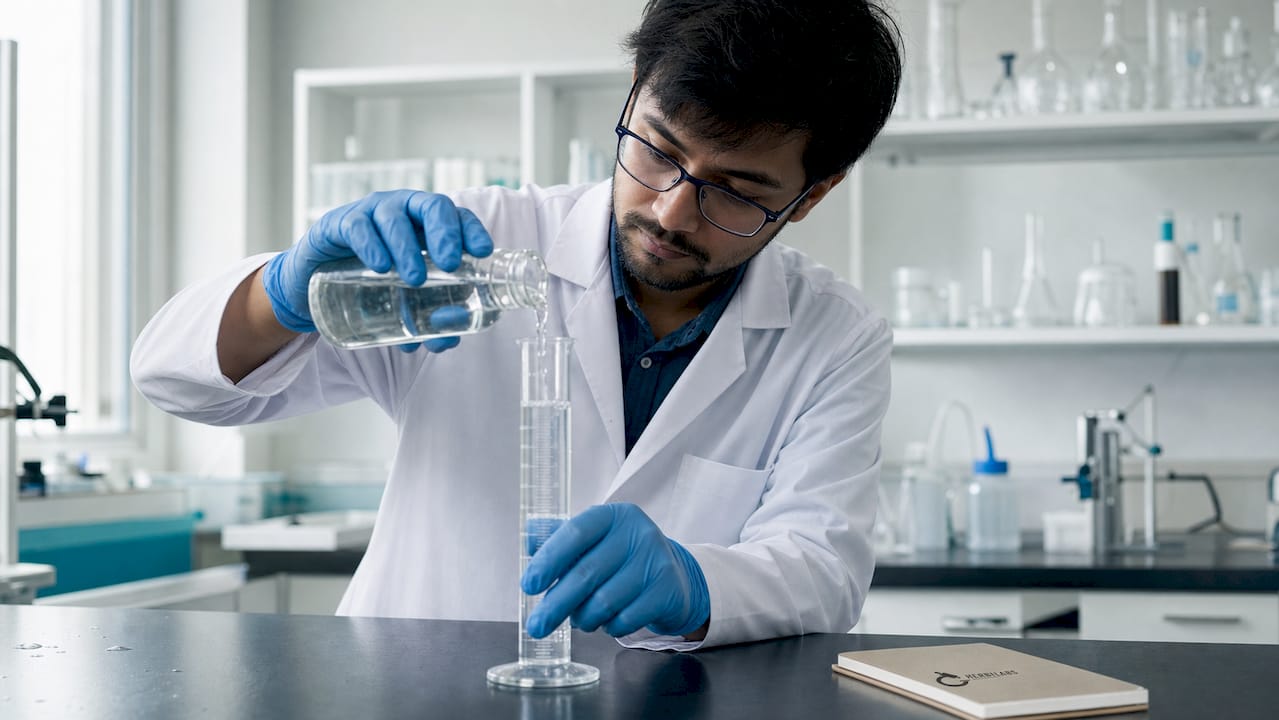
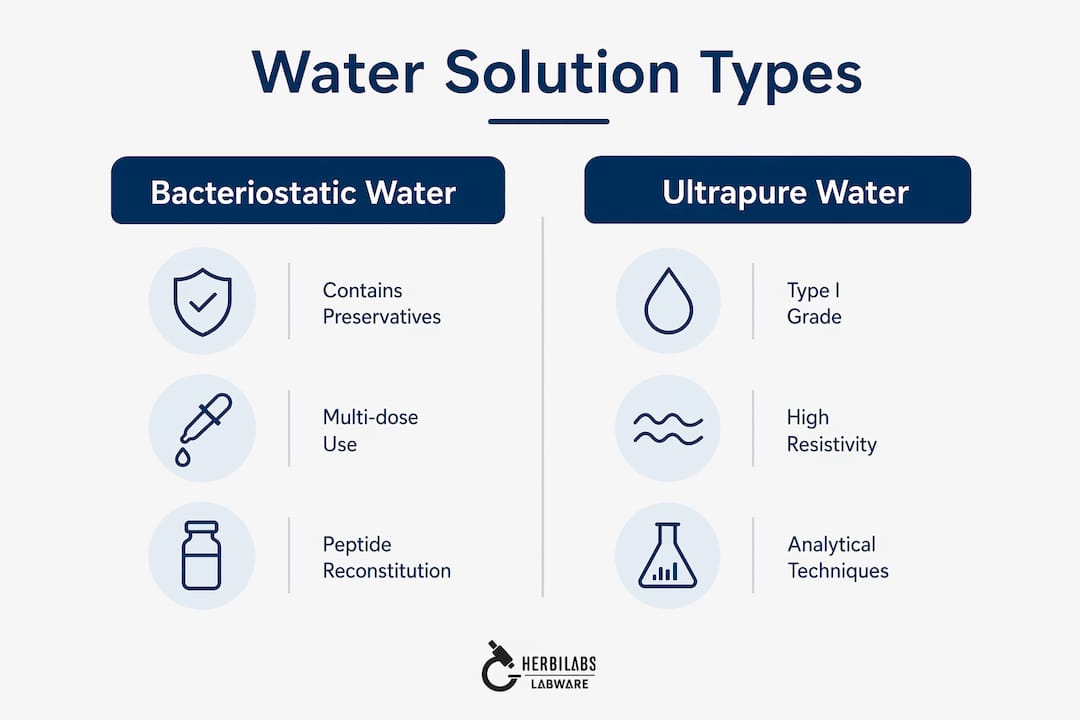
Bacteriostatic water contains a preservative that extends multi-dose vial usability. Ultrapure water contains no additives and is defined entirely by its ionic and organic purity. Both are aqueous solutions for research, but they serve fundamentally different functions and must never be substituted for one another.
What is bacteriostatic water and why is it essential for peptide reconstitution?
Bacteriostatic water for injection is formulated to USP Water for Injection standards and contains 0.9% benzyl alcohol as a preservative. That preservative inhibits microbial growth, maintaining vial sterility across repeated punctures for up to 28 days. This property makes BWFI the standard reconstitution vehicle for lyophilized peptides in research settings where multi-dose access is required.
Sterile water for injection, by contrast, contains no preservative. It is suitable for single-use reconstitution only. Once a sterile water vial is punctured, microbial contamination risk increases with each subsequent access. For peptide research protocols requiring repeated vial punctures over days or weeks, BWFI with benzyl alcohol is the correct choice.
Common research applications for bacteriostatic water include:
- Reconstitution of lyophilized peptides such as growth hormone-releasing peptides and research-grade GLP-1 analogs
- Preparation of multi-dose peptide stocks for longitudinal in vitro studies
- Dissolution of lyophilized proteins requiring repeated aliquoting over extended experimental timelines
- Preparation of aqueous solutions for research requiring preservative-maintained sterility
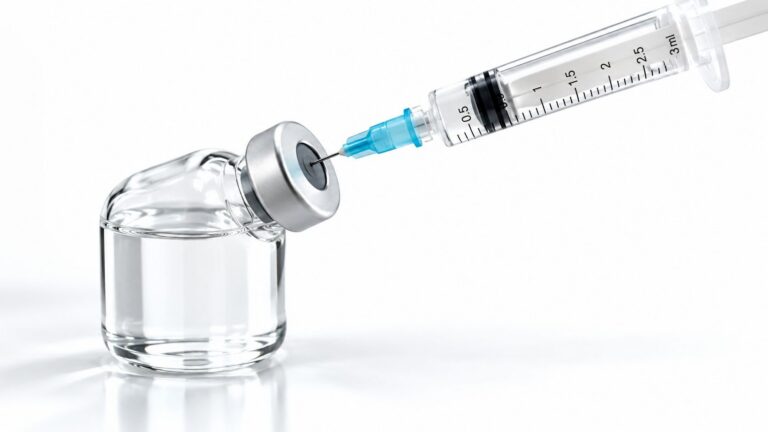
Pro Tip: When reconstituting a lyophilized peptide, inject the bacteriostatic water slowly down the inner wall of the vial rather than directly onto the lyophilized cake. This minimizes mechanical disruption of the peptide structure and reduces aggregation risk.
Storage after reconstitution matters as much as the reconstitution process itself. BWFI-reconstituted peptides are typically stored at 2–8°C and used within the 28-day preservative window. Freezing a reconstituted peptide in bacteriostatic water is generally not recommended, as repeated freeze-thaw cycles degrade both the peptide and the benzyl alcohol preservative efficacy. Reviewing the top reconstitution solutions available in 2026 can help researchers match vial volume to protocol needs.
How does ultrapure type i water differ and when should it be used?
Ultrapure water is defined by a resistivity of 18.2 MΩ·cm at 25°C, which represents the theoretical maximum for ionic purity in liquid water. This benchmark indicates that ionic contamination is effectively absent. Any deviation below 18.2 MΩ·cm signals the presence of dissolved ions that can interfere with sensitive instruments.
The three standard grades of laboratory water solutions are distinguished by their purity specifications:
| Water Grade | Resistivity | Primary Applications |
|---|---|---|
| Type I (Ultrapure) | 18.2 MΩ·cm | HPLC, ICP-MS, LC-MS, cell culture media |
| Type II (Purified) | ≥1 MΩ·cm | General buffers, reagent preparation, glassware rinsing |
| Type III (RO Water) | ≥0.05 MΩ·cm | Feed water for Type I/II systems, autoclave water |
Type I water is the correct choice for any analytical technique where trace ionic or organic contamination would produce signal artifacts. In ICP-MS, for example, dissolved metal ions at parts-per-trillion concentrations produce false positive signals. In LC-MS workflows, organic contaminants generate ghost peaks that complicate spectral interpretation. Type II water is adequate for buffer preparation and general reagent work. Type III water is not suitable as a final-use laboratory water solution for any research-grade application.
Resistivity alone does not fully characterize ultrapure water quality. Monitoring water resistivity is the foundational step for verifying ionic purity, but it must be complemented by tests for total organic carbon (TOC), endotoxin levels, and microbial load for sensitive biological and analytical applications. TOC values below 5 ppb are standard for Type I water used in cell-based assays. Endotoxin control becomes critical when water contacts biological samples or culture media.
Pro Tip: Never collect ultrapure water into a container and store it for later use. CO2 absorption from ambient air begins immediately after collection, lowering resistivity and introducing carbonic acid. Draw Type I water directly into your preparation vessel at point of use.
What are the critical quality standards governing research water solutions?
Regulatory standards for laboratory water include USP, ASTM, ISO, and CLSI, each defining purity specifications at different levels of stringency depending on application context. USP standards govern bacteriostatic water for injection, specifying acceptable preservative concentrations, sterility testing, and endotoxin limits. ASTM D1193 and ISO 3696 define purity grades for analytical laboratory water, providing the framework that Type I, II, and III classifications are built upon.
FDA regulations classify RUO products as distinct from in vitro diagnostic (IVD) or clinical-use products. RUO designation means the product is intended solely for research purposes and has not undergone the regulatory review required for diagnostic or therapeutic applications. This distinction carries practical implications for procurement and documentation.
Key compliance considerations for research-grade water procurement include:
- Certificate of Analysis (CoA) confirming resistivity, TOC, endotoxin, and microbial specifications for each batch
- Traceability documentation linking production batches to raw material sources and quality control records
- Confirmation that bacteriostatic water meets USP Water for Injection monograph requirements
- Verification that aqueous reference solutions used for instrument calibration carry SI-traceable concentration values
- Supplier audits or third-party quality certifications confirming manufacturing facility standards
Batch consistency is a non-negotiable requirement for reproducible research. A supplier that cannot provide batch-specific CoA documentation introduces an uncontrolled variable into every experiment that uses their product. Verifying research-grade water quality at the supplier level is as important as verifying it at the point of use.
How to select and handle the right water solution for your lab
Matching water type to protocol requirements is the first decision. Peptide reconstitution requires bacteriostatic water when multi-dose access is planned. Single-use reconstitution can use sterile water for injection, but BWFI is the safer default for most peptide research workflows. Analytical instrument preparation, mobile phase preparation for HPLC, and cell culture media formulation all require Type I ultrapure water.
Use the following numbered checklist when selecting a water-based research solution for a new protocol:
- Define the application. Peptide reconstitution, buffer preparation, instrument calibration, and cell culture each have different purity requirements.
- Determine single-use versus multi-dose access. Multi-dose vial access over days or weeks requires a benzyl alcohol-preserved solution.
- Identify the critical quality parameters. Resistivity, TOC, endotoxin, and microbial load are the four primary specifications to verify.
- Confirm supplier documentation. Request batch-specific CoA before ordering. Reject suppliers who cannot provide it.
- Assess storage requirements. BWFI-reconstituted peptides are stored at 2–8°C for up to 28 days. Ultrapure water must be used at point of collection.
- Review handling protocols. Consult bacteriostatic water handling practices to minimize contamination during vial access and reconstitution.
Pro Tip: Label every reconstituted vial with the reconstitution date, water lot number, and peptide concentration. This creates a traceable record that supports data reproducibility and simplifies troubleshooting if results are inconsistent.
Common pitfalls in water solution handling include using the same syringe for multiple vial punctures, storing ultrapure water in open containers, and failing to verify that a supplier’s “sterile water” product actually meets USP Water for Injection specifications. Each of these errors introduces contamination variables that are difficult to detect and harder to correct after the fact.
What are the implications of water purity on research accuracy?
Water purity directly determines signal quality in analytical instruments and biological validity in cell-based assays. Ionic contaminants in water used for HPLC mobile phase preparation suppress analyte signals and shift retention times. In ICP-MS, dissolved metals at sub-ppb concentrations produce false positives that cannot be distinguished from genuine sample signals without rigorous blank subtraction.
The high-purity water benefits for scientific research extend beyond instrument performance. Endotoxin contamination in water used for cell culture or in vitro biological assays activates innate immune pathways in sensitive cell lines, producing cytokine responses that confound biological readouts. Microbial contamination in peptide stocks degrades the peptide itself, reducing effective concentration and introducing protease activity.
Strategies that leading research labs use to validate water quality at point of use include:
- Inline resistivity monitoring on ultrapure water systems with automatic alerts when values drop below 18.0 MΩ·cm
- Periodic TOC testing using a dedicated TOC analyzer, with acceptance criteria set below 5 ppb for Type I applications
- Endotoxin testing via Limulus Amebocyte Lysate (LAL) assay for water used in biological experiments
- Microbial plate counts performed monthly on water system output to detect biofilm formation in distribution lines
“Ultrapure water systems can degrade due to cartridge exhaustion or contamination; continuous verification of resistivity and other parameters ensures reliable quality.” Source: Type 1 Water Specifications and Applications
Lab water quality control is not a one-time verification. It is an ongoing monitoring program. Cartridge exhaustion in ultrapure water systems occurs gradually, and resistivity decline often precedes visible contamination by days or weeks. Establishing a scheduled maintenance and verification calendar prevents quality failures from propagating into experimental data undetected.
Key takeaways
Selecting the correct research use only water solution requires matching the water type, purity grade, and preservative status to the specific demands of each protocol.
| Point | Details |
|---|---|
| Bacteriostatic water for multi-dose use | BWFI with 0.9% benzyl alcohol maintains vial sterility for up to 28 days across repeated punctures. |
| Type I ultrapure water for analytical work | 18.2 MΩ·cm resistivity is the standard for HPLC, ICP-MS, and LC-MS applications. |
| Quality standards require documentation | Batch-specific CoA covering resistivity, TOC, endotoxin, and microbial load is non-negotiable for reproducible research. |
| Water type mismatch causes experimental error | Applying bacteriostatic water where ultrapure water is required, or vice versa, introduces uncontrolled variables. |
| Point-of-use verification is mandatory | Inline resistivity monitoring and periodic TOC and endotoxin testing protect data integrity throughout the research workflow. |
Why researchers still get this wrong in 2026
I have reviewed procurement records and protocol documentation from independent research groups where bacteriostatic water was listed as the reconstitution vehicle for a peptide stock, and ultrapure water was listed as the mobile phase additive for the same experiment. On the surface, both entries look correct. The problem appears when you trace the actual products ordered: the lab had purchased a single “research-grade water” product and used it for both applications. That is a fundamental error, and it is more common than most researchers would admit.
The confusion persists because the phrase “research use only” appears on both product labels. Researchers interpret the label as a quality descriptor rather than a regulatory classification. It is both, but the quality specifications for bacteriostatic water and ultrapure water are not interchangeable. Benzyl alcohol, which makes BWFI suitable for multi-dose peptide work, would be a contaminant in an HPLC mobile phase. Ultrapure water, which lacks any preservative, would allow microbial growth in a multi-dose peptide vial within days.
My observation after working closely with peptide research supply chains is that the solution is not more complex testing. It is clearer protocol documentation at the point of water selection. Every protocol should specify water type, grade, and preservative status as distinct fields, not as a single “water” entry. Suppliers who provide clear product differentiation and batch documentation make this easier. Those who do not are a liability to your data.
The future of laboratory water solutions points toward integrated inline monitoring systems that log quality parameters in real time and flag deviations automatically. That technology exists today in high-end ultrapure water systems from manufacturers like ELGA LabWater and Merck Millipore. The gap is adoption in smaller independent research settings where budget constraints favor periodic manual testing over continuous monitoring. Closing that gap will meaningfully improve reproducibility across the research community.
— Ragnar
Explore premium research water solutions at Herbilabs
Herbilabs supplies bacteriostatic water and sterile reconstitution solutions manufactured to USP Water for Injection standards, with batch-specific CoA documentation provided for every order. Products are formulated in a dedicated facility with rigorous quality control, making them suitable for demanding peptide research workflows and analytical laboratory applications across the UK and Europe.
Researchers working with lyophilized peptides can select from the top reconstitution solutions available in 2026, including 3 ml, 10 ml, and 20 ml vial formats optimized for different protocol volumes. For guidance on proper storage and handling after reconstitution, the bac water handling guide covers contamination prevention, storage temperature protocols, and shelf life management in detail. Herbilabs also provides wholesale pricing for research institutions and resellers requiring consistent, high-volume supply.
FAQ
What does “research use only” mean on a water solution label?
“Research use only” (RUO) designates a product manufactured for laboratory research applications and not approved for diagnostic or therapeutic use. It is a regulatory classification, not solely a quality descriptor.
Can bacteriostatic water be used instead of ultrapure water for HPLC?
No. Bacteriostatic water contains 0.9% benzyl alcohol, which would contaminate HPLC mobile phases and produce interfering peaks. HPLC and other analytical techniques require Type I ultrapure water at 18.2 MΩ·cm.
How long does bacteriostatic water preserve a reconstituted peptide vial?
BWFI preserves multi-dose vial sterility for up to 28 days when stored at 2–8°C. After 28 days, the preservative efficacy is no longer guaranteed and the vial should be discarded.
What quality parameters should i verify when purchasing research-grade water?
Verify resistivity, total organic carbon (TOC), endotoxin levels, and microbial count. Each parameter addresses a different contamination risk, and a batch-specific CoA should confirm all four values.
Is type II purified water acceptable for peptide reconstitution?
Type II water lacks both the preservative content of BWFI and the ionic purity of Type I water. It is not the appropriate choice for peptide reconstitution or sensitive analytical preparation. Use BWFI for reconstitution and Type I water for analytical workflows.