Private Label, White Label, Wholesale partnerships available - EU, USA and UK - Free shipping from €75

Single-Use Labware Explained for Lab Professionals
Discover how to explain single-use labware and its crucial role in preventing contamination. Enhance your lab practices today!
TL;DR:
- Single-use labware, made from polymers like polystyrene and polypropylene, prevents contamination and ensures sterility during laboratory workflows. It offers advantages over reusable alternatives by reducing cross-contamination risks, improving batch consistency, and lowering infrastructure costs, while facing environmental challenges from plastic waste. Careful selection based on certification standards and proper inventory management optimize safety, compliance, and operational resilience.
Single-use labware is defined as polymer-based disposable equipment designed for one-time contact with reagents, biological samples, or cell cultures to prevent contamination and maintain sterility throughout a workflow. These consumables, which include pipette tips, petri dishes, centrifuge tubes, sterile filters, and shake flasks, are foundational to modern laboratory practice. To explain single-use labware accurately, you must understand both its material composition and its role in eliminating cross-contamination risks that reusable alternatives cannot fully eliminate. A single researcher generates between 30 kg and 1 ton of plastic waste annually, which signals the scale at which these products are consumed globally. Over 80% of American biopharmaceutical companies now use single-use bioreactor technology, reflecting how deeply disposable labware has penetrated regulated scientific environments.
What materials and standards define single-use labware?
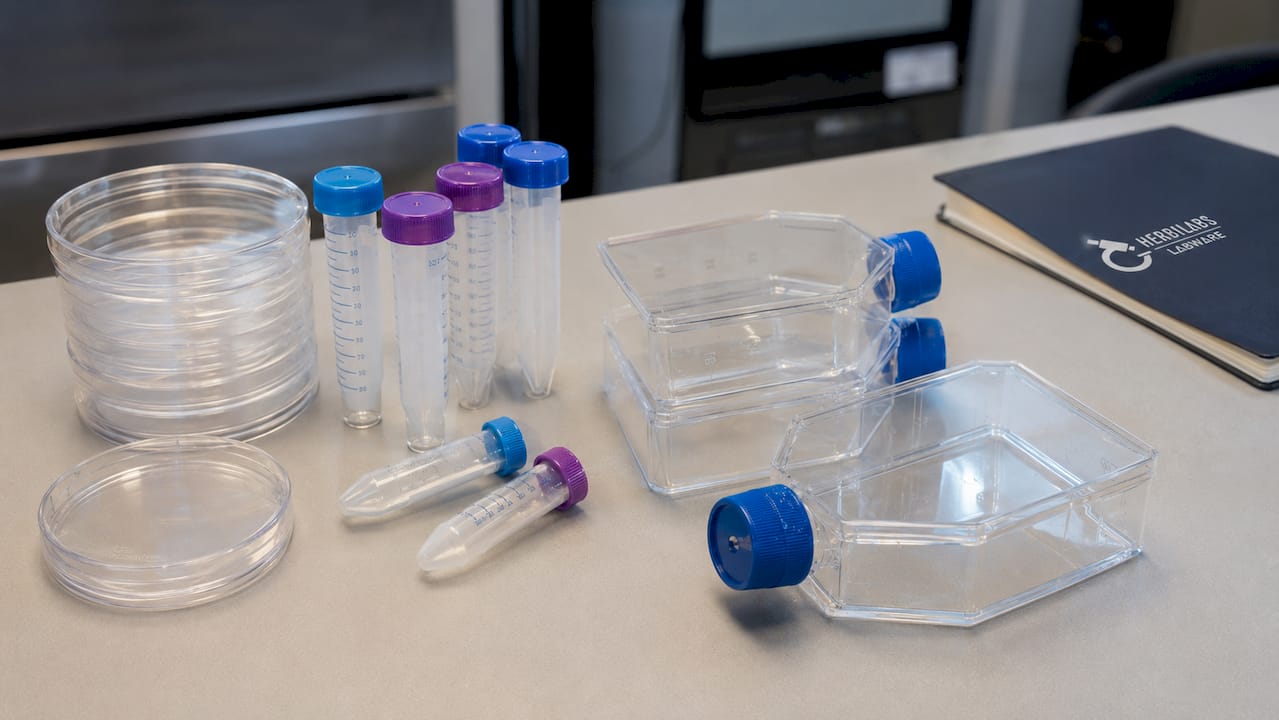
Single-use labware is manufactured from a range of synthetic polymers, each selected for specific chemical and biological compatibility requirements. The most common materials include polystyrene (PS), polyethylene (PE), polypropylene (PP), polyethylene terephthalate glycol (PETG), and polycarbonate (PC). Polystyrene dominates cell culture applications because of its optical clarity and surface treatment compatibility. Polypropylene is preferred for centrifuge tubes and reagent containers due to its resistance to a broad range of solvents and its tolerance of autoclave temperatures, though single-use items are rarely autoclaved after use.
Manufacturing standards govern the safety and reliability of these products in ways that directly affect experimental outcomes. The most cited certification is USP Class VI biocompatibility, which confirms that a polymer does not release biologically harmful leachables under physiological conditions. Sterility assurance level, expressed as SAL 10^-6, means there is no more than a one-in-one-million probability of a viable microorganism surviving the sterilization process. Gamma irradiation is the sterilization method of choice for most single-use plastics because it penetrates sealed packaging without leaving chemical residues. Individual packaging preserves sterility from the point of manufacture to the point of use.
A distinction that matters for compliance and waste accounting is the difference between primary single-use components and reusable secondary housings. A single-use bioprocess bag, for example, is the primary contact item and is discarded after one use. The stainless steel or rigid plastic housing that holds the bag is reusable. Recognizing this boundary is critical for both regulatory documentation and accurate waste reporting.
- Polystyrene (PS): Preferred for cell culture plates, petri dishes, and serological pipettes
- Polypropylene (PP): Used for centrifuge tubes, microcentrifuge tubes, and reagent reservoirs
- PETG: Common in bioprocess bags and media storage containers
- Polycarbonate (PC): Applied in high-clarity bottles and centrifuge bottles requiring optical inspection
- USP Class VI: Confirms biocompatibility for direct contact with biological samples
- SAL 10^-6: The sterility standard required for items used in aseptic processing
Pro Tip: When selecting single-use labware for sensitive assays such as PCR or ELISA, verify that the product carries both USP Class VI certification and a documented leachables profile from the manufacturer. A certificate of conformance alone is insufficient for regulated workflows.
For a detailed comparison of labware purity standards and how they affect experimental outcomes, Herbilabs provides a thorough reference covering certification hierarchies and risk assessment.
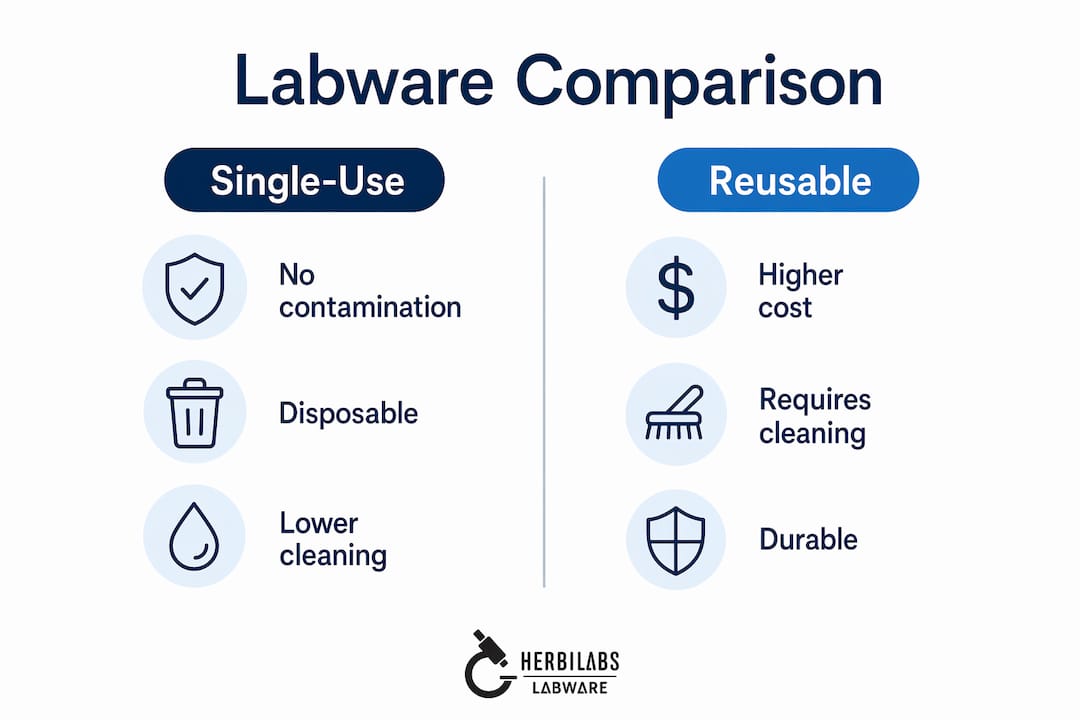
What are the key advantages of single-use labware vs. reusable?
The primary advantage of single-use labware is the elimination of cross-contamination risk. Reusable glassware and plasticware carry residual biological material, nucleic acids, and detergent traces even after validated cleaning cycles. In PCR workflows, a single contaminated tube can invalidate an entire plate. In cell culture, residual detergent from inadequate washing causes cytotoxicity that mimics experimental effects, producing false results. Single-use items minimize residual detergent contamination and deliver more consistent sterility and material purity profiles than reusable alternatives.
The economic argument for disposables is more nuanced than it first appears. The upfront cost of a single plastic petri dish is low, but the true comparison requires accounting for the full cost of reusable alternatives.
| Cost Factor | Single-Use Plastic | Reusable Glass |
|---|---|---|
| Per-unit purchase cost | Low | Higher upfront |
| Cleaning labor | None | Significant |
| Sterilization infrastructure | Not required | Required |
| Validation documentation | Supplier-provided | Lab-generated |
| Risk of cleaning failure | Eliminated | Present |
| Batch-to-batch variability | Standardized | Variable |
Purchasing 10 reusable glass petri dishes costs roughly the same as 600 single-use plastic dishes when labor and cleaning infrastructure are factored in. Cleaning and sterilization infrastructure can account for up to 13% of a facility’s annual production costs. That figure alone justifies the shift to disposables in high-throughput environments.
“Standardized manufacturing of single-use items reduces batch-to-batch variability and improves experimental reproducibility compared to manual cleaning cycles.” — FDCELL, Single-Use Shake Flask Research
Single-use shake flasks are replacing glass flasks in biopharma because they eliminate cleaning steps, reduce contamination risk, and deliver consistent surface chemistry across production runs. This reproducibility benefit is particularly significant in upstream bioprocessing, where cell growth kinetics are sensitive to surface conditions.
Pro Tip: In regulated environments such as GMP manufacturing or clinical diagnostics, the documentation burden for reusable labware validation often exceeds the cost of switching to certified single-use alternatives. Request a full cost-of-quality analysis from your procurement team before defaulting to reusables.
For a broader view of how disposable labware compares to glassware across cost, safety, and workflow efficiency, Herbilabs has published a detailed scientist’s guide covering the full decision framework.
What are the environmental and operational impacts?
The environmental cost of single-use labware is real and quantifiable. Global lab plastic waste may reach 687 million metric tonnes by 2050 if current consumption trends continue. That projection demands that laboratory professionals treat disposable labware as a resource management question, not just a convenience decision.
The comparison between single-use and reusable systems on environmental grounds is not straightforward. Single-use systems consume fewer resources like water and energy for low-volume applications up to 2,000 L compared to autoclaving glassware. Autoclaving requires significant energy input, water consumption, and chemical detergents that themselves carry environmental and safety implications. At small to medium scales, the carbon footprint of a single-use workflow can be lower than the equivalent reusable workflow when full lifecycle analysis is applied.
Operational resilience is a separate but equally important consideration. Supply chain disruptions can halt laboratory work dependent solely on disposables. The COVID-19 pandemic demonstrated this vulnerability when global shortages of pipette tips and PCR consumables delayed critical research and diagnostic work. Maintaining inventory buffers or integrating validated reuse strategies provides operational insurance against such disruptions.
The following factors should inform your environmental and operational assessment:
- Plastic waste volume: Track consumption per researcher and per project to identify reduction targets
- Energy and water savings: Calculate autoclave cycles avoided when switching to single-use at relevant scales
- Supply chain exposure: Identify which single-use items have no validated reusable substitute and prioritize buffer stock for those
- Validated reuse protocols: Validated cleaning cycles allow reusability for some plasticware, but require rigorous protocols to remove biological residues
- Waste segregation: Separate biohazardous single-use waste from non-contaminated plastics to enable recycling where regulations permit
The most defensible position is not a blanket adoption of single-use or a blanket rejection of it. The decision requires a task-level analysis that weighs contamination risk, scale, regulatory requirements, and supply chain exposure simultaneously.
How to select and implement single-use labware in your workflow
Decisions on using single-use labware should be made at the consumable level, not as a lab-wide policy. A molecular biology lab running PCR and cell culture has different requirements than an analytical chemistry lab working with harsh organic solvents. Glass remains superior for harsh solvents or general chemistry, while single-use is preferred for molecular biology and clinical diagnostics. Applying this principle prevents both unnecessary waste and unnecessary contamination risk.
Polymer selection is the first technical decision. Polypropylene centrifuge tubes are chemically resistant to most aqueous buffers and mild organic solvents, but they are not suitable for concentrated acids or aromatic hydrocarbons. PETG bioprocess bags are compatible with standard cell culture media but degrade with certain organic solvents. Matching the polymer to the sample matrix prevents leachables from entering your assay and compromising results.
Sterile bottle top filters illustrate the importance of certification in selection. Single-use sterile bottle top filters must meet SAL 10^-6 and ISO 13485 standards to guarantee sterility and regulatory compliance. Choosing a filter without documented sterility assurance introduces an uncontrolled variable into any downstream aseptic process. The same logic applies to pipette tips, microcentrifuge tubes, and any other item that contacts your sample directly.
Inventory management for single-use consumables requires a different approach than for reusable equipment. Consider the following implementation principles:
- Consumable-level assessment: Evaluate each item type independently based on contamination risk, chemical compatibility, and regulatory requirements
- Vendor quality assurance: Request certificates of conformance, lot-specific sterility data, and leachables documentation from suppliers
- Storage conditions: Store gamma-irradiated items in their original sealed packaging away from UV light and humidity to preserve sterility
- Inventory buffering: Maintain a minimum 4–8 week supply of critical single-use items to absorb supply chain delays
- Integration with reusables: Use single-use for primary contact items and reusable secondary housings where validated, to reduce waste without compromising sterility
Pro Tip: Build a consumable-level decision matrix for your lab that maps each item to its contamination risk category, polymer type, and regulatory requirement. This document accelerates onboarding for new researchers and provides an audit trail for quality management systems.
For a practical reference, Herbilabs has published labware selection tips for 2026 that cover chemical compatibility, certification requirements, and workflow integration for laboratory professionals.
Key takeaways
Single-use labware delivers its greatest value when selected at the consumable level based on contamination risk, polymer compatibility, and regulatory requirements rather than applied as a blanket lab-wide policy.
| Point | Details |
|---|---|
| Definition and scope | Single-use labware consists of polymer-based disposables designed for one-time contact with samples or reagents to maintain sterility. |
| Material and certification | USP Class VI biocompatibility and SAL 10^-6 sterility assurance are the minimum standards for primary-contact single-use items. |
| Cost and reproducibility | Cleaning infrastructure can account for up to 13% of facility costs; single-use eliminates this while improving batch consistency. |
| Environmental trade-offs | Global lab plastic waste may reach 687 million metric tonnes by 2050; lifecycle analysis at scale is required before assuming disposables are less sustainable. |
| Selection and resilience | Consumable-level decisions, validated reuse where appropriate, and inventory buffering protect both research quality and operational continuity. |
Where single-use labware decisions get complicated
The standard narrative around single-use labware presents it as a straightforward upgrade: cleaner, faster, more reproducible. My experience working with laboratory supply chains and research workflows tells a more complicated story.
The contamination prevention argument is unassailable for PCR, cell culture, and clinical diagnostics. There is no rational case for reusing pipette tips in a PCR setup. But the same logic applied uncritically to every item in a lab generates waste volumes that are difficult to justify, particularly when validated cleaning protocols exist for many plasticware formats.
What I find most researchers underestimate is the supply chain exposure that comes with full single-use adoption. When a critical consumable is unavailable, the entire workflow stops. Reusable alternatives, even imperfect ones, provide continuity. The labs that navigated the 2020 to 2022 consumable shortages best were those that had maintained validated cleaning protocols for at least some of their plasticware, not as a primary strategy, but as a contingency.
My recommendation is to treat single-use labware as the default for primary-contact items in sterility-critical workflows and to maintain documented reuse protocols for secondary items where contamination risk is lower. This approach reduces waste, preserves operational resilience, and does not compromise the sterility standards that matter most. The goal is not to minimize disposable use or maximize it. The goal is to match the tool to the risk.
— Ragnar
Herbilabs sterile reagents for single-use labware workflows
Single-use labware performs best when paired with reagents that meet the same sterility and purity standards. Herbilabs supplies research-grade reconstitution solutions and sterile diluents manufactured to strict purity standards in a dedicated facility, making them directly compatible with aseptic single-use workflows.
Whether you are reconstituting lyophilized peptides, preparing sterile buffers, or supporting downstream bioprocessing, Herbilabs’ high-purity reconstitution solutions are produced under rigorous quality control with full documentation. For researchers who need reliable sterile diluents to complement their single-use consumable setup, Herbilabs provides consistent, contaminant-free products with wholesale pricing for institutions and resellers across the UK and Europe.
FAQ
What is single-use labware?
Single-use labware is polymer-based disposable laboratory equipment designed for one-time contact with samples or reagents to prevent contamination and maintain sterility. Common examples include pipette tips, petri dishes, centrifuge tubes, and sterile filters.
What polymers are used in single-use labware?
The most common polymers are polystyrene, polypropylene, polyethylene, PETG, and polycarbonate, each selected for specific chemical resistance and biological compatibility requirements. Polypropylene is the most widely used due to its broad solvent resistance and compatibility with aqueous biological samples.
How does single-use labware prevent contamination?
Single-use labware eliminates cross-contamination by removing the cleaning and sterilization steps that reusable items require between uses. Residual biological material, nucleic acids, and detergent traces from inadequate washing are the primary contamination sources that disposables eliminate.
Is single-use labware more cost-effective than reusable?
Purchasing 10 reusable glass petri dishes costs roughly the same as 600 single-use plastic dishes when labor and cleaning infrastructure are included. Cleaning and sterilization infrastructure can account for up to 13% of a facility’s annual production costs, making single-use economically competitive at scale.
What standards should single-use labware meet?
Primary-contact single-use labware should meet USP Class VI biocompatibility certification and SAL 10^-6 sterility assurance. Items used in regulated environments such as GMP manufacturing or clinical diagnostics should also comply with ISO 13485 quality management standards.