Private Label, White Label, Wholesale partnerships available - EU, USA and UK - Free shipping from €75

Essential lab consumables: The 2026 procurement checklist
Discover the 2026 procurement checklist for essential lab consumables, including reconstitution solutions, sterile buffers, and sustainable sourcing strategies for European research labs.
TL;DR:
- European labs face increased complexity balancing sterility, performance, sustainability, and compliance in procurement.
- Critical consumables include sterilized pipette tips, buffers, microtubes, PCR plastics, and filtration units.
- Sustainable sourcing involves prioritizing recyclable options for non-critical steps while maintaining strict standards for sensitive applications.
Sourcing reliable lab consumables has grown considerably more complex over the past few years, with European research institutions now navigating competing demands for sterility, performance, sustainability, and regulatory compliance simultaneously. The choices made at the procurement stage directly shape experimental reproducibility, workflow efficiency, and ultimately the validity of published results. A single incompatible buffer or a contaminated pipette tip can invalidate weeks of careful work. This guide provides a structured, research-backed checklist covering the most critical consumable categories for 2026, along with comparison tools and selection frameworks designed to support informed purchasing decisions across institutions of all sizes.
Table of Contents
- Defining must-have lab consumables for 2026
- Top lab consumables: Item-by-item essentials
- Comparing performance: Side-by-side consumables analysis
- Selecting the right reconstitution solutions and buffers
- Sustainable sourcing and future trends in lab consumables
- Our view: Balancing innovation, reliability, and sustainability in lab consumables
- Find the right consumables and expert support with Herbilabs
- Frequently asked questions
Key Takeaways
| Point | Details |
|---|---|
| Critical selection criteria | Focus on sterility, purity, compliance, and sustainability when choosing consumables. |
| Essential inventory items | Every lab should stock high-quality reconstitution solutions, pipette tips, and certified plastics. |
| Compare before buying | Use feature and sustainability comparisons to choose the best products for your research needs. |
| Sustainable sourcing | Integrate recyclable and reusable consumables to meet evolving procurement standards in Europe. |
| Futureproof procurement | Regularly audit and upgrade inventory to match regulatory, scientific, and environmental requirements. |
Defining must-have lab consumables for 2026
Not every item in a supply catalog qualifies as a genuine laboratory essential. The term “must-have” carries specific meaning in a procurement context, referring to consumables that directly affect assay validity, sample integrity, or regulatory compliance. In 2026, the criteria for this classification have expanded beyond sterility alone to incorporate a broader set of performance and operational standards.
An essential guide for lab consumables typically organizes selection around six core criteria:
- Sterility: Confirmed absence of microbial contamination, particularly for cell culture and injectable applications.
- Purity: Low endotoxin levels and freedom from DNase, RNase, and pyrogens.
- Regulatory compliance: Conformity with ISO, CE, or relevant national standards for research-grade materials.
- Reproducibility: Consistent lot-to-lot performance to support experimental comparability.
- Supply chain security: Verified sourcing, stable availability, and documented chain of custody.
- Sustainability: Recyclability, reduced plastic content, or refillable formats where technically appropriate.
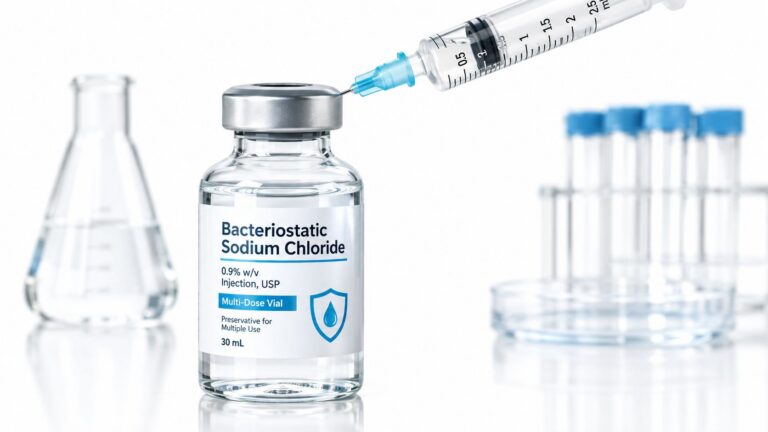
Reconstitution solutions occupy a particularly critical position within this framework. Bacteriostatic water, PBS, and specialized buffers for peptides, proteins, and conjugation applications must be sterile and low-endotoxin to protect sensitive samples from degradation or contamination during preparation.
“Single-use plasticware provides the highest sterility assurance, but the environmental cost is significant. The most defensible procurement strategy identifies where single-use is genuinely non-negotiable and substitutes recyclable or reusable formats everywhere else.” This tradeoff is increasingly reflected in sustainable procurement policies adopted by European research funders and institutions.
Sustainability is no longer a secondary consideration in European lab procurement. Regulatory pressure, institutional carbon commitments, and evolving supplier standards are driving a measurable shift toward greener consumable formats, even in high-sterility environments.
Top lab consumables: Item-by-item essentials
With the right criteria established, here is a closer look at the items that consistently top expert checklists for 2026. Each category presents distinct performance requirements, and understanding those requirements prevents costly substitutions mid-experiment.
Pipette tips remain among the most frequently purchased consumables in any molecular biology or biochemistry lab. Pre-sterilized, filter-tipped, and low-retention variants prevent cross-contamination and reduce sample loss during transfer, particularly when working with viscous or precious materials. Aerosol-barrier tips are non-negotiable for PCR workflows.
Reconstitution buffers and solutions are central to proper sample preparation and reagent stability, making them foundational to reliable results across peptide research, protein assays, and cell biology applications. Bacteriostatic water, PBS, and application-specific buffers each serve distinct purposes and must be selected with assay sensitivity in mind.
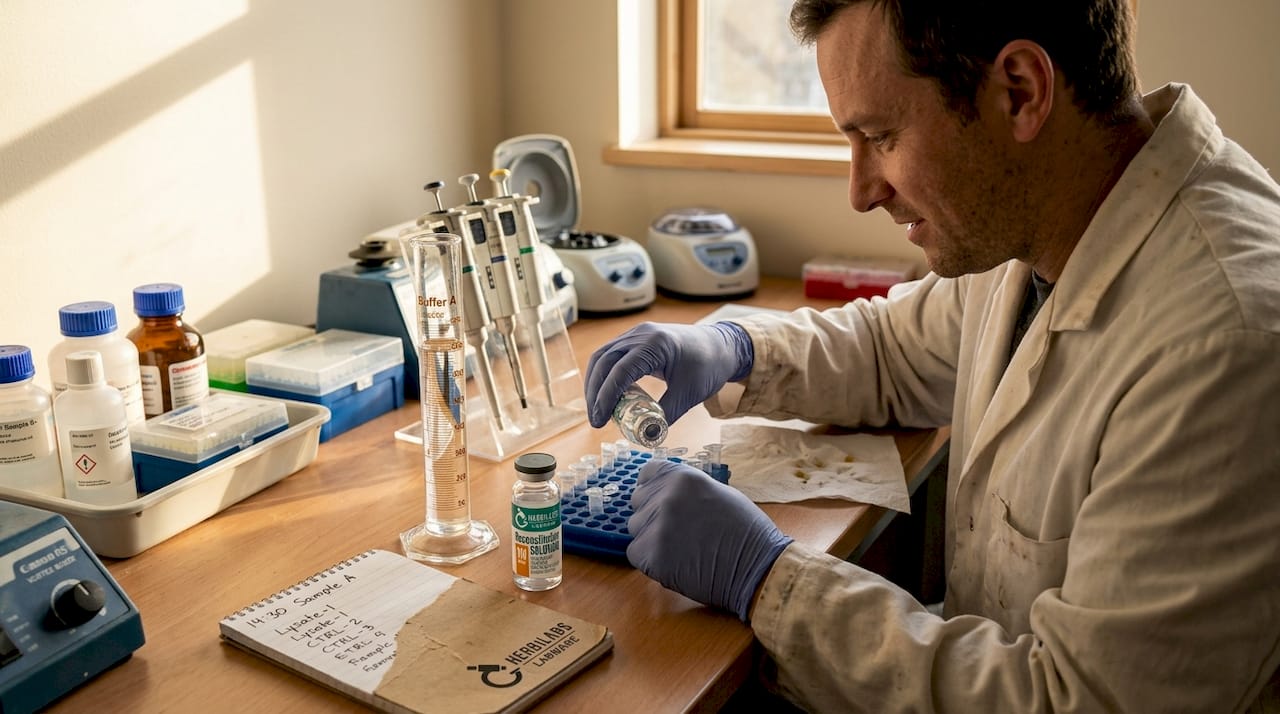
Sterile microtubes (0.5 mL to 2.0 mL) are workhorses for sample storage, reaction setup, and short-term preservation. Low-binding polypropylene formulations minimize analyte adsorption, which is critical when working at low concentrations.
PCR plates and strip tubes require dimensional precision for instrument compatibility and must be certified free of PCR inhibitors. Thin-wall formats improve thermal transfer and reduce cycle times.
Filtration units including syringe filters (0.22 µm and 0.45 µm) and vacuum filtration assemblies are essential for sterilizing buffers, clarifying cell lysates, and preparing samples for HPLC or mass spectrometry.
Cell culture plastics such as flasks, dishes, and multiwell plates must carry surface treatment certifications appropriate to the cell type being cultured. Tissue culture-treated surfaces are not interchangeable with ultra-low attachment formats.
For a structured overview of key consumable examples and their applications, cross-referencing a dedicated resource can help procurement teams build category-specific specifications.
Pro Tip: Filtration units and low-binding tubes are frequently overlooked in budget planning but are among the highest-impact consumables for reducing sample loss and preventing workflow delays in protein and peptide research.
For labs evaluating alternatives, a consumables comparison guide provides structured criteria to assess recyclable and refillable options without compromising sterility standards.
Comparing performance: Side-by-side consumables analysis
Having listed the essentials, let us objectively compare how these consumables measure up in daily use. The table below summarizes key differentiators across the top six categories.
| Item | Key feature | Best for | Sustainability | Regulatory rating |
|---|---|---|---|---|
| Bacteriostatic water | 0.9% benzyl alcohol, multi-dose stable | Peptide/protein reconstitution | Single-use vial | Research-grade, ISO compliant |
| Pipette tips (filter) | Aerosol barrier, low-retention | PCR, low-volume transfers | Recyclable options available | DNase/RNase-free certified |
| Sterile microtubes | Low-binding polypropylene | Sample storage, reactions | Recyclable PP | ISO 9001, DNase/RNase-free |
| PCR plates (96-well) | Thin-wall, inhibitor-free | qPCR, endpoint PCR | Limited recyclability | PCR-inhibitor-free certified |
| Syringe filters (0.22 µm) | Sterilization-grade membrane | Buffer prep, sample clarification | Single-use | Sterility-tested |
| Cell culture flasks | TC-treated surface | Adherent cell culture | Limited; reusable glass alt. | ISO 10993 biocompatibility |
The most significant tradeoff in this comparison is between single-use plastics and sustainable alternatives. Single-use formats guarantee sterility and eliminate cross-contamination risk, but generate substantial plastic waste. For non-sterile steps such as reagent mixing or sample labeling, recyclable or reusable formats are increasingly viable and are actively encouraged under European sustainability frameworks.
Sterile, low-endotoxin buffers are pivotal for sensitive applications including cell-based assays, in vivo studies, and any workflow where endotoxin-driven inflammation or signal interference would compromise data integrity. Studies indicate that switching to certified low-endotoxin consumables can reduce contamination-related experimental failures by a meaningful margin in immunology and cell biology workflows.
For protein and peptide reconstitution specifically, the priority hierarchy is: verified sterility first, confirmed low endotoxin second, then buffer compatibility with the target molecule. Price should not enter the equation until those three criteria are satisfied. A detailed consumables comparison 2026 resource can help teams apply this logic systematically. Labs also benefit from reviewing strategies to reduce laboratory waste without compromising sterility assurance.
Selecting the right reconstitution solutions and buffers
Consuables like buffers and reconstitution solutions deserve special attention due to their direct impact on research reliability. Selecting the wrong buffer for a given application is not simply an inconvenience; it can alter protein conformation, accelerate peptide degradation, or introduce variables that invalidate comparative data across experiments.
The selection process should follow a structured evaluation:
- Define assay sensitivity. High-sensitivity applications such as ELISA, mass spectrometry, or in vivo peptide administration require the lowest possible endotoxin levels and confirmed absence of preservative interference.
- Confirm regulatory status. Verify that the supplier provides a certificate of analysis (CoA) with lot-specific endotoxin, sterility, and pH data.
- Assess supply chain reliability. Single-source dependencies create procurement risk. Identify at least one qualified secondary supplier for critical buffers.
- Verify sterility method. Sterile filtration (0.22 µm) is the standard for aqueous buffers; autoclaved formats may introduce degradation products in sensitive applications.
The table below summarizes common buffer types by application and typical shelf life:
| Buffer type | Primary application | Shelf life (unopened) | Key specification |
|---|---|---|---|
| Bacteriostatic water | Peptide/protein reconstitution | 28 days post-opening | 0.9% benzyl alcohol, sterile |
| PBS (phosphate-buffered saline) | Cell washing, dilutions | 12 months | pH 7.4, low endotoxin |
| Peptide-specific buffers | Lyophilized peptide reconstitution | 6 to 12 months | Application-matched pH, sterile |
| Sterile water for injection | Single-use reconstitution | Single-use vial | Preservative-free, pyrogen-free |
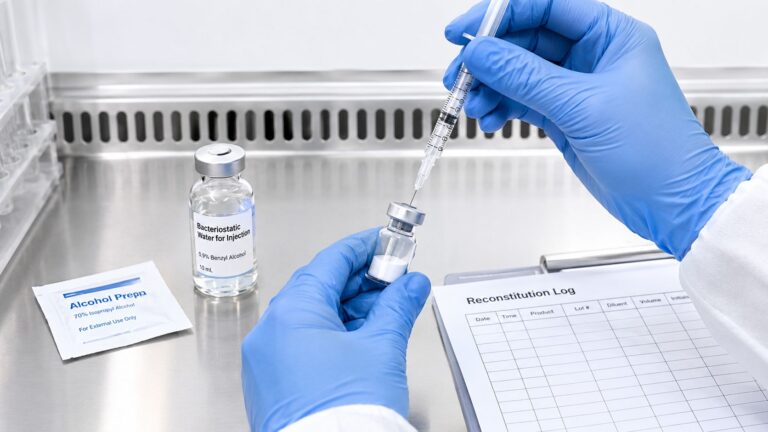
Bacteriostatic water containing 0.9% benzyl alcohol and specialized buffers are essential for sensitive applications because the benzyl alcohol component inhibits microbial growth across multiple uses, extending the functional window of reconstituted preparations without compromising sterility. For a thorough evaluation of sourcing options, reviewing high-purity reconstitution solutions helps procurement teams identify suppliers meeting the strictest purity standards. Understanding the practical distinction between bacteriostatic vs sterile water is also essential when specifying products for different research contexts. Labs managing multi-vial workflows should also consult guidance on optimizing research water stability to minimize waste and maintain preparation integrity.
Sustainable sourcing and future trends in lab consumables
Finalizing your checklist involves looking ahead. Procurement standards in European research are evolving rapidly, and labs that build sustainability into their sourcing strategy now will be better positioned for compliance and cost efficiency over the coming years.
The primary drivers accelerating sustainable sourcing in 2026 include:
- Regulatory pressure: EU Green Deal commitments and national research council requirements are increasingly mandating lifecycle assessments for laboratory consumables.
- Cost reduction: Refillable tip boxes and bulk-format reagents reduce per-unit costs over time, particularly for high-volume operations.
- Institutional reputation: Grant applications and institutional audits increasingly include environmental impact criteria for laboratory operations.
- Environmental responsibility: Researchers and procurement teams are demonstrating measurable demand for lower-waste alternatives, particularly among early-career scientists.
The move to recyclable and reusable consumables in European research labs is accelerating, driven by both environmental commitments and tightening regulatory compliance requirements. Recyclable polypropylene tip boxes, glass alternatives for non-sterile storage, and concentrated buffer formulations requiring dilution are all gaining traction as practical, lower-impact options.
Pro Tip: Conduct a quarterly consumables audit by categorizing each item as sterility-critical (single-use required) or non-critical (reusable/recyclable viable). This simple classification exercise typically identifies 20 to 30 percent of consumable spend where sustainable substitutions can be made without any compromise to research quality.
Lifecycle management and compliance reporting are becoming standard expectations for institutional procurement teams. Building documentation practices around consumable sourcing now reduces administrative burden when audit requirements intensify. Reviewing lab workflow efficiency strategies alongside sustainability planning ensures that process improvements reinforce rather than conflict with each other.
Our view: Balancing innovation, reliability, and sustainability in lab consumables
A persistent misconception in laboratory procurement is that sustainability and sterility exist in fundamental tension. In practice, the two objectives are largely compatible when procurement decisions are made with precision rather than convenience. The real risk is not choosing sustainable options; it is choosing them indiscriminately, without distinguishing between applications where sterility is non-negotiable and those where it is simply habitual.
We have observed that labs defaulting to single-use plastics across every workflow category often do so not from scientific necessity but from institutional inertia. The consequence is both environmental and financial. Conversely, labs that attempt to substitute reusable formats in sterility-critical steps to meet sustainability targets introduce genuine experimental risk.
The more productive framing is to treat consumable selection as a tiered decision. Sterility-critical applications, particularly those involving importance of purity in reagents for sensitive molecular work, demand certified, single-use, high-purity materials without compromise. Non-critical steps benefit from systematic substitution toward lower-impact formats. Procurement teams that share classification frameworks and supplier compliance data across institutions accelerate this transition for the entire sector, reducing both waste and the cost of redundant supplier qualification work.
Find the right consumables and expert support with Herbilabs
Armed with knowledge, you can now take the next step toward efficient, reliable, and future-ready lab procurement.
Herbilabs supplies research-grade bacteriostatic water, sterile diluents, and reconstitution solutions manufactured to strict purity standards, serving research institutions and procurement teams across Europe. Whether you are building a new consumables inventory or auditing an existing one, the full 2026 consumables guide provides structured comparison tools to support every purchasing decision. Use the reliable labware checklist to verify specifications before ordering, and explore the full range of high-purity solutions available with lot-specific certificates of analysis, secure ordering, and wholesale pricing for qualified institutions.
Frequently asked questions
What are the most essential lab consumables for 2026?
The top essentials include reconstitution solutions, pipette tips, sterile tubes, PCR plastics, and sustainable disposable items. Bacteriostatic water, PBS, and specialty buffers are among the most critical for maintaining reagent stability and sample integrity.
How can labs balance sterility and sustainability when choosing consumables?
Many labs now use recyclable or reusable options for non-critical steps and reserve single-use plastics for sterile procedures. The shift to recyclable and reusable formats is well established in European research environments and does not require compromising sterility where it genuinely matters.
Why is low-endotoxin consumable selection so important?
Low-endotoxin consumables help prevent experimental errors and ensure reliability in sensitive molecular and cell biology workflows. Sterile, low-endotoxin buffers are pivotal for any application where endotoxin-driven interference would compromise assay validity.
What should labs check before ordering reconstitution solutions?
Labs should verify buffer sterility, endotoxin levels, compatibility, expiry, and supplier compliance documentation before ordering. Sterile, low-endotoxin, and application-specific buffers with lot-specific CoA documentation are the minimum standard for research-grade procurement.
What are some actionable first steps for labs upgrading their consumable inventory?
Audit current inventory for expiring or non-compliant products, prioritize certified suppliers, and explore sustainable alternatives for non-critical workflow steps. The move to recyclable consumables in European labs demonstrates that this transition is both practical and increasingly expected by funders and regulatory bodies.