Private Label, White Label, Wholesale partnerships available - EU, USA and UK - Free shipping from €75
Sterile Water Vials Explained for Research and Lab Use
A new researcher is at the bench with two small vials in hand, one holding a lyophilized peptide, the other holding sterile water. The choice looks simple, but it usually decides whether the next step is smooth, reproducible, and easy to document, or awkward, wasteful, and hard to repeat later. In research settings, sterile water vials are the controlled diluent that turns a dry material into a usable solution without adding avoidable variables.
Their role is broader than one bench task. A sealed sterile water vial sits in the middle of reconstitution, dilution, and preparation of working solutions for peptides, proteins, antibodies, and other lyophilized materials. The decision is rarely just “which water,” it's also which vial format, which access pattern, and which documentation trail fits the workflow.
Table of Contents
- Why Sterile Water Vials Matter in Every Research Workflow
- Sterile Water vs Bacteriostatic Water
- How Sterile Water Vials Are Used for Reconstitution
- Common Vial Formats and Multi-Pack Options
- Quality, Sterility, and Regulatory Documentation
- Storage and Handling Best Practices
- Choosing the Right Supplier and Supply Model
- Frequently Asked Questions About Sterile Water Vials
Why Sterile Water Vials Matter in Every Research Workflow
A researcher reaches for a peptide vial, pauses, and checks the second vial on the rack. That pause matters because sterile water vials are not just small containers of water, they are controlled inputs that help keep the rest of the workflow consistent. In lab practice, the diluent has to be predictable, sealed, and matched to the intended use, especially when the final solution will go into a sensitive assay, a stock prep, or a reconstitution step.
What the Vial Represents
Sterile injectable water did not appear as a generic lab convenience. Its modern form grew out of the broader history of sterile and bacteriostatic water, including the move toward controlled aqueous inputs and the later standardization of bacteriostatic formats with 0.9% benzyl alcohol, or 9 mg/mL. Over time, the single-dose sterile water model became a defined product with controlled processing and packaging, and that history helps explain why researchers should treat it as part of the method rather than as an interchangeable supply item history of bacteriostatic and sterile water.
That matters for research buyers because the vial belongs to the workflow. A dry material does not become a working solution by itself, the diluent becomes part of the experimental record, the handling risk, and the reproducibility story. If the wrong water source is used, the problem is not cosmetic, it can change how the material is prepared and how confidently the result can be repeated.
Practical rule: treat the water vial as part of the protocol, not as a generic consumable.

Why Research Teams Keep Coming Back to It
Every R&D bench eventually faces the same task, making a dry material usable without adding unknowns. Sterile water vials support that by giving the user a defined starting point for dilution, reconstitution, or sample preparation. They appear across biotech, pharma, and independent labs because the need is common, even when the protocol changes from one bench to the next.
A useful way to frame the choice is through workflow, not debate. A lab might need a single-use diluent for one reconstitution, or a multi-dose container for repeated access across a project queue. That decision affects how many times the container can be opened, whether a preservative belongs in the workflow, and how tightly the vial has to be tracked after the first puncture. For teams comparing supply options, a practical reference point is the sterile water for injection overview from HerbiLabs, which shows how the product fits into a real bench routine.
Sterile Water vs Bacteriostatic Water
A new researcher can run into trouble here fast. Both products arrive as sterile aqueous inputs, yet they are not interchangeable in day-to-day lab work. One is preservative-free, the other contains 0.9% benzyl alcohol, or 9 mg/mL, and that difference changes how often the vial can be entered, how it is tracked after puncture, and which protocols it fits bacteriostatic water history and formulation.
Composition drives workflow
Sterile water for injection is labeled as sterile, nonpyrogenic, hypotonic, and preservative-free, with a pH of 5.5, within a 5.0 to 7.0 range, and osmolarity of 0 FDA labeling for sterile water for injection. In practical bench terms, that makes it a clean starting solvent for dilution or reconstitution, but the final preparation still has to be made compatible before direct use. Bacteriostatic water follows a different logic, because the benzyl alcohol is there to slow microbial growth between punctures.
For a lab team, the decision usually comes down to access pattern. Sterile water suits single-use style workflows. Bacteriostatic water suits repeated withdrawal workflows, where aseptic handling stays consistent and the vial remains in circulation across multiple pulls.
If you are comparing catalog language or supply formats, the Herbilabs sterile water for injection listing is a useful reference for how this product is described in practice.
How the decision map looks at the bench
| Criterion | Sterile Water | Bacteriostatic Water |
|---|---|---|
| Additive status | Preservative-free | Contains 0.9% benzyl alcohol |
| Access pattern | Usually single-dose | Designed as multi-dose |
| Best fit | Fresh reconstitution or protocol-specific use | Repeated withdrawals from the same vial |
| Post-puncture handling | Follow the product's single-use logic | Track first puncture and use aseptically |
| Workflow priority | Clean, simple, one-time access | Convenience and repeated access |
That difference also explains why buyers pay attention to formulation history. One source notes a marked drop in contamination risk once bacteriostatic formulations were introduced, compared with plain sterile water bacteriostatic water history and formulation. The point is not that the number applies to every setting. It shows why preservative status changes the handling model, not just the label.
For procurement, the better question is not which water is better. It is which one matches the workflow. A protocol that requires repeated access usually points toward bacteriostatic water. A protocol that calls for preservative-free input points toward sterile water.
How Sterile Water Vials Are Used for Reconstitution
A dry peptide or antibody vial doesn't become a working solution by accident. The researcher has to choose a diluent volume, keep the vial clean while drawing, and mix gently enough to avoid damaging the material. Sterile water vials sit in the middle of that process because they provide a consistent solvent for preparing a solution from a lyophilized form.
Start with the end state
The first question is always concentration. The user has to decide what final working strength is needed, then calculate how much sterile water to add. That volume choice affects the concentration, the amount of headspace left in the vial, and the ease of pulling off later aliquots.
Once the volume is set, aseptic handling becomes the central task. Septa are swabbed, sterile tools are used, and the withdrawal is done in a way that keeps the vial closed longer than it is open. That matters because reconstitution is not just about dissolving powder, it's about keeping the material usable after the mix is made.
Aseptic handling protects the stock solution from becoming the problem it was meant to solve.
What happens after the liquid goes in
After the sterile water is introduced, the material has to be mixed gently until the solution is clear and uniform. That step sounds routine, but it's where rough handling, excessive agitation, or poor vial choice can cause avoidable trouble. A narrow vial with poor headspace can be harder to mix cleanly, while a format with enough room makes the process less awkward.
Documentation matters too. Lot numbers, diluent type, and date of reconstitution should live together in the same record. That doesn't just satisfy paperwork. It helps another researcher repeat the same conditions later instead of guessing at what was done at the bench.
For a practical walkthrough tied to lyophilized materials, the internal guide on reconstituting lyophilized powder for lab work fits naturally with this workflow.
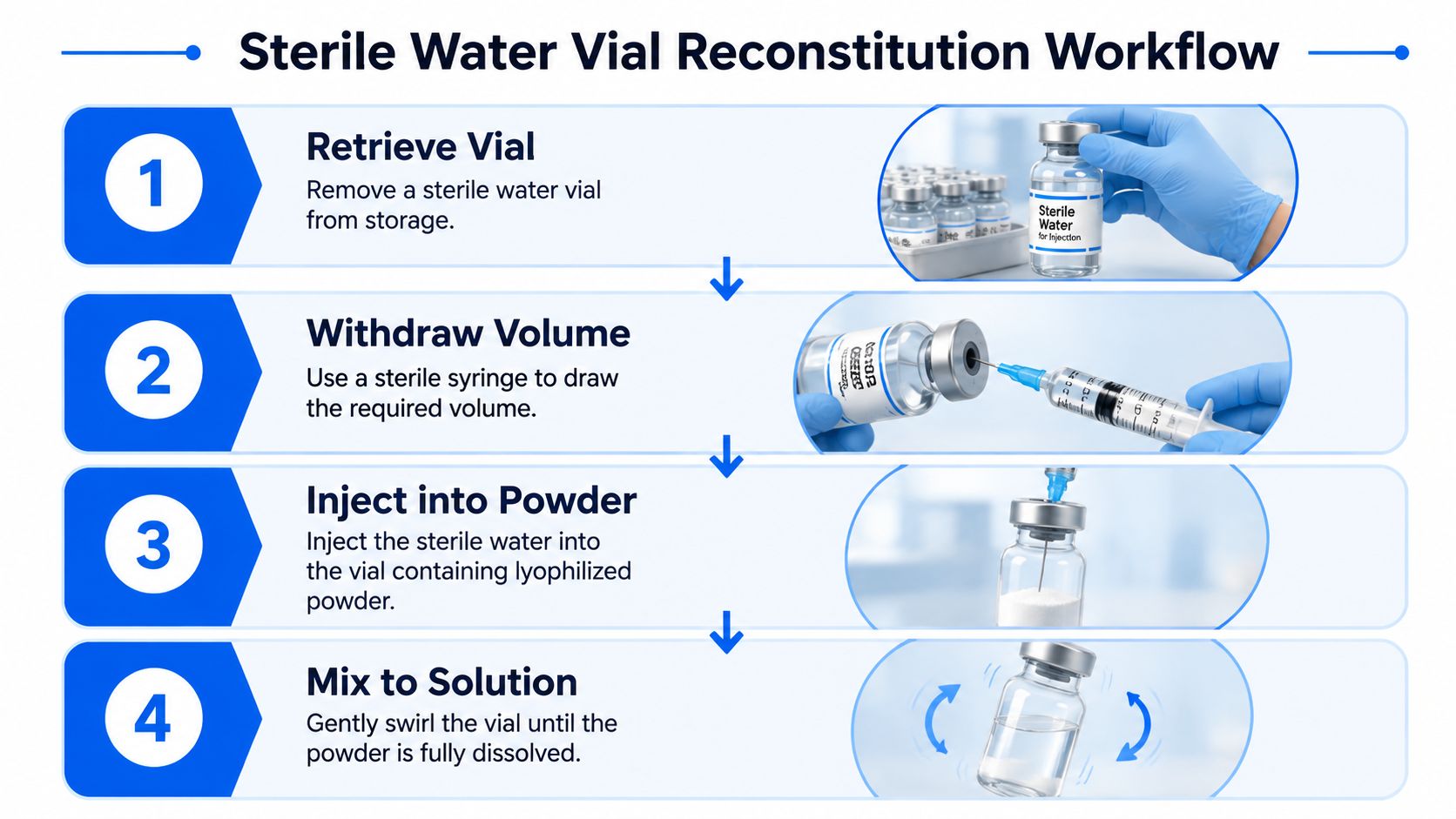
The key point is that a sterile water vial is not chosen in isolation. It's chosen against the material, the target concentration, the number of withdrawals, and the documentation standard the lab wants to keep.
Common Vial Formats and Multi-Pack Options
Format choice sounds minor until a lab starts running the same prep every week. Then the size of the vial affects how often the septum is pierced, how much product gets wasted, and how much shelf space gets tied up in inventory. Sterile water vials usually make the most sense when the vial size matches the rhythm of use.
Small vials suit low-frequency work
Smaller formats work well when a bench only needs sterile water occasionally. A compact vial lowers waste because the user opens only what's needed for that run. It also reduces the chance that a partially used container sits around longer than necessary.
Larger formats, on the other hand, fit shared benches, repeat prep routines, and resellers who want fewer touchpoints per unit stocked. The trade-off is straightforward, more volume can mean less frequent ordering, but it also increases the need for disciplined handling once the container is in use.
Multi-packs help with continuity
Bundled options, such as 10×3 mL or 10×10 mL, make inventory planning easier for small labs and distribution workflows. They let a team stage multiple sealed units instead of relying on one larger vial that gets accessed repeatedly. For a bench that values freshness and clear lot separation, that can be easier to manage.
The right choice depends on how the vial will be consumed, not just how it looks in the cart. A shared lab may prefer a few larger vials for convenience, while a reseller or independent group may prefer a multi-pack that keeps supply moving without creating a lot of open-container exposure.
The internal guide on single-use versus multi-use sterile water for lab use is useful for mapping these trade-offs to real ordering patterns.
| Format | Best fit | Main advantage | Main trade-off |
|---|---|---|---|
| Small vial | Infrequent use | Less waste | More frequent ordering |
| Mid-size vial | Shared bench use | Easier access continuity | More open-container exposure |
| Multi-pack | Inventory continuity | Cleaner lot separation | More storage planning |
Format is a procurement decision as much as a lab decision. The user isn't just buying water, they're buying how often a vial gets opened, how much gets left behind, and how predictable the next prep will feel.
Quality, Sterility, and Regulatory Documentation
A vial can look clean on the outside and still leave a buyer with unanswered questions. In sterile water procurement, the label language needs to do real work, because sterility, non-pyrogenicity, pH control, and a usable Certificate of Analysis, or COA tell the buyer what was made, how it was released, and what record exists if the lot is reviewed later. For injectable-grade expectations, the FDA labeling for sterile water for injection gives a concrete reference point for pH, which helps labs compare supplier claims against a known standard.
What the quality terms really mean
Sterile means the product was processed to keep viable microorganisms out. Non-pyrogenic means it is intended to avoid fever-causing contaminants associated with endotoxins, which matters because post-injection fever has historically been linked to pyrogens rather than visible contamination post-injection fever and pyrogens. The historical work of Florence Seibert helped establish that bacterial endotoxins could be removed by distilling water, which turned sterile water into a defined injectable-grade input instead of a vague “clean water” category.
A COA should answer the questions a bench team asks before opening the carton. It should show the lot identity, confirm that the batch went through review, and give the lab a traceable record if the material later appears in a documented workflow. It does not replace the buyer's own SOP, and it does not tell you how the vial will behave in every assay, but it does reduce guesswork at the sourcing stage.
Documentation is part of risk control
Facility systems carry that burden. ISO 13485:2016, GMP, and ISO 9001:2016 procedures are the framework for batch review, audit readiness, and traceable production records, which is why procurement teams should ask what documentation sits behind a bottle before they approve it. Aseptic processing tools, including 0.22 micrometer filtration, support the sterility claim before the product reaches the rack.
For teams that also write product copy or labels, health product advertising compliance is a useful reference for keeping claims clear and defensible.
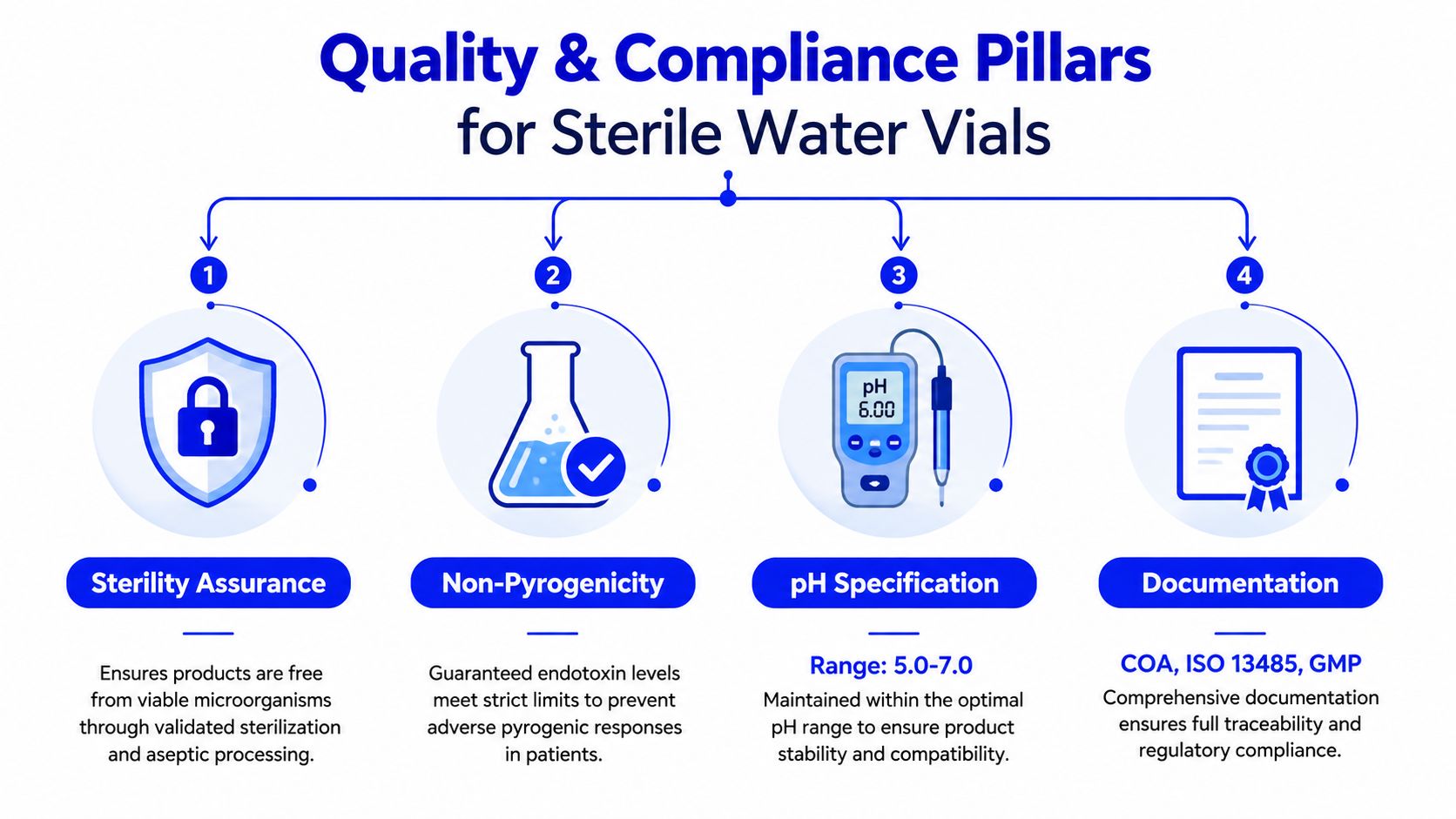
When the paperwork is tight, the lab spends less time checking assumptions after the fact and more time using the vial with confidence.
Storage and Handling Best Practices
A sterile water vial can still fail a workflow if it's handled carelessly. The practical rules are simple, but each one protects against a different failure mode, microbial growth, accidental contamination, lot confusion, or a vial that gets used beyond its intended window.
Keep the handling routine narrow
Store the vials under controlled conditions, away from heat swings and rough handling. Before each use, inspect the container for cracks, particulates, or anything that looks off. If the vial is multi-dose, label it at first puncture so the in-use period is obvious to everyone who touches the bench later.
Aseptic technique matters every time the septum is pierced. That means sterile tools, clean hands, and minimal exposure time while the liquid is withdrawn. It sounds basic because it is basic, and the basic steps are what keep the vial usable.
Date the first puncture, then trust the label, not memory.
A short lab checklist
- Check storage first: Keep the vial in the intended controlled environment and avoid unnecessary handling.
- Swab before access: Clean the closure before each withdrawal.
- Track the opening date: Multi-dose containers need a visible first-puncture record.
- Watch the in-use window: Guidance commonly calls for discarding a vial 28 days after first puncture unless the manufacturer says otherwise multi-dose vial stewardship.
That 28-day point matters because preservative help is not the same as unlimited reuse. Even a bacteriostatic vial still depends on aseptic technique and disciplined inventory control.
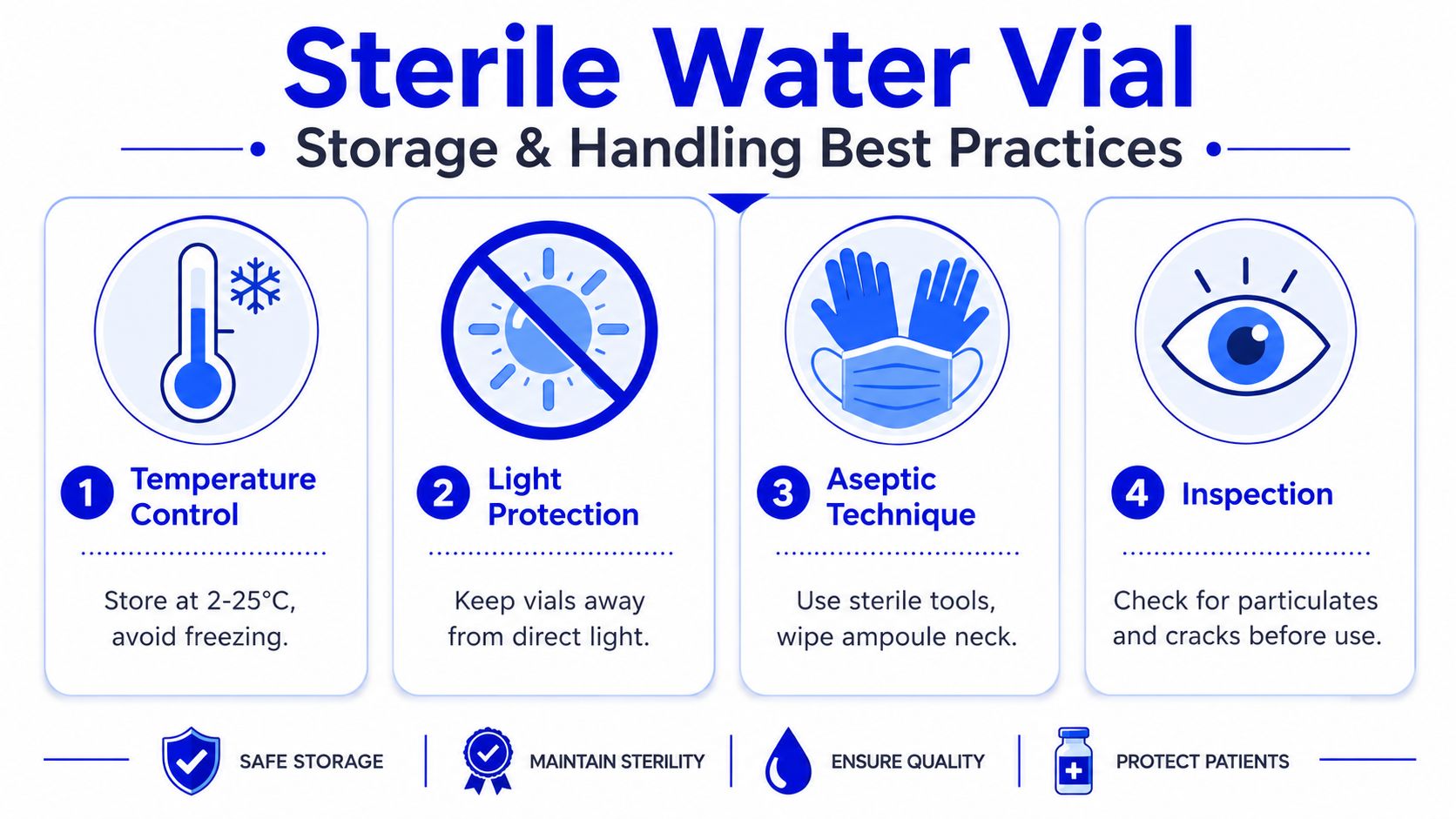
The most reliable labs keep this routine short enough to fit on one SOP page. That way, everyone handles the vial the same way, which is the goal.
Choosing the Right Supplier and Supply Model
A sterile water vial can be perfect on paper and still fail the lab if it shows up late, arrives in inconsistent lots, or can't be sourced again under the same conditions. Supply continuity matters because a research workflow is only as stable as the vendor behind it, and shortage guidance has made that clear for a while. ASHP notes that sterile water availability can be constrained by customer relationships and that organizations may need to batch preparations or use alternative sterile liquids if labeling allows, which leaves a real gap for small labs and resellers who need repeatable procurement rather than rationing advice ASHP sterile water shortage FAQ.
What to look for beyond the label
The first check is whether the supplier can keep lot consistency and documentation in place. The second is whether the fulfillment model supports the buyer's pace, same-day dispatch, temperature-controlled storage, and multi-pack availability all reduce the chance of a bench interruption. If the product comes from a private-label, white-label, or wholesale arrangement, the key question is whether that setup still gives the buyer a clean paper trail and dependable replenishment.
Why supplier structure changes the workflow
A reseller needs different support than a one-off purchaser. So does a small lab that orders on a fixed cadence. In both cases, access to consistent packaging, repeatable release records, and reliable distribution across the EU, UK, and USA can matter more than a feature list that looks good in isolation.
Herbilabs is one option in that category, with sterile diluents and reconstitution solutions in multiple vial formats, along with lot-specific COAs and wholesale or private-label arrangements. The point isn't the brand name, it's the operational fit, whether the supplier can keep the lab supplied without forcing it to reinvent the procurement process every time.
A good supplier doesn't just ship a vial, it keeps the same workflow available next month.
When buyers compare vendors, they should ask one question first: can the supplier keep the same product, same documentation style, and same delivery pattern available again when the bench needs it? If the answer is unclear, the workflow inherits that uncertainty.
Frequently Asked Questions About Sterile Water Vials
What's the main difference between sterile water and bacteriostatic water?
Sterile water is preservative-free and built for single-dose style use, while bacteriostatic water contains 0.9% benzyl alcohol so it can support repeated withdrawals when handled aseptically.
Can bacteriostatic water replace sterile water in every workflow?
No. It can be a useful substitute in some drug-specific or reconstitution contexts, but it isn't interchangeable across every protocol because preservative sensitivity and labeling rules still matter.
What does a COA tell a lab buyer?
A COA confirms the lot identity and release-related quality information. It helps with traceability, but it doesn't replace the lab's own SOP or prove suitability for every downstream use.
Why do multi-dose vials need first-puncture dating?
Because the vial is no longer a closed system after it's opened. Dating the first puncture helps users track the in-use period and avoid treating an open vial like fresh stock.
How should a team choose a vial format?
Start with access frequency, expected withdrawals, and storage habits. Small vials suit occasional use, while larger or multi-pack formats fit repeat access and continuity needs.
For labs that need sterile diluents, documentation, and reliable replenishment without guesswork, Herbilabs keeps those pieces together in one place. Review the available formats, compare the quality documentation, and visit Herbilabs to match a sterile water workflow to the way the bench runs.