Private Label, White Label, Wholesale partnerships available - EU, USA and UK - Free shipping from €75
Single-Use vs Multi-Use Sterile Water: Lab Guide 2026
Discover the key differences between single use vs multi-use sterile water in our 2026 lab guide. Enhance safety and compliance in your procedures!
TL;DR:
- Single-use sterile water is designed for one patient and procedure, eliminating contamination risk, while multi-use sterile water contains preservatives for repeated withdrawals. Proper handling and environmental controls are essential for multi-use formats to maintain sterility, and the choice depends on withdrawal frequency, workflow, and regulatory requirements. The decision between formats impacts safety, cost, and experimental integrity, with single-use being preferable for high-risk or sensitive procedures.
Single-use sterile water is defined as a preservative-free aqueous preparation intended for one patient, one procedure, and one container access only, while multi-use sterile water contains antimicrobial preservatives that permit repeated withdrawals under strict aseptic conditions. The distinction between single use vs multi-use sterile water is not merely a packaging preference. It carries direct consequences for contamination risk, regulatory compliance, and experimental reproducibility. The Joint Commission, USP, and Cytiva each address this distinction in their handling standards, making format selection a decision with measurable quality implications for any laboratory or clinical workflow.
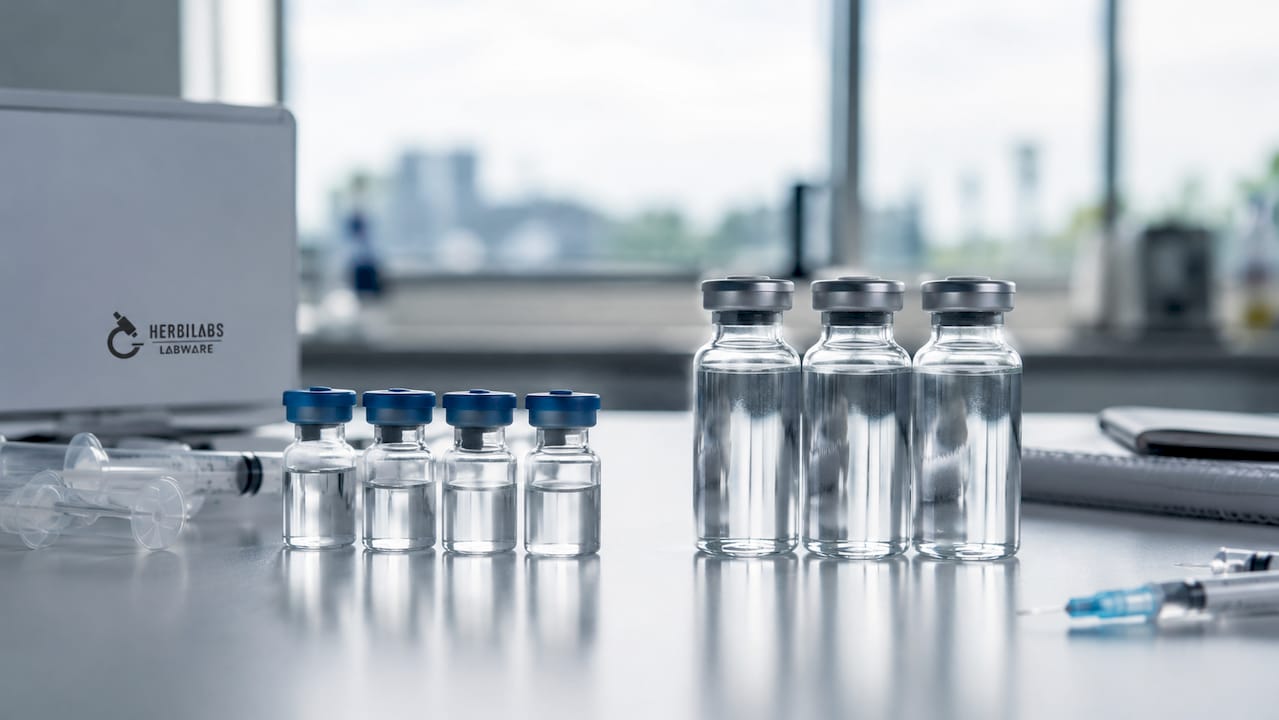
1. What are single-use sterile water containers and when to use them?
Single-use sterile water, formally termed sterile water for injection (SWFI) in pharmacopeial standards, is packaged in ampules, flip-top vials, or single-dose containers designed for one access event. Pfizer MECP, for example, offers SWFI in 10 mL flip-top plastic vials specifically to minimize contamination risk during aseptic preparation and dilution. Once the seal is broken, the container must be discarded regardless of remaining volume.
The primary advantage of single-use formats is the elimination of repeated puncture risk. Single-dose vials lack antimicrobial preservatives, which means the sterility guarantee is structural rather than chemical. The container is accessed once, used, and discarded. This design aligns with USP and Joint Commission standards for parenteral preparations, aseptic reconstitution of lyophilized compounds, and procedures involving immunocompromised or pediatric patient populations.
Typical applications for single-use sterile water include:
- Parenteral drug reconstitution where preservative-free diluent is required by formulation specifications
- Aseptic preparation of sensitive biologics such as peptide hormones or lyophilized proteins
- Single-event experimental procedures where cross-contamination between samples would invalidate results
- Clinical settings serving vulnerable patient populations where preservative exposure must be avoided
The primary limitations are higher cost per milliliter, increased plastic or glass waste, and inflexibility for workflows requiring repeated small-volume withdrawals from the same container. For high-throughput laboratories drawing from the same water source across multiple procedures in a single session, single-use formats generate significant consumable overhead.
Pro Tip: When working with lyophilized peptides or proteins, always confirm that the reconstitution protocol specifies preservative-free SWFI. Benzyl alcohol, the most common preservative in multi-use formats, can denature certain protein structures at standard concentrations.
2. Characteristics and proper handling of multi-use sterile water
Multi-use sterile water, often referred to as bacteriostatic water for injection (BWFI) in clinical and research contexts, contains antimicrobial preservatives, most commonly benzyl alcohol at 0.9%, that inhibit microbial growth between accesses. Multi-dose containers require strict aseptic technique on every withdrawal to maintain sterility assurance. The preservative slows microbial proliferation but does not sterilize a contaminated solution.
Packaging formats for multi-use sterile water include multi-dose vials ranging from 20 mL to 100 mL and larger bottles for high-volume laboratory use. The cost-per-milliliter advantage over single-use formats is substantial, particularly in workflows requiring repeated small-volume withdrawals across multiple sessions. Waste generation is also reduced, which matters for laboratories operating under sustainability mandates.
Key handling requirements for multi-use containers include:
- Aseptic needle insertion using a sterile syringe at every access point, without exception
- Disinfection of the rubber septum with 70% isopropyl alcohol before each puncture
- Storage at the manufacturer-specified temperature after opening, typically 2–8°C for most formulations
- Date-of-opening labeling applied immediately upon first access, with beyond-use dating tracked from that point
- Discard after 28 days from opening unless the manufacturer specifies an earlier expiration, per Joint Commission guidance
The critical operational error with multi-use formats is assuming that preservatives compensate for poor technique. Preservatives do not protect against contamination if safe injection practices are not followed. Outbreaks linked to multi-dose vial misuse have been documented in clinical settings, underscoring that the preservative is a supplementary control, not a primary sterility barrier.
Pro Tip: Label multi-use vials with both the date opened and the calculated discard date at the time of first access. Relying on date-opened labeling alone is insufficient for sterility assurance and does not meet Joint Commission standards.
3. Sterile water comparison: single-use vs multi-use at a glance
The table below summarizes the critical differences between single-use and multi-use sterile water formats across the factors most relevant to laboratory and clinical decision-making.
| Factor | Single-use sterile water | Multi-use sterile water |
|---|---|---|
| Preservatives | None (preservative-free) | Antimicrobial agent, typically benzyl alcohol 0.9% |
| Container accesses | One access only, then discard | Multiple accesses permitted over defined period |
| Contamination risk | Lowest, structural sterility guarantee | Higher with each puncture; technique-dependent |
| Cost per mL | Higher | Lower |
| Beyond-use dating | Not applicable after single use | Maximum 28 days after opening per Joint Commission |
| Regulatory alignment | USP, Joint Commission single-dose standards | USP, Joint Commission multi-dose vial standards |
| Typical applications | Parenteral reconstitution, sensitive biologics, single-event procedures | Repeated withdrawals, high-volume workflows, cost-sensitive settings |
| Waste generation | Higher (one container per use) | Lower (one container across multiple uses) |
This sterile water comparison makes clear that neither format is universally superior. The correct choice depends on withdrawal frequency, contamination risk tolerance, and the specific regulatory requirements governing the procedure.
4. How to choose between single-use and multi-use sterile water
Selecting the appropriate sterile water format requires a structured assessment of four operational variables: withdrawal frequency, volume per event, environmental controls, and the regulatory framework governing the procedure.
1. Assess withdrawal frequency and volume
Repeated multi-session use requires multi-dose formats with controlled aseptic workflows, while single-event use is safer with single-use sterile water. A laboratory reconstituting one lyophilized compound per session has no operational reason to open a multi-dose container. A compounding pharmacy preparing multiple parenteral formulations across a shift, by contrast, benefits from the volume and cost efficiency of multi-use formats.
2. Evaluate environmental controls and aseptic training
Multi-use formats are only appropriate in environments where aseptic technique is validated and consistently applied. If your facility lacks a laminar flow hood, documented aseptic training records, or surface monitoring protocols aligned with USP <797> sterile compounding requirements, single-use formats are the lower-risk default.
3. Balance cost against contamination risk
The cost-per-milliliter advantage of multi-use sterile water is real but conditional. A single contamination event that invalidates a batch of reconstituted peptides or biologics eliminates any cost savings and introduces additional costs from repeat synthesis, lost reagents, and delayed timelines. For high-value experimental compounds, the cost of single-use water is negligible relative to the value of the material being reconstituted.
4. Apply manufacturer instructions and regulatory requirements
Manufacturer instructions for use (IFUs) define the permissible use conditions for each sterile water product. These instructions are not advisory. They define the conditions under which sterility is guaranteed. Deviating from IFU specifications, such as storing a multi-use vial at room temperature when refrigeration is required, voids the sterility assurance regardless of preservative content.
5. Match format to patient or sample population
Clinical procedures involving neonates, immunocompromised patients, or subjects with known sensitivities to benzyl alcohol require preservative-free single-use sterile water. Experimental protocols using cell cultures or primary tissues sensitive to preservative carry-over require the same. For high-purity water in scientific research, the absence of preservatives is often a non-negotiable specification.
Pro Tip: Build a simple decision matrix for your lab’s SOP: if the procedure requires more than one withdrawal from the same container in the same session, evaluate multi-use formats. If each procedure is a discrete event with its own container, default to single-use.
5. Mitigating contamination risks with multi-use sterile water
The contamination risk in multi-use containers comes primarily from repeated punctures and vial handling, not from the absence of preservatives alone. Each container entry degrades sterility assurance incrementally, making procedural discipline the decisive variable in safe multi-use sterile water management.
Effective contamination mitigation requires controls at three levels: technique, environment, and documentation.
Technique-level controls:
- Use a new sterile syringe and needle for every withdrawal without exception
- Disinfect the rubber septum with 70% isopropyl alcohol and allow it to dry completely before insertion
- Never leave a needle in the septum between uses, as this creates an open pathway for environmental contamination
- Inspect the solution visually before each withdrawal for particulates, cloudiness, or color change
Environment-level controls:
- Prepare multi-use sterile water withdrawals in a controlled aseptic environment such as a laminar flow hood or ISO Class 5 clean area
- Implement surface monitoring per USP <797> recommendations to detect environmental contamination before it reaches the vial
- Segregate multi-use vial handling from non-sterile workflows to prevent cross-contamination
Documentation and labeling controls:
- Record the date and time of first access on every multi-use container immediately upon opening
- Calculate and mark the discard date based on the 28-day beyond-use limit or the manufacturer’s specified period, whichever is shorter
- Log each withdrawal event, including the volume drawn and the operator identity, to support traceability
The Joint Commission’s 2026 guidance reinforces that multi-dose vial preparation areas must be clean, uncluttered, and functionally separate from other activities. If these environmental conditions cannot be maintained, the vial must be treated as single-use and discarded after the current procedure.
Key takeaways
Single-use sterile water eliminates contamination risk through structural design, while multi-use sterile water requires validated aseptic technique and environmental controls to maintain sterility across multiple accesses.
| Point | Details |
|---|---|
| Format defines sterility mechanism | Single-use relies on one-time access; multi-use relies on preservatives plus technique. |
| Preservatives are not a safety net | Antimicrobial agents do not compensate for lapses in aseptic practice at each vial entry. |
| Beyond-use dating is mandatory | Multi-use containers must be discarded within 28 days of opening per Joint Commission standards. |
| Cost savings are conditional | Multi-use formats reduce cost per mL only when contamination events are prevented through rigorous controls. |
| Format selection requires workflow analysis | Withdrawal frequency, environmental controls, and regulatory requirements determine the correct format. |
The format decision is more consequential than most labs treat it
I have reviewed laboratory SOPs across research and clinical settings where the choice between single-use and multi-use sterile water was treated as a procurement decision rather than a quality decision. That framing is where most contamination problems begin.
The assumption I encounter most often is that a multi-dose vial with benzyl alcohol is inherently safe for repeated use. It is not. The preservative is a bacteriostatic agent, meaning it slows microbial growth rather than eliminating it. If a contaminated needle enters the septum, the preservative buys time but does not guarantee sterility. I have seen experimental batches invalidated by contamination traced directly to multi-use vial mishandling in facilities that had no documented aseptic training program.
The practical guidance I give consistently is this: single-use formats should be the default for any procedure where the cost of a failed experiment exceeds the cost difference between formats. For most peptide reconstitution work, that threshold is crossed immediately. Multi-use formats are appropriate where withdrawal patterns genuinely justify them and where the environmental and procedural controls are already validated and documented, not aspirational.
The evolving trend toward single-use formats in sterile compounding and research reflects a broader recognition that structural contamination prevention outperforms technique-dependent prevention in high-stakes settings. That trend is correct. The single-use labware movement in laboratory consumables reflects the same logic applied across the supply chain.
— Ragnar
High-purity sterile water solutions from Herbilabs
Herbilabs supplies research-grade reconstitution solutions manufactured to strict purity standards for laboratory and clinical applications. Whether your workflow requires preservative-free single-use formats or multi-use solutions with documented sterility assurance, Herbilabs provides options built to meet USP specifications and the demands of peptide research environments across the UK and Europe. Each product is manufactured in a dedicated facility with rigorous quality control to support contaminant-free results. Explore the top reconstitution solutions for 2026 to compare specifications, volumes, and compliance details. For a deeper comparison of sterile and bacteriostatic water formats, the bacteriostatic vs sterile water guide provides application-specific guidance for research and clinical use.
FAQ
What is the main difference between single-use and multi-use sterile water?
Single-use sterile water contains no preservatives and is discarded after one access, while multi-use sterile water contains antimicrobial agents such as benzyl alcohol that permit repeated withdrawals under strict aseptic conditions.
Is multi-use sterile water safe for repeated laboratory use?
Multi-use sterile water is safe when strict aseptic technique is applied at every container access. Preservatives slow microbial growth but do not compensate for contaminated needles or poor handling practices, as the Joint Commission confirms.
How long can a multi-use sterile water vial be kept after opening?
Multi-use vials should not be used beyond 28 days after opening unless the manufacturer specifies a shorter period. The discard date must be calculated and labeled at the time of first access.
When should single-use sterile water be required over multi-use formats?
Single-use sterile water is required for parenteral preparations, procedures involving benzyl alcohol-sensitive patient populations, and any single-event experimental procedure where preservative carry-over would compromise results.
Does USP <797> apply to sterile water handling in compounding settings?
USP <797> governs aseptic workflow and environmental monitoring in sterile compounding, which directly applies to how multi-use sterile water containers are handled, stored, and documented in compounding pharmacy and research environments.