Private Label, White Label, Wholesale partnerships available - EU, USA and UK - Free shipping from €75
Benefits of High-Purity Water for Scientific Research
Discover the benefits of high-purity water for scientific research, enhancing reproducibility and compliance while ensuring optimal results.
TL;DR:
- High-purity water production involves advanced purification processes like reverse osmosis, electrodeionization, and ultrafiltration to meet strict industry standards. Proper handling and real-time monitoring are essential to maintain water integrity at points of use, preventing contamination and ensuring regulatory compliance. Many failures stem from mishandling or improper storage rather than the purification process itself, highlighting the need for disciplined operational practices.
Water contamination is one of the most underestimated sources of error in laboratory and industrial environments. Trace ions, organic compounds, endotoxins, and microbial load can invalidate assay results, compromise biopharmaceutical product safety, and cause semiconductor yield failures that cost millions. The benefits of high-purity water extend well beyond simple contamination avoidance. They translate directly into experimental reproducibility, regulatory compliance, equipment longevity, and manufacturing yield. This article covers the defining criteria, documented advantages, and critical applications of high-purity water across regulated industries, along with the operational practices that sustain those benefits over time.
Table of Contents
- Key takeaways
- 1. What defines high-purity water and how it is produced
- 2. Improved experimental integrity and reproducibility
- 3. Regulatory compliance across pharmaceutical and biotech manufacturing
- 4. Semiconductor wafer fabrication and yield protection
- 5. Clinical diagnostics, HPLC, PCR, and genomics applications
- 6. Equipment protection and operational cost reduction
- 7. Protection against endotoxin and microbial contamination
- 8. Operational best practices for sustaining water purity
- My perspective on where high-purity water management actually fails
- High-purity reconstitution solutions from Herbilabs
- FAQ
Key takeaways
| Point | Details |
|---|---|
| Purity metrics drive selection | Resistivity, TOC, and microbial limits define water grade; match grade to application risk, not to maximum specification. |
| Compliance depends on water quality | Pharmaceutical and clinical applications require grades like WFI with endotoxin limits of 0.25 EU/mL and validated production methods. |
| Semiconductor yield is at risk | Nanoparticle contamination below 20 nm in ultrapure water is undetectable by conventional particle counters, requiring advanced metrology. |
| Storage degrades purity rapidly | Type I water must be used immediately after dispensing; storage in plastic containers causes resistivity drop and ion leaching. |
| Proactive monitoring outperforms remediation | Real-time resistivity and TOC monitoring with predictive maintenance sustains water quality more reliably than periodic testing alone. |
1. What defines high-purity water and how it is produced
High-purity water is not simply filtered tap water. It is produced through sequential purification technologies designed to remove dissolved ions, organic compounds, particulates, endotoxins, and microorganisms to defined, measurable limits. Regulated industries including biopharma, life sciences, semiconductors, and clinical labs all depend on it to protect process integrity and meet compliance requirements.
The most widely cited benchmark is ASTM Type I ultrapure water, which carries a resistivity of 18.2 MΩ·cm at 25°C and strict limits on total organic carbon and bacterial content. A resistivity reading below 18.1 MΩ·cm signals ion-exchange cartridge exhaustion and necessitates immediate system intervention.
Production technologies typically operate in sequence:
- Reverse osmosis (RO): Removes the bulk of dissolved solids, microorganisms, and particulates from feedwater, forming the backbone of most purification trains.
- Electrodeionization (EDI): Polishes the RO permeate by removing residual ionic species without chemical regeneration, maintaining consistent purity output.
- UV oxidation: Degrades trace organic compounds and inactivates microorganisms, reducing TOC and bioburden simultaneously.
- Ultrafiltration (UF): Removes endotoxins, colloids, and high-molecular-weight organics through size-based membrane exclusion.
- Vapor compression (VC) distillation: Used for critical pharmaceutical streams where validated endotoxin removal and compendial compliance are required.
Pharmaceutical grades are further differentiated by pharmacopeial standards. USP Purified Water (PW) serves lower-risk manufacturing steps, while Water for Injection (WFI) applies to parenteral product contact, with more stringent production and monitoring requirements.
Pro Tip: When designing a purification train, account for seasonal and regional feedwater variability. Systems engineered to handle worst-case conductivity and organic load will perform reliably year-round without manual intervention.
2. Improved experimental integrity and reproducibility
Contaminant-free water is the baseline for any quantitative scientific work. Trace metal ions interfere with enzyme kinetics, nucleic acid amplification, and cell culture media formulation. Organic compounds at parts-per-billion concentrations suppress chromatographic signals and distort spectrophotometric readings. When water chemistry is unstable, inter-assay variability increases, often without an obvious root cause that researchers can identify.
High-purity water eliminates this background noise. PCR amplification, for example, requires water free of nucleases, metal ions, and inhibitory organics. A single contaminated water batch can produce false negatives across an entire plate. The same principle applies to HPLC mobile phase preparation, where ionic impurities shift retention times and alter peak integration.
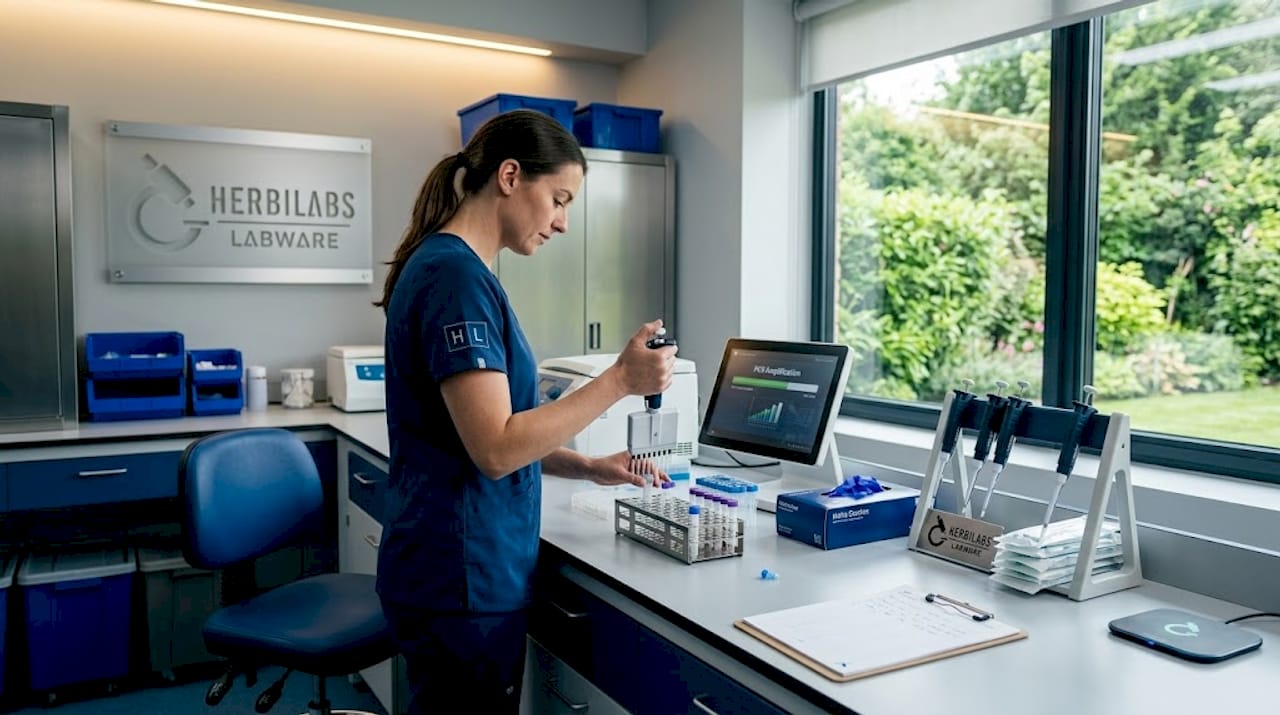
The high-quality water advantages here are operational and scientific simultaneously. Fewer failed experiments mean reduced reagent expenditure, shorter project timelines, and data that holds up to peer review and regulatory scrutiny.
3. Regulatory compliance across pharmaceutical and biotech manufacturing
Pharmaceutical manufacturing operates under compendial frameworks that specify water grades by application. WFI endotoxin limits are set at 0.25 EU/mL, with microbial limits of 10 CFU per 100 mL, compared to 100 CFU/mL for USP Purified Water. These specifications reflect the direct patient contact risk associated with parenteral products and require validated production and monitoring programs.
Using water that fails to meet the applicable grade is not a documentation issue. It is a batch failure. Regulatory agencies including the FDA and EMA review water system qualification data during inspections, and deviations can result in warning letters, product recalls, or manufacturing shutdown. The benefits of high-purity water in this context translate directly into batch release rates and audit outcomes.
Understanding the distinction between water grades by application risk also prevents over-specification. Applying WFI-grade water to low-risk cleaning operations adds cost without any compliance or quality benefit. Matching water grade to actual process risk is both economically and technically sound practice.
4. Semiconductor wafer fabrication and yield protection
Ultrapure water (UPW) in semiconductor fabs serves as both a process chemical and a cleaning medium, used in wafer rinsing, photolithography, and chemical mechanical planarization. At advanced process nodes below 10 nm, contamination below 20 nm is undetectable by conventional liquid particle counters, creating a metrology gap that causes unexplained yield loss and process failures.
This is one of the most technically challenging high-purity water applications in any industry. Nanoparticles that pass undetected through standard quality checks deposit on wafer surfaces, disrupting feature formation and electrical performance. The gap between detection capability and contamination risk is widening as feature sizes shrink.
Advanced condensation particle counting and nebulization-based detection methods now address this limitation by converting aqueous nanoparticles into aerosol form for counting, achieving sensitivity limits orders of magnitude below conventional instruments. Fabs investing in these advanced detection technologies gain a direct yield advantage.
5. Clinical diagnostics, HPLC, PCR, and genomics applications
The uses of purified water in analytical and molecular biology workflows are not uniform. Each application carries its own contamination sensitivity profile, and water grade selection must reflect that profile precisely.
| Application | Recommended grade | Key contaminant concern |
|---|---|---|
| HPLC mobile phase | ASTM Type I | Ionic impurities, TOC, particulates |
| PCR and qPCR | Nuclease-free Type I | DNases, RNases, metal ions |
| Cell culture media | Sterile, endotoxin-free | Endotoxins, microbial load, organics |
| Clinical immunoassays | ASTM Type II or higher | Ionic interference, organic background |
| Gene sequencing reagent prep | Ultrapure, nuclease-free | Enzymatic inhibitors, metal ions |
For gene sequencing and next-generation sequencing library preparation, the tolerance for enzymatic inhibitors in water is essentially zero. Even nanogram-level nuclease contamination degrades adapter ligation efficiency, producing library preparation failures that are difficult to trace back to water quality without rigorous lot-tracking.
The importance of pure water in these workflows is not theoretical. Laboratories that track water quality alongside reagent lot numbers consistently identify water as a variable contributing to inter-run variance.
6. Equipment protection and operational cost reduction
High-purity water’s aggressive solvent properties work in two directions. They make it highly effective at removing contaminants from process surfaces. They also make it corrosive to system components if distribution materials are poorly specified. When used correctly with appropriate materials such as polypropylene, PVDF, and stainless steel 316L, ultrapure water prevents the scale buildup, corrosion, and microbial fouling that degrade process equipment over time.
Holistic water systems that integrate RO, EDI, and distillation with real-time monitoring improve water quality stability and reduce energy consumption, lower total ownership costs, and increase operational reliability simultaneously. The financial case for investing in properly engineered systems is measurable within the first few production cycles.
Scaling from hard water deposits is a well-documented cause of heat exchanger fouling, autoclave calcium buildup, and pump seal degradation. High-purity water eliminates the ionic load responsible for these failure modes, extending equipment service intervals and reducing unplanned downtime.
7. Protection against endotoxin and microbial contamination
Bioburden and endotoxin control represent some of the most critical benefits of high-purity water in pharmaceutical production and clinical research. Endotoxins, the lipopolysaccharide fragments from gram-negative bacterial cell walls, are heat-stable and cannot be removed by standard sterilization. They must be excluded through validated purification steps including ultrafiltration and distillation.
The laboratory water purity requirements for endotoxin control are particularly stringent in cell-based assays, where endotoxin at sub-nanogram concentrations activates immune signaling pathways and confounds cytokine measurements. Researchers working with primary cells, macrophage activation assays, or pyrogenicity testing cannot afford to treat water endotoxin as an acceptable background variable.
Microbial contamination introduces a related but distinct risk: enzymatic activity from biofilm-resident organisms degrades nucleic acids and proteins in storage solutions, even at low colony-forming unit counts. Ultrafiltration and UV treatment in combination address both endotoxin load and viable cell counts, but the distribution loop integrity and point-of-use discipline determine whether those gains are maintained at the benchtop.
8. Operational best practices for sustaining water purity
Producing high-purity water is only half the challenge. Maintaining it through distribution, storage, and point-of-use handling determines whether the purification investment translates into actual experimental and process quality.
Key operational practices that sustain water purity include:
- Use immediately after dispensing: Type I water stored in plastic containers absorbs ions and plasticizers within minutes, dropping resistivity and introducing organic contamination. Dispense directly into the application vessel.
- Monitor resistivity and TOC in real time: Continuous inline sensors detect cartridge exhaustion, membrane breakthrough, and biofilm onset before they compromise output quality. Batch testing alone creates compliance gaps between checks.
- Sanitize distribution loops on schedule: Stable system performance depends on loop sanitization frequency matched to bioburden growth rates in the system design temperature and flow conditions.
- Select materials for low extractables: Distribution tubing, fittings, and storage vessels must be validated for compatibility with ultrapure water. Unsuitable materials leach plasticizers, catalysts, and stabilizers into the water stream.
- Implement predictive maintenance: Tracking trending data for TOC, conductivity, and pressure differential across filter stages allows intervention before specifications are breached rather than after.
Membrane-based WFI systems using double-pass RO, EDI, UV, and UF operate at 1 to 3 kWh per cubic meter, compared to 5 to 10 kWh/m³ for multi-effect distillation. The energy advantage is significant at commercial scale, though membrane systems require more extensive validation programs to satisfy pharmacopeial endotoxin removal requirements.
Pro Tip: Establish a water quality trending dashboard that captures daily resistivity, TOC, and bioburden data in a single view. Drift patterns often appear one to three weeks before a system fails specification, giving your team time to respond without a batch impact.
My perspective on where high-purity water management actually fails
I’ve worked alongside enough research teams and pharmaceutical operations to see one pattern repeat consistently. The technical specification gets met at the point of production, and then the discipline falls apart at the point of use. A system producing ASTM Type I water at 18.2 MΩ·cm means nothing if that water is collected in a re-used polypropylene bottle that sat open on the bench for two hours.
What I’ve found is that the benefits of high-purity water are almost never lost at the purification stage. They are lost in handling. Ion leaching from containers, airborne CO₂ absorption driving down pH and conductivity, and biofilm formation in low-flow distribution branches are the actual failure modes. None of them show up in a morning resistivity check if your sampling protocol only tests the output at the point of production.
My take on semiconductor UPW management is that the industry is about five years behind where it needs to be on nanoparticle metrology. The detection gap for sub-20 nm particles is known, the consequences are documented, and yet most fabs are still qualifying their UPW systems with instruments that physically cannot see the contamination causing their yield variance. That is a solvable problem, but only if process engineers are willing to challenge the adequacy of current qualification protocols.
For pharmaceutical teams, the persistent mistake I see is defaulting to WFI grade for applications that legitimately require only USP Purified Water. The cost differential is real, the compliance requirement does not exist for those steps, and the risk profile does not justify it. Matching grade to application is not a cost-cutting compromise. It is good science.
— Ragnar
High-purity reconstitution solutions from Herbilabs
For researchers and laboratory professionals who require dependable, contaminant-free water products manufactured to pharmacopeial standards, Herbilabs offers a curated selection of high-purity reconstitution solutions designed for the demands of peptide research, biopharmaceutical applications, and clinical workflows.
Herbilabs manufactures bacteriostatic water and sterile diluents under rigorous quality control protocols, with traceability and purity documentation supporting both research and regulated production environments. Whether you are reconstituting lyophilized peptides, preparing standard solutions, or sourcing sterile water for injection-grade applications, the top reconstitution solutions available through Herbilabs are manufactured to meet the specifications your work requires. For guidance on selecting the right water grade for your application, the bacteriostatic vs. sterile water comparison guide covers the distinctions in technical detail.
FAQ
What is the resistivity standard for Type I ultrapure water?
Type I ultrapure water requires a resistivity of 18.2 MΩ·cm at 25°C. A reading below 18.1 MΩ·cm indicates ion-exchange cartridge exhaustion and the system requires servicing before further use.
How does WFI differ from USP Purified Water?
WFI carries an endotoxin limit of 0.25 EU/mL and a microbial limit of 10 CFU per 100 mL, compared to 100 CFU/mL for Purified Water. WFI is required for parenteral product contact where endotoxin poses direct patient risk.
Why does Type I water degrade when stored?
Type I water is highly reactive and leaches ions and plasticizers from container walls within minutes of contact, reducing resistivity and introducing organic contamination. It should be used immediately after dispensing and never stored in plastic carboys.
Can conventional particle counters detect all UPW contaminants in semiconductor fabs?
No. Contamination below 20 nm is undetectable by conventional liquid particle counters, creating a metrology gap that contributes to unexplained yield loss. Nebulization-based condensation particle counting addresses this limitation with significantly greater sensitivity.
What energy savings do membrane-based WFI systems offer over distillation?
Membrane-based WFI systems using double-pass RO, EDI, UV, and ultrafiltration consume 1 to 3 kWh per cubic meter, compared to 5 to 10 kWh/m³ for multi-effect distillation, representing a substantial operational cost reduction at production scale.