Private Label, White Label, Wholesale partnerships available - EU, USA and UK - Free shipping from €75

Can You Freeze Bac Water? (Short Answer: No)
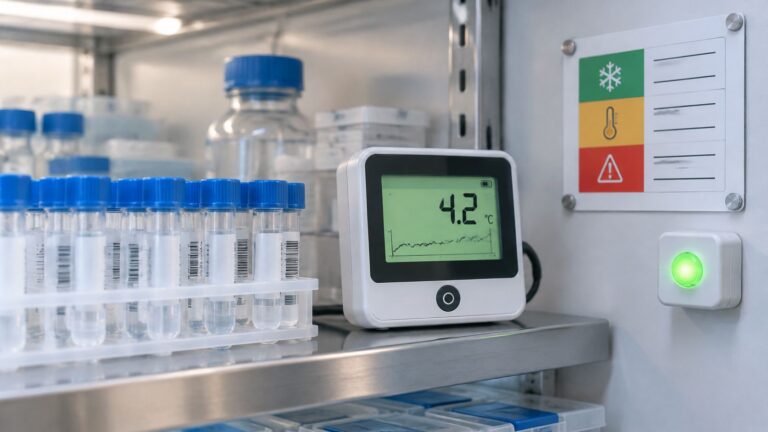
Can you freeze bac water? No. Freezing does not preserve bacteriostatic water and can ruin the vial: ice expands, which can crack the glass and unseat the rubber stopper, and a vial with a compromised seal can’t be treated as sterile anymore. Store unopened vials at room temperature (15–25 °C / 59–77 °F) and opened vials in a refrigerator (2–8 °C / 36–46 °F), never in a freezer.
Key takeaways
- Freezing adds no shelf life to bac water, opened or unopened.
- Ice takes up about 9% more space than water, so a full vial is under pressure as it freezes.
- If a vial froze solid, discard it.
- In the fridge, keep vials off the back wall where they can partly freeze.
Herbilabs products are sold for laboratory research use only (RUO). Not for human or veterinary use.
Why freezing is a problem
Bacteriostatic water is sterile water with 0.9% benzyl alcohol as a preservative. The alcohol content is far too low to act as antifreeze, so in a freezer the vial freezes solid at roughly 0 °C (32 °F). Three things can go wrong:
- Glass stress. Expansion can leave fine cracks you may not notice until the vial leaks.
- Stopper movement. The ice can push the stopper up under the crimp, opening a path for contamination.
- Condensation on thawing. Moisture collects on the stopper, the exact spot where every withdrawal goes through.
Will freezing make bac water last longer?
No. An unopened vial is already stable at room temperature until the printed expiry date. An opened vial is limited by contamination risk from repeated punctures, which is why labs follow the 28-day rule. Cold storage below freezing changes neither. See how long bac water lasts after opening.
What to do with bac water that froze
- Frozen solid: discard. You can’t verify the seal.
- Slushy edge after sitting against the fridge wall: let it reach room temperature, then inspect glass, crimp, stopper and clarity. Any doubt, discard.
- Arrived frozen in the mail: don’t open it. Take a photo and contact the seller.
- Cloudy, particles or leaking after thawing: discard right away.
Not sure what to look for? Our guide to bacteriostatic water contamination signs covers it.
Winter shipping
Brief cold exposure during transit is normal and harmless as long as the water stays liquid. When a package arrives cold, leave it closed for an hour so the vials warm up slowly before you handle them.
Where bac water should be stored instead
| Vial | Store at |
|---|---|
| Unopened | 15–25 °C (59–77 °F), dry cabinet, out of direct light |
| Opened, in repeated use | 2–8 °C (36–46 °F), lab refrigerator, upright, middle shelf |
| Any | Never in the freezer |
Full storage guidance: does bac water need to be refrigerated?
FAQ
Can bacteriostatic water be frozen for long-term storage?
No. It gains nothing and risks the seal.
At what temperature does bac water freeze?
About 0 °C (32 °F), nearly the same as plain water.
Is it OK if bac water got cold but didn’t freeze?
Yes. Fridge temperatures are fine; only freezing is the problem.
Shop bac water
For laboratory research use only (RUO). Not for human or veterinary use.