Private Label, White Label, Wholesale partnerships available - EU, USA and UK - Free shipping from €75
How to Buy Bacteriostatic Water Online Safely
A procurement request lands late in the afternoon. The lab needs bacteriostatic water for an upcoming reconstitution workflow, a marketplace listing offers fast delivery, and the product page shows little more than “sterile water” and a vial photograph. The price looks attractive, but the manufacturer, lot documentation, preservative concentration, and storage history are unclear. That's not a shopping inconvenience. It's a quality-control problem.
Buyers who buy bacteriostatic water online should evaluate the purchase as a documented supply decision, not a simple retail transaction. The vial must match the required formulation, packaging, intended use, and handling process. A credible supplier should also be able to explain where the product was made, which lot was shipped, and how the vial was stored before dispatch.
Table of Contents
- What Bacteriostatic Water Actually Is and Why Online Buying Is Different
- Product Specifications to Verify on Any Listing
- How to Read a Certificate of Analysis Before You Buy
- Certifications That Actually Matter for Sterile Production
- Shipping, Storage, and the 28-Day Clock
- Red Flags and Legal Status Across the US, UK, and EU
- A Five-Minute Supplier Verification Routine
What Bacteriostatic Water Actually Is and Why Online Buying Is Different
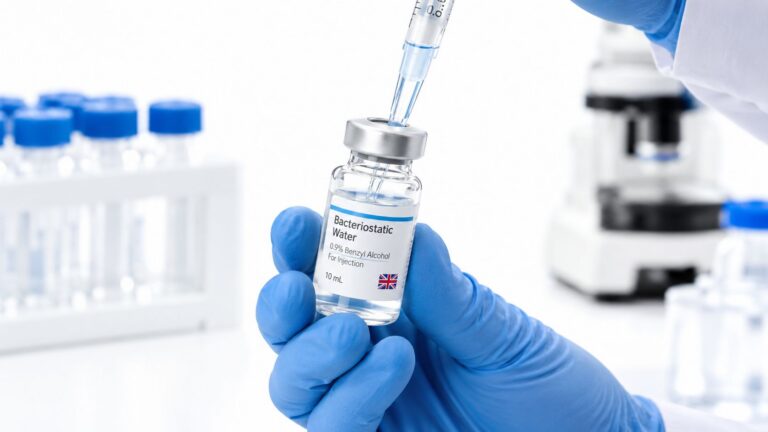
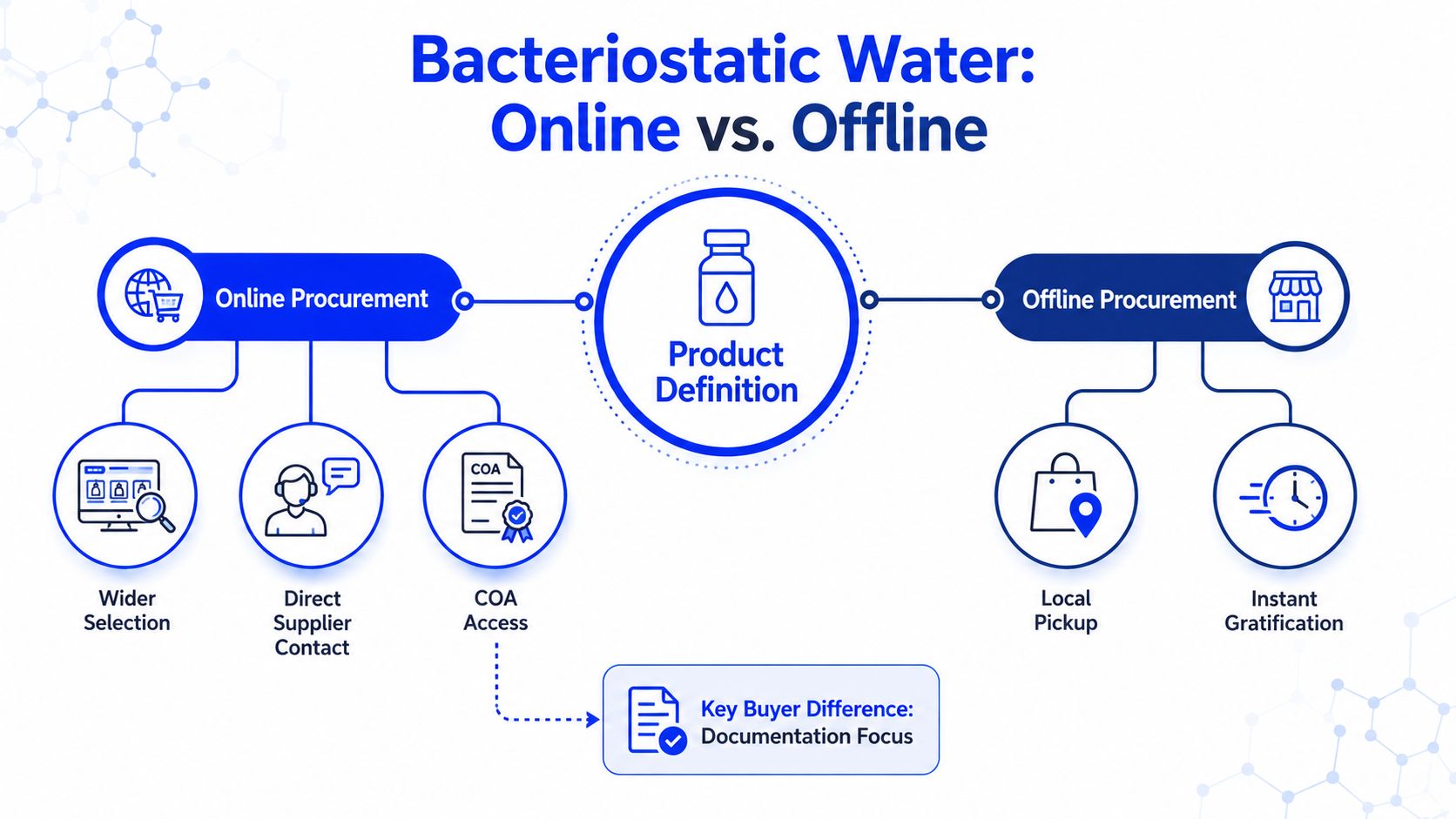
Bacteriostatic Water for Injection is formally defined as a sterile, nonpyrogenic preparation of water for injection containing 0.9% benzyl alcohol, or 9 mg/mL, as a bacteriostatic preservative. The FDA and DailyMed labeling also identifies a 30 mL multi-dose vial presentation. That formulation matters because bacteriostatic water isn't interchangeable with plain sterile water.
Plain sterile water is commonly supplied for a different use profile, while bacteriostatic water is packaged for repeated withdrawals under appropriate aseptic conditions. The benzyl alcohol is intended to inhibit microbial growth. It doesn't sterilize a contaminated vial, and it doesn't replace careful handling, clean access technique, or proper disposal.
The specification that controls the workflow
The practical purchasing question is simple: does the vial's formulation and format fit the lab's process? A reusable multi-dose vial may suit a workflow involving repeated withdrawals, while a smaller format may reduce the amount of product exposed to repeated access when consumption is limited.
The post-puncture limit also shapes the purchase. FDA labeling for a bacteriostatic-water-reconstituted product states that the vial should be discarded after 28 days, and the FDA-approved labeling provides the relevant benchmark. The same 28-day standard is used in compounding guidance for punctured multi-dose containers with antimicrobial preservatives.
Procurement rule: Treat the printed expiration date and the in-use date as separate controls. The first applies while the vial remains unopened. The second begins when the stopper is first punctured.
Online purchasing adds variables that local procurement can hide. A product page may omit storage conditions, a marketplace seller may provide no lot-specific paperwork, and shipping delays can reduce operational flexibility. The buyer should therefore verify the product, the documentation, and the supplier before payment.
Product Specifications to Verify on Any Listing
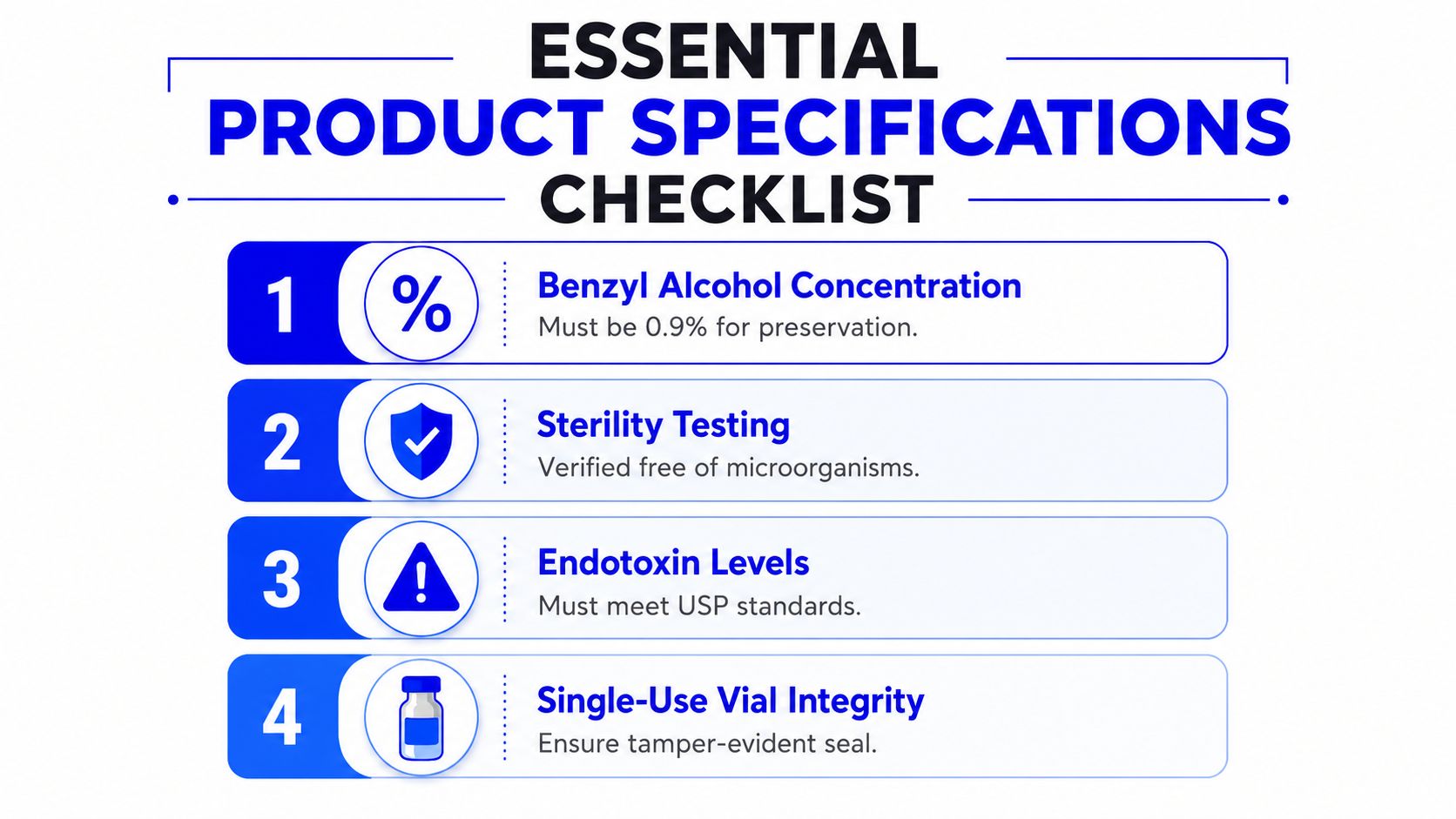
A trustworthy product page should answer the core specification questions without forcing the buyer to guess. The first check is the preservative concentration. For Bacteriostatic Water for Injection, the defining formulation is 0.9% benzyl alcohol, or 9 mg/mL, as stated in the DailyMed product labeling. A listing that says only “sterile water” is incomplete for a buyer seeking bacteriostatic water.
Use a five-line listing check
A procurement spreadsheet can capture the following fields:
- Formulation: Confirm the product is explicitly identified as Bacteriostatic Water for Injection or a clearly labeled RUO reconstitution solution, not plain sterile water.
- Preservative: Verify the stated benzyl alcohol concentration is 0.9%. If the listing gives no concentration, the product shouldn't move to approval.
- Sterility and nonpyrogenicity: Look for explicit claims supported by product documentation. “Clean,” “pure,” or “laboratory water” doesn't mean the same thing.
- Container format: Record the fill volume, vial material, closure, and whether the container is multi-dose. The labeled commercial format includes a 30 mL multi-dose vial, according to DailyMed's presentation details.
- Intended use: Separate products positioned for research use from products marketed for clinical or injectable use. The seller's wording can affect regulatory expectations.
Some supplier pages also publish pH information and filtration details. Those fields can help a lab compare batches and assess whether the solution fits an established workflow, but they shouldn't be treated as substitutes for sterility records or lot traceability.
A buyer comparing bacteriostatic water vial options should record the exact format rather than comparing only the displayed price. A larger vial may create waste if the lab won't use it within the post-puncture window. A smaller pack may cost more per milliliter but provide better control over opened inventory.
How to Read a Certificate of Analysis Before You Buy
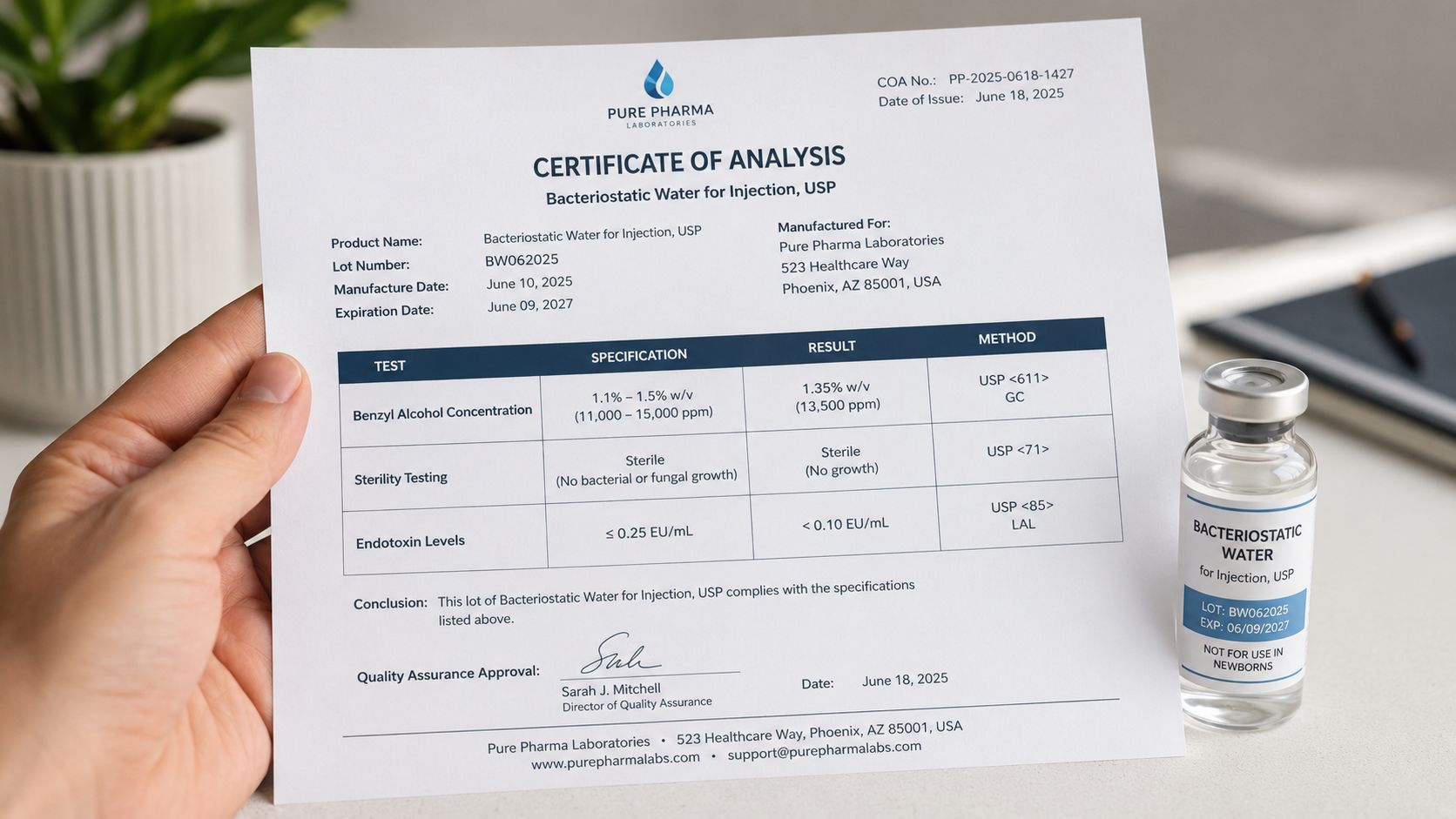
A Certificate of Analysis, or COA, has value only when it identifies the lot being purchased. A generic PDF with a company logo and no batch reference is marketing material, not strong batch evidence. A lot-specific COA should connect the test results to the vial or shipment through a matching lot number.
The fields that deserve attention
A quick review should focus on the identity of the product, the batch, and the reported test outcomes.
- Product name and lot number: The document should identify what was tested and provide a lot or batch reference that can be matched to the vial.
- Appearance: The result should describe the expected visual condition. Clear appearance is useful, but it doesn't prove sterility.
- pH: A reported pH result helps the buyer compare the batch against the supplier's stated specification.
- Benzyl alcohol assay: The COA should state the preservative test and acceptance result, not merely repeat “contains benzyl alcohol.”
- Sterility result: The document should identify the sterility test outcome or reference the applicable testing record.
- Endotoxin result: A buyer should look for the reported limit and result, with the applicable standard identified where provided.
The FDA labeling for bacteriostatic-water-reconstituted products is useful for understanding why post-puncture handling and product labeling matter, but it doesn't turn a supplier's generic COA into lot-specific proof. The buyer still needs the document tied to the actual batch.
Generic paperwork versus traceable paperwork
A strong COA includes a batch number, issue or test information, product identity, and a clear relationship to the shipped vial. A weak COA uses broad wording, omits the lot, shows no testing laboratory or responsible reviewer, or appears unchanged across different product batches.
For buyers requiring documentation in a research or reseller operation, the supplier should provide the COA before checkout or respond promptly to a direct request. A supplier that refuses to identify the shipped lot creates an avoidable traceability gap. Buyers comparing sterile diluents can also review sterile non-pyrogenic water information to distinguish product identity from generic claims about purity.
Certifications That Actually Matter for Sterile Production
Certification language often creates false confidence. A supplier may display several logos, yet the buyer still won't know whether those credentials relate to sterile filling, general quality management, or an unrelated business activity. The right question isn't “does the website show an ISO badge?” It's “what does the credential cover, and can the supplier connect it to the product and facility?”
ISO 13485, GMP, and ISO 9001 serve different purposes
ISO 13485:2016 is associated with quality-management systems for medical devices and related regulated production environments. It can indicate that the organization operates documented processes, manages records, controls changes, and addresses quality responsibilities in a structured way. It isn't, by itself, proof that every vial is suitable for a particular lab workflow.
GMP certification is more directly relevant to controlled manufacturing and production discipline. Buyers should expect a GMP-oriented supplier to discuss controlled procedures, sanitation, personnel training, material handling, batch records, release review, and deviation management. The credential matters most when it applies to the facility producing and filling the solution.
ISO 9001:2016 is a broad quality-management baseline. It can support process consistency, corrective action, supplier control, and documentation, but it doesn't specifically establish sterile-product competence. It's useful evidence of management-system maturity, not a standalone sterility qualification.
| Credential | What it can signal | What it doesn't prove alone |
|---|---|---|
| ISO 13485:2016 | Structured quality controls in medical-device-adjacent environments | That the exact vial meets every required product specification |
| GMP | Controlled manufacturing and batch-management practices | That a reseller's marketplace listing is authentic |
| ISO 9001:2016 | General quality-management processes | Sterile filling capability or product sterility |
Credentials must connect to the vial
A buyer should ask for the legal entity name, facility identity, certificate scope, validity, and relationship between the certified organization and the product manufacturer. A certificate held by a distributor may say little about the facility that produced the liquid.
The product range also deserves a packaging decision. Common online formats include 3 mL, 10 mL, 20 mL, and 30 mL glass multi-dose vials, along with multi-pack kits such as 10×3 mL and 10×10 mL. These formats are useful for different consumption patterns:
- Small formats: A smaller vial or multi-pack can suit intermittent work, multiple product lines, or operations that want fewer repeatedly accessed containers.
- Mid-size formats: A 10 mL or 20 mL vial can fit a recurring workflow where the lab expects regular withdrawals but doesn't need the largest presentation.
- 30 mL format: A 30 mL multi-dose vial can suit higher-throughput use, provided the lab can consume the contents within the applicable in-use period after first puncture.
The ASHP guidance on assigning beyond-use dates reinforces the operational point. A preservative supports multi-dose handling, but it doesn't create indefinite usability. Packaging should be selected against actual withdrawal frequency, not the lowest unit-price calculation.
Shipping, Storage, and the 28-Day Clock
A vial can meet its listed specification and still arrive in a condition that deserves review. Online buyers should ask where inventory is stored, how it's protected before dispatch, whether the outer packaging prevents damage, and how the supplier handles delays. These questions are more important for cross-border orders, where customs or carrier problems can interfere with planned receipt dates.
The unopened vial follows the manufacturer's printed expiration date when stored according to the product instructions. Once the stopper is first punctured, the relevant operational window changes. The established benchmark for a punctured multi-dose container is 28 days, supported by FDA labeling and compounding guidance from ASHP.
Build the order around consumption
The first-access date should be written on the vial or recorded in the lab's inventory system immediately. The vial should remain under controlled storage, and each withdrawal should use aseptic technique. Refrigeration doesn't erase the discard rule. Independent storage guidance states that the 28-day limit still applies when the vial is refrigerated because the limit manages repeated-access risk, not just temperature stability. See bacteriostatic water storage guidance for that practical distinction.
A procurement plan should therefore answer three questions:
- When will the shipment arrive? Include potential carrier or customs delays.
- When will the vial first be punctured? The in-use period begins then, not at checkout.
- Can the selected format be consumed in time? If not, a smaller vial or multi-pack may reduce waste.
For a buyer evaluating a smaller presentation, 3 mL bacteriostatic water vials may fit a lower-volume or intermittent workflow. The supplier's storage and dispatch answers should be documented before payment, especially when the order supports a scheduled experiment or recurring resale inventory.
Red Flags and Legal Status Across the US, UK, and EU
The most dangerous listing is often the one that looks almost legitimate. It uses a professional product photograph, promises rapid dispatch, and describes the liquid as sterile, but it doesn't identify the manufacturer, preservative concentration, lot, or testing record. Those omissions matter more than polished branding.
Reject listings with weak identity or weak evidence
The following signals should stop a purchase until the supplier provides satisfactory documentation:
- Unclear formulation: The page never states 0.9% benzyl alcohol, or it uses “BAC water” without defining the product.
- Missing manufacturer: The seller provides no accountable company or facility identity.
- No lot traceability: The supplier can't show how the shipped vial will be matched to a COA.
- Documentation refusal: Staff avoid sharing specifications, storage details, or testing records.
- Suspicious pricing: A low price is not proof of a problem, but market pricing guidance describes a wide spread between lower-cost marketplace listings and higher-trust channels. Price should never replace verification.
- Risky product positioning: A listing bundles bacteriostatic water with claims about injectable peptides or unapproved treatment products.
Before entering payment details, buyers should also review the business identity, contact information, refund terms, and checkout security. A practical resource on how to check if a website is safe can help screen the site itself, but website security doesn't validate the liquid. Technical trust and product quality are separate checks.
Legal status depends on the market and the claim
The same type of liquid can face different treatment depending on jurisdiction, intended-use language, seller category, and whether it's marketed as a lab reagent or an injectable drug. Buyers in the US, UK, and EU shouldn't assume that a statement such as “no prescription required for research use” settles the question for every transaction.
A March 2026 FDA warning letter illustrates why positioning matters. The FDA said a website offering bacteriostatic water alongside peptides was marketing it as an unapproved drug, as documented in the FDA warning letter to Gram Peptides. The warning doesn't establish a universal rule for every seller or country, but it does show that product claims and surrounding marketing can create compliance exposure.
Buyers should select a supplier whose labeling, intended-use statement, shipping route, and documentation align with the buyer's jurisdiction and organizational policies. A cross-border purchase that ignores customs requirements or regulatory classification can create delays, seizure risk, or a recordkeeping problem even when the vial itself appears intact.
A Five-Minute Supplier Verification Routine
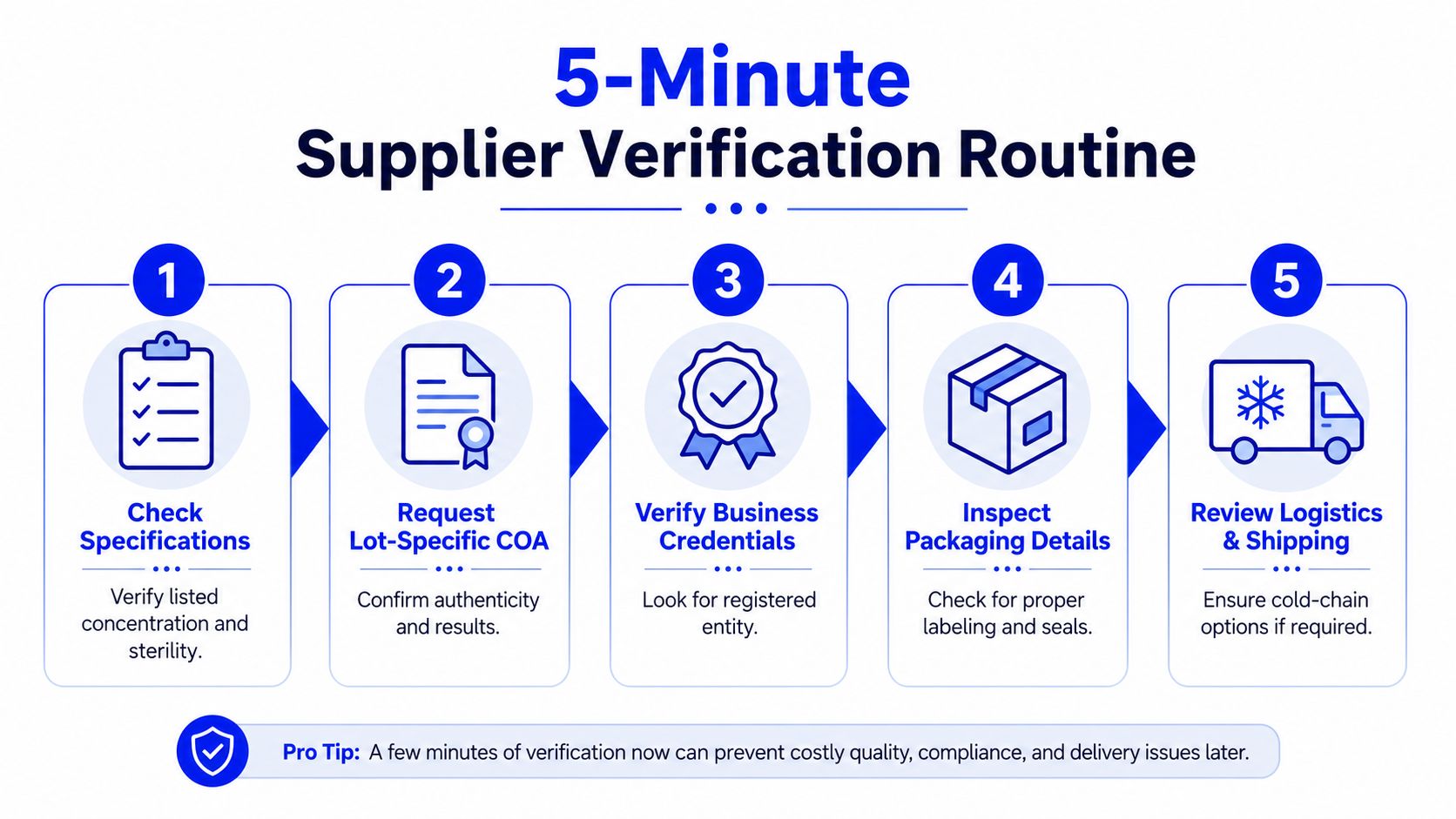
A buyer doesn't need a lengthy vendor audit for every order, but a fast routine should be a standard practice. The lowest-priced listing is rarely the lowest-risk option if the supplier can't provide batch traceability, clear labeling, and realistic fulfillment details. A documented answer in each category gives the purchasing team something defensible to file with the order.
Run the same five checks every time
Check the specifications. Confirm the product identity, 0.9% benzyl alcohol concentration, sterility and nonpyrogenicity claims, vial size, closure, and intended-use language. A listing that fails the formulation check shouldn't proceed to a COA request.
Request the lot-specific COA. Ask for the COA associated with the batch that will ship. Check the product name, lot number, appearance, pH, benzyl alcohol assay, sterility result, and endotoxin information. A blank template doesn't meet this requirement.
Verify the business credentials. Match the seller's legal identity to the manufacturer or authorized distributor. Review the scope of any ISO 13485:2016, GMP, or ISO 9001:2016 claim instead of accepting an unqualified logo.
Inspect packaging details. Confirm the glass vial format, label, tamper evidence, closure condition, fill volume, and lot marking. The received vial should match the product page and the COA.
Review logistics and shipping. Ask about storage before dispatch, dispatch timing, distribution location, carrier handling, and the procedure for damaged or delayed shipments. Record the first puncture date after receipt and manage the in-use window from that point.
Teams handling repeated orders should save the listing, correspondence, COA, purchase record, and receipt inspection notes together. A structured technical documentation software workflow can help standardize those records across procurement, quality, and fulfillment teams.
Herbilabs offers RUO bacteriostatic water and reconstitution solutions in 3 mL, 10 mL, 20 mL, and 30 mL vial formats, plus multi-pack, wholesale, private-label, and white-label options. Buyers can visit Herbilabs to review product formats and documentation expectations before placing an order.