Private Label, White Label, Wholesale partnerships available - EU, USA and UK - Free shipping from €75

Bacteriostatic Water 30ml: A Practical Multi-Dose Guide
You're at the bench with a peptide vial on one side, an antibody dilution on the other, and a partially used Bacteriostatic Water 30 mL vial sitting in the rack because the smaller bottles kept forcing extra swaps. That's where the decision starts. The question isn't just what bacteriostatic water is, it's whether the 30 mL format improves your workflow enough to justify the extra puncture exposure, the handling discipline, and the procurement planning that comes with it.
Table of Contents
- Why the 30 mL Vial Has Become a Lab Staple
- What Bacteriostatic Water Is
- Why 30 mL Specifically and What the Size Buys You
- Where the 30 mL Format Works Best in Practice
- Storage, Shipping, and In-Use Handling Best Practices
- Procurement Realities and Supply Continuity
- Key Takeaways and Common Questions
Why the 30 mL Vial Has Become a Lab Staple
A tech reaches for the same vial again on Wednesday, then again the following Monday, because the workflow keeps stretching across days instead of a single prep session. That's the use case where bacteriostatic water 30 mL starts making sense. It gives one sterile, multi-dose container enough runway for repeated withdrawals, so the bench doesn't fill up with half-empty small vials and stop-start handling.
Repeated access without constant container changes
The practical advantage is simple. A multiple-dose 30 mL vial sits at the upper end of the standard small-volume multidose container class used for repeated withdrawals, and the labeled product itself is supplied that way in U.S. drug labeling (DailyMed labeling for bacteriostatic water for injection). In a peptide or protein lab, that means fewer interruptions when the same diluent is needed across multiple preparations.
It also explains why the format became a recognizable benchmark size in research and pharmaceutical supply chains. When teams are managing recurring reconstitution steps, a 30 mL vial reduces container turnover and packaging clutter. That convenience matters most when multiple users are pulling from the same workstream and trying to keep documentation, traceability, and aseptic technique aligned.
Practical rule: the larger the vial, the more useful it becomes for repeated work, but only if the team actually has the discipline to handle every access cleanly.
The vial is not special because it's large. It's useful because it matches a very common lab pattern, several small withdrawals over time, with one container designed for that exact behavior.
What Bacteriostatic Water Is
The label definition is direct. Bacteriostatic water for injection is sterile, nonpyrogenic water for injection containing 0.9% benzyl alcohol as a bacteriostatic preservative, and the product is supplied in a multiple-dose 30 mL vial. That preservative is what separates a vial built for repeated access from a plain sterile diluent that has to be handled under a different assumption set.
Benzyl alcohol is the reason the vial can be reused
0.9% benzyl alcohol works as a preservative after the stopper has been punctured. It does not make the vial contamination-proof, and it does not replace aseptic technique, but it does inhibit bacterial growth after access. In real bench work, that is the practical reason bacteriostatic water sits in the multi-dose category instead of the one-use category.
A preservative-free sterile water product does not offer that margin. It can leave the factory sterile and still be the wrong choice for repeated withdrawals, especially in a workflow where the same container is opened again and again. The difference is operational, because the lab is choosing how much protection it has after the first puncture, not just which liquid is on the shelf.
For a plain-language comparison with sterile water, this internal guide is useful: bacteriostatic water vs sterile water.
The chemistry is simple, but the operational effect is not. A preservative changes how long the vial stays in active rotation, how carefully the septum has to be managed, and how much confidence a lab can place in repeated access when aseptic technique stays tight.
Why 30 mL Specifically and What the Size Buys You
The 30 mL size is not arbitrary. In major U.S. supply chains, benchmark specs for this format commonly include sterility, pyrogen-free status, endotoxin limits below 0.5 EU/mL, and osmolarity around 9 mOsm/L (benchmark specifications for 30 mL bacteriostatic water products). Those figures help explain the product's role as a diluent, and they also show why it is built for reconstitution workflows rather than direct physiologic use on its own.
Throughput versus puncture exposure
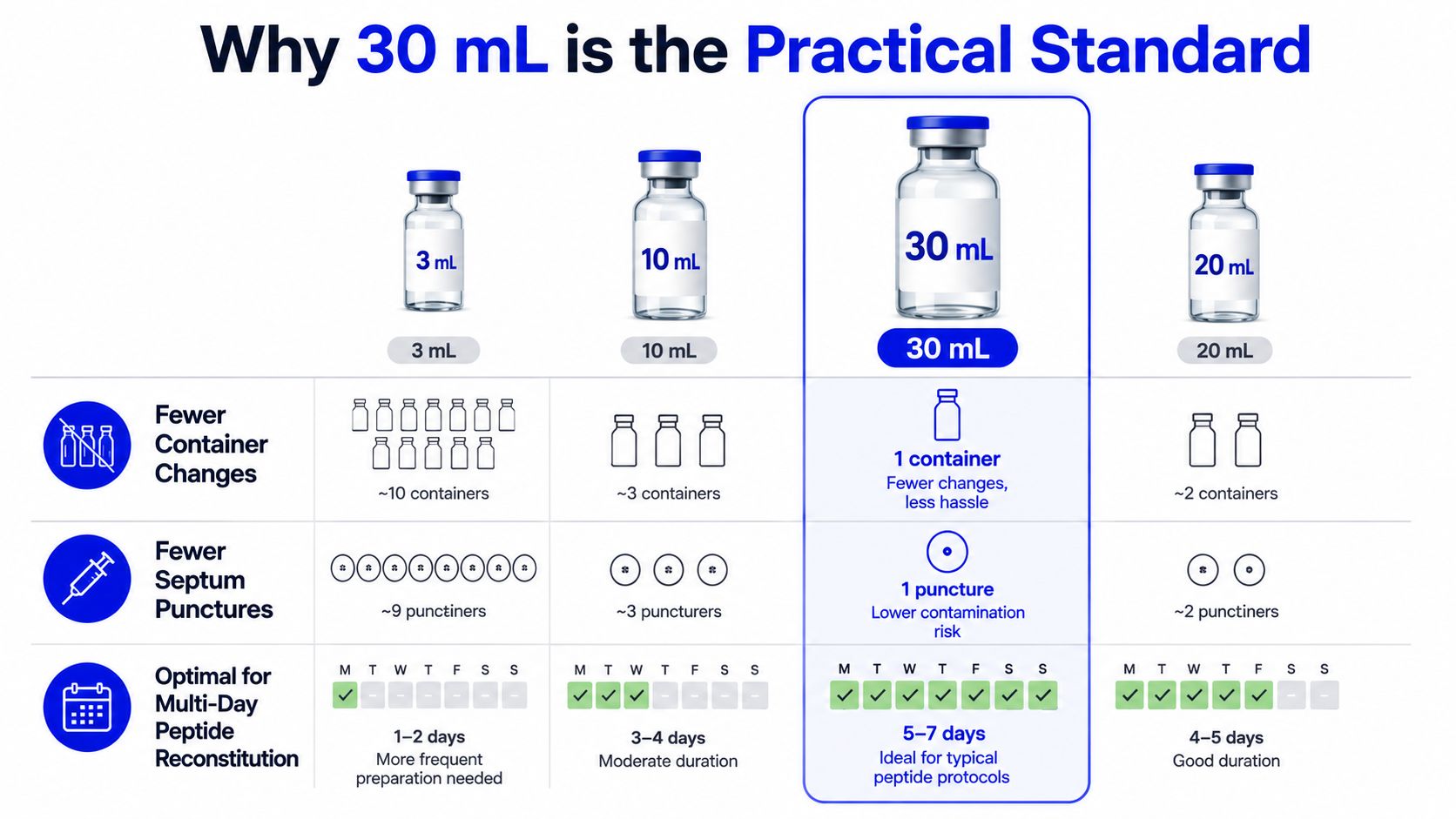
The operational trade-off is easy to miss. A larger vial means fewer container changes, less packaging waste, and less time spent opening new units during high-frequency R&D work. It also means the same septum is accessed more times, which raises cumulative contamination risk unless the team has the discipline to handle every access cleanly, with disinfection, needle changes, and storage control kept tight.
That is why the 30 mL format is best understood as a throughput choice. It improves workflow efficiency when the same diluent is used repeatedly, but it rewards only the labs that treat each access like a controlled event.
The low osmolarity matters for another reason. At roughly 9 mOsm/L, the fluid behaves as a hypotonic vehicle, which works for dissolving lyophilized peptides, proteins, or antibodies. It is not meant to mimic blood tonicity. Instead, it functions as a reconstitution tool for lyophilized materials.
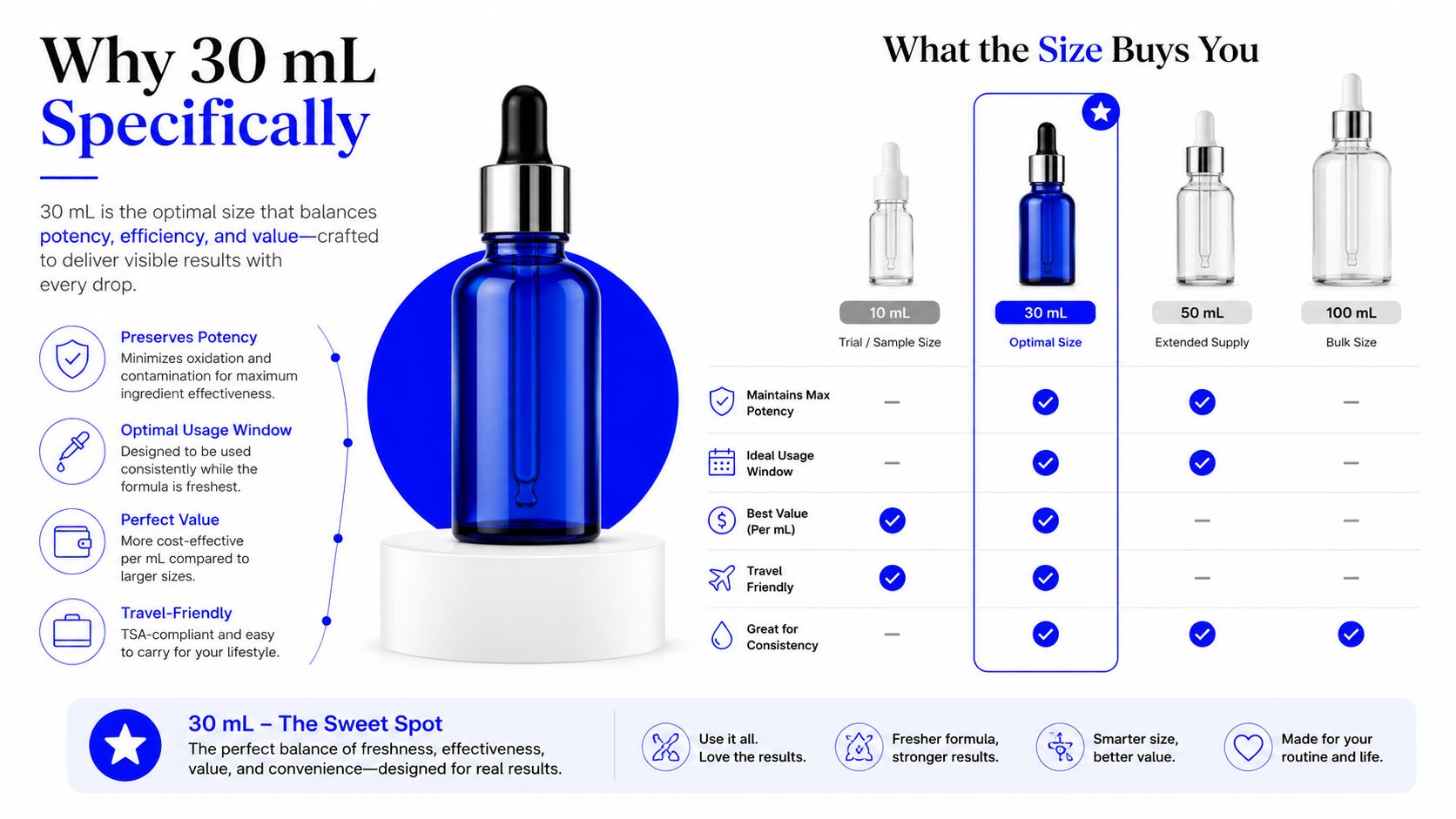
For a broader product-format view, this reference on bacteriostatic water vials helps frame how the 30 mL sits relative to smaller presentations.
The size pays off when the vial gets used hard but carefully. It does not solve aseptic problems. It gives the bench more useful volume before a replacement is needed, which matters when procurement is tight and the team wants fewer partial containers in rotation.
Where the 30 mL Format Works Best in Practice

A peptide researcher running multiple prep days sees the benefit quickly. The same diluent stays in rotation across successive reconstitutions, so the bench does not need a fresh container for every draw. That keeps the workflow moving and cuts waste from small vials that would otherwise sit partly used. The format earns its place when one series stretches across several days and the team needs one consistent sterile source.
The use cases that justify the format
Peptide reconstitution is the clearest fit, but protein and antibody workflows also benefit when repeated dilution steps are part of assay development. Lyophilized materials need a sterile vehicle that behaves predictably, and the 30 mL vial provides enough volume to support multiple preparations without constant container changes.
A peptide reseller sees a different trade-off. A larger vial reduces handling churn during repeated prep work and keeps the inventory model simpler, while still fitting routine RUO use. A small lab running recurring Western blot antibody dilutions can get the same operational advantage, one vial covers a longer working window and leaves fewer partial units in cold storage.
The right format is the one that fits the timeline, not the one that looks convenient on a product page.
That planning is where the 28-day in-use period becomes useful. It gives the lab a practical boundary for deciding whether a 30 mL vial belongs in a current series or should be held for a shorter run. For a focused note on first-access handling, see this guide for researchers on bac water after opening storage.
The 30 mL format works best when repeated access is expected and the vial stays in controlled rotation. It is less attractive when the diluent will be used once and discarded, because the larger format only pays off if the team can keep the septum management tight and the workflow disciplined.
Storage, Shipping, and In-Use Handling Best Practices
A 30 mL vial earns its keep only if the handling stays disciplined from dock to bench. Temperature swings, rough movement, and careless punctures are the usual failure points, and they matter more in a larger format because the same container may sit in rotation longer before it is fully used. For teams comparing formats, the trade-off is simple, fewer container changes can help workflow efficiency, but each extra day the septum stays in service adds exposure risk that has to be managed.
Herbilabs' temperature and post-opening storage for researchers guide covers the post-opening side of that routine, and the operational point is straightforward. The vial has to be protected before it reaches the bench, then handled with the same care after first access. In transit, that means controlled logistics for EU, UK, and USA shipments, because warehousing, movement, and temperature drift can all affect product condition before a single withdrawal is made.
The access routine that protects the vial
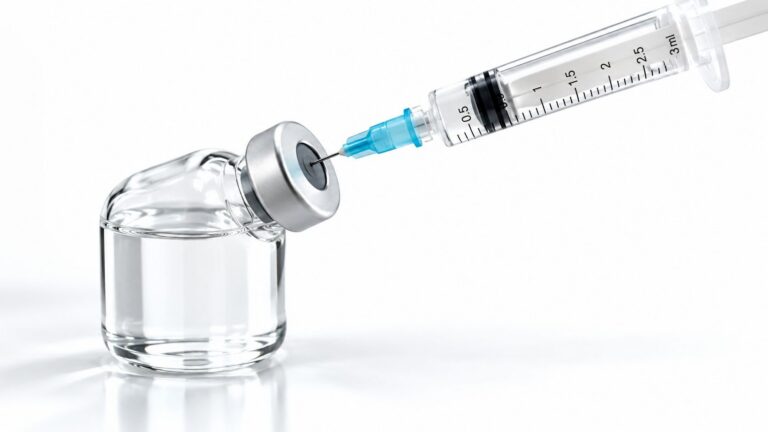
The access sequence should stay predictable. Disinfect the septum before every puncture, use a new sterile needle and syringe for each withdrawal, avoid touching the stopper or vial interior, and recap immediately after use. Mark the first-access date on the label so the 28-day in-use period is tracked in real time, not from memory.
A clean workflow also needs a clear reject rule. Cloudiness, visible particulate, leaks, a damaged stopper, or any other sign that sterility may have been compromised should end the vial's usable life. That is basic contamination control, not overcaution.
- Disinfect Every Time: Wipe the septum before each puncture and let it dry before access.
- Use Fresh Hardware: Never reuse a needle or syringe for a second withdrawal.
- Limit Air Exposure: Keep the vial on the bench only as long as needed for the draw.
- Track First Use: Write the opening date on the label immediately.
- Discard Questionable Vials: Cloudy, particulate-containing, or damaged vials should not remain in rotation.
Shipping controls matter for the same reason aseptic technique matters, they reduce avoidable variability. A lab or reseller managing restricted fulfillment should also build those checks into its workflow, and a pharmacy shipping compliance plugin can help keep regulated routes and destination rules from getting overlooked.
The biggest mistake is treating a multi-dose vial like a passive object. Every puncture creates a new risk point, so the handling routine has to stay consistent from first access to final discard.
Procurement Realities and Supply Continuity
A lot of consumer-facing content stops at usage, but the sourcing side is often what disrupts a lab. Bacteriostatic water for injection has appeared in the FDA and ASHP shortage system, and that makes the 30 mL format a procurement issue, not just a bench issue (ASHP shortage record). When demand spikes, lead times shift, substitution risk rises, and labs can't assume the same presentation will always be available.
What to verify before switching suppliers
The first question is whether the alternative matches the same core specifications, including sterility, pyrogen control, and 0.9% benzyl alcohol. If those aren't clearly documented, the substitute isn't equivalent in any operational sense that matters to research workflows.
Documentation matters as much as product composition. Labs and resellers should ask for lot-specific Certificates of Analysis, QA release review, and manufacturing credentials such as ISO 13485 and GMP. That paperwork doesn't just satisfy internal compliance, it helps preserve reproducibility when lots change.
Supply continuity also deserves a logistics lens. For teams managing restricted shipping workflows, a resource like the pharmacy shipping compliance plugin can help frame how shipping limitations are handled operationally, even though the product itself still has to meet the right quality bar.
A practical buffer helps, too. Multi-pack options, more than one approved supplier, and a small reserve inventory reduce the chance that a shortage or shipping delay derails a reconstitution schedule. That's not overbuying, it's preventing an avoidable stop in work.
Key Takeaways and Common Questions
The decision framework is pretty simple. Choose the 30 mL format when repeated withdrawals, multiple prep days, or higher-throughput reconstitution work make container changes expensive in time or handling. Choose a smaller vial when the use is occasional, the timeline is short, or puncture exposure would outlast the workflow.
Quick answers to the questions people ask next
How does 30 mL compare with 10 mL vials?
For high-frequency workflows, 30 mL reduces container changes and packaging churn. A 10 mL vial can be cleaner for one-off tasks, but it becomes less efficient when the same diluent is needed over and over.
Can it still be used after 28 days if it looks clear?
Clear appearance is not a release criterion. Once the in-use period has run, the vial should be treated as expired for routine research handling.
Why does benzyl alcohol matter for compatibility?
Because it changes how the vial behaves after puncture, and that makes it unsuitable for certain preservative-sensitive contexts. The label also warns that benzyl alcohol-containing parenteral products must not be used in neonates (DailyMed product label PDF).
What should a research-grade purchase include?
At minimum, clear lot traceability, a COA, and enough manufacturing detail to confirm the vial matches the intended RUO workflow.
For inventory planning, teams often use the same logic described in how to balance sales and lead time, because supply continuity is really just controlled availability under uncertain demand.
Herbilabs supplies bacteriostatic water and reconstitution solutions in RUO vial formats, including 30 mL, with documentation-oriented fulfillment for peptide, protein, and antibody workflows. If your lab needs a sterile multi-dose diluent with traceable release paperwork and a format that fits repeated-access work, visit Herbilabs and review the available vial options before the next prep cycle starts.