Private Label, White Label, Wholesale partnerships available - EU, USA and UK - Free shipping from €75

Sterility Testing Methods: 7 Categories for Lab QA
A lot of preserved diluent arrives with an intact seal, a tidy label and a COA that reads clean. That isn't enough for routine release. Someone still has to decide which sterility testing methods support the decision, whether the method works in the presence of benzyl alcohol, and whether the batch record tells the same story as the certificate.
For a preserved aqueous diluent such as bacteriostatic water, that distinction matters. The preservative that allows repeated withdrawals can also suppress microbial recovery in the test itself. A method that looks suitable for plain sterile water can produce a reassuring no-growth result for the wrong reason.
The seven categories below cover the options most QA reviewers encounter. Some are compendial release tests, some prove that a release test is valid, and others answer narrower questions about endotoxin, speed or organism identity. The practical choice starts with the question being asked, then moves to documentation. Every lot file should show the method, the controls, the incubation conditions and the reviewer's disposition.
Table of Contents
- 1. Membrane Filtration Sterility Test
- 2. Direct Inoculation Sterility Test
- 3. Method Suitability and Antimicrobial Neutralization Testing
- 4. Bacterial Endotoxin Testing (LAL and Recombinant Factor C)
- 5. Automated Continuous Monitoring Sterility Systems
- 6. Rapid Microbiological Methods (ATP Bioluminescence and Related Techniques)
- 7. Nucleic Acid Amplification Sterility Screening (PCR-Based Methods)
- How the seven sterility testing methods compare on time, sample fit, and preserved-product risk
- Turning Method Choice Into a Defensible Lot Record
1. Membrane Filtration Sterility Test
The filtration setup below shows the workflow most labs reach for first with a clear, filterable aqueous diluent.
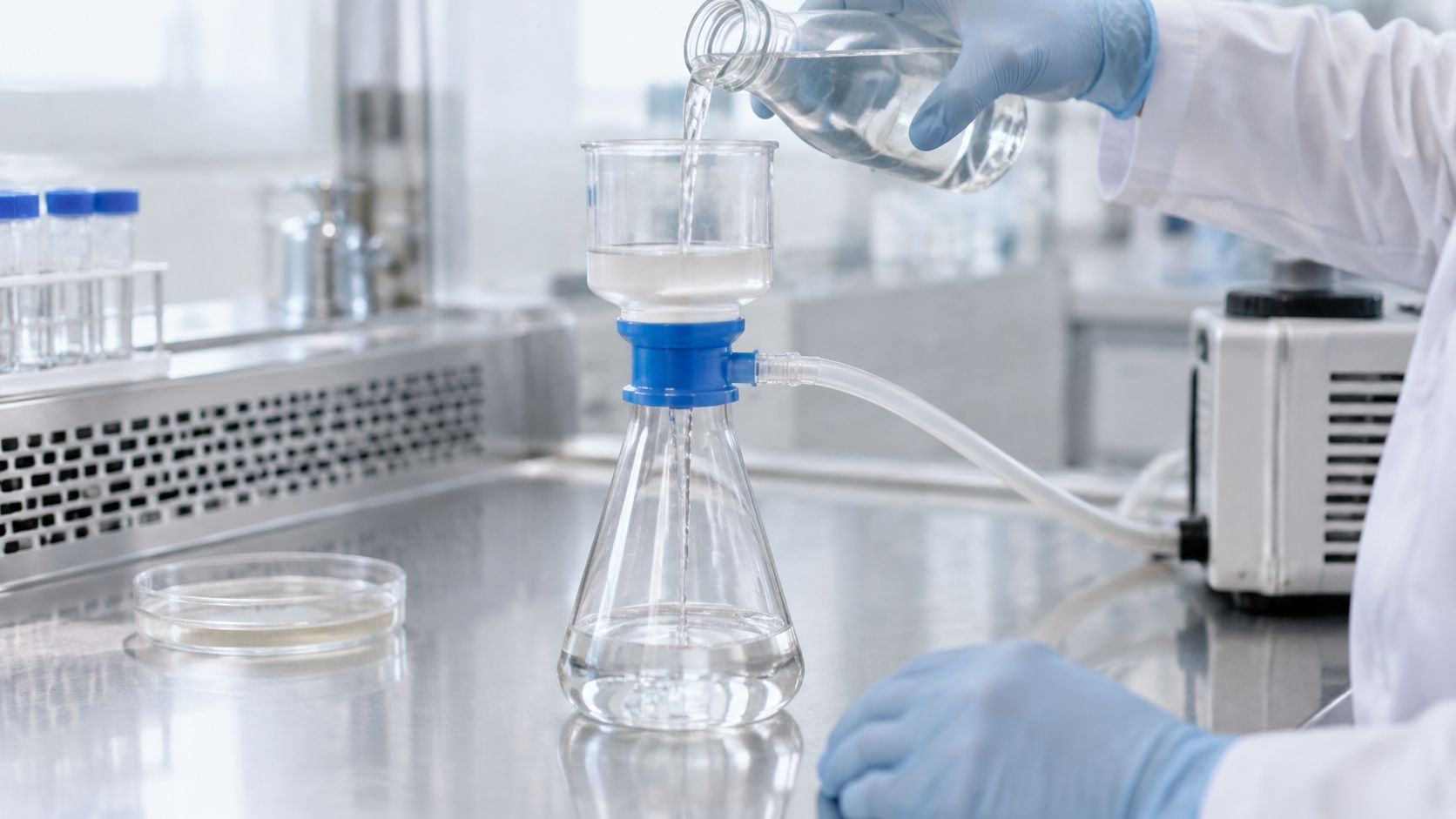
Membrane filtration passes the sample through a membrane, retains microorganisms on the surface, rinses away residual material, then places the membrane into culture media. The USP harmonization material specifies a pore size of no more than 0.45 µm, transfer into Tryptic Soy Broth and Fluid Thioglycollate Medium, and incubation for not less than 14 days. The membrane may also be divided aseptically so each portion enters a different medium.
That separation step is the advantage for preserved diluents. Rinsing reduces benzyl alcohol carryover before incubation, so organisms retained on the membrane get a better chance to grow. It's the strongest default for contract labs testing diluent lots, QC labs releasing sterile aqueous liquids, and teaching labs demonstrating a compendial workflow.
What the Record Has to Prove
The short demonstration below is useful for training, but the batch record still has to stand on its own during review.
- Membrane traceability: Record membrane lot, pore size certification and filtration time.
- Validated rinsing: Show the rinse fluid and volume removed antimicrobial interference.
- Positive control: Confirm recovery with a low-level challenge organism.
- COA match: Confirm the lot is listed as sterile and preserved before planning the test.
Clogging, slow filtration or a damaged membrane isn't a minor bench problem. Each one affects sample volume and recovery, so each belongs in the deviation or comment field, not in memory.
2. Direct Inoculation Sterility Test
Direct inoculation skips filtration and places a measured volume straight into culture media. The review of USP <71> procedures describes transfer into Tryptic Soy Broth at 20 to 25 °C and Fluid Thioglycollate Medium at 30 to 35 °C, with both cultures maintained for at least 14 days. Two media and two temperatures broaden recovery beyond a single growth condition.
Simplicity is the appeal. Small private labs can run it without filtration manifolds, and it suits viscous or non-filterable liquids that would block a membrane. Teaching labs also use it beside membrane filtration to show why method choice changes the result.
The weakness shows up fast with preserved material. Benzyl alcohol travels into the medium with the sample, and dilution alone may not remove its effect. Without validated neutralization, a clear tube can mean inhibited growth rather than a sterile sample. That's the central trade-off with bacteriostatic water, especially once storage time after opening becomes part of the receiving decision.
Controls That Make the Result Usable
- Neutralizer validation: Prove benzyl alcohol doesn't suppress recovery in the selected media.
- Uninoculated controls: Run media blanks with every test to catch laboratory contamination.
- Fixed inspections: Document turbidity checks on schedule, supported by dated photos where the SOP allows.
- Aseptic sampling: Keep multi-use vials sealed except during controlled withdrawals.
A direct inoculation result without neutralization evidence is an observation, not a defensible release record.
3. Method Suitability and Antimicrobial Neutralization Testing
Method suitability answers a prior question: can the chosen test find organisms when the actual product is present? The EMA ICH Q4B harmonization guidance specifies a small microbial inoculum of no more than 100 colony-forming units, added to the final membrane rinse fluid or directly to culture medium. Recovery is then compared with controls that don't contain the interfering material.
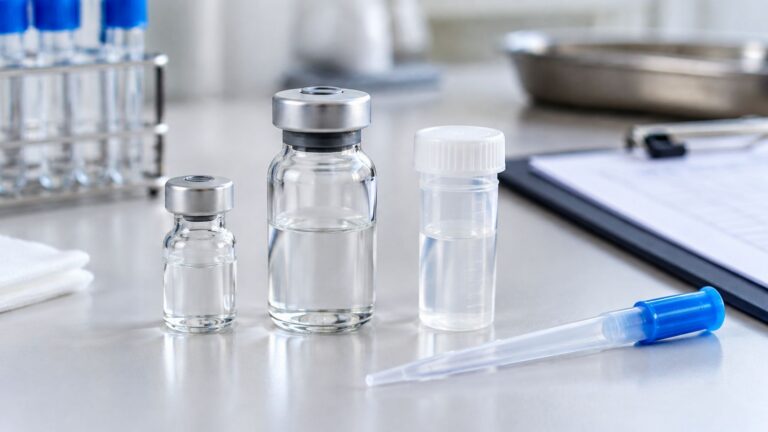
The bench setup for that challenge work is ordinary, but the documentation carries the weight.
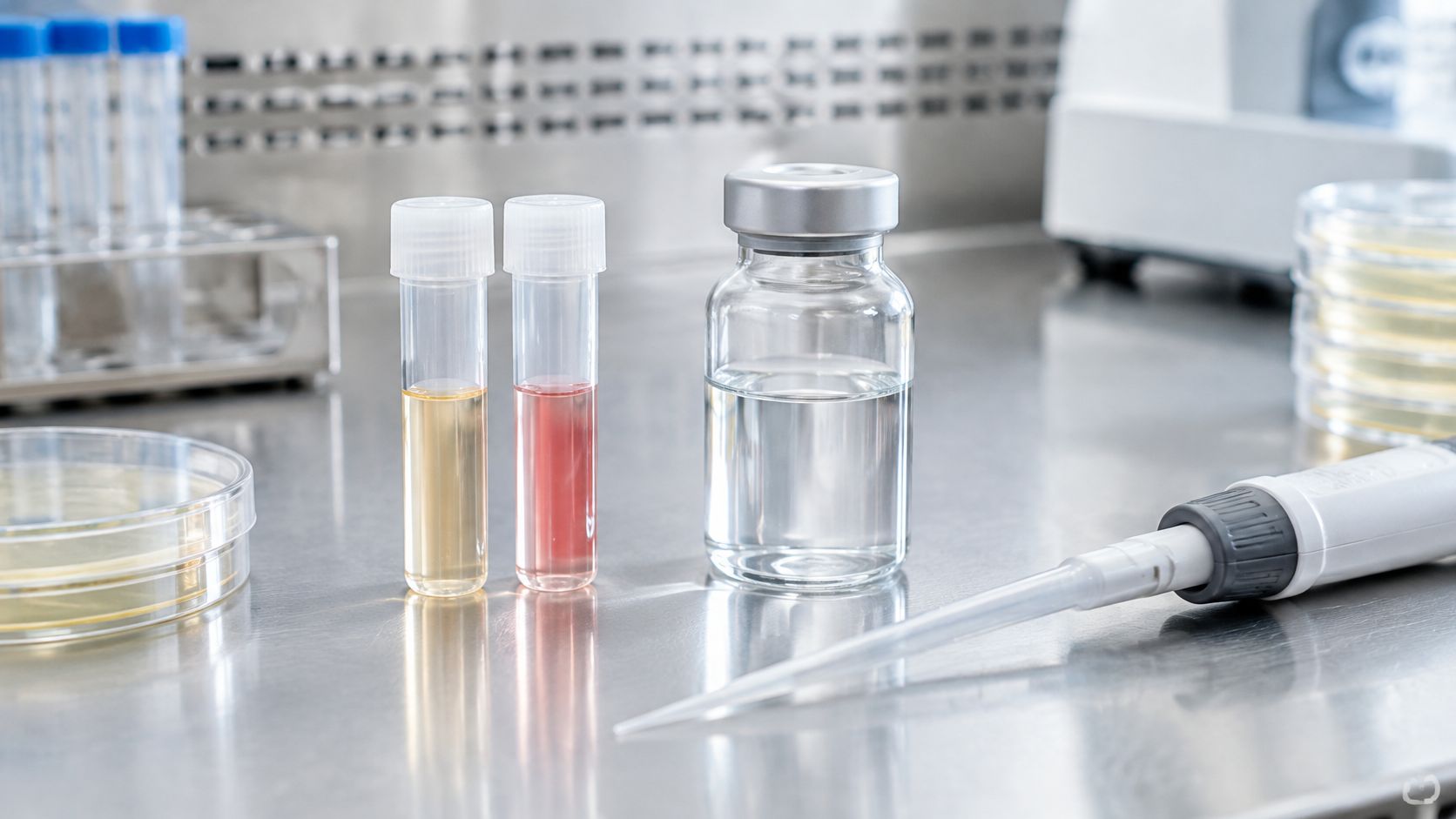
For bacteriostatic water, the preservative concentration is 0.9% benzyl alcohol. QA teams validate rinse volume, dilution or neutralizing agents against that exact matrix. Research labs comparing neutralizers and procurement teams qualifying a supplier should ask for the same evidence, not a generic statement that a sterility test was performed.
When Revalidation Is Required
A change in vial supplier, stopper material or preservative concentration can change recovery. So can a new membrane type, rinse fluid or sample volume. The validation report belongs with the SOP, and every batch record should reference the current version.
Challenge organisms should cover the recovery risk, including spore-formers and Gram-negative bacteria where the compendial panel requires them. Poor recovery means the routine method gets modified before release testing continues. It doesn't mean the lab repeats the same test until a cleaner answer appears.
4. Bacterial Endotoxin Testing (LAL and Recombinant Factor C)
Endotoxin testing doesn't detect living organisms. It measures lipopolysaccharide fragments from Gram-negative bacterial outer membranes, reported in endotoxin units per millilitre. A sample can show no viable growth and still carry endotoxin from earlier contamination, which is why labs run the assay beside sterility testing rather than instead of it.
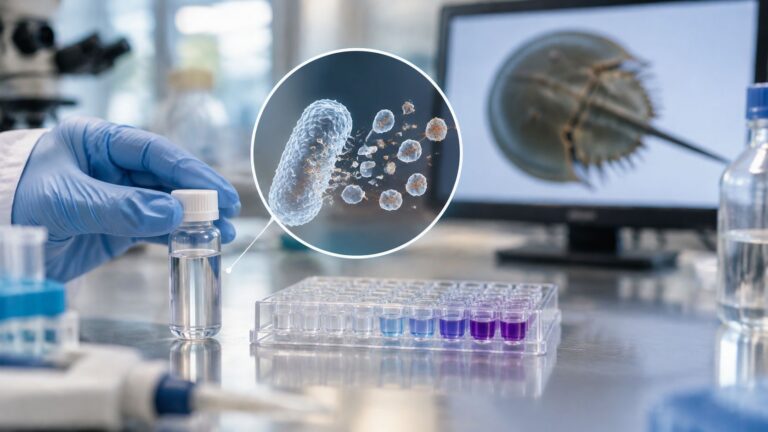
Traditional Limulus amebocyte lysate methods use horseshoe crab blood-derived reagent. Recombinant Factor C methods avoid animal-derived lysate and use a recombinant reagent instead. Gel-clot, turbidimetric, chromogenic and rFC formats differ in quantification, equipment and interference profile, so procurement teams should compare LAL testing methods against the sample type before accepting a COA value at face value.
What Belongs Beside the Sterility Result
- Method and standard: Name the assay format and reference standard on the COA.
- Interference controls: Run inhibition and enhancement checks for the diluent matrix.
- Clean consumables: Use endotoxin-free tubes, tips and depyrogenated glassware.
- Lot file pairing: File the endotoxin result with the sterility result for the same lot.
University labs using diluents around cell culture work often need that documented endotoxin value even when sterility is already shown. Upstream, water system reliability matters too, and pharma water treatment predictive maintenance is relevant because a drifting purification system can create endotoxin risk before final testing begins.
Review point: Sterility asks whether viable organisms grow. Endotoxin testing asks what Gram-negative debris remains. One result never substitutes for the other.
5. Automated Continuous Monitoring Sterility Systems
Automated systems keep inoculated containers in an instrument that watches for growth signals throughout incubation. Depending on the platform, detection follows changes in carbon dioxide, pH, oxygen or fluorescence. Positive containers flag when the signal crosses a threshold instead of waiting for a technician to spot turbidity at a scheduled visual check.
The compact incubator format below suits labs that need an auditable trail without constant manual reading.
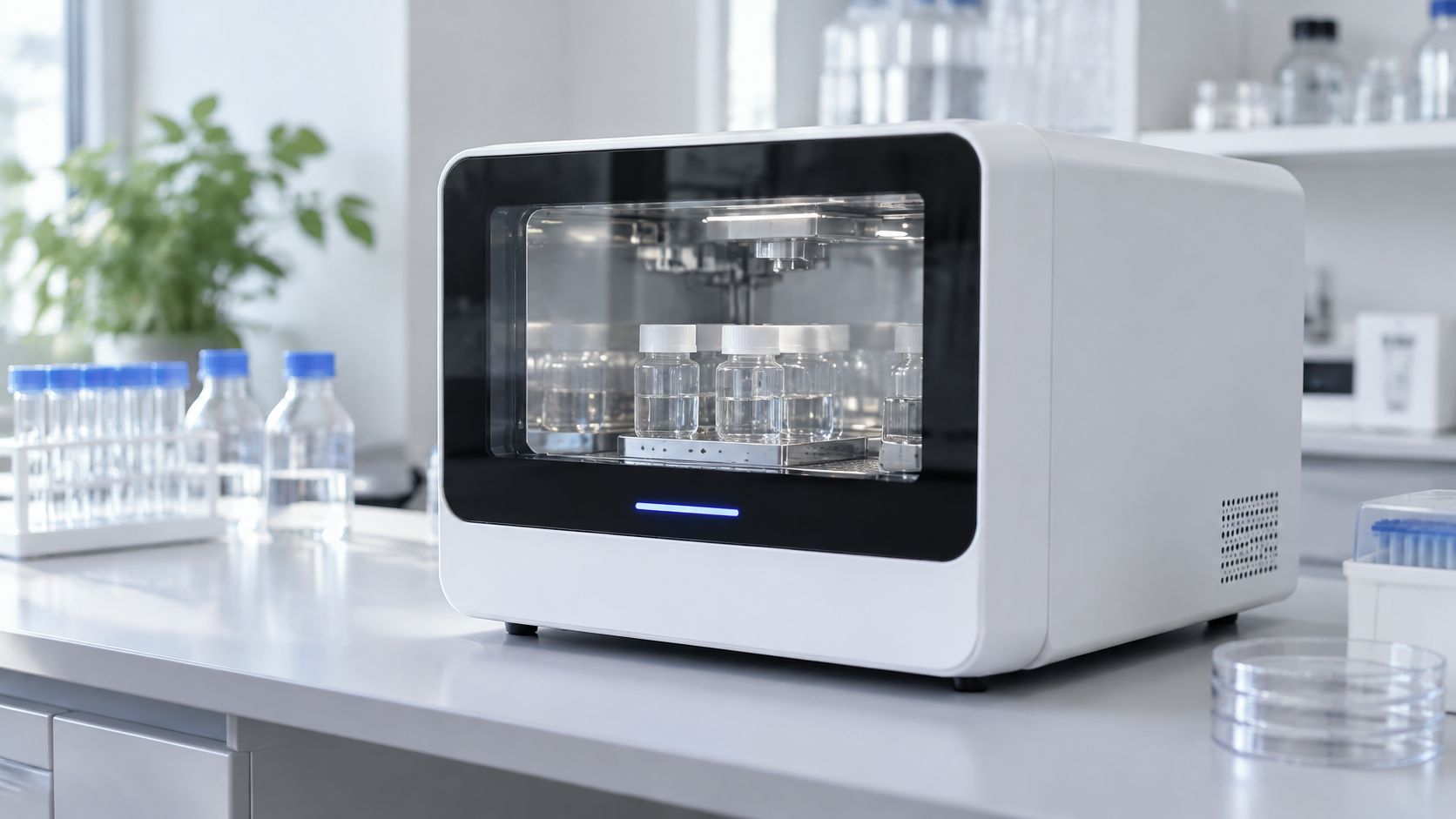
Large contract testing laboratories gain the most because they process high batch volumes and need consistent timestamps. Pharmaceutical QA departments use the same systems for release workflows after validation, and academic core facilities use them when several sterile materials move through each month. Earlier flags shorten investigations, but they don't remove the need to confirm and identify growth.
Validation Before Routine Use
Detection chemistry must tolerate the sample matrix. Benzyl alcohol, coloured material or gas-producing formulation components can distort a signal, so positive and negative controls need to run in the preserved diluent itself. Alert handling also needs a written path: who receives the flag, how fast the container is subcultured, and when QA opens an investigation.
Calibration records, maintenance logs, software audit trails and container lot numbers belong with the batch record. An automated graph without instrument status is hard to defend. Reviewers will ask whether the system was qualified on the day the lot was tested, and the file should answer without a search through separate maintenance folders.
6. Rapid Microbiological Methods (ATP Bioluminescence and Related Techniques)
Rapid methods trade visible colonies for a biochemical or physical signal. ATP bioluminescence measures light produced when adenosine triphosphate reacts with luciferase. Flow cytometry and solid-phase cytometry reach the same operational goal by different routes: an earlier warning than a full culture cycle gives.
Interest is running ahead of routine adoption. A 2023 survey of pharmaceutical and biopharmaceutical professionals found 93% of respondents expressed interest in rapid sterility testing, while only 28% reported current use. That gap reflects validation burden, not a shortage of instruments.
Speed claims need the same scrutiny. The 2023 PDA Journal study reported two case studies with approximately 50% shorter incubation times than the conventional method. Compendial bodies continue to develop chapters covering alternative microbiological methods, so confirm the current chapter text and scope before basing a release decision on one.
Where Rapid Methods Earn Their Place
- Water trending: ATP checks between culture-based tests on research water systems.
- Environmental monitoring: faster signals from clean areas and work surfaces.
- Method development: side-by-side correlation against compendial culture for the exact diluent.
- Interference checks: confirmation that benzyl alcohol doesn't quench the luminescence or staining signal, since a quenched assay can read clean whether or not organisms are present.
A rapid assay shouldn't replace compendial sterility testing methods for lot release until equivalence or superiority is demonstrated for that matrix. For a preserved diluent, the demonstration carries extra weight: benzyl alcohol can suppress growth in a culture container and dampen the signal in a rapid one, so both failure modes need ruling out during validation. The batch record should state which role each result played, screening or release, and the COA should match it. Faster detection with weaker interpretation increases risk.
7. Nucleic Acid Amplification Sterility Screening (PCR-Based Methods)
PCR-based screening detects microbial DNA or RNA instead of waiting for growth. Primers target conserved bacterial or fungal sequences, amplification raises the signal, and the result can flag organisms that are present at low levels or difficult to culture. Targeted panels can also help identify what grew in a positive compendial container.
That sensitivity creates its own problems. Nucleic acid can persist after organisms are no longer viable, so a positive signal doesn't automatically prove living contamination. Conversely, preservatives and extraction carryover can inhibit amplification and produce a false negative. Sample preparation decides whether the assay says anything useful.
Controls for a Credible PCR Screen
- Inhibition control: Spike each run with a known amount of target DNA.
- Preservative handling: Remove or dilute benzyl alcohol before extraction when the protocol requires it.
- Separated work areas: Keep pre-PCR and post-PCR handling physically apart.
- Defined purpose: Use results for screening, confirmation or investigation support, not as a silent replacement for the sterility record.
Contamination investigations in cell culture facilities show the best use case. PCR can narrow the organism group quickly while culture work continues, giving QA a direction for environmental checks and material quarantine. For routine diluent release, the COA should state clearly whether PCR supplemented the compendial test or merely supported an investigation. Ambiguous wording creates review questions later.
How the seven sterility testing methods compare on time, sample fit, and preserved-product risk
| Item | Typical Time to Result | Sample Format Fit | Preserved Product Risk | Core Documentation Focus |
|---|---|---|---|---|
| Membrane Filtration Sterility Test | 14 days | Filterable liquids; not ideal for viscous, oily, or particulate samples | Lower after validated rinsing removes preservative | Membrane details, filtration and rinse procedure, controls, incubation |
| Direct Inoculation Sterility Test | 14 days | Non-filterable samples; limited sample volume | High risk of false negatives unless neutralization is validated | Method suitability, neutralizer validation, media controls, inspection records |
| Method Suitability and Antimicrobial Neutralization Testing | Product- and method-specific; no fixed duration stated | Product-specific samples processed by the intended sterility method | Directly evaluates preservative inhibition and neutralization | Challenge organisms, recovery versus controls, neutralization results, validation report |
| Bacterial Endotoxin Testing (LAL and Recombinant Factor C) | No typical duration specified | Samples suitable for the selected assay; interference controls may be needed | Product components may interfere; does not establish sterility | Method and standard, inhibition or enhancement controls, endotoxin result |
| Automated Continuous Monitoring Sterility Systems | Earlier detection possible; no fixed duration stated | Sterility test containers compatible with the instrument | Validate that benzyl alcohol does not affect detection chemistry | Instrument validation, controls, time-stamped records, calibration and maintenance |
| Rapid Microbiological Methods (ATP Bioluminescence and Related Techniques) | Hours | Suitable for validated applications such as water or environmental monitoring | Preservatives may affect assay chemistry; non-viable material can produce signals | Correlation with compendial methods, product-specific validation, controls |
| Nucleic Acid Amplification Sterility Screening (PCR-Based Methods) | Within hours of sample preparation | Samples compatible with extraction; inhibitors may require removal or dilution | Preservatives may inhibit amplification; DNA from non-viable organisms may be detected | Inhibition controls, sample preparation, contamination controls, supplementary-use rationale |
Turning Method Choice Into a Defensible Lot Record
No single method answers every sterility question. Membrane filtration suits a filterable preserved diluent because rinsing separates organisms from antimicrobial carryover. Direct inoculation suits non-filterable material, provided neutralization is proven. Endotoxin, automated monitoring, rapid assays and PCR each add a different kind of evidence, and none should be stretched into a claim it can't support.
The harder point is often missed. The Lab Manager review of sterility testing limits frames compendial tests as qualitative growth checks: growth detected or no growth detected in the units sampled. That's not a measurement proving every container is sterile. Sterility assurance also depends on validated aseptic processing, environmental monitoring, container-closure integrity, sampling plans and investigation of atypical results.
European practice makes the documentation burden concrete. The European Pharmacopoeia teaching material describes inoculation into two different liquid media, an incubation period of 14 days, then observation and interpretation. Shortened incubation, wrong temperature or an unrecorded transfer isn't a clerical detail. Each deviation affects validity and belongs in the QA system.
A defensible lot file therefore connects five things: the COA claim, the selected method, method suitability for the preserved matrix, the controls run with that lot, and the reviewer's signed disposition. Herbilabs maintains lot-specific COAs and QA review before release, which gives receiving labs a starting point for that chain rather than a substitute for their own SOP. The same connected thinking applies beyond microbiology, as shown in why compliance needs connected product data. When the COA, batch record and SOP tell the same story, the release decision holds up. When they don't, the cleanest-looking result is the first thing a reviewer should question.
Herbilabs supplies sterile bacteriostatic water with 0.9% benzyl alcohol in multi-use glass vials for laboratory research use only, with lot-specific COAs published for QA review. Labs comparing diluent documentation, storage requirements and sterility testing methods can review the available 10 mL vial and 10 x 10 mL kit, then visit Herbilabs to check current lot information before placing an order.