Private Label, White Label, Wholesale partnerships available - EU, USA and UK - Free shipping from €75

Top 6 Laboratory Reagents for Peptide Users 2026
Explore the top 6 laboratory reagents for peptide users to help you decide which are best suited for your scientific experiments and needs.
Choosing laboratory reagents for peptide workflows is complicated by inconsistent batch quality, missing documentation, and unreliable shipping times that can derail routine calibration and method validation. Many suppliers either limit traceability by skipping Certificates of Analysis or add unpredictable lead times that disrupt time sensitive experiments. This comparison covers purity, documentation, calibration utility, and vendor support so you can select the reagent provider best suited to your laboratory’s throughput, reporting, and reproducibility requirements.
Table of Contents
- Herbilabs Labware
- Thermo Fisher Scientific Industrial and Laboratory Supplies
- 6 x 5 LC-MS/MS Peptide Reference Mix
- MS QCAL Peptide Mix
- Fisher Scientific
- Thermo Scientific™ Pierce™ Peptide Retention Time Calibration Mixture
- Comparative Analysis
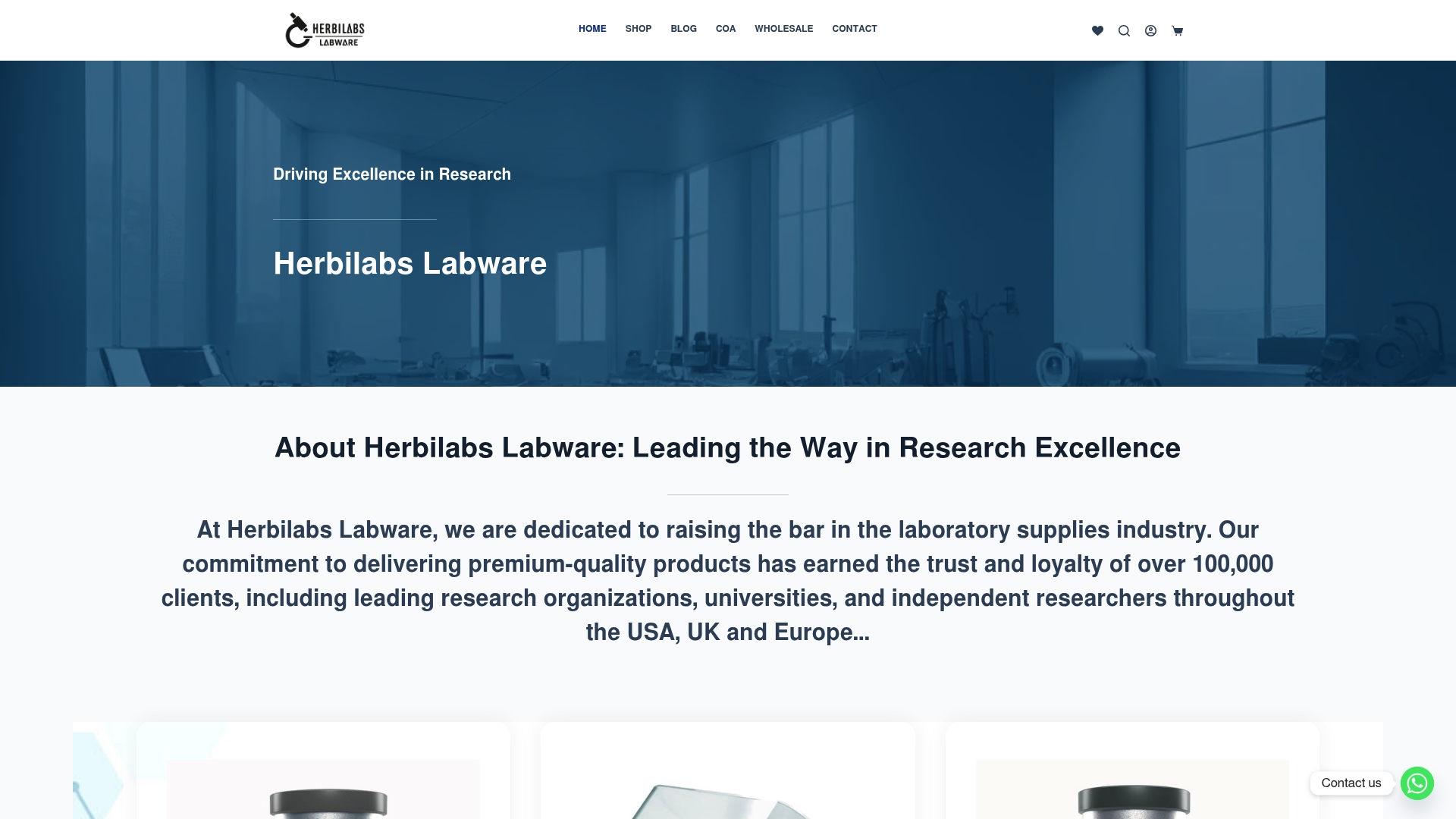
Herbilabs Labware
At a Glance
Multi-dose vials in Herbilabs’ lineup support up to 28-day reuse when handled with proper aseptic technique, which reduces waste for repeat peptide reconstitution workflows. The product set centers on bacteriostatic water and sterile reconstitution solutions for research use.
Core Features
Core features concentrate on high-purity water solutions, batch documentation, and controlled manufacturing aimed at reproducible reconstitution outcomes.
- Bacteriostatic water: Research-grade sterile water for peptide and protein reconstitution and lab diluent needs.
- Multi-dose vials (up to 28 days): Designed for repeated aliquoting under aseptic practice to lower per-use waste.
- Certificates of Analysis (COA): Each batch ships with lab test documentation to track purity and specifications.
- Dedicated manufacturing processes claimed to maintain batch consistency and contaminant-free products.
Key Differentiator
According to the company, Herbilabs supplies independently verified, third-party tested products with detailed COAs and manufactures to ISO-certification and GMP standards. That combination is presented as the primary means to give labs documentary traceability and reproducible reagent performance.
Pros
The offering is tightly focused on the operational needs of peptide researchers and labs running repeat reconstitutions.
- Strong focus on quality and purity backed by third-party validation, which helps when justifying reagent choice in methods sections.
- Same-day dispatch supports tight experimental schedules across the UK, EU, and USA for urgent resupplies.
- Detailed COA documentation enables lot-level traceability for record keeping and audit trails.
- Multiple packaging options, including multi-dose vials, reduce waste and lower per-experiment cost where repeated use is validated.
- Established presence with distribution channels and wholesale arrangements aimed at laboratories and independent researchers.
Cons
- Limited product range mainly focused on lab water and reconstitution solutions, so labs requiring a broader catalog of consumables or instruments must source those items elsewhere.
Who It’s For
Research institutions, academic laboratories, and independent peptide researchers who need traceable, high-purity sterile water and diluents for non-clinical experiments and publication-grade record keeping.
Unique Value Proposition
Detailed Certificates of Analysis for each lot are available on request, letting you link reagent characteristics directly to experimental variance and grant reporting. That practical traceability shortens troubleshooting when reagents behave unexpectedly in peptide handling.
Real World Use Case
A university peptide lab orders bacteriostatic water from Herbilabs to reconstitute synthetic peptides across multiple experiments, keeping COAs in the lab notebook so batch identity is recorded for reproducibility and reporting.
Pricing
Pricing is not publicly listed; items are sold per product with potential wholesale discounts for distribution partners. Products are marketed for research use only and are not intended for clinical, diagnostic, or human or animal treatment.
Website: https://herbilabs.com
Thermo Fisher Scientific Industrial and Laboratory Supplies
At a Glance
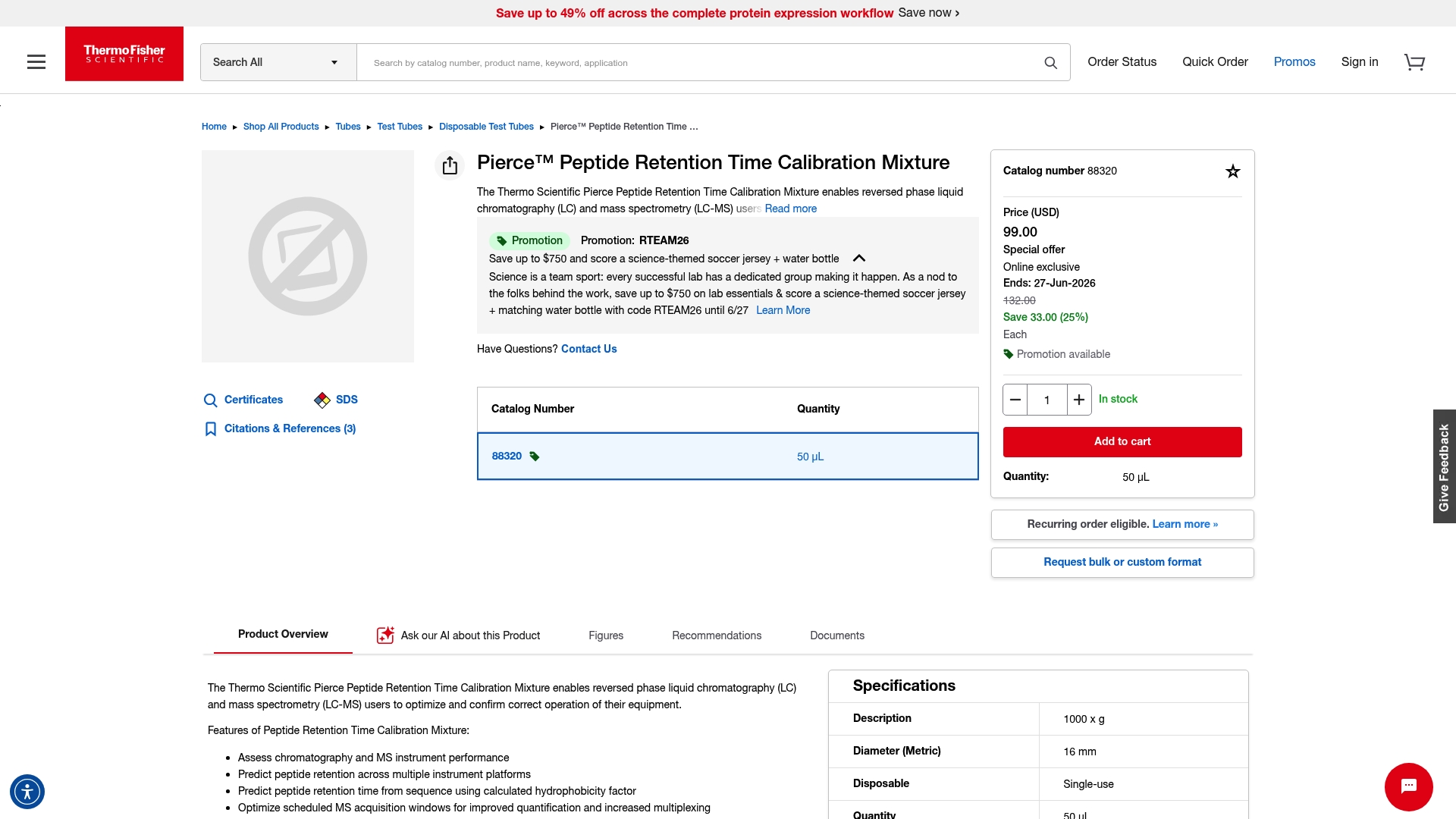
Despite a vast catalog spanning antibodies to chromatography supplies, recent user reviews flag recurring problems with customer service, communication, and shipping reliability. The vendor advertises enterprise software and lab informatics tools that support traceability and data integrity alongside physical products.
Core Features
Thermo Fisher offers an extensive inventory that covers consumables, reagents, and analytical instrumentation for research and production workflows.
- Extensive catalog including antibodies, cell culture media, chemicals, microplates, oligos, primers, probes, and lab equipment.
- Services such as CDMO and consultancy to support scale up and regulated manufacturing projects.
- Digital offerings including Lab Informatics and data management tools that integrate with laboratory workflows for traceability and audit readiness.
Key Differentiator
A single vendor relationship for both bench reagents and linked digital tools is the main selling point. That combination lets labs align consumables, instruments, and data practices under one procurement and support channel.
Pros
-
Comprehensive catalog. Access to reagents and instrumentation from one supplier reduces vendor juggling when you run parallel assay and production activities.
-
End-to-end support. The mix of CDMO, consultancy, and product supply helps teams move from protocol development to small scale manufacturing without stitching multiple vendors together.
-
Data and traceability features. The Lab Informatics offering can simplify audit trails and batch records when configured with your LIMS.
-
Strong brand recognition. Many institutions already have purchasing relationships with Thermo Fisher, which can speed procurement approvals and compliance checks.
Cons
-
Customer service and communication are inconsistent. Multiple users report delays and poor follow up on orders and technical queries.
-
Shipping and stock issues. Unreliable delivery timing and unexpected discontinuations disrupt experiments and production runs.
-
Price profile is high. Cost-sensitive labs will find lower-cost alternatives for common consumables.
-
Management and support frustrations. Complex escalation and account management can add project overhead.
When It May Not Fit
If you need rapid, low-cost sourcing for commodity reagents or very small one-off orders, a single large supplier relationship can become inefficient. Labs that require guaranteed fast turnaround for critical parts of an experiment may prefer local distributors or specialized niche suppliers.
Who It’s For
Research institutions, biotech and pharmaceutical companies, clinical laboratories, and industrial testing facilities that need a broad product portfolio and options for process support. Best where procurement and validation teams can absorb higher list prices in exchange for consolidated purchasing.
Real World Use Case
A biotech team uses Thermo Fisher antibodies and chromatography resins for analytical method development while running their batch records through the vendors informatics stack. The single-vendor path reduced vendor qualification steps during tech transfer, though the team had to plan around occasional shipping delays.
Pricing
Pricing is product specific and listed per catalog item. Many consumables are quoted by pack size while instruments and services receive bespoke quotes. Catalog browsing and formal quotes are available through the product page and sales channels.
Website: https://thermofisher.com/order/catalog/product/kr/en/88320
6 x 5 LC-MS/MS Peptide Reference Mix
At a Glance
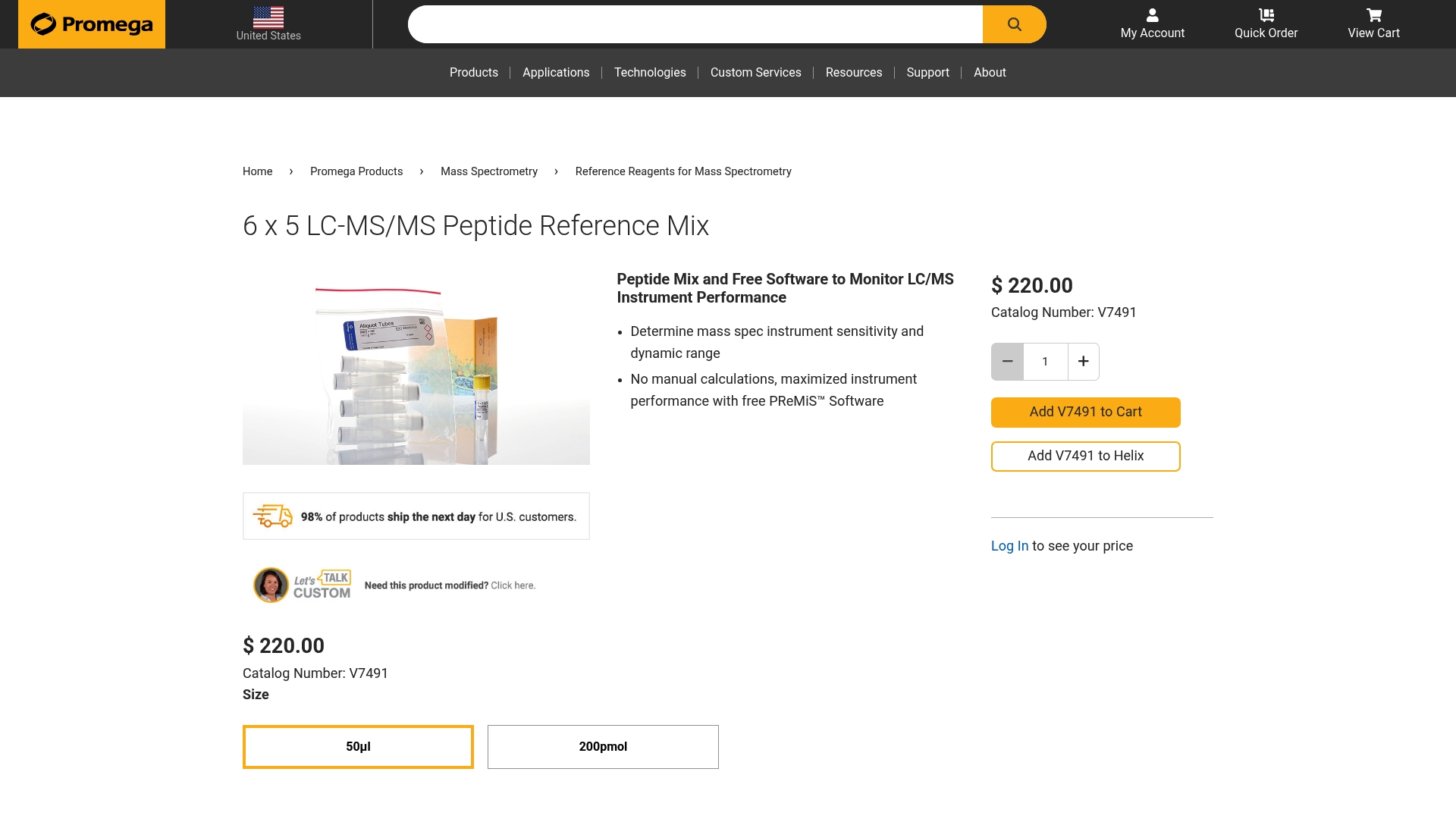
Contains 30 isotopologue peptides arranged as tenfold dilutions to let you assess sensitivity and dynamic range in a single LC-MS/MS run. According to the vendor, the mix is suitable for research, diagnostic, and quality control applications; that suitability claim is vendor reported.
Core Features
- Contains 30 isotopologue peptides across a tenfold dilution series for stepwise sensitivity checks and dynamic range assessment.
- Includes free PReMiS™ software for automated performance analysis, removing manual calculation steps.
- Validated for use in neat formats and complex biological matrices such as human cell extracts.
- Comes with application protocols and technical resources compatible with multiple LC-MS/MS platforms.
- Designed to let you compare instrument performance over time and between devices for troubleshooting and method validation.
Key Differentiator
Promega pairs an AAA-quality peptide set in a tenfold dilution series with integrated analysis software. That combination shifts the workflow from manual spreadsheet calculations to a repeatable software-driven performance record you can archive and query across instruments.
Pros
- Standardized quantitative ladder. The dilution series delivers a clear visual and numeric trace of sensitivity loss or dynamic range compression during routine checks.
- Faster problem identification. Using the supplied PReMiS software lets you flag sensitivity drops without manual curve fitting or ad hoc spreadsheets.
- Flexible sample formats. You can run the mix neat or spike it into complex matrices to see matrix effects on signal and retention.
- Useful documentation. Application notes and platform compatibility guides shorten setup time for new instruments or methods.
- Purchase options let labs pick volume or total moles based on throughput needs, which helps budgeting for core facilities.
Cons
- No independent user reviews. The product data lists no substantive third-party evaluations, so external performance benchmarking is limited.
- Instrument requirement. You need access to compatible LC-MS/MS hardware and the technical skill to run and interpret peptide ladder data.
- Not turnkey for clinical labs. The product is supplied for research and quality control; clinical diagnostic use requires validation in your regulatory context.
When It May Not Fit
If you need an externally validated clinical control with regulatory traceability built in, this mix requires you to perform or document additional validation steps. Also, laboratories without routine LC-MS/MS access or personnel trained in peptide-based QC will find the product difficult to operationalize.
Notable Integrations
- PReMiS™ software for data analysis is included and intended to automate quantitation and performance trend reporting. The integration is the core analytic path recommended by the vendor and removes the need for homegrown spreadsheet workflows.
Who It’s For
Laboratory scientists and mass spectrometry core facilities that run regular instrument performance checks, method validation, or troubleshooting in proteomics workflows. Good fit for teams that want a reproducible, software-backed QC record.
Real World Use Case
A proteomics core runs the mix weekly, imports the results into PReMiS, and tracks sensitivity and dynamic range across three instruments. When one instrument shows progressive loss at low-abundance dilutions, the record pinpoints maintenance timing and avoids wasted sample runs.
Pricing
Two stock configurations are listed: $220.00 for 50 μl (V7491) and $978.00 for 200 pmol (V7495). Volume and vial options let cores align cost with running frequency and sample throughput.
MS QCAL Peptide Mix
At a Glance
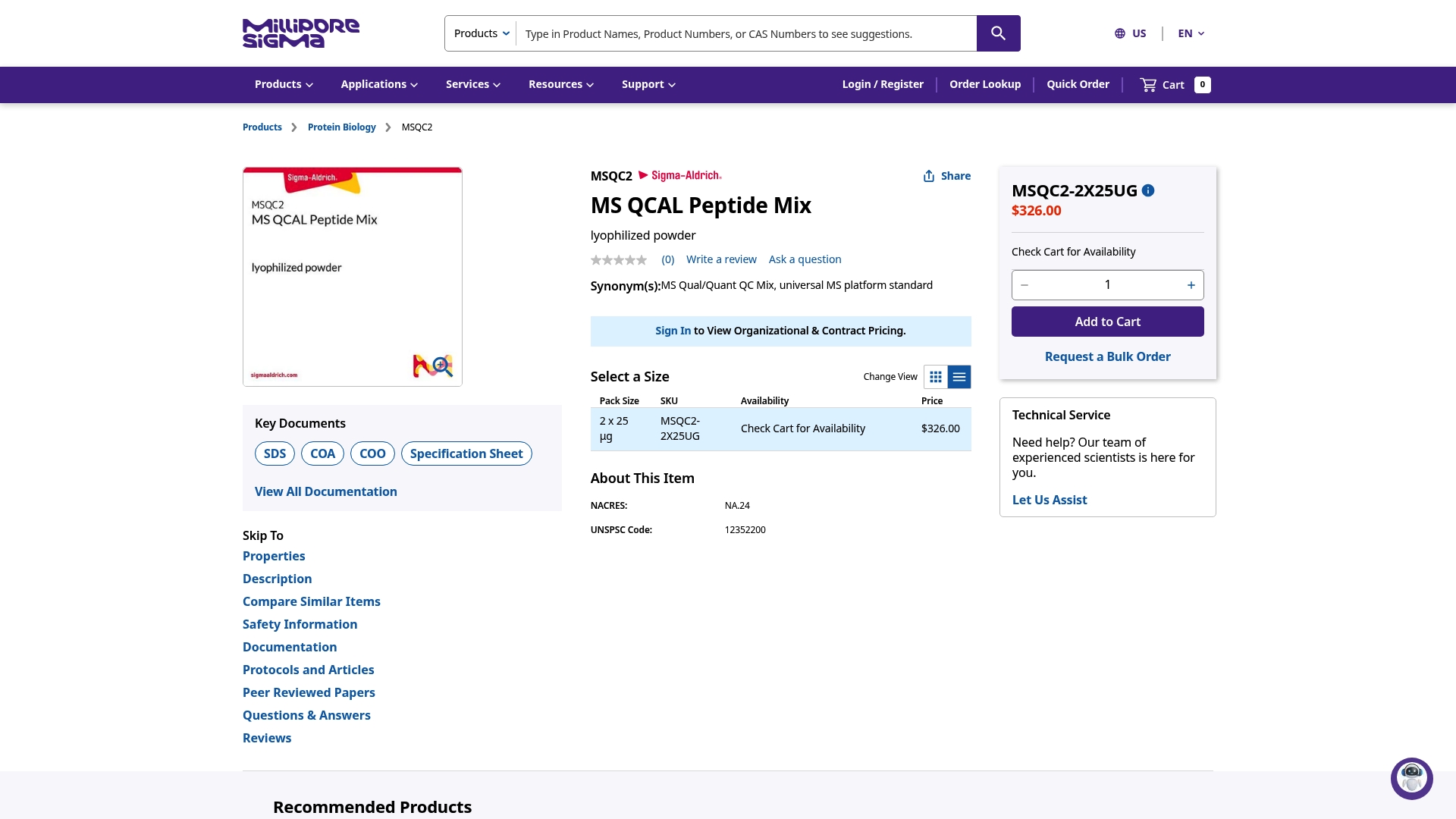
Each vial contains 25 μg of trypsin-digested peptides derived from a recombinant concatamer, supplied as a lyophilized powder. The mix contains 22 peptides and is intended as a universal standard for mass spectrometry calibration and platform performance checks.
Core Features
MS QCAL ships as a lyophilized powder that simplifies storage and long term stability for routine use.
The mix contains peptides produced from a recombinant concatamer so you get a defined, repeatable composition for benchmarking instrument resolution, linearity, and repeatability.
Documentation accompanies the product, including Certificates of Analysis and Certificate of Origin, which helps traceability and audit records in regulated labs.
Key Differentiator
The vendor describes the product as built using QconCAT technology, which produces a multi peptide concatamer that yields a consistent peptide set after trypsin digestion. That approach gives you a single recombinant source rather than assembling many individual synthetic peptides.
Pros
-
High confidence in analysis. A complex but defined peptide mixture helps you verify system performance across m z ranges and retention times.
-
Traceable documentation. The included Certificates of Analysis and Certificate of Origin reduce paperwork when you log standards into your inventory or audits.
-
Practical format. Lyophilized vials are easier to store and ship between facilities and they reduce cold chain demands during routine transfers.
-
Relevance to proteomics workflows. The 22 peptide set maps well to common proteomics methods which makes method development and cross instrument comparisons more straightforward.
-
Recombinant origin. Using a concatamer means batch consistency is stronger than sourcing many individual peptides separately.
Cons
-
Logistics complaints. User reports mention stock inaccuracies and long or unpredictable delivery times, which complicates planning for time sensitive experiments.
-
Support and ordering friction. Several users describe slow or unclear customer communication that lengthens procurement cycles for critical reagents.
-
Purchasing experience. The ordering workflow is reported as disorganized by some customers which can be a problem for labs that require prompt resupply.
When It May Not Fit
If you run urgent validations or clinical workflows that cannot tolerate delivery delays, this product’s logistical limitations make it a poor choice. For one off experiments where lead time is flexible it still works well.
Who It’s For
Research scientists and lab technicians focused on protein mass spectrometry who need a multi peptide calibration standard for routine instrument checks, method development, or inter instrument comparison in a research laboratory setting.
Real World Use Case
A proteomics core facility uses MS QCAL weekly to check mass accuracy and resolution across three instruments. The defined peptide set shortens troubleshooting time when performance shifts and supports cross platform data harmonization.
Pricing
Not applicable. The product data lists this item as informational only and does not include a public unit price. Contact the supplier for current availability and pricing.
Website: https://sigmaaldrich.com/UA/en/product/sigma/msqc2
Fisher Scientific
At a Glance
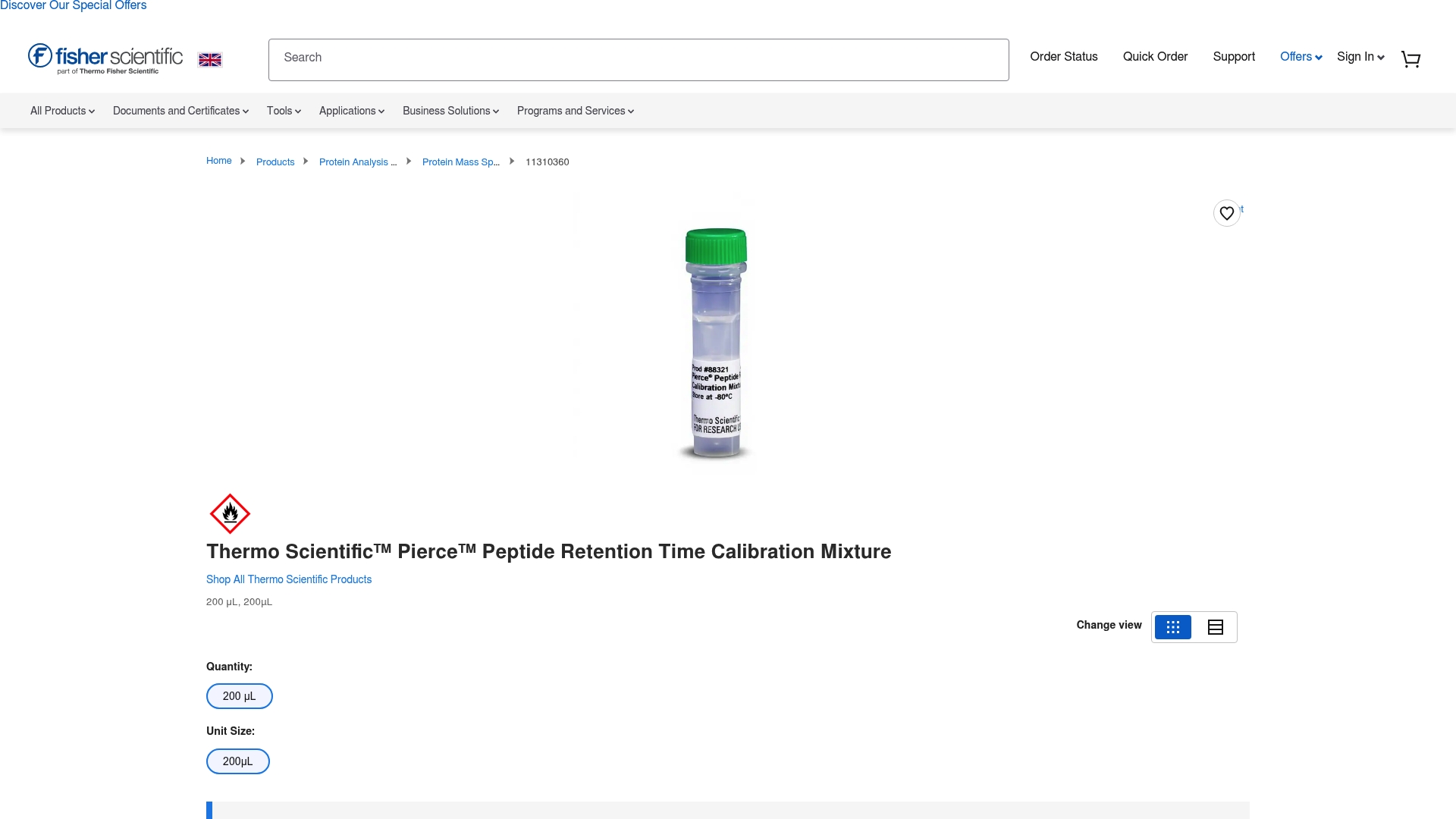
Contains 15 synthetic heavy peptides in an equimolar ratio intended specifically for retention time and intensity calibration in LC-MS workflows. The mixture targets routine performance checks, method transfer, and monitoring chromatographic behavior across instruments.
Core Features
Contains calibrated peptides covering a broad elution range to map chromatographic windows and peak shapes.
- Designed for LC-MS calibration and method transfer across platforms.
- Peptides supplied in equimolar amounts to support consistent peak intensity comparisons.
- Includes metadata to predict retention times from sequence using hydrophobicity factors and compatible software.
- Documentation and certificates provided for traceability and quality control.
Key Differentiator
The formulation concentrates on a set of 15 heavy peptides chosen to span practical retention windows and intensity ranges, which makes the mixture practical for ongoing instrument performance monitoring. That density of well characterized peptides reduces guesswork when normalizing runs and transferring methods between instruments.
Pros
- Broad product catalog and technical support from the vendor make sourcing related reagents and consumables easier when you standardize protocols.
- The mixture helps map peptide elution windows quickly, so you spend less time chasing chromatographic anomalies and more time on data.
- Detailed documentation and certificates support laboratory quality systems and audit trails, which matters for regulated or multiuser facilities.
- Using equimolar heavy peptides simplifies normalization of peak intensities between runs and instruments, improving reproducibility of comparative experiments.
Cons
- Some customers report inconsistent service levels and shipping delays; these comments refer to the vendor experience and not necessarily this specific calibration product.
- Shipping logistics to certain regions have caused delays for time-sensitive workflows, which can disrupt routine calibration schedules.
- Multiple reviewers mention a complex ordering flow for some accounts, adding administrative overhead when labs reorder frequently.
When It May Not Fit
Not suitable for applications outside peptide LC-MS calibration. If you need small molecule standards, intact protein calibrants, or performance checks for non-peptide methods, this mixture will not address those needs and a different calibrant class is required.
Who It’s For
Analytical chemists, proteomics researchers, and core facilities that run routine LC-MS peptide assays and require a single, documented calibrant to maintain reproducible retention times and relative intensities across instruments and days.
Real World Use Case
A proteomics core uses this mixture at the start of each run day and after column changes to confirm retention windows and adjust retention time alignment parameters. Over a month, the lab tracks shifts and identifies when column conditioning or maintenance is needed.
Pricing
Listed price is £724.00 for 200μL with promotional discounts occasionally available. Factor shipping windows and lead time into scheduling for labs that run daily calibration checks.
Website: https://fishersci.co.uk/shop/products/pierce-peptide-retention-time-calibration-mixture/11310360
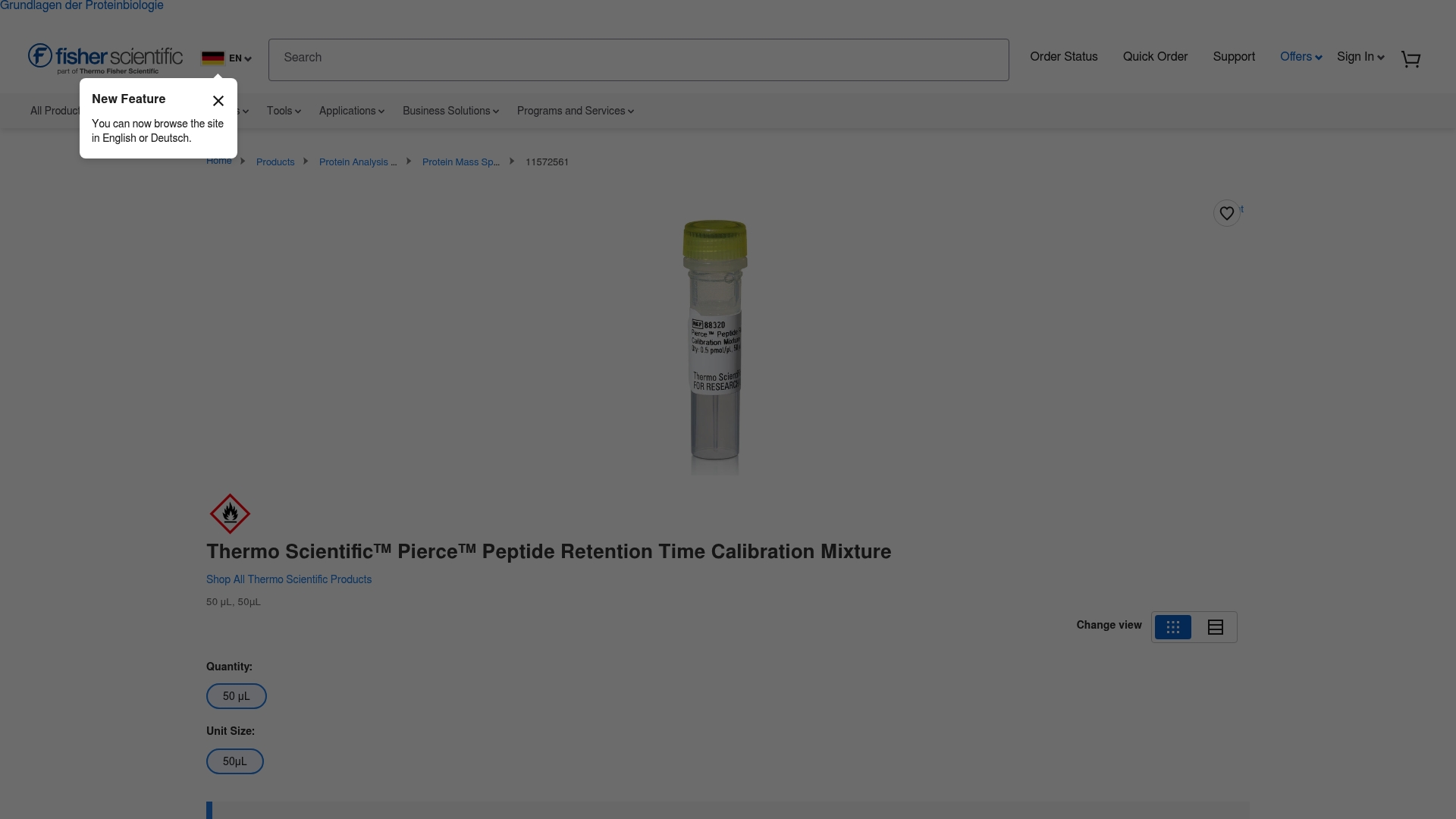
Thermo Scientific™ Pierce™ Peptide Retention Time Calibration Mixture
At a Glance
This kit contains 15 heavy peptides supplied in an equimolar mixture to standardize retention time measurements across LC-MS runs. Labs use it to predict peptide elution windows and keep retention time data comparable during method transfer and routine monitoring.
Core Features
- Test and calibrate LC and LC-MS equipment to reveal elution windows and instrument drift.
- Predict peptide retention times from sequence data and pair results with Thermo Scientific Pinpoint for retention time modeling.
- Optimize LC and MS parameters, then use the mixture to normalize performance across instruments and over time.
Key Differentiator
The primary distinction is the packaged set of 15 synthetic heavy peptides that covers a broad retention-time range. That composition supports method transfer across platforms and provides a repeatable internal standard for labs refining chromatography gradients and MS settings.
Pros
-
Reliable calibration material for routine QC. Synthetic heavy peptides reduce batch variability and give reproducible anchors for retention time alignment across runs.
-
Supports method transfer. Using the same equimolar mix on different instruments helps translate gradients and retention windows between systems.
-
Practical for optimization work. Run this mixture to check column behavior, tweak gradients, and validate MS settings quickly without consuming precious sample.
-
Predictive workflow compatibility. When used alongside Pinpoint, sequence-based retention prediction helps accelerate schedule planning for targeted assays.
Cons
-
Customer support reports vary. Some users note inconsistent service experiences when they need technical help or order help.
-
Shipping delays occur. Delays can disrupt tight project schedules since the product is a consumable reagent rather than a downloadable asset.
-
Ordering complexity for some labs. The procurement and logistics steps have been flagged as more cumbersome than expected by a subset of buyers.
When It May Not Fit
If you need a general-purpose analytical reagent or a prep-grade peptide mix for synthesis rather than LC-MS calibration, this product is not appropriate. It is designed specifically for retention time calibration and method transfer workflows, not for assay development outside LC-MS contexts.
Who It’s For
Research scientists, lab technicians, and informatics staff running proteomics, metabolomics, or analytical chemistry LC-MS pipelines who need consistent retention time anchors and a reproducible calibration standard for method validation and routine QC.
Real World Use Case
A pharmaceutical research lab runs the mixture weekly to confirm column performance and retention stability before processing peptide samples. Over months the lab uses those anchors to detect subtle shifts in chromatography and to validate method transfers between instruments.
Pricing
Listed at €131.00 for 50 μL, the product is positioned as a small-volume calibration standard. Budget for periodic replacement if you include it in routine QC schedules.
Website: https://fishersci.de/shop/products/pierce-peptide-retention-time-calibration-mixture-1/11572561/en
Comparative Analysis
In evaluating laboratory reagent products tailored to peptide reconstitution and LC-MS/MS calibration, key distinctions emerge regarding product compatibility, traceability, and operational logistics.
Specific Catalog Focus vs. General Product Portfolio
Herbilabs concentrates its offerings on sterile water solutions and reconstitution materials for repeat peptide handling. This focus aligns with labs prioritizing accuracy and reproducibility in experimental setups, especially as each batch is paired with a detailed Certificate of Analysis for traceability. By comparison, Thermo Fisher Scientific provides an expansive catalog featuring consumables, laboratory reagents, and proprietary informatics software, designed to serve multifunctional institutions seeking centralized procurement and broad functionality. However, customer feedback highlights challenges such as inconsistent service response and occasional shipping delays that could disrupt tight experimental schedules.
Product Utility in LC-MS/MS Calibration
For contexts emphasizing quantitative sensitivity testing, Promega’s 6 x 5 LC-MS/MS Peptide Reference Mix facilitates automated performance analysis using integrated software to enhance accuracy and throughput consistency. Similarly, Fisher Scientific’s Thermo Scientific™ Pierce™ Peptide Retention Calibration Mixture simplifies retention mapping and instrument tuning through equimolar peptide ratios spanning chromatographic ranges. Herbilabs lacks a direct counterpart in LC-MS/MS-focused calibration but maintains a unique position in routine sterile diluent supply and peptide reconstitution quality verification.
Best Fit Recommendations
- Herbilabs: for research entities emphasizing repeat peptide handling, recordable reagent interactions, and multi-dose sterile vial usage verified by batch-level COAs.
- Thermo Fisher Scientific: Best suited for teams managing diverse lab demands, integrating reagent procurement with linked data integrity systems across assays.
- Promega: Recommended for LC-MS/MS facilities troubleshooting sensitivity variances with reproducible quantitative peptide ladders through automated solutions.
- Fisher Scientific: Effective calibration choice for labs requiring precise retention anchors to ensure instrumental consistency in proteomic workflows.
Our Pick
Herbilabs stands out for organizations that rely heavily on consistent sterile reconstitution solutions with validated traceability tied to experimental reproducibility. However, labs focused on LC-MS/MS calibration or requiring large-scale support for varied laboratory operations may benefit from competitor offerings tailored to broader or specialized workflows.
Laboratory Reagent Solutions Comparison
Which laboratory reagent supplier offers the best combination of purity, batch traceability, and calibration efficacy?
| Product Name | Core Features | Key Differentiator | Best For | Notable Limitation |
|---|---|---|---|---|
| Herbilabs | High-purity sterile water multi-dose vials | Third-party verified COAs and GMP/ISO | Research labs requiring traceable reconstitution reagents | Focus on sterile water solutions limits broader catalog offerings |
| Thermo Fisher Scientific Industrial and Laboratory Supplies | Extensive consumable and instrument catalog | Integrated digital tools for audit readiness | Labs needing comprehensive product and service support | Customer service and delivery reliability inconsistencies reported |
| 6 x 5 LC-MS/MS Peptide Reference Mix | Peptides for dynamic range calibration | Automated analysis with PReMiS software | Labs validating LC-MS/MS methods | Requires LC-MS/MS access and peptide analysis expertise |
| MS QCAL Peptide Mix | Lyophilized peptides for MS calibration | Recombinant concatamer for batch consistency | Proteomics laboratories needing stable and reproducible peptide sets | Stock accuracy issues and delivery delays reported |
| Thermo Scientific Pierce Peptide Retention Time Calibration Mixture | Synthetic heavy peptides for retention mapping | Broad retention-time range for method transfer | Labs running routine LC-MS calibration and method transfer | Shipping delays and ordering complexity flagged by reviewers |
Reliable Reagents for Peptide Research Made Simple
The article highlights the challenge peptide researchers face in sourcing traceable, high-purity reagents that support reproducible experiments and maintain detailed documentation. Herbilabs answers this need by offering bacteriostatic water and sterile reconstitution solutions manufactured under strict purity standards. Their multi-dose vials and comprehensive Certificates of Analysis provide confidence in consistency and quality, helping you reduce waste and ensure your peptide workflows stay reliable.
Discover how Herbilabs supports your research with a dedicated focus on sterile, contaminant-free reagents trusted across scientific institutions and independent labs. Explore their precise product range and enjoy quick UK and European delivery from a partner committed to dependable supply.
Browse Herbilabs products and take control of your peptide reconstitution steps with quality solutions designed for your exact needs.
Make your next peptide experiment more consistent by choosing Herbilabs for your bacteriostatic water and lab reagents. Visit https://herbilabs.com/ now to access detailed batch documentation and experience prompt, trustworthy reagent delivery.
Frequently Asked Questions
What benefits do Herbilabs’ multi-dose vials provide for peptide researchers?
Herbilabs’ multi-dose vials support up to 28-day reuse under proper aseptic technique, which significantly reduces waste for peptide reconstitution processes. These vials are specifically designed for repeated aliquoting, contributing to lower per-use costs in peptide workflows. Researchers looking to optimize their reagent usage will find this feature beneficial, especially for repeated experiments.
How does Herbilabs compare to Thermo Fisher Scientific in terms of product focus?
Thermo Fisher Scientific offers a comprehensive catalog that spans a wide array of laboratory supplies, including antibodies and chromatography equipment. In contrast, Herbilabs focuses tightly on high-purity water solutions and reconstitution products, making it the better option for peptide researchers with specific needs in that area. Labs dedicated to peptide studies should choose Herbilabs for its specialized offerings.
What is the significance of the Certificates of Analysis provided by Herbilabs?
The Certificates of Analysis (COA) supplied with each batch from Herbilabs provide detailed documentation of purity and specifications, ensuring traceability for each lot. This level of documentation helps researchers maintain rigorous standards in record keeping and audit trails, making Herbilabs a solid choice for labs that prioritize reproducibility in experiments.
Can I use Herbilabs’ bacteriostatic water for clinical applications?
Herbilabs’ products are marketed for research use only and are not intended for clinical, diagnostic, or human or animal treatment. Researchers should be aware of this limitation and consider other suppliers if clinical-grade reagents are required. For those needing specialized water for research, Herbilabs remains a practical starting point.
What distinguishes Herbilabs’ manufacturing processes from competitors?
Herbilabs claims to adhere to ISO-certification and GMP standards in its manufacturing processes, which help ensure batch consistency and contaminant-free products. This focus on manufacturing quality provides additional assurance to research labs that depend on reproducible reagent performance for their experiments.