Private Label, White Label, Wholesale partnerships available - EU, USA and UK - Free shipping from €75

Types of Laboratory Reagents: A Scientist’s Reference Guide
Discover the essential types of laboratory reagents that impact your experiments. Ensure accuracy and compliance with our detailed guide!
TL;DR:
- Selecting appropriate laboratory reagents is essential for ensuring experimental accuracy, with purity, function, and regulatory compliance guiding choices. Proper storage container selection and supplier validation further impact reagent integrity and reproducibility across labs. Prioritizing reagent quality and handling standards prevents costly errors and enhances research reliability.
Selecting the right types of laboratory reagents determines whether an experiment produces reliable data or introduces compounding sources of error that undermine months of work. Reagent selection affects sensitivity, specificity, reproducibility, and regulatory compliance, yet many lab professionals treat it as secondary to instrument calibration or protocol design. This guide covers the principal types of lab reagents, the classification systems that separate them, and the practical criteria that should govern your selection decisions.
Table of Contents
- Key takeaways
- 1. Key classification criteria for laboratory reagents
- 2. Common types of laboratory reagents and their roles
- 3. Comparison of laboratory reagent types by category and application
- 4. Specialized reagent types and emerging categories
- 5. Practical recommendations for selecting laboratory reagents
- My perspective on the realities of reagent selection
- Reliable reagents for demanding research from Herbilabs
- FAQ
Key takeaways
| Point | Details |
|---|---|
| Purity grade drives accuracy | Matching purity grade to experimental sensitivity prevents contaminant-driven artifacts and wasted reagent costs. |
| Functional classification aids selection | Functional reagent types — analytical, synthetic, catalytic — clarify which reagent fits which experimental role. |
| RUO grade enables faster research | Research Use Only reagents allow rapid prototyping and innovation but cannot be used in clinical or diagnostic applications. |
| GMP grade is a costly commitment | Achieving GMP-grade qualification typically requires USD 1 to 5 million and 18 to 36 months of dedicated investment. |
| Storage containers are not interchangeable | Container material directly affects reagent integrity; choosing incorrectly introduces contamination or degradation risks regardless of purity grade. |
1. Key classification criteria for laboratory reagents
Understanding the types of laboratory reagents begins with grasping the classification frameworks that differentiate them. No single axis tells the full story. Reagents are classified by purity grade, functional role, chemical composition, and regulatory application, and each axis answers a different question.
Purity grade is the most frequently referenced classification in procurement and protocol design. The principal grades include:
- ACS grade: Meets American Chemical Society purity standards at 95% purity or greater, appropriate for analytical reagent preparation and routine high-precision lab work.
- USP grade: Meets pharmaceutical purity requirements at 99% purity or greater, subject to identity, strength, and purity tests aligned with FDA requirements.
- GMP grade: Manufactured under Good Manufacturing Practice conditions, required in clinical and pharmaceutical research where contamination control is non-negotiable.
- RUO grade: Research Use Only reagents are the most common in academic and discovery research, exempt from FDA or CE-IVD approval requirements but subject to variable quality specifications.
Functional classification organizes reagents by their role in a reaction. Analytical reagents detect or measure; synthetic reagents build or modify molecular structures; catalytic reagents accelerate reactions without being consumed. This framework helps you anticipate chemical behavior before committing to a protocol.
Chemical composition further divides reagents into organic and inorganic categories. Organic reagents contain carbon frameworks and are typically used in biochemical assays and synthesis. Inorganic reagents, such as metal salts and mineral acids, serve roles in gravimetric analysis, electrochemistry, and materials research.
Pro Tip: When reviewing a reagent’s certificate of analysis, cross-reference the functional grade with the purity grade. A reagent labeled ACS that functions as a reducing agent in a redox-sensitive assay may still introduce bias if trace oxidants are present within the stated purity margin.
2. Common types of laboratory reagents and their roles
Common lab reagents span several distinct categories, each supporting specific experimental functions. Understanding what each category does, and what it cannot do, prevents protocol design errors.
- Acids and bases: Hydrochloric acid, sulfuric acid, sodium hydroxide, and ammonium hydroxide are ubiquitous in pH adjustment, titrations, protein denaturation, and surface preparation. Strong acids and bases require secondary containment and compatibility-checked storage.
- Salts and buffers: Phosphate-buffered saline, HEPES, and Tris-HCl maintain ionic strength and pH stability in biological and biochemical systems. Buffers are not interchangeable across pH ranges, and ionic strength choices affect enzyme kinetics directly.
- Oxidizing and reducing agents: Hydrogen peroxide, potassium permanganate, dithiothreitol (DTT), and sodium borohydride drive redox transformations. Reducing agents such as DTT are particularly sensitive to oxygen exposure, degrading rapidly under ambient conditions.
- Indicators and dyes: Phenolphthalein, bromothymol blue, and fluorescent intercalating dyes like SYBR Green serve detection and measurement functions. Their utility depends on absorption or emission properties matching the detection instrument’s specifications.
- Enzymes and biochemical reagents: Restriction enzymes, polymerases, proteases, and kinases are the workhorses of molecular biology. These reagents demand rigorous cold-chain handling, and even brief temperature excursions compromise activity.
- Solvents and diluents: Dimethyl sulfoxide (DMSO), ethanol, acetonitrile, and sterile water are used for reagent preparation, analyte extraction, and reaction media formulation. Solvent choice affects solubility, protein stability, and downstream analytical performance. Sterile diluents, including bacteriostatic water, are particularly relevant in peptide and protein reconstitution, where contaminant introduction would invalidate results.
3. Comparison of laboratory reagent types by category and application
The following table presents a structured comparison of major reagent categories to support practical selection decisions.
| Reagent category | Common purity grade | Typical applications | Key handling consideration |
|---|---|---|---|
| Acids and bases | ACS, GMP | pH adjustment, titrations, digestion | Corrosive; secondary containment required |
| Salts and buffers | ACS, USP, RUO | Biological assays, cell culture, chromatography | Check ionic strength compatibility |
| Oxidizing agents | ACS, RUO | Redox reactions, disinfection, bleaching | Incompatible with reducing agents; store separately |
| Reducing agents | ACS, RUO | Thiol protection, chemical synthesis, gel electrophoresis | Oxygen-sensitive; aliquot and seal under inert gas |
| Indicators and dyes | RUO, ACS | Spectrophotometry, titrations, fluorescence assays | Light-sensitive; store in amber glass or foil |
| Enzymes and biochemical reagents | RUO, GMP | PCR, restriction digestion, ELISA, proteomics | Cold-chain critical; avoid freeze-thaw cycling |
| Solvents and diluents | ACS, USP, RUO | Reconstitution, extraction, chromatography | Purity traces affect downstream MS and HPLC data |
This comparison illustrates that the correct chemical reagent type cannot be selected on grade alone. Application context, compatibility, and handling constraints all factor into sound reagent procurement.
4. Specialized reagent types and emerging categories
Modern laboratory environments increasingly require reagent types that go beyond standard ACS or RUO designations. The expansion of clinical research, biomanufacturing, and precision medicine has made specialized reagent categories both more necessary and more complex to source.
GMP-grade reagents represent the highest tier of manufacturing rigor. The US biotechnology reagent market, valued between USD 18 and 21 billion in 2026 and projected to reach USD 35 to 45 billion by 2035, reflects strong growth driven by GMP-grade demand. GMP-grade segment share is expected to increase from 55 to 60% in 2026 to 65 to 70% by 2035. Achieving GMP-grade qualification for a single reagent product category costs USD 1 to 5 million and requires 18 to 36 months of process validation.
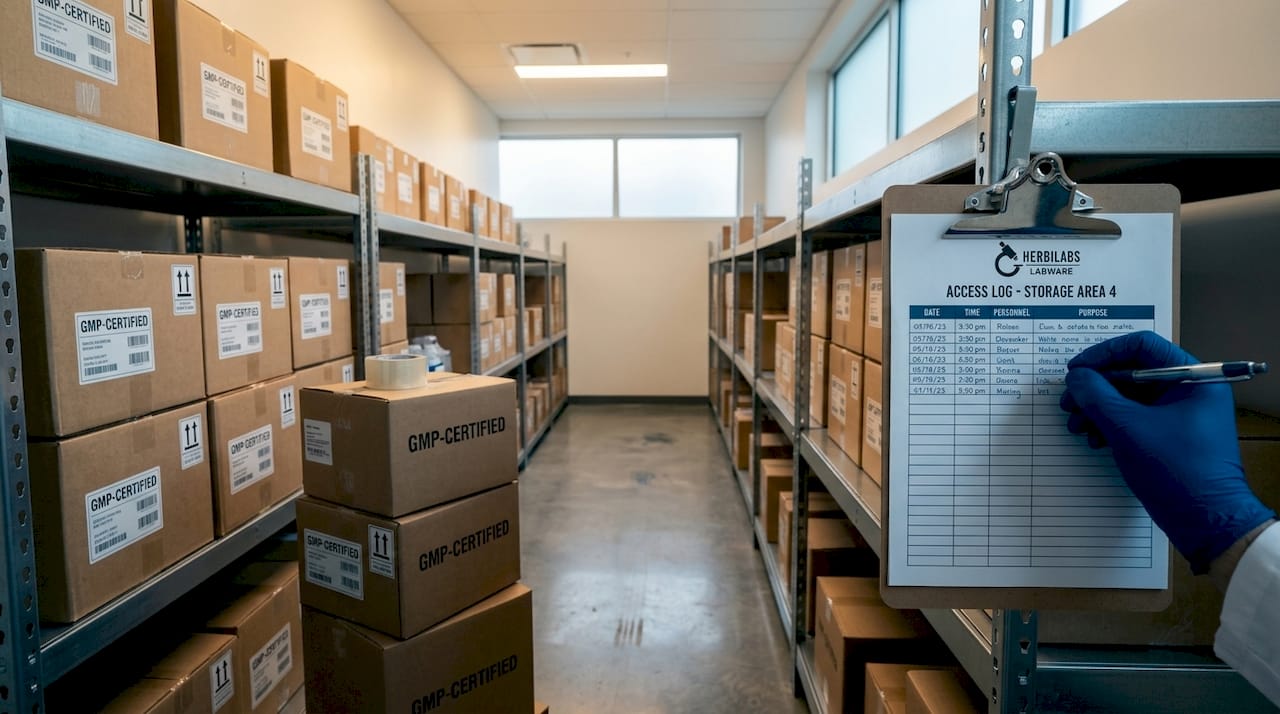
RUO reagents remain the dominant choice for discovery and academic research due to their flexibility and lower cost. However, their exclusion from clinical diagnostic and therapeutic applications is categorical. Labs transitioning assay platforms from discovery to development must revalidate all RUO reagents against appropriate grades before regulatory submission.
Cell culture grade reagents represent a distinct subcategory with specific requirements. These reagents must be tested for cytotoxicity, endotoxin levels, and sterility, beyond standard purity specifications. A cell culture grade PBS that passes chemical purity tests but contains residual endotoxins at 0.1 EU/mL can dramatically distort immune cell behavior in co-culture assays.
Reagent storage container choice is often underestimated in its effect on reagent integrity. Container materials such as PTFE cost significantly more than standard glass or plastic alternatives, and breakage and quality testing add 10 to 25% to total container costs. Amber glass is growing in adoption specifically for light-sensitive reagent storage such as fluorescent dyes and photolabile compounds.
Pro Tip: For light-sensitive reagents, pair amber glass storage with minimal headspace and inert gas blanketing at the fill stage. Amber glass alone does not fully protect against photodegradation when oxidative degradation is also a factor.
5. Practical recommendations for selecting laboratory reagents
Applying classification knowledge to real procurement and protocol decisions requires systematic thinking rather than default assumptions. The following steps provide a practical framework for laboratory reagent selection.
- Define the sensitivity requirements of the experiment first. A gravimetric titration tolerates ACS grade far more readily than a mass spectrometry-based metabolomics assay, where trace solvent contaminants alter ionization efficiency.
- Map reagent function to experimental stage. Analytical, synthetic, and catalytic reagents each carry specific requirements. Using a synthetic-grade reagent in a detection step because it was available on the shelf is a common but costly error in protocol design.
- Validate supplier documentation. Every reagent should arrive with a current certificate of analysis specifying the lot-specific purity, identified impurities, and expiration date. Generic certificates that reference specification sheets rather than lot data are insufficient for high-precision work.
- Weigh cost against the cost of experimental failure. Downgrading reagent purity to reduce per-unit cost rarely produces net savings when the cost of failed experiments, extended timelines, and repeat assays is factored in. This calculation is most relevant for enzymatic and biochemical reagent categories.
- Apply appropriate storage conditions from the point of receipt. Temperature, light exposure, humidity, and container compatibility all affect reagent stability. Reviewing the best practices for reagent handling before receipt reduces degradation-related variability. Reagents stored outside specified conditions lose traceability integrity even if their appearance is unchanged.
- Consider sourcing logistics for specialized reagents. Small-scale lab synthesis of specific reagents may be viable when procurement lead times are prohibitive or when local transport regulations constrain hazardous material delivery, provided the synthesized material can meet required purity specifications.
My perspective on the realities of reagent selection
I have observed a consistent pattern across laboratory environments: researchers treat reagent grade as an afterthought relative to instrument settings or statistical power calculations. In my experience, that order of priority is inverted. The variability introduced by a suboptimal reagent grade contaminates datasets at a level that no amount of post-hoc statistical correction reliably fixes.
What often surprises less experienced researchers is how profoundly reagent grade affects reproducibility between labs. Two groups following identical protocols with reagents from different grades or suppliers routinely produce results that diverge beyond acceptable thresholds. Reagent grade’s impact on research accuracy is frequently discussed in theory but too rarely enforced in practice.
Container choice is another area where I’ve seen labs make expensive mistakes. Storing a fluorescent probe in a clear polypropylene vial instead of amber glass, then attributing signal loss to antibody quality, wastes weeks of investigation time. The principle that container selection is as critical as purity grade is not an overcaution. It is a practical reality that does not receive proportional attention in standard operating procedure documentation.
My view on supplier evaluation is straightforward: if a supplier cannot provide lot-specific certificates of analysis on request before purchase, the product should not enter a regulated or high-precision workflow, regardless of listed price. Market expansion in reagent supply chains means more options at competitive prices, but it also means more variability in manufacturing standards. Critical evaluation of suppliers is not optional. It is a core laboratory competency.
— Ragnar
Reliable reagents for demanding research from Herbilabs
Herbilabs supplies high-purity research reagents and reconstitution solutions manufactured to rigorous quality standards for scientific research institutions, independent researchers, and laboratory professionals across the UK and Europe. Every product in the Herbilabs catalog, from bacteriostatic water to sterile diluents, is produced in a dedicated facility with documented quality control and lot traceability. For researchers working in peptide reconstitution and biochemical assay preparation, the high-purity reconstitution solutions available through Herbilabs are manufactured to meet the purity and sterility requirements that precise experimental work demands. Explore the full product range and learn how Herbilabs supports reliable peptide research reagents with consistent quality and dependable delivery.
FAQ
What are the main types of laboratory reagents?
The principal laboratory reagent types include acids and bases, salts and buffers, oxidizing and reducing agents, indicators and dyes, enzymes and biochemical reagents, and solvents and diluents. Each category serves distinct functions in chemical reactions, detection, and biological assays.
What is the difference between ACS and USP reagent grades?
ACS grade meets American Chemical Society purity standards at 95% or greater and is suited for analytical and routine laboratory applications. USP grade meets pharmaceutical standards at 99% or greater purity and is required for medicinal and regulatory-compliant applications.
Can RUO reagents be used in clinical diagnostics?
No. Research Use Only reagents are explicitly excluded from clinical diagnostic and therapeutic applications. They operate under relaxed regulatory oversight compared to GMP or IVD-certified grades and cannot be substituted in regulated workflows.
Why does reagent container choice matter?
Container material directly affects reagent stability. PTFE containers resist chemical interaction better than standard plastics, while amber glass protects light-sensitive compounds from photodegradation. Selecting an incompatible container introduces contamination or degradation independent of the reagent’s purity grade.
How do I select the right reagent grade for my experiment?
Begin by defining the sensitivity requirements of the assay and mapping the reagent’s functional role. High-precision analytical work such as mass spectrometry or fluorescence assays requires higher purity grades than preparative or screening work. Always validate the supplier’s lot-specific certificate of analysis before incorporating a new reagent into a validated protocol.