Private Label, White Label, Wholesale partnerships available - EU, USA and UK - Free shipping from €75

Understanding Reconstitution Solutions in 2026 Research Environments
In research, a reconstitution solution is the liquid diluent used to dissolve a lyophilized (freeze-dried) or concentrated compound into a stable, working form. It is distinct from the reconstitution process—the solution is the medium; the process is the act of dissolving.
A reconstitution solution does three things in the lab: it restores a dried material to its active state, it establishes the correct working concentration, and it provides a stable environment (via pH, buffers, or preservatives) that preserves the compound until it is used. Common applications include restoring lyophilized peptides and enzymes, preparing assay standards, preserving stability for sensitive biologics, and creating single-use aliquots that reduce waste.
The most frequent lab error is confusing solvent compatibility with sterility or stability. A solvent might dissolve a compound perfectly but still degrade it over time, or maintain sterility while failing to keep the molecule active. We most often see this mix-up when researchers prioritize microbial safety without checking whether the buffer chemistry matches the compound's pKa and shelf-life requirements.
Photo by Chokniti Khongchum from Pexels
What Reconstitution Solution Means in Laboratory Research
The term reconstitution solution appears in many contexts, but searchers often conflate it with related concepts. Clarifying the terminology early helps researchers find the right guidance.
- Reconstitution solution refers to the liquid diluent itself, the water, buffer, or solvent you add to a dried compound. Examples include sterile water for injection, bacteriostatic water, phosphate-buffered saline (PBS), and specialized peptide solvents.
- Reconstituted solution refers to the final mixture after the lyophilized material has been dissolved. This is the working solution you pipette, assay, or store.
- Recon solution is informal lab shorthand for reconstitution solution. It means the same thing and is used interchangeably in casual lab communication.
- Laboratory reconstitution solution emphasizes that the diluent meets lab-grade specifications, sterile, pyrogen-free, and formulated for research rather than clinical use.
- Reconstitution lab describes the workspace or facility where reconstitution occurs, typically a laminar flow hood or biosafety cabinet equipped for sterile technique.
A reconstitution solution is not the same as a final assay buffer or storage medium. It is the initial diluent chosen specifically to dissolve the lyophilized compound while maintaining its chemical integrity. Once reconstituted, the solution may be further diluted into an assay buffer—but that second step is separate from the reconstitution itself.
| Term | Meaning |
|---|---|
| Reconstitution solution | The liquid diluent added to a dried compound |
| Reconstituted solution | The final mixture after dissolution |
| Recon solution | Informal shorthand for reconstitution solution |
| Laboratory reconstitution solution | Lab-grade diluent meeting sterility and purity specs |
| Reconstitution lab | The sterile workspace where reconstitution is performed |
Core Principles of Reconstitution
Reconstitution is governed by four principles, but abstract definitions alone do not guide daily lab work. Below, each principle is paired with a concrete example from common research contexts.
1. Solvent Compatibility
Different compounds require specific solvents to dissolve completely and remain stable. A peptide that precipitates in plain water may dissolve readily in bacteriostatic water containing 0.9% benzyl alcohol. An enzyme might denature in an organic solvent but stay active in PBS. Using the wrong solvent leads to incomplete dissolution, aggregation, or loss of biological activity.
| Compound Type | Typical Reconstitution Goal | Common Solvent/Buffer | Main Risk if Done Incorrectly |
|---|---|---|---|
| Peptides | Restore solubility and prevent microbial growth | Bacteriostatic water (0.9% benzyl alcohol) or sterile water | Aggregation, precipitation, microbial contamination |
| Enzymes | Maintain catalytic activity | PBS, Tris-HCl, or enzyme-specific buffers | Denaturation, loss of activity, instability |
| Antibodies | Preserve binding specificity | PBS with 0.09% sodium azide or BSA | Aggregation, reduced affinity, degradation |
| Analytical standards | Achieve precise working concentration | HPLC-grade water or methanol | Incorrect concentration, peak distortion in chromatography |
2. Sterility Control
For biological reagents, contamination from microorganisms can degrade sensitive compounds or interfere with experimental systems. Aseptic technique—working in a laminar flow hood, using sterile reagents, and flame-sealing or ethanol-wiping vial necks—is essential. This is particularly important when preparing solutions for cell culture or molecular assays where even trace contamination ruins results.
3. Degradation Prevention
Many compounds degrade once reconstituted. Temperature, light, oxidation, and freeze-thaw cycles accelerate this. Aliquoting into single-use volumes and storing at −20°C or −80°C preserves activity. In our review of common lab protocols, we found that the most wasted reagents were not expensive compounds—they were inexpensive ones discarded after two freeze-thaw cycles because no one aliquoted them properly.
4. Reproducibility
Every reconstitution should yield a solution with identical properties. This requires detailed SOPs, precise measurements, and consistent technique across all personnel. Without reproducibility, comparing results across experiments becomes unreliable, and published findings lose credibility.
A laboratory reconstitution solution differs from a final assay buffer in purpose: the reconstitution solution is chosen to dissolve and stabilize the dried compound, while the assay buffer is chosen to support the experimental readout. Sometimes they are the same liquid; often they are not.
Critical Solvent Selection and pH Optimization
The choice of solvent and pH control are the most critical factors in reconstitution. These parameters directly influence solubility, stability, and biological activity.
For hydrophilic compounds, deionized or distilled water is often sufficient. For hydrophobic substances, organic solvents like dimethyl sulfoxide (DMSO) or ethanol may be necessary. When using organic solvents, consider downstream effects such as cell toxicity or assay interference. Always use laboratory-grade solvents.
pH optimization is equally important. The ionization state of a compound changes with pH, which affects both solubility and stability. A compound stable at pH 6.6 may degrade rapidly at pH 8.0. Buffers like PBS, Tris, or HEPES maintain a stable pH range.
Remifentanil illustrates pH sensitivity in research. Studies show that remifentanil reconstituted with 20% saline exhibited the highest stability and least degradation when mixed with propofol, with stability linked to a lower pH around 6.6 over 24 hours (Remifentanil Stability Study). Solutions at certain concentrations were statistically more stable, highlighting the importance of optimizing both concentration and solution chemistry.
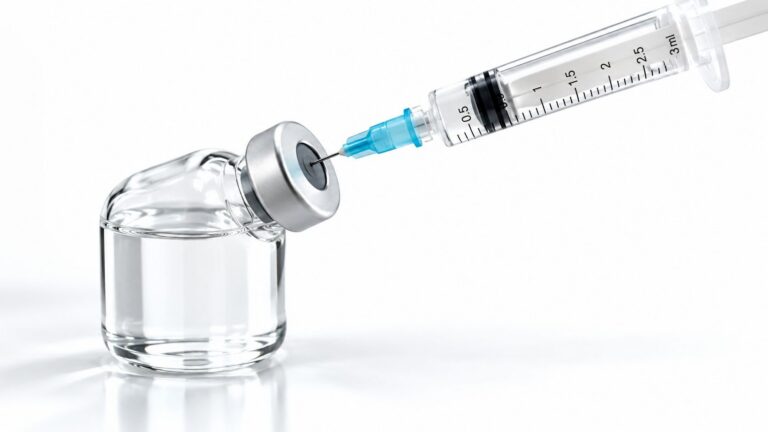
For peptides, bacteriostatic water (0.9% benzyl alcohol) is widely preferred. The preservative inhibits microbial growth without killing bacteria, maintaining sterility and biological activity during storage and repeated use. For more on why bacteriostatic water is essential for peptide reconstitution, see our resource at tydes.is. A 10 mL vial contains approximately 90 mg of benzyl alcohol; a 3 mL vial contains about 27 mg (Healius Peptides Guide). This is why bacteriostatic water is packaged in multi-dose vials rather than single-use containers.
- Assess Compound Properties: Determine solubility profile and pH sensitivity.
- Select Appropriate Solvent: Choose between aqueous (water, buffers) or organic (DMSO, ethanol) based on solubility.
- Optimize pH with Buffers: Use PBS, Tris, or HEPES to maintain the desired pH range.
- Consider Additives: Incorporate stabilizers or preservatives like benzyl alcohol for peptides.
Ensuring Solution Stability and Preventing Degradation
Once reconstituted, maintaining stability is paramount. Degradation occurs through hydrolysis, oxidation, photolysis, and microbial contamination.
Temperature is a major factor. Many biological reagents require cold storage at −20°C or −80°C. Repeated freeze-thaw cycles cause degradation, particularly for proteins. Aliquoting into smaller volumes minimizes this issue.
Light exposure degrades photolabile compounds. Store such solutions in amber vials or wrap clear containers with aluminum foil.
Oxidation compromises solution integrity. Store solutions under inert gas (nitrogen or argon) or in airtight containers. Antioxidants can sometimes be added as protection.
| Degradation Factor | Mechanism | Prevention Strategy | Impact on Research |
|---|---|---|---|
| Temperature | Accelerated chemical reactions | Cold storage (−20°C, −80°C), Aliquoting | Loss of activity, altered kinetics |
| Light Exposure | Photolysis, bond breakage | Amber vials, foil wrapping | Inactivation of photolabile compounds |
| Oxidation | Reaction with atmospheric oxygen | Inert gas overlay, airtight containers | Compound inactivation, structural changes |
| Microbial Contamination | Enzymatic breakdown by microbes | Aseptic technique, sterile solvents | Interference with assays, false positives |
Aseptic Techniques and Sterility Maintenance
Maintaining sterility during reconstitution is essential for biological experiments, cell culture, and molecular assays.
Work in a laminar flow hood or biosafety cabinet. These filter airborne particles and maintain unidirectional sterile airflow. Disinfect all work surfaces before and after use.
Use pre-sterilized pipette tips, tubes, and containers. Sterile-filter or autoclave solvents and buffers. For compounds that cannot be autoclaved, filter through a 0.22 µm pore size membrane after reconstitution (FDA Aseptic Processing PDF). Note that filtration alone does not guarantee sterility—FDA guidance requires validation, microbiological challenge studies, and filter-integrity testing under defined production conditions.
Wear sterile gloves, lab coats, and face masks. Change gloves frequently, especially after touching non-sterile surfaces.
Disinfect vial necks with 70% ethanol before uncapping. Minimize open-cap time. Work efficiently to reduce ambient exposure.
- Sterile Environment: Conduct all steps within a laminar flow hood or biosafety cabinet.
- Sterile Consumables: Use only pre-sterilized pipette tips, tubes, and containers.
- Sterile Reagents: Ensure all solvents and buffers are sterile-filtered or autoclaved.
- Personal Protection: Wear sterile gloves and lab coats; change gloves as needed.
- Careful Handling: Disinfect vial necks, minimize open-cap time, work efficiently.
Photo by Martin Lopez from Pexels
Standardization and Automation of Workflows
Standardizing reconstitution workflows reduces human error and improves consistency. Automation increases throughput but is not always necessary. See flevy.com for case studies on 5S efficiency in life sciences.
Develop detailed SOPs for each reconstitution task. Specify exact compound amount, solvent type and volume, mixing instructions, pH adjustments, and storage conditions. Leave no room for ambiguity.
Document the following decision points in every SOP:
- Solvent choice and rationale
- Target concentration
- Mixing method (vortex, pipette, shake)
- Filter or no-filter decision
- Aliquot size
- Storage temperature
- Maximum hold time after reconstitution
Automation helps most in high-volume aliquoting and routine buffer preparation. Manual review remains necessary for sensitive biologics, insoluble compounds, or novel reagents where protocol deviation could compromise the experiment. In our experience, labs that automate routine reconstitution but keep manual oversight for critical compounds see the best balance of throughput and quality. As highlighted by Alira Health, data-driven reformulation strategies are key to eliminating growth barriers in biotech.
- Develop SOPs: Create clear, step-by-step procedures for every reconstitution task.
- Document Decision Points: Record solvent, concentration, mixing, filtration, aliquot, and storage choices.
- Use Automated Liquid Handlers: Employ robots for precise dispensing and aliquoting in high-volume settings.
- Retain Manual Review: Keep hands-on oversight for sensitive or novel compounds.
Quality Assurance and Training Protocols
Robust QA and comprehensive training ensure all prepared solutions meet defined standards. For insights on managing a core lab like a business, refer to Promega UK's guide.
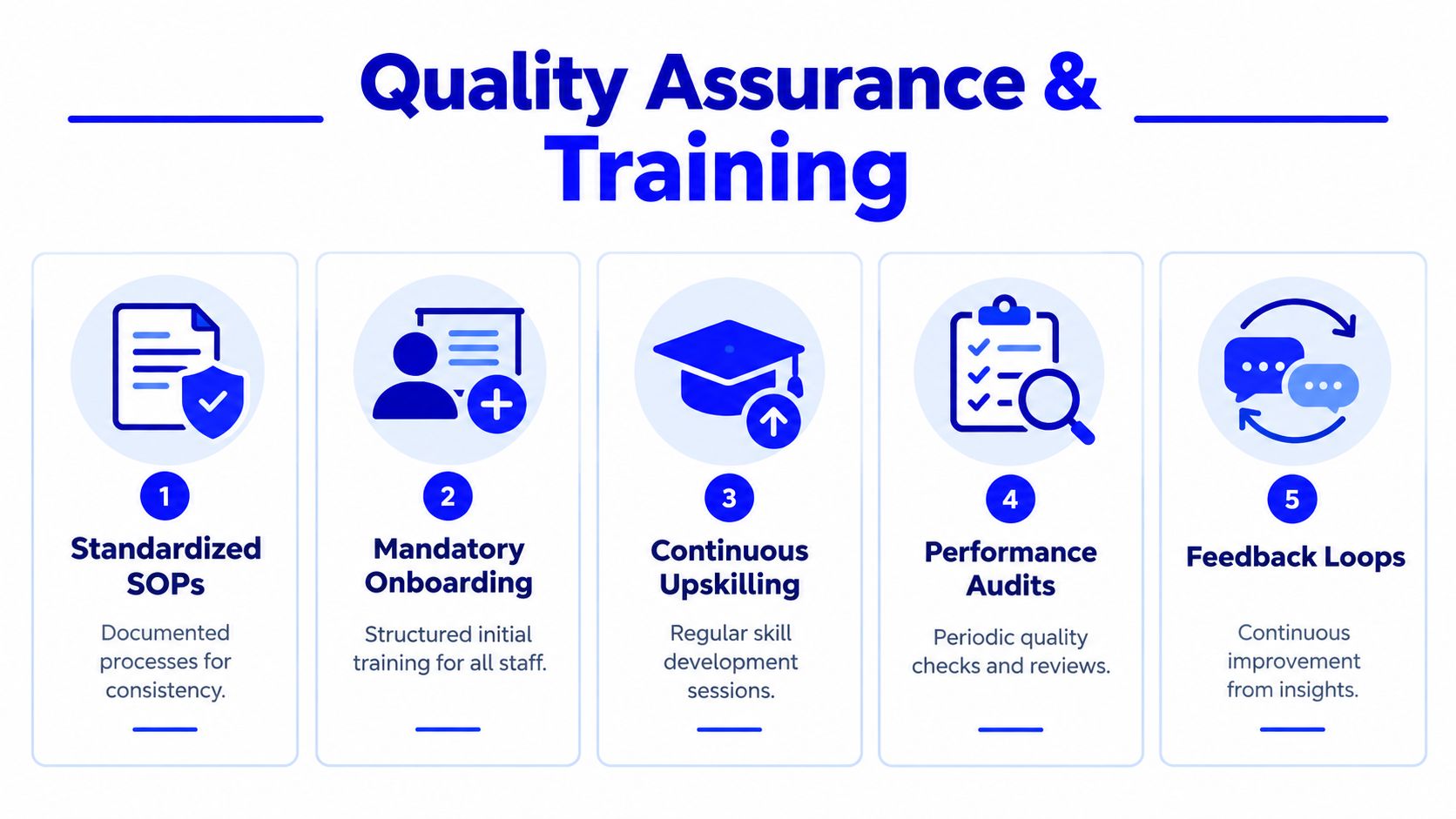
Verify raw material quality. Use laboratory-grade compounds and solvents from reputable suppliers. Review Certificates of Analysis for purity and concentration.
Perform in-process quality checks: verify pH after buffer addition, confirm complete dissolution, inspect visually for particulates. For critical solutions, test a small aliquot for activity or concentration before full use.
Train all lab personnel thoroughly. Cover technical SOP steps and underlying principles of stability, sterility, and pitfalls. Conduct regular refreshers and competency assessments.
- Raw Material Verification: Confirm purity and concentration using CoAs.
- In-Process Checks: Monitor pH, dissolution, and visual appearance.
- Post-Reconstitution Testing: Perform activity or concentration assays on critical solutions.
- Training: Educate staff on SOPs, principles, and potential issues.
- Continuous Improvement: Update protocols based on feedback and new insights.
Photo by Lukas from Pexels
Frequently Asked Questions (FAQ)
What is a reconstitution solution?
A reconstitution solution is the liquid diluent used to dissolve a lyophilized or concentrated compound into a stable, working form. It is distinct from the reconstitution process itself—the solution is the medium; the process is the act of dissolving.
What is a reconstitution solution used for?
Reconstitution solutions restore lyophilized materials to active form, establish working concentrations, preserve stability through pH and buffer control, and enable aliquoting that reduces waste. Common uses include peptide reconstitution, enzyme preparation, antibody dilution, and analytical standard setup.
What does reconstitution solution mean?
It refers to the diluent liquid chosen to dissolve a dried compound while maintaining its chemical and biological integrity. The term is sometimes confused with "reconstituted solution," which is the final mixture after dissolution.
What is a recon solution?
"Recon solution" is informal lab shorthand for reconstitution solution. Both terms refer to the same liquid diluent.
What is a reconstitution lab?
A reconstitution lab is the sterile workspace—typically a laminar flow hood or biosafety cabinet—where reconstitution procedures are performed under controlled conditions.
How does a laboratory reconstitution solution differ from an assay buffer?
A laboratory reconstitution solution is chosen to dissolve and stabilize the dried compound. An assay buffer is chosen to support the experimental readout. They may be the same liquid, but their purposes differ.
Why use bacteriostatic water for peptides?
Bacteriostatic water contains 0.9% benzyl alcohol, which inhibits microbial growth without killing bacteria. This maintains sterility and biological activity during storage and repeated use, which is critical for peptide research accuracy. Learn more at tydes.is.
How do I choose the right solvent for reconstitution?
Consult the manufacturer's specifications or chemical databases. Consider hydrophilicity, hydrophobicity, and pH sensitivity. For peptides, bacteriostatic water is often preferred. For hydrophobic compounds, DMSO or ethanol may be necessary.
What causes solution degradation after reconstitution?
Temperature fluctuations, light exposure, oxidation, microbial contamination, and improper pH. Aliquoting, cold storage, amber vials, and inert gas overlays mitigate these risks.
When should I aliquot my reconstituted solutions?
Immediately after preparation, especially for compounds sensitive to freeze-thaw cycles or frequent handling. Single-use aliquots prevent degradation from repeated access to the main stock.
How does pH affect stability?
pH influences ionization state, which impacts solubility and chemical stability. Deviations from optimal pH cause precipitation or accelerated degradation. Buffers maintain stable pH.
What role do SOPs play in reconstitution?
SOPs provide step-by-step instructions ensuring consistency and reproducibility. They minimize human error and serve as training tools.
Can automation improve reconstitution accuracy?
Yes. Liquid handling robots dispense solvents and compounds precisely, reduce manual pipetting errors, and increase throughput. Automation is most valuable in high-volume labs.
What quality checks should I perform after reconstitution?
Visually inspect for complete dissolution and particulates. Measure pH. For critical reagents, perform a small-scale activity or concentration assay before full use.
How can I extend shelf life?
Store at optimal temperatures (−20°C or −80°C), protect from light, aliquot to prevent freeze-thaw cycles, and use inert gas overlays for oxygen-sensitive compounds.
What is the 5S methodology and how does it apply to lab reconstitution?
5S (Sort, Set in Order, Shine, Standardize, Sustain) is a lean management tool for workplace organization. In lab reconstitution, it streamlines workflows, reduces waste, and standardizes preparation steps. For detailed cases, see flevy.com.
Why use laboratory-grade solvents?
Lab-grade solvents have certified purity and minimal contaminants. Impurities in lower-grade solvents can react with sensitive compounds, interfere with assays, or compromise experimental integrity.
Compliance Reminder
Herbilabs supplies bacteriostatic water strictly for Research Use Only (RUO). It must not be used in humans or animals.
Conclusion
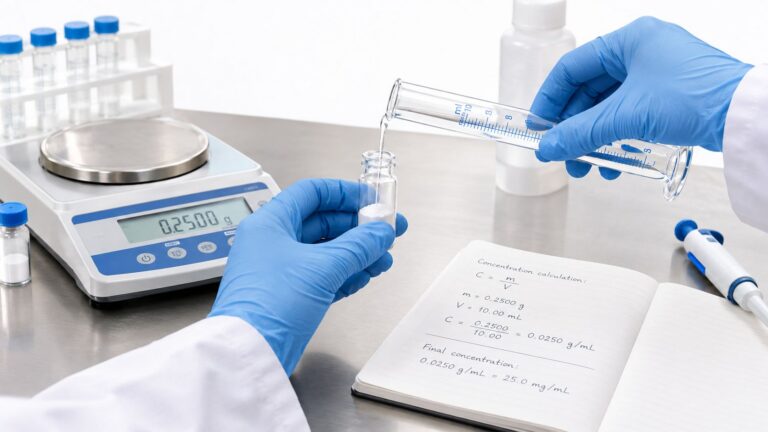
Understanding reconstitution solutions in research begins with a clear definition: the diluent liquid that dissolves a dried compound into a stable, working form. The four core principles—solvent compatibility, sterility control, degradation prevention, and reproducibility—guide every reconstitution decision. Common errors like confusing solvent compatibility with sterility can be avoided by documenting solvent choice, target concentration, mixing method, filtration decision, aliquot size, storage temperature, and maximum hold time in every SOP. For guidance on calculations, refer to the Concentration and Dilution resource.
Automation improves consistency in high-volume settings, but manual review remains essential for sensitive or novel compounds. Quality assurance through raw material verification, in-process checks, and robust training ensures every reconstituted solution meets defined standards.
By applying these principles, laboratories enhance the quality and consistency of their prepared reagents, safeguard research integrity, and support more reliable scientific discoveries. For additional resources on lab water purification systems relevant to reconstitution workflows, see the guide on Lab Water Purification Systems: Type I, II & III from Labs USA.
By Dr. Robert Miller, PhD — Published January 2026