Private Label, White Label, Wholesale partnerships available - EU, USA and UK - Free shipping from €75
What Is Lab Sample Integrity: A Guide for Researchers
Discover what is lab sample integrity and how it impacts research accuracy. Ensure your samples are protected from collection to reporting.
TL;DR:
- Lab sample integrity involves maintaining a specimen’s physical and chemical state from collection through analysis, encompassing proper handling, documentation, and storage. Pre-analytical errors, such as misidentification and temperature excursions, are the leading causes of integrity breaches across the lifecycle. Implementing automated systems, standardized procedures, and high-quality reagents effectively safeguards sample quality and regulatory compliance.
Lab sample integrity is one of those concepts that researchers discuss frequently yet define inconsistently. At its core, what is lab sample integrity refers to the preservation of a specimen’s physical and chemical state from the moment of collection through analysis and final reporting. The stakes are high. Pre-analytical variables cause most laboratory errors, yet many laboratories invest the majority of their quality assurance resources in the analytical phase. This article covers the full scope of sample integrity: its defining components, the threats that compromise it, the systems that protect it, and the regulatory frameworks that govern it.
Table of Contents
- Key takeaways
- What lab sample integrity actually means
- Threats to sample integrity across the lifecycle
- Systems and best practices for protecting sample integrity
- Domain-specific integrity challenges across sample types
- Regulatory standards and quality management compliance
- My perspective on where sample integrity efforts fall short
- How Herbilabs supports your sample integrity workflow
- FAQ
Key takeaways
| Point | Details |
|---|---|
| Integrity spans the full lifecycle | Sample integrity must be preserved from collection through reporting, not just during analysis. |
| Pre-analytical phase is highest risk | Most errors originate before analysis begins, in collection, transport, and storage steps. |
| Documentation is legally binding | Missing or broken traceability records constitute a regulatory data integrity failure. |
| Automation reduces human error | Laboratory information systems automate chain of custody, reducing manual handling mistakes. |
| Domain-specific standards apply | Clinical, biopharma, and food testing each impose distinct integrity requirements and tolerances. |
What lab sample integrity actually means
Sample integrity is defined as the physical and chemical state of a specimen remaining unaltered from collection through analysis and reporting. That definition sounds straightforward, but it encompasses several distinct dimensions that professionals sometimes conflate or overlook.
The concept extends well beyond the biological or chemical material itself. True sample integrity includes:
- Physical state preservation: The specimen must arrive in the correct container, with no visible evidence of degradation such as hemolysis, lipemia, or turbidity in blood matrices, and no leakage, cracking, or frost damage in frozen samples.
- Chemical composition fidelity: Analyte concentrations, pH, enzyme activity, and molecular structure must reflect the condition of the source material at the time of collection, not the condition after inadequate handling.
- Metadata accuracy: The sample label, collection timestamp, patient or subject identifiers, and tube type must all match the corresponding records precisely.
- Chain of custody continuity: Every transfer, storage event, and processing step must be documented and traceable without gaps.
It is also worth distinguishing sample integrity from sample stability. Stability refers to the known duration over which an analyte remains measurable under defined conditions. Integrity is a broader quality attribute that encompasses stability but also includes handling, documentation, and traceability. A sample can be chemically stable yet still fail an integrity check if its label is illegible or its collection container was incorrect. Understanding this distinction shapes how labs design their quality controls.
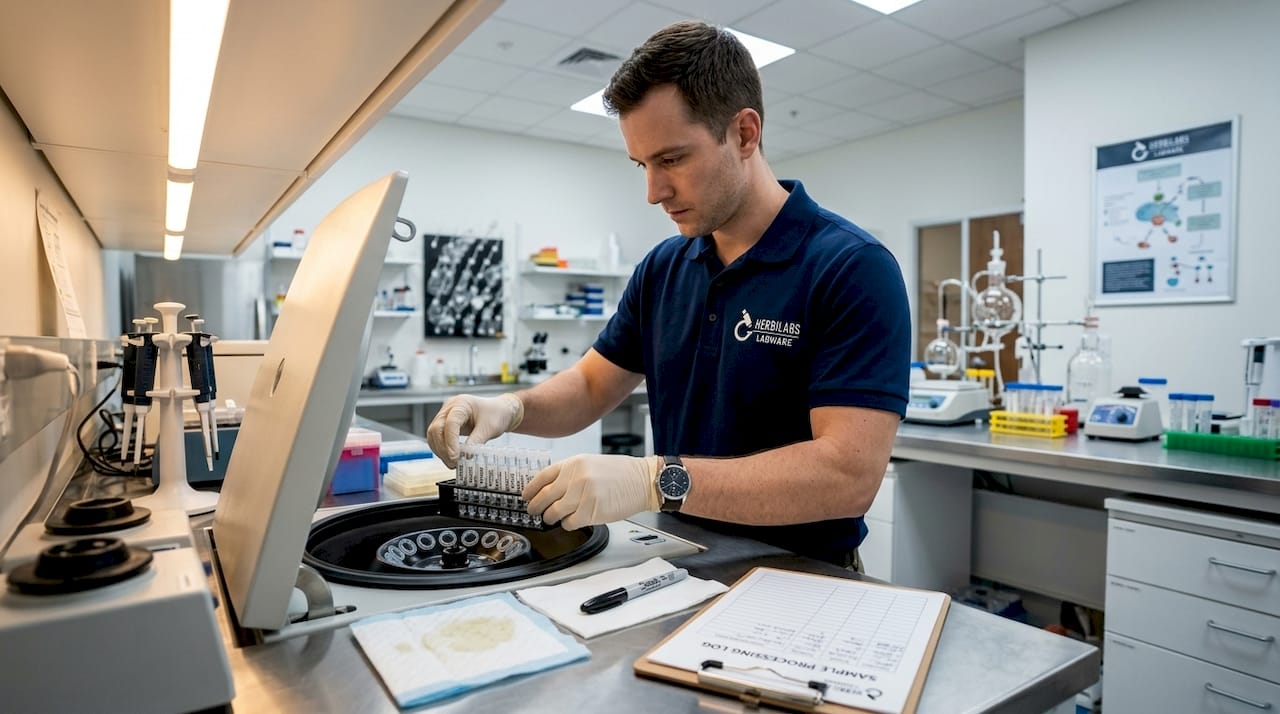
What affects sample quality is rarely a single point of failure. Contamination, degradation, improper handling, and documentation lapses all interact, and a deficiency in one area can amplify risk in others.
Threats to sample integrity across the lifecycle
Knowing where integrity fails is as important as knowing what it is. Threats arise at every stage, but the pre-analytical phase concentrates the greatest risk because it involves the most human touchpoints and the least standardized automation.
The most common integrity threats, organized by stage, are as follows:
- Patient or subject misidentification: Incorrectly labeled tubes or specimen containers create a chain of traceability errors that propagate through the entire analytical process. This is one of the leading causes of reportable pre-analytical errors in clinical laboratories.
- Wrong container or additive: Using an EDTA tube where a serum separator tube is required, for example, directly alters analyte concentrations through anticoagulant interference. The error is often invisible until downstream results appear anomalous.
- Improper order of draw: In phlebotomy, failing to follow the correct order of draw introduces additive carryover between tubes, particularly affecting coagulation and trace element assays.
- Temperature excursions during transport: Delayed centrifugation leads to ongoing cellular metabolism, nucleic acid degradation, and leakage of intracellular components, all of which alter biochemical profiles. A blood sample left uncentrifuged at room temperature for two hours produces measurably different potassium and glucose values than one processed promptly.
- Mechanical damage during preparation: Hemolysis from excessive shaking, frictional heat during grinding, or high-pressure homogenization can irreversibly alter analyte concentrations before the sample reaches the instrument.
- Freeze-thaw cycling: Repeated freezing and thawing degrades protein conformation, nucleic acid integrity, and enzyme activity. Each cycle introduces cumulative damage that compounds over multiple aliquots.
- Documentation and traceability failures: Missing timestamps, unsigned transfer logs, and unrecorded storage condition deviations constitute data integrity violations regardless of whether the sample itself is physically intact. Broken traceability is treated by regulators as a data integrity failure, not merely a procedural oversight.
Pro Tip: Label all aliquots immediately upon preparation, before transferring them to storage. Labeling after the fact under cryogenic conditions introduces condensation and adhesive failure, which are leading causes of illegible tube labels in biorepository audits.
Systems and best practices for protecting sample integrity
Protecting lab sample quality requires both procedural rigor and technological infrastructure. Neither alone is sufficient. Standard operating procedures set the rules; information systems and environmental controls enforce them.
The foundational best practices for sample integrity include:
- Strict SOPs for every phase: Collection protocols must specify container type, order of draw, mixing requirements, and maximum acceptable transit times. Handling SOPs must define centrifugation parameters, aliquoting procedures, and acceptable visual quality indicators before processing proceeds.
- Temperature monitoring with real-time alerts: Refrigerated and frozen storage units should be connected to continuous data loggers that trigger alerts when temperature thresholds are breached. Manual temperature logs recorded twice daily are inadequate for regulated environments.
- Rejection criteria and documentation: Every laboratory should maintain a standardized rejected sample log that records the basis for rejection, the receiving analyst, and the corrective action taken. Sample integrity records must be retained for at least five years or per sponsor-specified durations.
| Control Type | Method | Primary Benefit |
|---|---|---|
| Chain of custody | LIS/LIMS with barcode scanning | Automated traceability, reduced transcription error |
| Temperature control | Continuous data loggers with alert thresholds | Early detection of storage excursions |
| Visual integrity check | Standardized inspection at receipt and pre-analysis | Catches hemolysis, lipemia, incorrect containers |
| Documentation retention | Electronic records with audit trails | Regulatory compliance and historical traceability |
| Staff training | Periodic competency assessments and SOPs | Reduces procedural drift and handling errors |
Laboratory information systems protect sample integrity through automated chain of custody, audit trails, storage condition tracking, and by linking analytical results to sample identifiers and instrument calibration records. This integration eliminates the manual transcription steps where errors concentrate most. Automation also allows lab consumables workflows to be standardized across multiple sites, which is particularly valuable for multi-center studies where inter-site variability in handling is a recognized source of data inconsistency.
Pro Tip: When implementing a LIMS for the first time, map your existing sample lifecycle on paper before configuring the system. Laboratories that configure LIMS without first formalizing their workflows often digitize their existing errors rather than eliminate them.
Domain-specific integrity challenges across sample types
How to maintain sample integrity differs meaningfully depending on the sample matrix and the intended analytical method. The challenges facing a clinical pathology laboratory are not the same as those in biopharma drug metabolism studies or food safety testing.
Food matrix homogenization
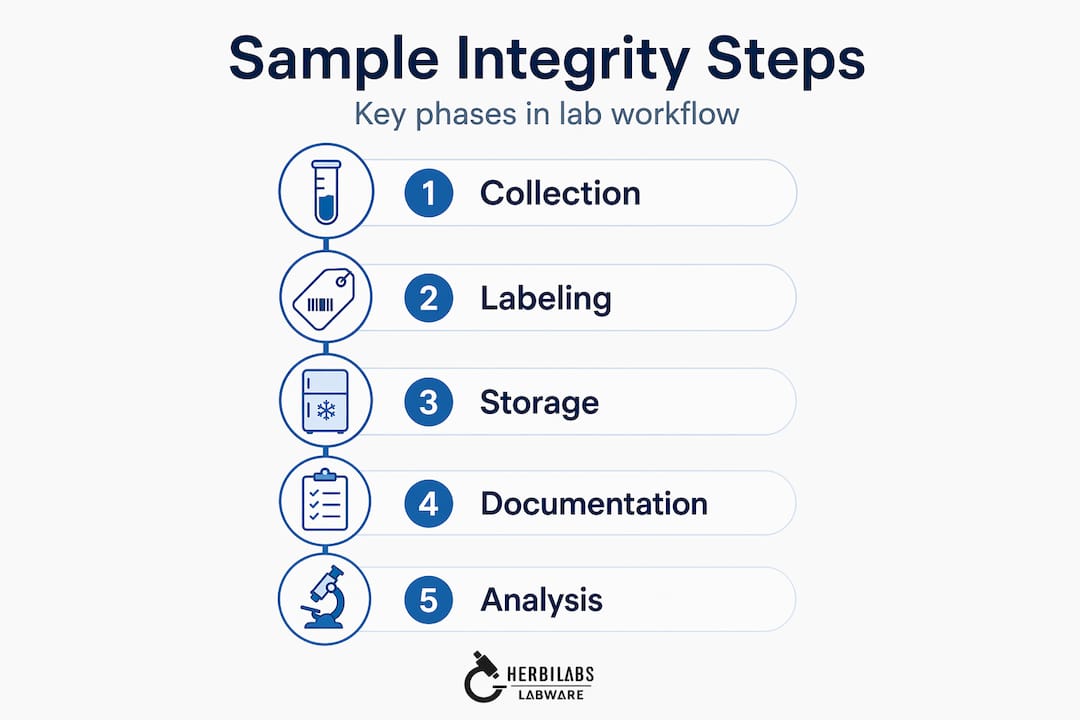
AOAC International Procedure 977.16 mandates that food matrices be homogenized to below 850 µm particle size to yield representative sub-samples for nutritional analysis. Failure to achieve this particle size increases analytical variance and raises the probability of false-negative results in contamination assessments. The integrity risk here is not biological degradation but physical non-homogeneity. A poorly ground sample produces a sub-sample that does not represent the bulk material, which is a form of integrity failure that no analytical instrument can correct.
A compounding concern is frictional heat. Frictional heat during grinding can raise sample temperature by 10 to 20°C, causing volatilization of heat-labile compounds such as essential oils and vitamin C. This thermal degradation can introduce systematic bias even when storage conditions before and after grinding are perfect.
Biopharma and clinical diagnostics
In biopharma, sample integrity failures during stability studies can invalidate entire datasets. Missing integrity documentation or incorrect preservatives lead to outright sample rejection by the FDA and other regulatory agencies, and such preservation errors are frequently irreversible. A freeze-dried peptide reconstituted in a diluent with incorrect pH or osmolarity, for example, may denature before the analytical run begins, producing results that appear plausible but are factually incorrect.
The comparison below summarizes how integrity concerns differ across three major testing contexts:
| Domain | Primary Integrity Risk | Key Standard or Guidance |
|---|---|---|
| Clinical diagnostics | Hemolysis, misidentification, improper additive | CLSI EP7, local accreditation requirements |
| Biopharma R&D | Incorrect preservative, documentation failure, freeze-thaw cycling | FDA Bioanalytical Method Validation Guidance |
| Food safety testing | Insufficient homogenization, frictional heat, non-representative sub-sampling | AOAC 977.16, ISO 6497 |
Recognizing these domain-specific distinctions allows laboratories to prioritize their sample preservation techniques where the actual risk is highest, rather than applying generic controls uniformly.
Regulatory standards and quality management compliance
The regulatory and standards infrastructure governing sample integrity is extensive, and quality control begins at the sample collection or manufacturing stage, not at the point of instrument analysis. Treating handling and storage as integral quality systems rather than logistical functions is the posture that regulators now expect.
Key frameworks and requirements include:
- ISO/IEC 17025: The international standard for laboratory competence requires documented procedures for sample handling, transport, storage, and preparation, along with mechanisms for identifying, protecting, and retaining samples.
- FDA Bioanalytical Method Validation Guidance: Requires explicit demonstration that storage conditions maintain analyte stability throughout the study duration, with documented rationale for any deviations.
- QMS integration: A well-integrated quality management system encompassing collection, transport, analysis, and reporting is the recognized framework for continuous improvement and systematic error mitigation. It requires documentation, internal audits, corrective and preventive action plans, and regular procedural reviews.
- Audit trail and record retention: Regulators prioritize documented rationale for storage excursions over the severity of the deviation itself. A minor temperature excursion with a documented investigation and risk assessment is treated more favorably than a larger deviation with no record at all.
- Staff competency: Internal audits and periodic competency reassessments are the mechanisms through which procedural drift, a gradual loosening of adherence to SOPs over time, is detected and corrected before it produces a reportable finding.
Understanding labware purity standards and their connection to sample quality is also a compliance consideration, since contaminants introduced by low-grade consumables can constitute an integrity failure even when all procedural steps are followed correctly.
My perspective on where sample integrity efforts fall short
I have worked closely with laboratories across clinical, biopharma, and analytical food testing contexts, and the pattern I see repeatedly is the same. Organizations invest heavily in analytical phase validation, instrument qualification, and reagent specifications, then leave the pre-analytical phase to informal practices and tribal knowledge.
What I find most consequential is the documentation gap. Many laboratory professionals understand the physical requirements for sample preservation intuitively. They know not to leave tubes at room temperature. They know to label before aliquoting. But they underestimate how much a missing temperature log or an unsigned transfer record costs them when a regulatory audit or a disputed result demands a full reconstruction of the sample’s history.
The move toward stricter standards compels labs to abandon manual methods in favor of automated systems with algorithmic endpoint detection and electronic audit trails. In my view, this is the single most impactful structural change a laboratory can make. Digital transformation does not just reduce error rates; it makes existing errors visible, which is what allows them to be corrected systematically rather than discovered retrospectively.
The laboratories that handle this best treat laboratory accuracy as a system-level property, not as the responsibility of any single analyst. That cultural shift is harder to implement than any software platform, but it is what sustains integrity over time.
— Ragnar
How Herbilabs supports your sample integrity workflow
Maintaining sample integrity depends as much on the quality of the reagents and diluents used during reconstitution as it does on handling protocols. A sample reconstituted with a substandard diluent, one with incorrect osmolarity, trace contaminants, or inconsistent pH, will produce compromised results regardless of how carefully every upstream step was executed. Herbilabs manufactures research-grade bacteriostatic water and sterile reconstitution solutions to strict purity standards, specifically to meet the demands of sensitive research environments where analyte fidelity is non-negotiable.
For researchers working with peptides or lyophilized compounds, Herbilabs offers a curated selection of high-purity reconstitution solutions designed to preserve molecular structure from the moment of reconstitution through the analytical run. For laboratories selecting reagents for sensitive bioassays, the reagent selection guide for peptide research provides practical criteria for evaluating purity, compatibility, and stability across common experimental formats.
FAQ
What is lab sample integrity in simple terms?
Lab sample integrity means that a specimen’s physical and chemical composition has remained unchanged from the point of collection to the point of analysis and reporting. Any alteration, whether from temperature exposure, contamination, or documentation failure, constitutes a compromise of integrity.
What is the most common cause of sample integrity failure?
Pre-analytical errors cause the majority of laboratory sample integrity failures. These include patient misidentification, wrong collection containers, improper storage temperatures, and delayed processing, all of which occur before the analytical instrument is ever involved.
How long must sample integrity records be retained?
Standard operating procedures in regulated environments require integrity check records to be retained for a minimum of five years, or longer if specified by the study sponsor or applicable regulatory guidance.
What is the difference between sample integrity and sample stability?
Sample stability refers to the duration over which a specific analyte remains measurable under defined conditions. Sample integrity is a broader concept that includes stability but also encompasses physical state, documentation accuracy, and chain of custody continuity.
Does labware quality affect sample integrity?
Yes. Contaminants leached from low-grade plasticware, trace metals from inadequately cleaned glassware, and improper container additives can all alter analyte concentrations. Labware purity is therefore a direct contributor to overall sample integrity.