Private Label, White Label, Wholesale partnerships available - EU, USA and UK - Free shipping from €75

Top lab consumables: key examples for efficient research
Discover the top lab consumables with key examples, a glass vs plastic comparison, and procurement tips to improve research efficiency and reduce waste.
Choosing the wrong lab consumable is not just a minor inconvenience. It can invalidate an entire dataset, delay a project by weeks, or quietly introduce contamination that skews every result downstream. The consumables you stock directly shape your workflow speed, your budget allocation, and increasingly, your lab’s environmental footprint. This article walks through the major categories of lab consumables, from glassware and plasticware to specialized tools for high-throughput applications, with practical comparisons and procurement guidance to help you make smarter purchasing decisions.
Table of Contents
- How to evaluate lab consumables
- Common examples of lab consumables
- In-depth: Glassware vs plasticware
- Specialized consumables for advanced applications
- Comparison summary: Which consumables fit your lab?
- Connect with trusted lab consumable suppliers
- Frequently asked questions
Key Takeaways
| Point | Details |
|---|---|
| Glassware vs plasticware | Glass offers reusability and chemical resistance but is fragile, while plastic is lightweight and convenient but creates more waste. |
| Bulk procurement tips | Buy high-use consumables like pipette tips and tubes in bulk from certified suppliers to save cost and ensure quality. |
| Sustainability practices | Track lab waste and seek sustainable alternatives like reusable glass and bioplastics to reduce your environmental footprint. |
| Selection criteria matters | Always align consumable choice with experiment demands, taking into account compatibility, sterility, and disposal. |
How to evaluate lab consumables
Before you order anything, you need a clear framework. Not all consumables are created equal, and the wrong choice for your application can cost far more than the price difference between options.
Here are the core criteria to assess before purchasing:
- Material compatibility: Glass for chemistry and heat-intensive applications; specific polymers like polypropylene (PP) for biology and microbiology to minimize contamination risk
- Heat and chemical resistance: Know your protocol temperatures and reagent chemistries before committing to a material
- Cost-effectiveness and supplier reliability: Unit price matters less than total cost of ownership, including reorder frequency and lead times
- Sterility requirements: Pre-sterilized plasticware reduces prep time but adds cost; weigh this against your aseptic techniques workflow
- Sustainability considerations: Reusable glassware reduces long-term waste; single-use plastics offer sterility but accumulate fast
- Supplier certification: Always verify that your supplier meets relevant quality standards, especially for high-purity reagents and sterile consumables
Pro Tip: For high-use items like pipette tips and microtubes, bulk purchasing from a certified supplier cuts per-unit cost significantly and reduces the risk of mid-project stockouts. Negotiate volume pricing and confirm batch consistency before committing to large orders.
Common examples of lab consumables
Most labs draw from the same core inventory of consumables, regardless of research discipline. Knowing what falls into each category helps you build a complete procurement checklist.
Here are the staple consumables found across research environments:
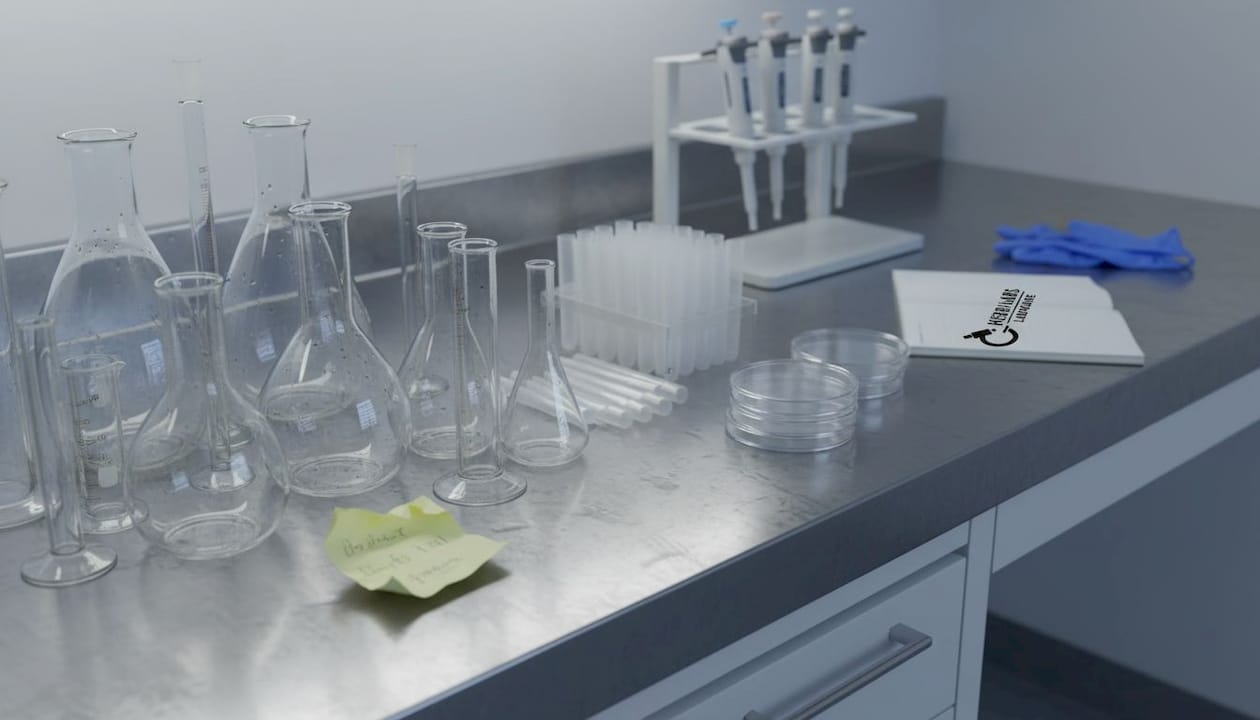
- Glassware: Beakers, Erlenmeyer flasks, graduated cylinders, test tubes, volumetric flasks
- Plasticware: Pipette tips, microcentrifuge tubes, petri dishes, cuvettes, conical tubes
- Filtration materials: Filter papers, syringe filters, membrane filters
- Microbiology tools: Swabs, inoculation loops, cell spreaders, culture plates
- Fluid handling: Syringes, needles, septa, vial sealers
- High-throughput formats: Centrifuge tubes, 96-well microplates, deep-well plates
- Reagents and media: Culture media, buffer solutions, diluents, reconstitution solutions
The scale of plastic consumption in research is striking. Labs generate 32 to 237 kg of plastic waste per researcher per year, with an estimated 5.5 million tons of global lab plastic waste generated in 2014 alone. Around 87% of that waste comes from just 10 item types, which means targeted procurement decisions can have a real sustainability impact.
Water quality also plays a role here. The diluents and reconstitution solutions you use are consumables too, and lab water quality directly affects assay reproducibility and reagent stability.
In-depth: Glassware vs plasticware
The glass versus plastic decision comes up constantly in lab procurement. Both materials have genuine strengths, and the right choice depends on your specific application, not a blanket preference.
| Feature | Borosilicate glass | Polypropylene / polystyrene plastic |
|---|---|---|
| Heat resistance | Up to 500°C | Typically 121°C (autoclavable PP) |
| Chemical inertness | Excellent | Good, but varies by polymer |
| Optical clarity | High | Moderate (PS better than PP) |
| Reusability | Yes, multiple cycles | Limited or single-use |
| Breakage risk | High | None |
| Weight | Heavy | Lightweight |
| Cost per unit | Higher upfront | Lower upfront |
| Sterility options | Requires autoclaving | Available pre-sterilized |
Borosilicate glass offers high heat resistance, chemical inertness, and optical clarity that makes it ideal for analytical chemistry, titrations, and any protocol involving strong acids or high temperatures. The trade-off is fragility and weight. Plasticware in PP, PS, or PE is lightweight, shatterproof, and available pre-sterilized, making it the default for cell culture, molecular biology, and any workflow where contamination risk from reuse outweighs the cost of disposal.
Key considerations when choosing:
- Reuse vs disposal: Glass pays for itself over time if breakage is managed; plastic is more practical in high-throughput or sterile environments
- Leaching risk: Some plastics can leach plasticizers into sensitive samples; verify polymer compatibility with your reagents
- Sustainability goals: If your institution tracks environmental metrics, glass reuse programs reduce plastic waste substantially
- Experiment type: Fluorescence assays often require specific optical properties; confirm cuvette material before purchasing
“The shift toward bio-based and sustainable plastics in laboratory settings is accelerating, driven by institutional sustainability mandates and supplier innovation. Labs that start tracking plastic consumption now will be better positioned to meet future reporting requirements.”
Pro Tip: Before switching entirely to disposable plasticware, assess your actual breakage rate for glass items. Many labs overestimate breakage risk and underestimate the long-term cost and waste of single-use alternatives. To avoid contamination without defaulting to disposables, invest in proper cleaning and sterilization protocols for reusable glassware.
Specialized consumables for advanced applications
Beyond the basics, advanced research environments rely on a set of specialized consumables that are purpose-built for precision applications. These items often carry higher unit costs but are non-negotiable for specific workflows.
Examples of specialized consumables by application:
- Genomics and PCR: Low-retention PCR plates, thin-wall PCR tubes, optical adhesive seals, nuclease-free tips
- High-throughput screening: Multi-channel pipette tips, 384-well plates, robotic-compatible tip racks
- Analytical chemistry: Chromatography vials, HPLC inserts, headspace vials, crimp caps
- Cell biology: T-flasks, roller bottles, gas-permeable culture bags, cell strainers
- Protein research: Spin columns, desalting cartridges, ultrafiltration units
The volume of specialized consumables in active labs is substantial. High-throughput labs use 20,000 pipette tips per instrument per year. That figure alone justifies a dedicated procurement strategy for tip management, including recyclable tip programs and bulk purchasing agreements.
For procurement managers, two priorities stand out. First, work directly with suppliers who offer recyclable or refillable options for high-volume items. Second, implement usage tracking for your top 10 consumable items. This data supports green benchmarking, budget forecasting, and supplier negotiations simultaneously.
The stability of research water used in reconstitution and dilution steps is equally important in specialized workflows. Degraded diluents compromise even the most carefully sourced consumables. Pair your consumable procurement with reagent handling best practices to protect the integrity of your entire workflow.
Comparison summary: Which consumables fit your lab?
With the full range of options covered, here is a practical decision table to guide your purchasing choices based on lab type and application.
| Lab type | Preferred consumables | Key reason |
|---|---|---|
| Analytical chemistry | Borosilicate glassware, chromatography vials | Heat and chemical resistance |
| Molecular biology | PP tubes, PCR plates, nuclease-free tips | Sterility, low retention |
| Cell culture | PS petri dishes, T-flasks, sterile pipettes | Optical clarity, pre-sterilized |
| High-throughput screening | 384-well plates, multi-channel tips | Throughput, robotic compatibility |
| Microbiology | Loops, swabs, culture media, petri dishes | Sterility, single-use safety |
| Protein/peptide research | Spin columns, low-bind tubes, sterile vials | Minimize sample loss and contamination |
A bulk purchasing strategy from certified suppliers is the single most effective way to control consumable costs while maintaining quality. Tracking waste volumes for your top items also feeds directly into sustainability reporting and helps identify where reusable alternatives are viable.
Here is a final procurement checklist before placing any major consumable order:
- Confirm material compatibility with your reagents and protocols
- Verify supplier certification and batch consistency records
- Assess sterility requirements and whether pre-sterilized options are necessary
- Calculate total cost of ownership, not just unit price
- Check Herbilabs supplier benefits for research-grade options with verified purity standards
- Evaluate sustainability options: reusable formats, recyclable packaging, or take-back programs
- Set up usage tracking for your top 10 high-volume items
Connect with trusted lab consumable suppliers
Sourcing consumables from a certified, research-grade supplier is not just about price. It is about protecting your data, your timelines, and your lab’s reputation. When a reconstitution solution or sterile diluent fails purity standards, the downstream cost in lost samples and repeated experiments far exceeds any savings from a cheaper supplier.
At Herbilabs, we supply high-purity reagents and sterile reconstitution solutions manufactured to strict quality standards, with rigorous batch testing and reliable delivery across the UK and Europe. Whether you need to verify your reagent preparation checklist or source a premium glass vial solution for peptide research, our catalog is built for researchers who cannot afford to compromise on purity. Wholesale pricing is available for institutions and resellers.
Frequently asked questions
What are the most commonly used lab consumables?
Pipette tips, test tubes, petri dishes, and microcentrifuge tubes are among the most widely used lab consumables. In fact, 87% of lab plastic waste comes from just 10 item types, which reflects how concentrated high-volume usage really is.
How do you choose between glass and plastic consumables?
Consider chemical and heat resistance, breakage risk, cost, and your lab’s sustainability goals. Glass suits chemistry and heat-intensive protocols, while specific plastics are preferred in biology to minimize contamination from reuse.
What steps can labs take to reduce consumable waste?
Buying in bulk, choosing reusable glassware where appropriate, implementing recycling programs, and tracking waste for sustainability benchmarks are all effective strategies. Starting with your top 10 high-volume items gives you the fastest impact.
Why are pipette tips so significant in laboratory waste?
High-throughput labs can use 20,000 pipette tips per instrument per year, making them one of the largest contributors to lab plastic waste. Switching to recyclable tip programs or refillable racks can meaningfully reduce that volume.
How does procurement strategy affect lab efficiency?
Bulk sourcing from certified suppliers for high-use items ensures cost control, material consistency, and fewer supply disruptions. A structured procurement approach also supports sustainability reporting and budget forecasting across research cycles.