TL;DR:
- Implementing ISO/IEC 17025 standards establishes a structured and compliant quality control framework.
- Sterility testing for bacteriostatic water requires membrane filtration and 14-day incubation under specific conditions.
- Continuous monitoring of water and reagent purity, cleaning validation, and staff engagement are essential for reliable research results.
Maintaining consistent quality across bacteriostatic water batches and research reagents is one of the most technically demanding responsibilities a laboratory manager faces. A single lapse in sterility verification, purity monitoring, or cleaning validation can cascade into compromised data, failed audits, and wasted reagent stocks. The pressure is compounded when workflows involve sensitive peptide reconstitution or lyophilized compound preparation, where even trace contaminants alter experimental outcomes. This article presents evidence-based, practical quality control tips organized around the major pillars of a robust QC system, from ISO/IEC 17025 accreditation structures through sterility testing, purity benchmarks, cleaning validation, and reagent traceability.
Table of Contents
- Set up a robust QC framework with ISO/IEC 17025
- Master sterility testing: Ph. Eur. & EU GMP for bacteriostatic water
- Monitor water and reagent purity with strict testing parameters
- Validate and document cleaning to avoid cross-contamination
- QC your reagents and media: controls, traceability, proficiency
- Why real QC is about culture, not just compliance
- Boost your lab’s QC with the right partners and resources
- Frequently asked questions
Key Takeaways
| Point | Details |
|---|---|
| Apply recognized QC frameworks | ISO/IEC 17025 standards structure reliable lab QC for all key steps. |
| Follow strict sterility testing | Ph. Eur.-compliant protocols ensure safe bacteriostatic water and reagent use. |
| Regular purity monitoring is vital | Check lab water and reagent purity parameters frequently to prevent contamination. |
| Validate cleaning to avoid errors | Consistently validated cleaning protocols stop cross-contamination before it starts. |
| Document QC for traceability | Comprehensive records and batch controls maintain traceability and boost compliance. |
Set up a robust QC framework with ISO/IEC 17025
A structured quality framework is the foundation upon which every other QC activity depends. Without it, individual testing efforts remain disconnected and difficult to defend during external audits or regulatory inspections. Understanding the distinction between quality assurance and quality control is the logical starting point: quality assurance (QA) refers to the systematic, proactive processes designed to prevent defects from occurring, while quality control (QC) describes the reactive testing and monitoring activities that detect errors within specific batches or runs.
For laboratories handling bacteriostatic water and research reagents, ISO/IEC 17025 accreditation provides the globally recognized benchmark for technical competence. Achieving and maintaining this accreditation requires demonstrating method validation, equipment calibration, and structured QC protocols, including the use of positive and negative controls alongside regular proficiency testing. Reviewing established lab quality standards helps contextualize where your current processes align and where gaps exist.
The critical elements of a compliant QC framework include:
- Standard operating procedures (SOPs): Written, version-controlled protocols for every critical process, from reagent receipt through disposal.
- Positive and negative controls: Run with every analytical batch to confirm assay performance and detect false results.
- Equipment calibration schedules: Documented intervals for all instruments, with corrective action records when calibration fails.
- Batch controls and traceability records: Lot-specific documentation linking each reagent or water batch to its test results.
- Regular staff training: Competency assessments tied to SOPs, not just one-time onboarding sessions.
Implementing these elements systematically, and streamlining workflows around them, prevents errors before they propagate into data. As one accreditation preparation guide notes:
“Proficiency testing is not optional for accredited labs. It is a structured, external mechanism for verifying that your methods and staff perform consistently against peer laboratories.”
Regular proficiency testing rounds out an internal QC program by providing objective, external validation that your results are reliable and reproducible.
Master sterility testing: Ph. Eur. & EU GMP for bacteriostatic water
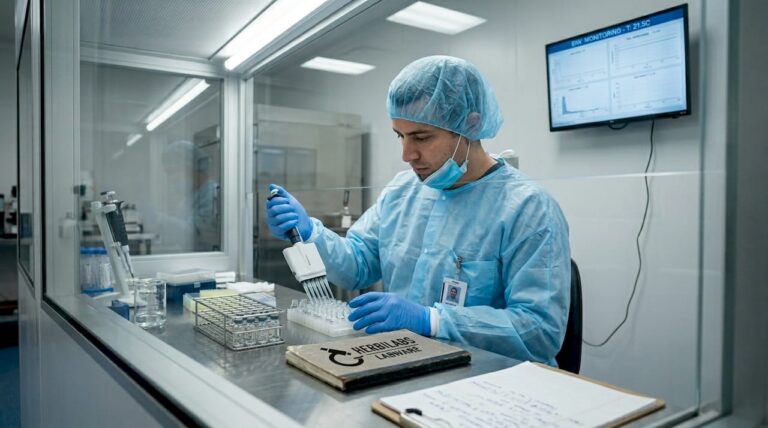
Sterility testing for bacteriostatic water and injectable reagents follows tightly defined regulatory requirements under the European Pharmacopoeia (Ph. Eur.) and EU GMP Annex 1. The preferred method for these product types is membrane filtration, which physically removes microorganisms from the test sample before incubation, making it more sensitive and less susceptible to bacteriostatic interference than direct inoculation.
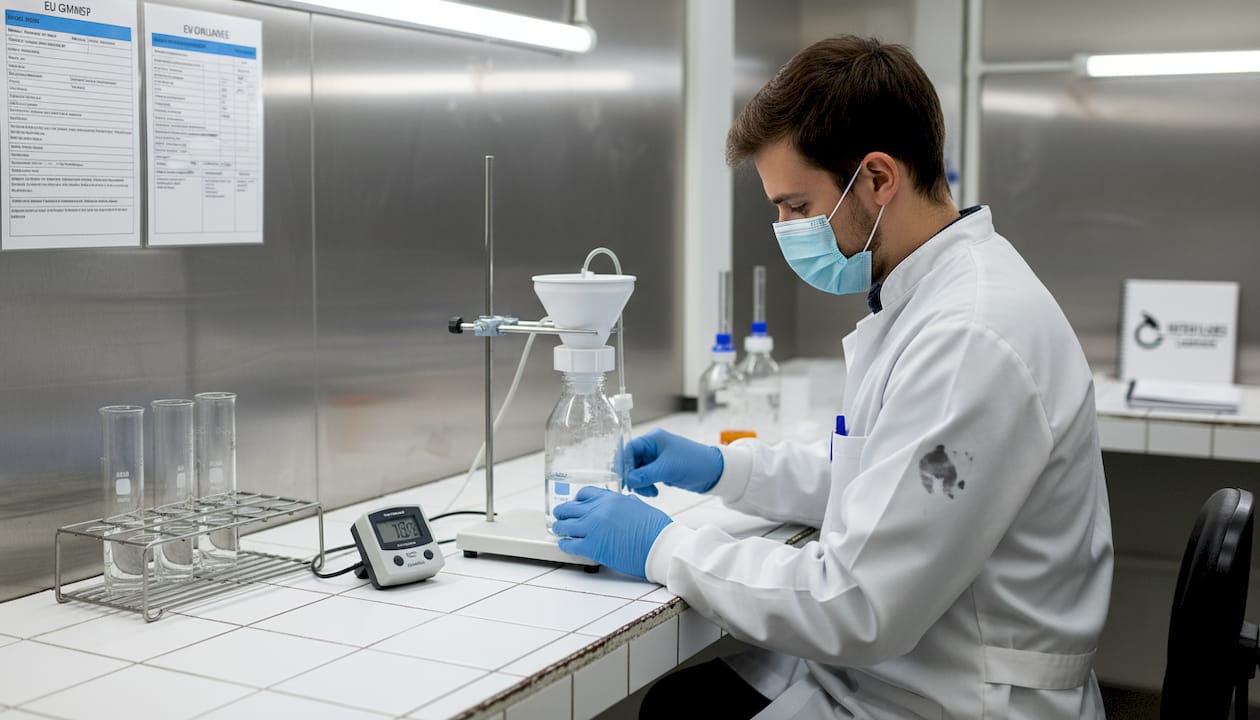
Following pharmaceutical sterility standards, the Ph. Eur. 2.6.1 method specifies two growth media incubated under defined conditions. Fluid Thioglycollate Medium (FTM) targets anaerobic and aerobic bacteria and is incubated at 30 to 35°C. Soybean Casein Digest Medium (SCDM) targets aerobic bacteria and fungi and is incubated at 20 to 25°C. Both media require a sterility testing period of 14 days before a negative result can be confirmed.
Key protocol steps for compliant sterility testing include:
- Batch unit sampling: Select the required number of units per batch according to Ph. Eur. Table 2.6.1-1, based on batch size.
- Membrane rinsing: Rinse membranes with sufficient sterile diluent to remove residual bacteriostatic agent before incubation, a critical step for bacteriostatic water specifically.
- Growth promotion testing: Verify each batch of media supports microbial growth using specified challenge organisms before use.
- Aseptic technique throughout: All manipulations must occur in a Grade A environment; review aseptic handling tips to minimize contamination risk.
| Parameter | Ph. Eur. 2.6.1 | EU GMP Annex 1 |
|—|—|—|
| Preferred method | Membrane filtration | Membrane filtration |
| FTM incubation temp | 30 to 35°C | 30 to 35°C |
| SCDM incubation temp | 20 to 25°C | 20 to 25°C |
| Incubation duration | 14 days | 14 days |
| Sampling basis | Batch size table | Risk-based, aligned with Ph. Eur. |
| Rinse protocol | Required for bacteriostasis | Required, documented |
For water quality considerations beyond sterility, consult the water quality guide and review common contamination mistakes that compromise reconstitution workflows.
Pro Tip: Always run method suitability tests for bacteriostasis before routine sterility testing begins. If your bacteriostatic agent inhibits growth in the test system, rinsing volumes or neutralization steps must be adjusted and revalidated before results can be considered valid.
Monitor water and reagent purity with strict testing parameters
Purity monitoring is a continuous obligation, not a one-time qualification exercise. For purified water and water for injection (WFI) used in reagent preparation, two parameters define compliance: electrical conductivity and total organic carbon (TOC). Conductivity must remain below 4.3 µS/cm at 20°C, while TOC must not exceed 500 ppb for purified water, with a stricter limit of 0.5 mg/L applied to WFI. The TOC test has largely replaced the older oxidizable substances test because it provides a more sensitive and quantitative measure of organic contamination.
The latest Ph. Eur. purity rules reinforce these benchmarks and introduce updated guidance on monitoring frequency and point-of-use testing.
| Water grade | Conductivity limit | TOC limit |
|---|---|---|
| Purified water | <4.3 µS/cm at 20°C | <500 ppb |
| WFI | <1.3 µS/cm at 25°C | <0.5 mg/L |
| Cleaning rinse residue | Site-specific limit | Site-specific limit |
Implementing routine purity checks requires a structured approach:
- Define sampling points: Test at the point of generation and at point of use to identify distribution system contamination.
- Select calibrated instrumentation: Use conductivity meters and TOC analyzers with current calibration certificates and documented uncertainty values.
- Set monitoring frequency: Daily or continuous conductivity monitoring is standard; TOC testing frequency depends on system risk classification.
- Document action limits vs. alert limits: Alert limits trigger investigation; action limits trigger batch rejection and corrective action.
- Review trends, not just single results: A rising conductivity trend over weeks is more informative than a single out-of-specification reading.
For reagents beyond water, monitoring lab water purity and understanding the labware purity guide provide additional context for setting internal specifications appropriate to peptide research applications.
Validate and document cleaning to avoid cross-contamination
Cleaning validation is frequently underestimated in research laboratory settings, yet it is one of the most direct mechanisms for preventing cross-contamination between reagent batches or experimental runs. When equipment surfaces retain residues from previous preparations, those residues can transfer to subsequent batches, introducing false signals, altered pH, or microbial contamination that invalidates results.
A validated cleaning procedure must demonstrate that residues are removed to a defined, acceptable level. Two primary sampling methods are used:
- Swab sampling: A moistened swab is applied to a defined surface area, then extracted and analyzed. This method is suitable for accessible, flat surfaces and provides location-specific data.
- Rinse sampling: A known volume of solvent or water is used to rinse the equipment interior, and the rinse fluid is analyzed. This method covers larger or complex internal surfaces that swabs cannot reach.
Recovery rates define whether a method is fit for purpose. PDA and WHO guidance generally establishes recovery rates above 50% as acceptable and above 80% as excellent for swab methods. Any method with recovery below 50% requires revalidation or replacement before cleaning data can be considered reliable.
Additional validation considerations include:
- Sampling frequency: Validate at initial implementation, after equipment modification, and at documented periodic intervals.
- Worst-case equipment classification: Identify high-contact surfaces and complex geometries as worst-case sampling locations.
- Analytical method suitability: Confirm that the analytical method used to measure residues is validated for the specific analyte and matrix.
For guidance on broader reagent handling safety practices that complement cleaning validation, structured protocols are available to support compliant laboratory operations.
Pro Tip: Classify equipment by contact risk and cleaning difficulty. High-touch items used across multiple reagent types should be validated more frequently and sampled at a greater number of locations than single-use or low-risk equipment.
QC your reagents and media: controls, traceability, proficiency
Reagent and media quality control is the operational layer that connects your framework, sterility, purity, and cleaning activities into a coherent, defensible system. Without structured internal controls and external validation, even well-designed protocols can drift over time without detection.
A practical reagent QC program includes the following actions:
- Run method blanks: Analyze reagent blanks with every analytical batch to confirm that background contamination is below detection thresholds.
- Include positive and negative controls: Positive controls confirm the assay is capable of detecting the target; negative controls confirm the absence of false positives.
- Spike and recovery tests: Add a known concentration of analyte to a sample matrix and measure recovery to verify method accuracy.
- Periodic batch verification: Re-test retained samples from previous batches to confirm results remain consistent over time.
- Growth promotion and sterility checks for microbiological media: Every new batch of culture media must pass growth promotion testing before use in critical workflows.
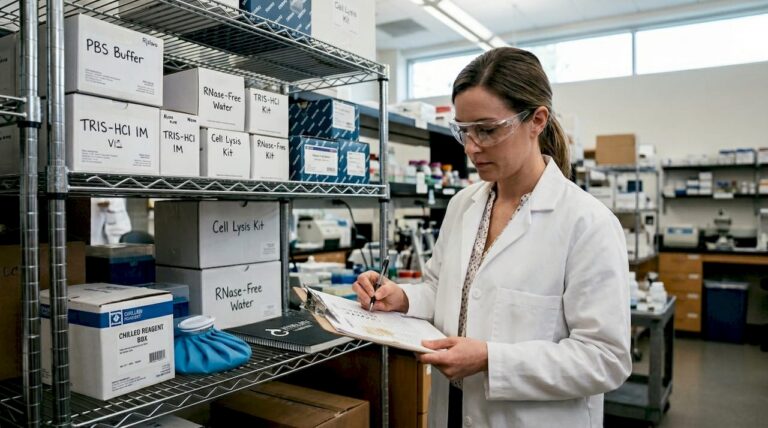
Traceability is a non-negotiable element of reagent QC. Certified reference materials (CRMs) and reference materials (RMs) provide the metrological anchor that links your measurements to internationally recognized standards, enabling batch-to-batch consistency and defensible data. For guidance on selecting reliable reagents that meet these traceability requirements, structured selection criteria are essential.
External proficiency testing (PT) rounds out the program by comparing your laboratory’s results against peer laboratories using the same or equivalent samples. PT participation is required under ISO/IEC 17025 and provides objective evidence that your methods perform within acceptable limits under real-world conditions.
Why real QC is about culture, not just compliance
The practical steps outlined above are necessary, but they are not sufficient on their own. The most technically complete QC system can still fail if the laboratory culture treats quality as a compliance obligation rather than a shared professional standard. In our experience working with research and quality teams, the most costly errors rarely originate from missing procedures. They originate from complacency: a rushed membrane filtration step, an unvalidated shortcut adopted under time pressure, or a failed control result that gets rationalized rather than investigated.
Sustained quality requires staff engagement at every level, from the technician running daily checks to the laboratory manager reviewing trend data. Open error reporting, where staff can flag deviations without fear of blame, is one of the most effective mechanisms for catching systemic problems early. Routine process reviews, not just annual audits, keep procedures aligned with current practice.
We encourage laboratories to treat QC as an evolving practice. Improving lab culture through workflow optimization and transparent communication structures is as important as any technical protocol. Regulatory compliance sets the floor. Research integrity and reproducibility require going well beyond it.
Boost your lab’s QC with the right partners and resources
For labs ready to put these QC strategies into practice, having access to pre-vetted consumables and structured guidance resources simplifies both procurement and implementation.
Herbilabs Labware supplies research-grade bacteriostatic water and sterile reagents manufactured to strict purity standards, with full batch documentation to support your traceability requirements. Explore our lab consumables comparison to identify the right products for your workflow, review the safe lab application guide to understand when bacteriostatic versus sterile water is appropriate, and consult our resource on how to optimize research water shelf life and stability. Reliable QC starts with reliable supply.
Frequently asked questions
What is the difference between quality assurance and quality control in labs?
Quality assurance is proactive process planning designed to prevent defects from occurring, while quality control is the testing and monitoring stage that detects errors within specific batches or analytical runs.
How often should labs validate cleaning procedures?
Labs should validate cleaning procedures at initial implementation and repeat validation after any equipment modification, process change, or at documented periodic intervals defined in the validation protocol.
What are the key sterility testing conditions for bacteriostatic water?
Sterility tests use membrane filtration, with FTM incubated at 30 to 35°C and SCDM at 20 to 25°C for 14 days per Ph. Eur. 2.6.1, with membrane rinsing required to neutralize bacteriostatic activity before incubation.
How can I ensure traceability of my reagents?
Use certified reference materials, maintain complete batch records linking each reagent lot to its analytical results, and participate in regular external proficiency testing to confirm method performance against peer laboratories.
Recommended
- What is quality control in labs? Essential guide for reliable results
- Laboratory reagent handling: best practices for safety
- Why certified lab supplies are essential for reliable research
- Understand laboratory reagent standards for reliable results
- Why Maintain Clean Spray Booths for Superior Results